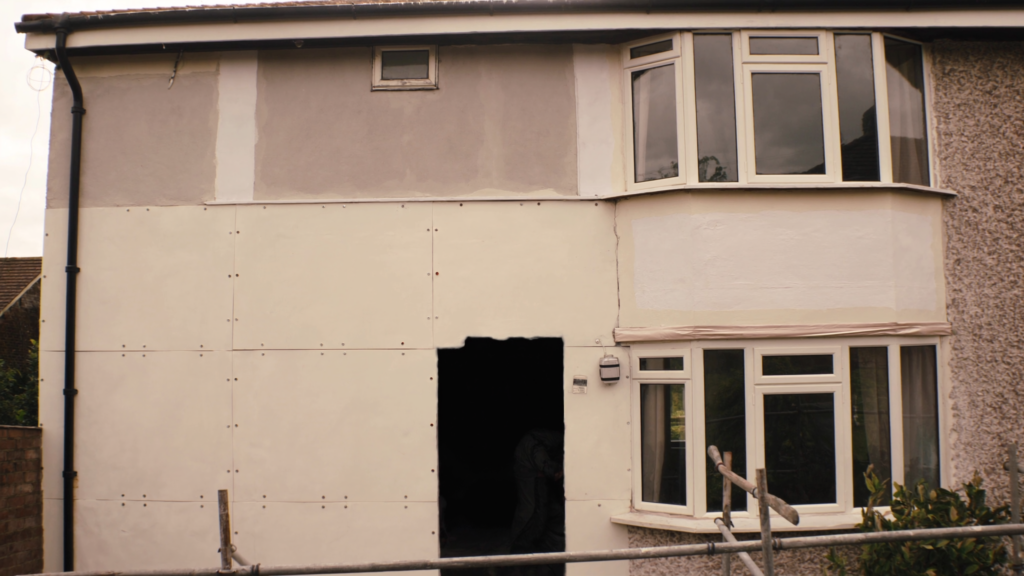
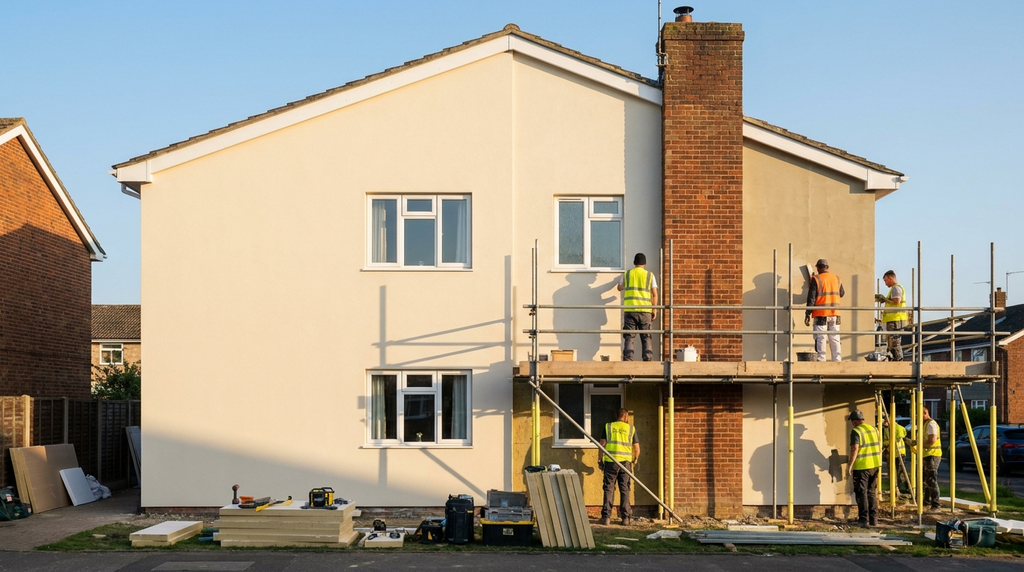
The quickest way to identify your existing cavity wall insulation is to check your property’s insulation certificate or building control records
The fastest route is to find the original installation paperwork. If a registered installer fitted the insulation, you should have a certificate from the Cavity Insulation Guarantee Agency (CIGA), the British Board of Agrément (BBA), or the Scottish and Welsh Insulation Guarantee Agency (SWIGA). These documents specify the material, thickness, and installer details (CIGA, 2026).
Check your CIGA certificate or EPC first to identify cavity wall insulation. If paperwork is missing, look for 20–25mm injection holes on external walls or use a borescope to view the cavity fill. These methods reveal the material without a professional survey.
- Check your CIGA or BBA certificate for material and thickness details.
- Look at your EPC under the 'Walls' section for insulation type codes.
- Inspect external brickwork for 20–25mm injection holes in vertical rows.
- Use a borescope camera to see cavity fill through an access point.
- Contact your local building control for records of renovation insulation work.
- The quickest way to identify your existing cavity wall insulation is to check your property's insulation certificate or building control records
- You can visually inspect the cavity wall insulation from outside or inside your home
- Quick numbers – typical cavity wall insulation types and their properties
- The type of cavity wall insulation you have determines your eligibility for UK government grants
- The direct answer to "what cavity wall insulation do I have" is check your EPC, look for installation holes, or hire an MCS-accredited surveyor
- How to verify an installer and ensure your cavity wall insulation meets current standards
- If you cannot identify your cavity wall insulation, a professional survey is the only reliable method
If you cannot locate the certificate, check your Energy Performance Certificate (EPC). The EPC lists the wall construction and insulation type under the “Walls” or “Cavity Wall” section, often with a material code such as “Cavity wall – filled” followed by the insulation type (GOV.UK, 2026). For homes built after 1990, the original building plans or a new-build warranty document from the National House Building Council (NHBC) may specify the insulation material used during construction. You can also contact your local authority’s building control department if the insulation was part of a larger renovation project.
You can visually inspect the cavity wall insulation from outside or inside your home
Look at the external brickwork for small, evenly spaced holes typically 20–25mm in diameter. These injection holes indicate blown-in insulation such as mineral wool, polystyrene beads, or foam. The holes are usually arranged in a vertical line every 1–2 metres along the wall (Energy Saving Trust, 2026).
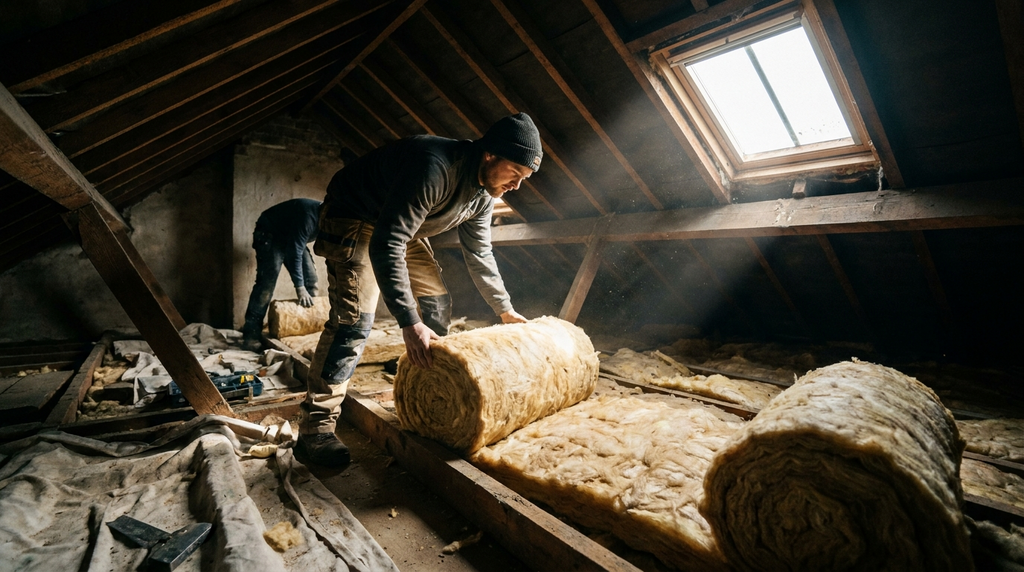
Inside, check the loft space where the cavity wall meets the roof. You may see the insulation material poking out or a gap that reveals the cavity fill. For a non-invasive check, use a borescope (a small camera) to peer into the cavity through an existing hole or a drilled access point. This is a common method for homeowners to identify the material without a professional survey. If you see a white or grey fibrous material, it is likely mineral wool. Small round beads indicate expanded polystyrene (EPS). A solid foam appearance suggests polyurethane or urea-formaldehyde foam.
Quick numbers – typical cavity wall insulation types and their properties
| Insulation Type | Material | Typical R-Value per 100mm | Common Installation Method | Typical Lifespan | Source |
|---|---|---|---|---|---|
| Mineral wool | Rock or glass fibre | 2.2–2.7 | Blown-in | 30+ years | EST, 2026 |
| EPS beads | Expanded polystyrene | 2.5–3.0 | Blown-in | 40+ years | EST, 2026 |
| Polyurethane foam | Rigid foam | 3.5–4.0 | Injected | 25–30 years | CIGA, 2026 |
| Urea-formaldehyde foam | Foam | 2.0–2.5 | Injected | 20–25 years | BRE, 2026 |
The type of cavity wall insulation you have determines your eligibility for UK government grants
The Great British Insulation Scheme closed on 31 March 2026. It funded insulation measures only and never covered windows or glazing. If your existing insulation is mineral wool, EPS beads, or foam and is in good condition, you are generally not eligible for a free or subsidised cavity wall insulation grant. If the insulation is damaged, damp, or missing due to gaps or settlement, you may qualify for a top-up or replacement under ECO4 provided your property has an EPC band D or below. Check your eligibility through your local authority or energy supplier scheme. They will require a survey to confirm the insulation type and condition (DESNZ, 2026).
The direct answer to “what cavity wall insulation do I have” is check your EPC, look for installation holes, or hire an MCS-accredited surveyor
Your Energy Performance Certificate is the most reliable starting point. It lists the insulation type with a specific material code under the walls section (GOV.UK, 2026). If no paperwork exists, look for external injection holes in a vertical line every 1–2 metres. This confirms blown-in insulation, but the material type requires further inspection. For a definitive answer, hire an MCS-accredited surveyor through the Microgeneration Certification Scheme register. They can use a borescope and identify the material from its colour, texture, and shape (MCS, 2026). If you cannot afford a survey, contact your local authority’s energy advice service. They may offer a free visual inspection or signpost you to a grant-funded assessment (Energy Saving Trust, 2026). how to find your EPC online
How to verify an installer and ensure your cavity wall insulation meets current standards
The Great British Insulation Scheme closed on 31 March 2026. It funded insulation measures only and never covered windows or glazing. For a retrofit, the installer should provide a CIGA guarantee that covers the work for 25 years (CIGA, 2026). If you are checking existing insulation, look for a CIGA certificate or a BBA certificate. These confirm the product and installation meet UK standards. To verify a current installer, use the MCS register at mcscertified.com or TrustMark at trustmark.org.uk. Both are free to search (MCS, 2026).
If you cannot identify your cavity wall insulation, a professional survey is the only reliable method
A professional survey uses a borescope and sometimes a thermal imaging camera to check for gaps, damp, or settlement. The typical cost in 2026 is £100–£200 (Energy Saving Trust, 2026). The surveyor will drill a small hole of 10mm into the cavity and take a sample, then seal it. This is low-risk and non-destructive. A thermal imaging survey can detect cold spots where insulation is missing or wet. This may indicate a problem that needs addressing. If your home is in a flood-prone area or has existing damp issues, a survey is essential before any new insulation work. Wet insulation can cause structural damage (BRE, 2026). cavity wall insulation problems to watch for
Frequently Asked Questions
Check your home files for a certificate from CIGA, BBA, or SWIGA. If missing, search the CIGA online database or contact the original installer. The Energy Saving Trust advises keeping these documents for future sales.
Yes, your EPC lists wall construction and insulation type under the 'Walls' section. Look for codes like 'Cavity wall – filled' followed by the material. GOV.UK confirms this data is included in all EPCs since 2007.
Injection holes are small, evenly spaced holes about 20–25mm in diameter on external brickwork. They are arranged in vertical lines every 1–2 metres. The Energy Saving Trust notes these indicate blown-in insulation like mineral wool or beads.
Visually inspect the loft space for insulation material poking out, or use a borescope camera through an existing hole. White or grey fibrous material suggests mineral wool. For a definitive answer, hire a professional surveyor.
Homes built after 1990 often have cavity wall insulation specified in original building plans or NHBC warranty documents. Common materials include mineral wool, polystyrene beads, or polyurethane foam. Check with your local authority building control for records.