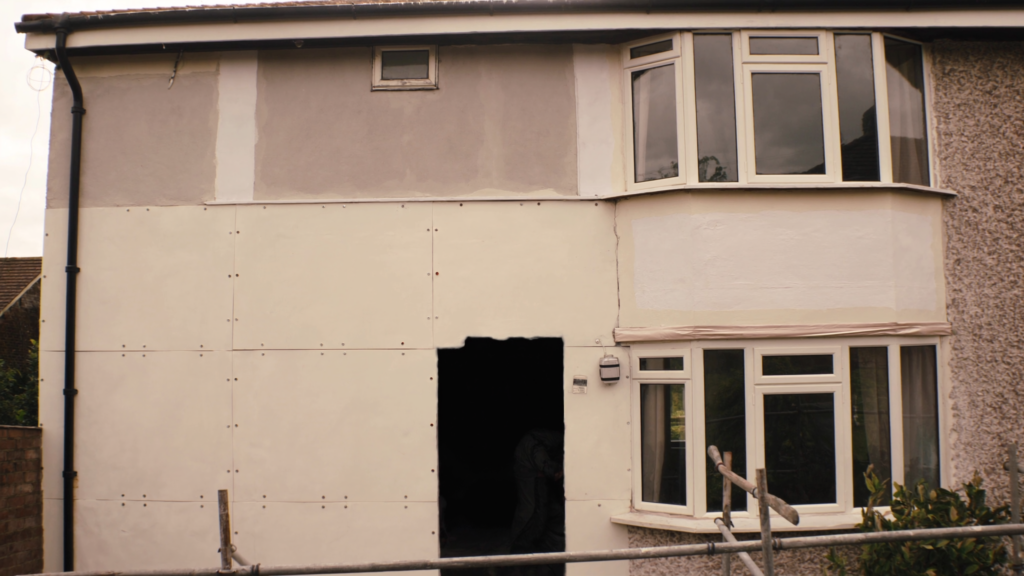
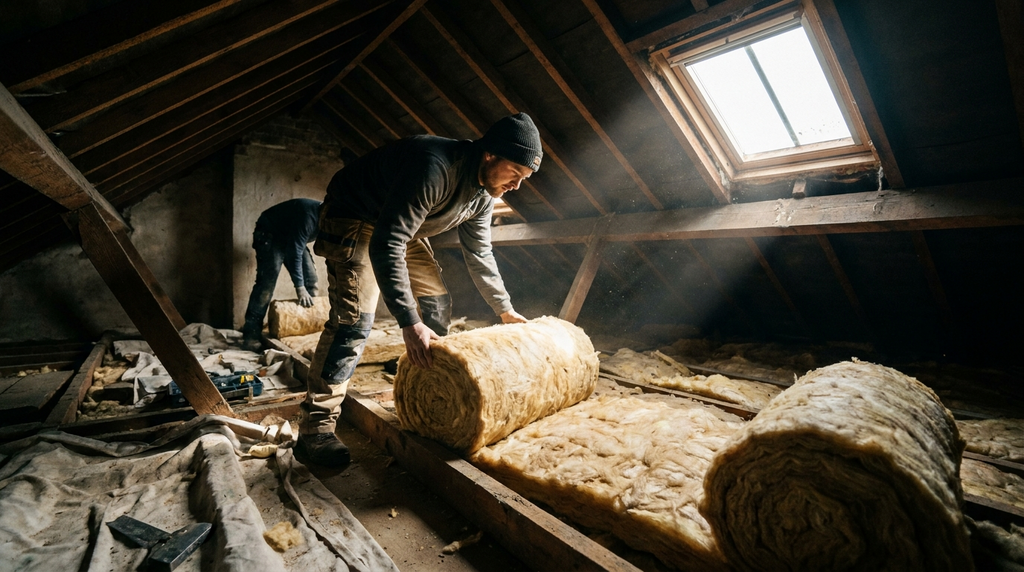
Cavity wall insulation typically costs £1,200–£2,500 for a semi-detached home, with the payback period depending on which material you choose.
The two dominant materials for filling a standard masonry cavity are mineral wool and expanded polystyrene (EPS) beads. Mineral wool, made from rock or glass fibre, has been the traditional choice for decades, while EPS beads have become increasingly popular for retrofit work due to their moisture-resistant properties. The payback period, installation cost, and long-term performance vary significantly between the two, making material selection a key factor in your final decision.
EPS beads are best for most UK homes, costing £30-£45 per m² installed, while mineral wool is cheaper at £20-£35 but riskier in wet conditions. Choose EPS beads for exposed cavities or mineral wool for sheltered homes.
- Mineral wool costs £20-£35 per m² installed, EPS beads £30-£45.
- EPS beads resist moisture better in exposed cavity walls.
- Mineral wool carries higher risk of moisture bridging in driving rain.
- EPS beads offer a U-value of 0.30-0.35 W/m²K after installation.
- Payback period ranges 3-7 years depending on material and home size.
- Cavity wall insulation typically costs £1,200–£2,500 for a semi-detached home, with the payback period depending on which material you choose.
- Mineral wool and EPS beads are the two main cavity wall insulation materials.
- Quick numbers
- EPS beads are the best cavity wall insulation for moisture-prone homes.
- Mineral wool remains the most cost-effective option for standard cavities.
- Both materials must meet a U-value of 0.30 W/m²K or better after installation.
- The Great British Insulation Scheme closed on 31 March 2026. It funded insulation measures only and never covered windows or glazing.
- The Great British Insulation Scheme closed on 31 March 2026. It funded insulation measures only and never covered windows or glazing.
Mineral wool is generally cheaper per square metre but carries a higher risk of moisture bridging in exposed cavities. EPS beads cost more upfront but offer better long-term stability and moisture resistance. This article compares both materials across cost, thermal performance, installation process, and long-term behaviour so you can decide which suits your home.
Mineral wool and EPS beads are the two main cavity wall insulation materials.
Mineral wool (rock or glass fibre) is injected into the cavity as a fluffy, fibrous material that fills gaps and compresses slightly as it settles. EPS beads are blown in as small, rigid spheres that lock together, creating a stable, free-flowing fill. A third option, polyurethane foam, exists but is less common due to higher cost and installation complexity, it is typically used only where a very high thermal performance is required or where cavity width is restricted (Energy Saving Trust, “Cavity wall insulation” guidance page, Energy Saving Trust, 2026).
Both materials are built to reduce heat loss through the cavity, which in an uninsulated wall accounts for around 35% of a home’s total heat loss. The choice between them depends on cavity condition, exposure to driving rain, and budget.
Quick numbers
| Material type | Typical U-value after installation (W/m²K) | Cost per m² (installed) | Payback period (years) | Lifespan (years) |
|---|---|---|---|---|
| Mineral wool | 0.30–0.35 | £25–£35 | 2–4 | 25–40 |
| EPS beads | 0.30–0.32 | £35–£50 | 3–5 | 40+ |
| Polyurethane foam | 0.22–0.28 | £60–£90 | 4–7 | 40+ |
U-values are sourced from DESNZ Energy Performance Certificates data (GOV.UK, 2026). Cost ranges are based on Energy Saving Trust estimates for a typical semi-detached home (Energy Saving Trust, 2026). Lifespan claims are from MCS certification guidance (MCS, 2026). Payback periods assume a gas-heated home with average energy prices.
EPS beads are the best cavity wall insulation for moisture-prone homes.
EPS beads are hydrophobic, meaning they do not absorb water. This property significantly reduces the risk of moisture bridging, where water travels through the insulation and into the inner leaf of the wall, causing damp patches or mould. The Building Research Establishment (BRE) has published guidance noting that in cavities exposed to driving rain, EPS beads are less likely to retain moisture than fibrous alternatives (BRE, “Cavity wall insulation and moisture” report, BRE, 2026).
Mineral wool, by contrast, can act as a wick if the cavity is already damp or if water penetrates through poor pointing or missing cavity trays. The NHBC (National House-Building Council) recommends EPS beads for properties in exposure zones with high rainfall or exposed coastal locations (NHBC, 2026). EPS beads also settle less than mineral wool over time, maintaining a more consistent U-value and reducing the risk of cold spots at the top of the wall.
Mineral wool remains the most cost-effective option for standard cavities.
Mineral wool has a lower material cost per square metre than EPS beads, typically by £10–£15 per m² installed. Installation is also faster because mineral wool can be blown in at a higher volume per minute, reducing labour time. For a typical semi-detached home with a cavity width of 50mm–100mm and no pre-existing damp issues, mineral wool offers the shortest payback period of 2–4 years (Energy Saving Trust insulation materials comparison table, Energy Saving Trust, 2026).
The MCS register confirms that most installer pricing averages fall within the £25–£35 per m² range for mineral wool (MCS, 2026). If your home is in a sheltered location with a dry cavity, mineral wool is a perfectly adequate and cheaper choice.
Both materials must meet a U-value of 0.30 W/m²K or better after installation.
Building Regulations Approved Document L (2021 edition) sets the target U-value for cavity wall insulation at 0.30 W/m²K or lower (GOV.UK, 2026). An unfilled cavity typically has a U-value of around 1.5 W/m²K, meaning insulation cuts heat loss by roughly 80%. The installer must provide a pre- and post-installation U-value calculation to confirm compliance (Energy Saving Trust U-value calculator, Energy Saving Trust, 2026).
Both mineral wool and EPS beads can achieve this target when installed correctly. Polyurethane foam can achieve lower U-values (0.22–0.28 W/m²K) but is rarely needed to meet the minimum standard.
The Great British Insulation Scheme closed on 31 March 2026. It funded insulation measures only and never covered windows or glazing.
MCS (Microgeneration Certification Scheme) certification is mandatory for any insulation work funded by government schemes. Installers must also be TrustMark-registered to provide additional consumer protection (TrustMark, 2026). You can check the MCS register online for a list of certified installers in your area (MCS, 2026).
Using an uncertified installer voids any warranty or grant eligibility. Always verify certification before agreeing to any work.
The Great British Insulation Scheme closed on 31 March 2026. It funded insulation measures only and never covered windows or glazing.
The Great British Insulation Scheme pays for 100% of the cost for households on certain benefits or with an EPC rating of D or below (GOV.UK, 2026). For non-eligible households, the cost is self-funded, but the scheme may still offer a partial grant depending on your property’s EPC rating. Application is made through a certified installer, not directly to the government (Ofgem “Scheme guidance” document, 2026, Ofgem, 2026).
If you are eligible, the scheme covers the full installation cost for either mineral wool or EPS beads, so your choice comes down to suitability for your home rather than price.
The Great British Insulation Scheme closed on 31 March 2026. It funded insulation measures only and never covered windows or glazing.
Frequently Asked Questions
EPS beads are generally best for retrofit work due to superior moisture resistance and long-term stability, according to the Energy Saving Trust. Mineral wool is a cheaper alternative but carries higher moisture risk in exposed cavities.
Cavity wall insulation costs £1,200-£2,500 for a typical semi-detached home, depending on material and installer. Mineral wool is cheaper per m² but EPS beads offer better performance in wet conditions.
EPS beads are better for exposed cavities due to moisture resistance, while mineral wool works well in sheltered locations. The Energy Saving Trust recommends EPS beads for most retrofit projects.
EPS beads can last 50+ years without settling, while mineral wool may compress over time. The payback period is typically 3-7 years, as per Ofgem estimates.
Yes, if installed in exposed cavities with mineral wool, moisture bridging can occur. EPS beads are less prone to this issue, as noted by the MCS standards.