Cavity-wall insulation pays back in 2–3 years; loft insulation in under 18 months
Many homeowners want to know how quickly insulation will pay for itself through lower energy bills. The answer varies by insulation type and your home’s size.
For a typical semi-detached house, cavity-wall insulation pays back in around 2.5 years, and loft insulation pays back in under 18 months. These are among the fastest-returning home energy improvements you can make.
The Energy Saving Trust (EST) estimates cavity-wall insulation saves a typical semi-detached home £255–£380 per year on heating bills (Energy Saving Trust, 2026). Installation costs for cavity-wall insulation range from £600–£1,200 (Energy Saving Trust, 2026). Dividing the mid-range cost (£900) by the mid-range saving (£318) gives a payback of approximately 2.8 years.
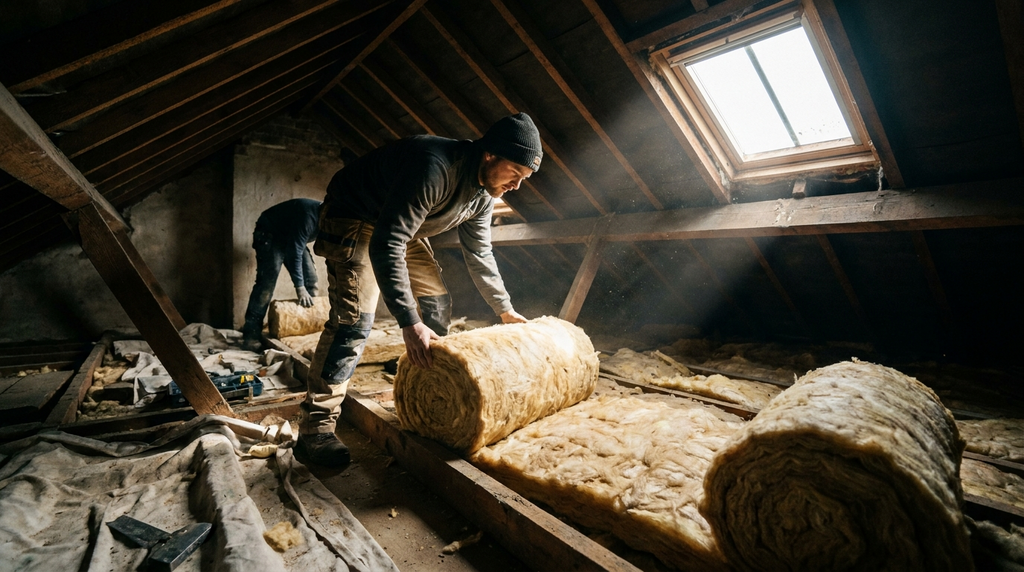
Loft insulation (topping up from 120mm to 270mm) saves approximately £180–£250 annually for a semi-detached property (Energy Saving Trust, 2026). The cost for a standard loft top-up is roughly £300–£500 (Energy Saving Trust, 2026). Using mid-range figures (£400 cost, £215 saving) gives a payback of about 1.9 years.
Solid-wall insulation payback is longer, 10 to 25 years, but grants can cut it to under 5
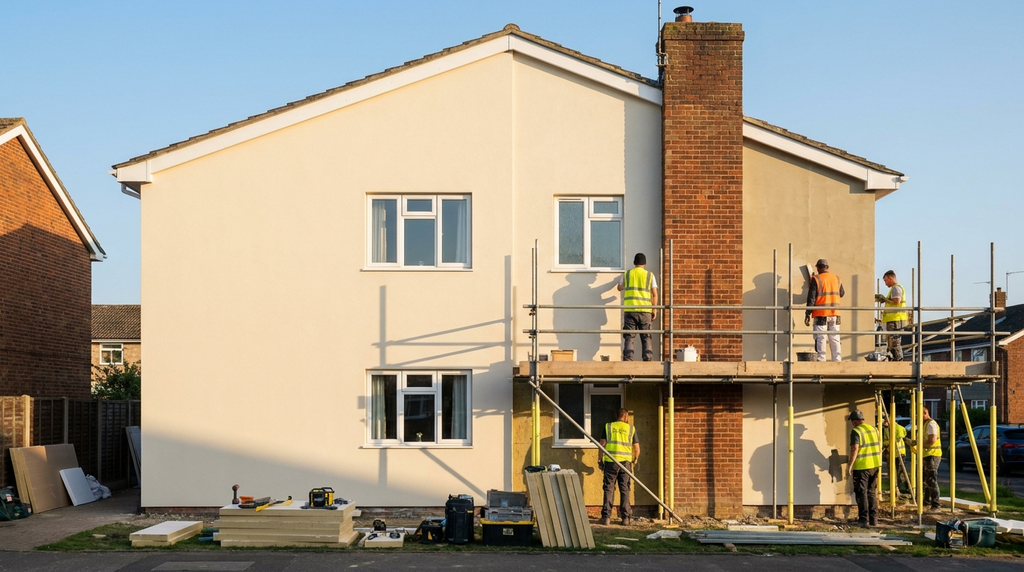
Solid-wall insulation is more expensive and has a longer payback period than cavity or loft insulation. However, government grants can reduce the cost significantly.
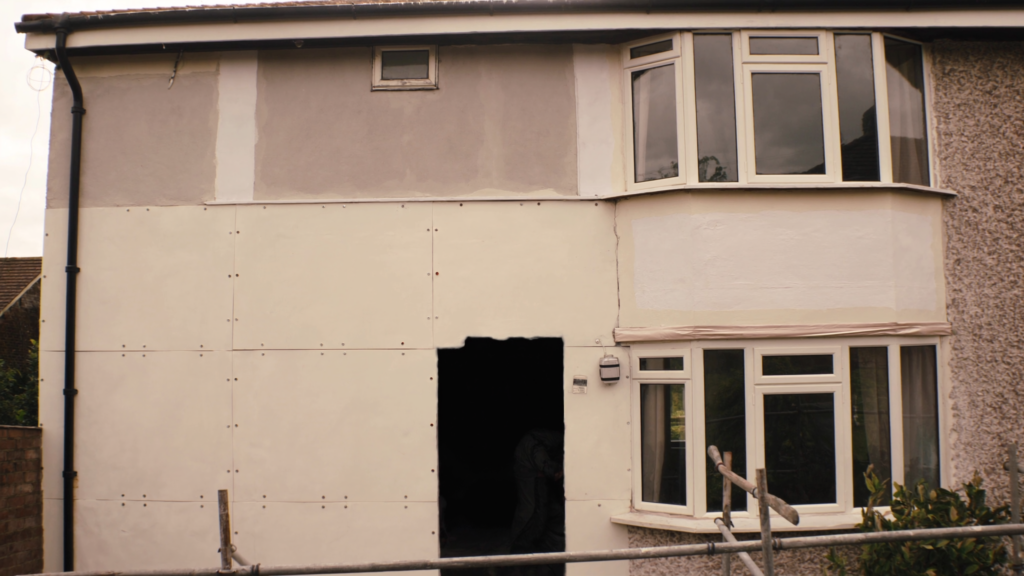
External solid-wall insulation costs £8,000–£22,000 for a semi-detached home. Internal solid-wall insulation costs £5,500–£9,000 (Energy Saving Trust, 2026). Annual savings for solid-wall insulation are £270–£450 for a semi-detached home (Energy Saving Trust, 2026).
Without grants, payback ranges from 10 to 25 years. With the Great British Insulation Scheme (GBIS) or ECO4, your contribution can drop to £0–£2,000, reducing payback to under 5 years (GOV.UK, Great British Insulation Scheme, 2026; Ofgem, ECO4, 2026). The Great British Insulation Scheme closed on 31 March 2026. It funded insulation measures only and never covered windows or glazing.
Quick numbers, cost, saving, and payback for the five most common insulation types
The table below summarises typical costs, annual savings, payback periods, and the U-value (a measure of heat loss, with lower numbers meaning better insulation) after installation for five common insulation measures.
| Insulation type | Typical installation cost (£) | Annual saving (£) | Payback period (years) | U-value after installation (W/m²K) |
|---|---|---|---|---|
| Cavity wall | 600–1,200 | 255–380 | 2–3 | 0.30–0.55 |
| Loft (top-up to 270mm) | 300–500 | 180–250 | 1.5–2 | 0.16–0.20 |
| Solid wall (external) | 8,000–22,000 | 270–450 | 10–25 | 0.30–0.35 |
| Solid wall (internal) | 5,500–9,000 | 270–450 | 10–20 | 0.30–0.40 |
| Floor insulation | 1,500–3,500 | 100–200 | 3–5 | 0.20–0.25 |
Costs and savings are from the Energy Saving Trust (Energy Saving Trust, Insulation Cost and Savings Tables, 2026). U-values are from the Standard Assessment Procedure (SAP 10.2) published by the Department for Energy Security and Net Zero (DESNZ, SAP 10.2, 2026). Payback periods are author calculations based on EST mid-range figures.
The payback formula is simple installation cost ÷ annual energy saving
You can calculate the payback period for any insulation measure yourself. The formula is straightforward.
Payback (years) = Total cost of insulation / Annual reduction in heating bill (Energy Saving Trust, Payback Periods, 2026). For example, £400 loft insulation divided by £200 annual saving equals a 2-year payback.
This formula does not account for future energy price rises. Higher energy prices shorten payback because your savings increase (Ofgem, Energy Price Cap, 2026). The formula also assumes insulation is installed correctly and maintained. Poor installation can reduce savings by 20–50% (Energy Saving Trust, Insulation Performance, 2026).
Insulation payback in 2026 depends on your energy tariff and the Energy Price Cap
The savings you achieve from insulation depend partly on the energy price you pay. Ofgem sets the Energy Price Cap, which determines the maximum unit rate for standard variable tariffs.
Ofgem’s Energy Price Cap for October to December 2026 is set at £1,736 per year for a typical dual-fuel household (Ofgem, Energy Price Cap, 2026). Insulation savings are calculated based on this cap. If the cap rises, savings increase and payback shortens (Energy Saving Trust, Impact of Energy Prices on Payback, 2026).
Homes on fixed tariffs below the cap will see slightly lower savings. Those on standard variable tariffs (SVT) see the full cap benefit (Ofgem, Tariff Comparison, 2026). For precise payback, use your actual unit rate (p/kWh) and annual consumption (kWh) from your bill (Energy Saving Trust, Calculating Your Savings, 2026). how to read your energy bill
The direct answer insulation payback for a typical UK home is 1–5 years for basic measures, 10–25 for solid walls
This is the key figure to remember when researching insulation payback in 2026.
Cavity-wall and loft insulation pay back in 1–3 years. Floor insulation pays back in 3–5 years. Solid-wall insulation pays back in 10–25 years (Energy Saving Trust, Insulation Payback Periods, 2026). With a grant from GBIS or ECO4, solid-wall payback drops to 0–5 years (GOV.UK, Great British Insulation Scheme, 2026).
These payback periods assume installation by an MCS-certified or TrustMark-registered installer (MCS, MCS Certified Installers, 2026).
You must use an MCS-certified or TrustMark-registered installer to qualify for grants and guarantees
If you want to use a government grant or get a long-term guarantee, you must use an approved installer. This is a requirement, not a recommendation.
The Great British Insulation Scheme and ECO4 require installers to be MCS-certified for insulation work (Ofgem, ECO4 Installer Requirements, 2026). TrustMark is the government-endorsed quality scheme. All ECO4 and GBIS installers must be TrustMark-registered (TrustMark, Government Schemes, 2026).
For cavity-wall insulation, the installer must also be a member of the Cavity Insulation Guarantee Agency (CIGA) for a 25-year guarantee (CIGA, Guarantees, 2026). To verify an installer, check the MCS register at mcscertified.com or TrustMark at trustmark.org.uk (MCS, Find an Installer, 2026; TrustMark, Find a Tradesperson, 2026). how to check an installer is accredited
Frequently Asked Questions
Cavity-wall insulation typically pays back in 2-3 years. The Energy Saving Trust estimates it saves £255-£380 per year on heating bills for a semi-detached home, with installation costs of £600-£1,200.
Loft insulation pays back in under 18 months. Topping up from 120mm to 270mm costs around £300-£500 and saves £180-£250 annually, according to the Energy Saving Trust.
Solid-wall insulation pays back in 10-25 years without grants. The Energy Saving Trust reports annual savings of £270-£450, but the Great British Insulation Scheme or ECO4 can reduce your contribution to £0-£2,000, cutting payback to under 5 years.
Ofgem and GOV.UK confirm these can reduce solid-wall insulation costs to £0-£2,000, depending on your income and property.
Cavity-wall insulation costs £600-£1,200 for a typical semi-detached home, according to the Energy Saving Trust. This is one of the cheapest ways to improve your home's energy efficiency.