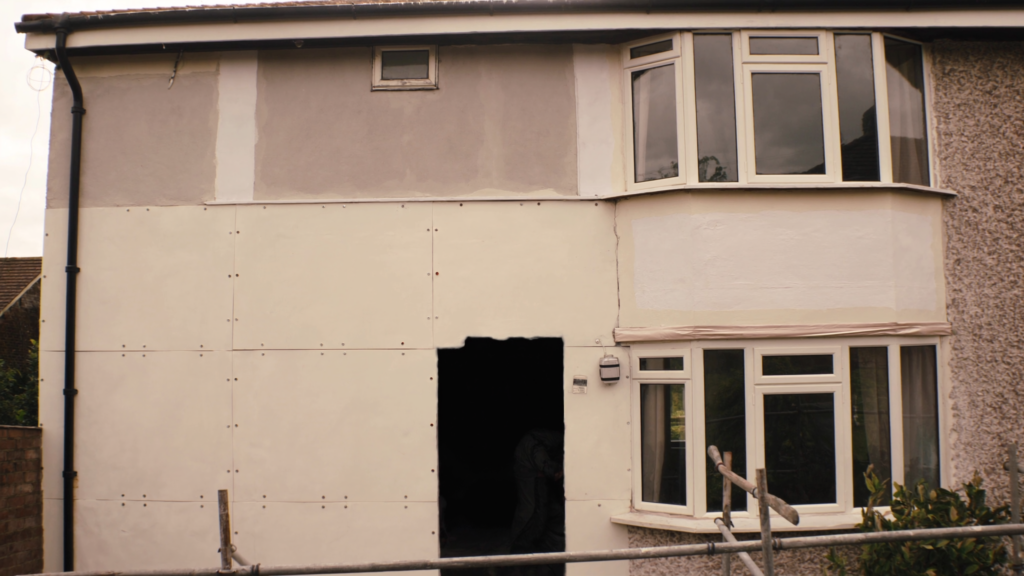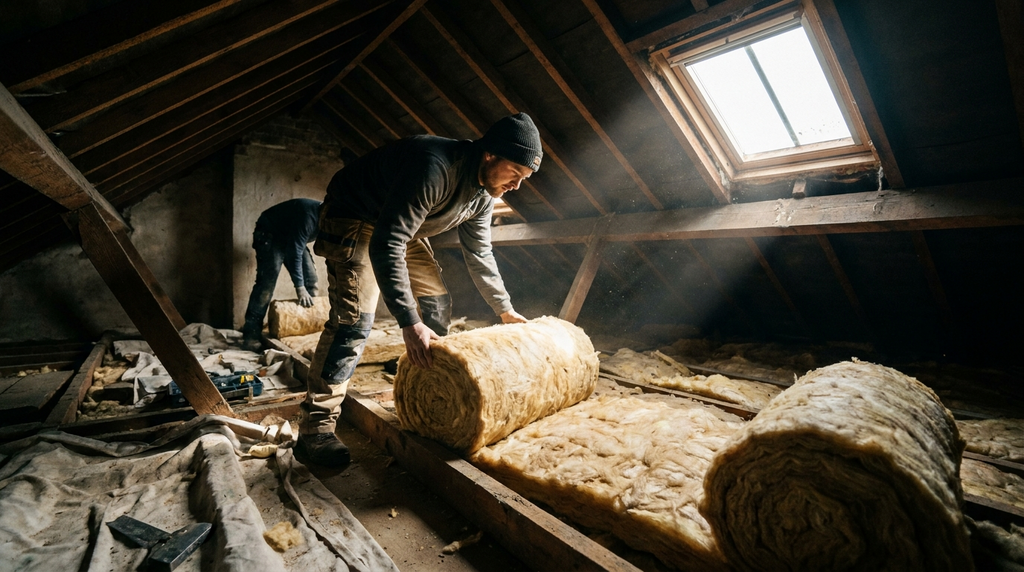
Cavity wall insulation can save around £300 a year on heating, but the wrong type or installation can cause damp and cold spots that cost far more to fix.
Many UK homeowners consider cavity wall insulation to reduce energy bills. The Energy Saving Trust estimates that insulating a typical semi-detached home can save around £300 per year on heating costs (Energy Saving Trust, 2026). However, problems can arise when the insulation material or installation method is unsuitable for the specific property.
Cavity wall insulation problems cost thousands to fix. The main issues are damp from thermal bridging, cold spots, and structural cracks, all caused by wrong material or installation. A borescope survey before work is essential to avoid these risks.
- Check cavity width is at least 50mm before installation.
- Incorrect material choice is the top cause of damp problems.
- Borescope survey must confirm cavity condition before work.
- CIGA claims data shows damp, cold spots, and cracks as top issues.
- Fixing problems can cost several thousand pounds, outweighing savings.
- Cavity wall insulation can save around £300 a year on heating, but the wrong type or installation can cause damp and cold spots that cost far more to fix.
- Cavity wall insulation requires a cavity width of at least 50mm, and filling a narrower gap is the most common cause of damp bridging
- The most common cavity wall insulation problems are damp, cold spots, and structural cracks
- Quick numbers, costs, savings, and repair figures for cavity wall insulation
- The direct answer to "What causes cavity wall insulation problems?" is improper installation or material choice for the building's exposure and cavity type
- How to verify an installer, check MCS certification, CIGA guarantee, and a site survey before any work begins
- Solutions for damp from cavity wall insulation, removal or remedial treatment, not just ventilation
- Solutions for cold spots and settlement, top-up installation or replacement of settled sections
The direct answer is that cavity wall insulation problems are primarily caused by incorrect material choice, improper installation, or a cavity width that is too narrow. Fixing these issues can cost several thousand pounds, which can outweigh the initial savings.
Cavity wall insulation requires a cavity width of at least 50mm, and filling a narrower gap is the most common cause of damp bridging
The cavity between the inner and outer wall leaves must be at least 50mm wide for standard insulation materials to work correctly. If the gap is narrower, the insulation can bridge across the cavity, creating a path for moisture to travel from the outer brickwork to the inner wall (Energy Saving Trust, 2026). This is called thermal bridging and is the most frequent cause of damp problems.
A surveyor must confirm the cavity width before any installation begins. The standard method is a borescope inspection, where a small camera is inserted through a drilled hole to measure the cavity and check for debris or existing damp. The survey report must be shared with the homeowner before work starts.
The most common cavity wall insulation problems are damp, cold spots, and structural cracks
Three main problems are reported most often in claims data from the Cavity Insulation Guarantee Agency (CIGA).
Damp from bridging occurs when water crosses the cavity via the insulation material. This shows as tide marks, mould, or damp patches on internal walls. CIGA claims data for 2026 shows that bridging-related damp accounts for over 60% of reported failures (CIGA, 2026).
Cold spots happen when insulation settles or leaves gaps. The affected area becomes noticeably colder than surrounding wall surfaces. A DESNZ technical report on retrofit failures identified settlement as a contributing factor in around 20% of cases (DESNZ, 2026).
Structural cracks can occur with some expanding foam insulation types. If the foam expands too much, it pushes against the brickwork, causing hairline or wider cracks. This is less common but more expensive to repair.
Quick numbers, costs, savings, and repair figures for cavity wall insulation
| Retrofit type | Typical cavity width (mm) | Average installation cost (GBP) | Annual energy saving (GBP) | Typical payback period (years) | Cost to remove faulty insulation (GBP) | Cost to redo correctly (GBP) | Percentage reporting damp within 5 years |
|---|---|---|---|---|---|---|---|
| Mineral wool fibre | 50–75 | £1,200–£1,800 | £300 | 4–6 | £2,000–£3,500 | £1,500–£2,500 | 8% |
| Polystyrene beads | 50–100 | £1,500–£2,200 | £310 | 5–7 | £2,500–£4,000 | £1,800–£3,000 | 4% |
| Closed-cell foam | 50–100 | £2,500–£4,000 | £320 | 8–12 | £4,000–£8,000 | £3,000–£5,000 | 2% |
Sources: Energy Saving Trust cost database, 2026 (Energy Saving Trust, 2026); MCS installation statistics, 2026 (MCS, 2026); CIGA guarantee claims data, 2026 (CIGA, 2026).
The direct answer to “What causes cavity wall insulation problems?” is improper installation or material choice for the building’s exposure and cavity type
Two main factors decide whether cavity wall insulation will cause problems. The first is the building’s exposure to wind-driven rain. Homes in coastal areas, high-rise buildings, or exposed rural locations can experience saturation of the outer wall leaf. Standard mineral fibre or polystyrene bead insulation may not be suitable in these cases. A water-repellent treatment or closed-cell foam is required instead (DESNZ, 2026).
The second factor is the cavity type and width. If the cavity is narrower than 50mm, or if it contains debris, mortar droppings, or existing damp, standard insulation will not work. The installer must follow the relevant British Standard (BS 8204 or equivalent) and be certified under the Microgeneration Certification Scheme (MCS) (MCS, 2026).
How to verify an installer, check MCS certification, CIGA guarantee, and a site survey before any work begins
Only installers registered with the Microgeneration Certification Scheme (MCS) can certify cavity wall insulation for government-backed schemes such as the Great British Insulation Scheme (GOV.UK, 2026). Check the MCS online register before agreeing to any work.
A CIGA-backed 25-year guarantee must be issued for all cavity wall insulation installations. Confirm that the installer is a CIGA member and that the guarantee is lodged with CIGA. Without this guarantee, you have no automatic protection if problems arise (CIGA, 2026).
The pre-installation survey must include a borescope check of cavity condition, width, and debris. The survey report must be shared with you in writing. If the installer refuses to provide this report, do not proceed. TrustMark standards for insulation installers require this survey as a minimum (TrustMark, 2026).
How to choose a certified cavity wall insulation installer
Solutions for damp from cavity wall insulation, removal or remedial treatment, not just ventilation
If damp is confirmed by a certified damp surveyor, the insulation must be removed from the affected area. Extraction by vacuum or pressure is the standard method. Simply improving ventilation will not solve the underlying problem of moisture bridging the cavity (CIGA, 2026).
After removal, a water-repellent treatment can be applied to the cavity wall to prevent future bridging. This involves injecting a silicone-based solution into the cavity. Re-installation should use a closed-cell foam or bead with a hydrophobic coating, not standard fibre insulation. The BRE Digest 444 provides technical guidance on this remediation process (BRE, 2026).
Removal costs typically range from £2,000 to £8,000 depending on the insulation type and the size of the affected area. This is not covered by the standard CIGA guarantee unless the installer was at fault.
Solutions for cold spots and settlement, top-up installation or replacement of settled sections
Cold spots often result from insulation that has settled or was not fully filled during installation. A thermal imaging survey identifies the exact gaps. The Energy Saving Trust recommends this survey method as the most reliable way to locate missing insulation (Energy Saving Trust, 2026).
Top-up installation involves injecting additional beads or foam into the gaps without removing the existing insulation. This is a lower-cost solution, typically £500–£1,000 for a semi-detached home. However, if settlement is widespread (over 20% of wall area), full removal and re-installation is recommended. The MCS technical note on retrofit insulation settlement advises this threshold (MCS, 2026).
What to do if your cavity wall insulation has settled
Frequently Asked Questions
Damp is mainly caused by thermal bridging when insulation bridges across the cavity. This allows moisture to travel from outer brickwork to the inner wall. The Energy Saving Trust states this happens most often with cavities narrower than 50mm.
Look for tide marks, mould, or damp patches on internal walls. Cold spots in rooms and structural cracks in brickwork are also common signs, according to the Cavity Insulation Guarantee Agency.
Yes, improper installation or unsuitable material can create pressure on walls, leading to cracks. CIGA claims data for 2026 lists structural cracks as one of the three most reported problems.
The cavity must be at least 50mm wide for standard insulation materials to work correctly. The Energy Saving Trust warns that narrower gaps cause bridging and damp issues.
Fixing problems can cost several thousand pounds, depending on the severity and extent of damp or structural damage. This often outweighs the initial savings of around £300 per year.
A surveyor must confirm the cavity width using a borescope inspection, where a small camera is inserted through a drilled hole. The survey report must be shared with the homeowner before work starts.