Insulating a garage roof costs roughly £300–£800, compared to £1,500–£3,000 for a full wall insulation project.
If your garage is attached or integral to your home, an uninsulated roof can bleed heat straight out of your house. Insulating it is one of the cheapest ways to cut heat loss and lower your energy bills. The total cost depends on garage size, material choice (PIR boards, mineral wool, or multifoil), and whether you DIY or hire a professional.
Insulating a garage roof costs £300–£800 for materials on a single-car garage. This is one of the cheapest ways to cut heat loss from an attached garage, according to the Energy Saving Trust.
- Insulating a garage roof costs £300–£800 for a single-car garage.
- Pitched roofs need insulation between or over rafters.
- Flat roofs use warm or cold roof insulation methods.
- DIY installation can save up to 50% on labour costs.
- Check Building Regulations Approved Document L for thermal standards.
- Insulating a garage roof costs roughly £300–£800, compared to £1,500–£3,000 for a full wall insulation project.
- You must first determine if your garage roof is pitched or flat to choose the correct insulation method.
- The minimum U-value for a garage roof insulation is 0.18 W/m²K under current Building Regulations.
- Quick numbers insulation thickness, cost, and U-value targets for garage roofs
- The direct answer to "How do I insulate a garage roof?" is to install insulation between or over the roof structure, then seal with a vapour control layer and plasterboard.
- To check if you are eligible for any grants, you must first confirm your property is in England, Wales, or Scotland, and that your garage is attached or integral.
- You must verify that any installer you hire is MCS-certified or registered with TrustMark for grant-funded work.
A typical single-car garage roof of around 15–20 square metres will cost between £300 and £800 for materials and basic finishing, according to the Energy Saving Trust (Energy Saving Trust, 2026). The Department for Energy Security and Net Zero quotes a similar range for garage roof insulation projects (DESNZ, 2026). By comparison, insulating a full cavity wall in a typical three-bedroom semi-detached house costs £1,500–£3,000. The garage roof job is smaller and simpler, which keeps the price low.
You must first determine if your garage roof is pitched or flat to choose the correct insulation method.
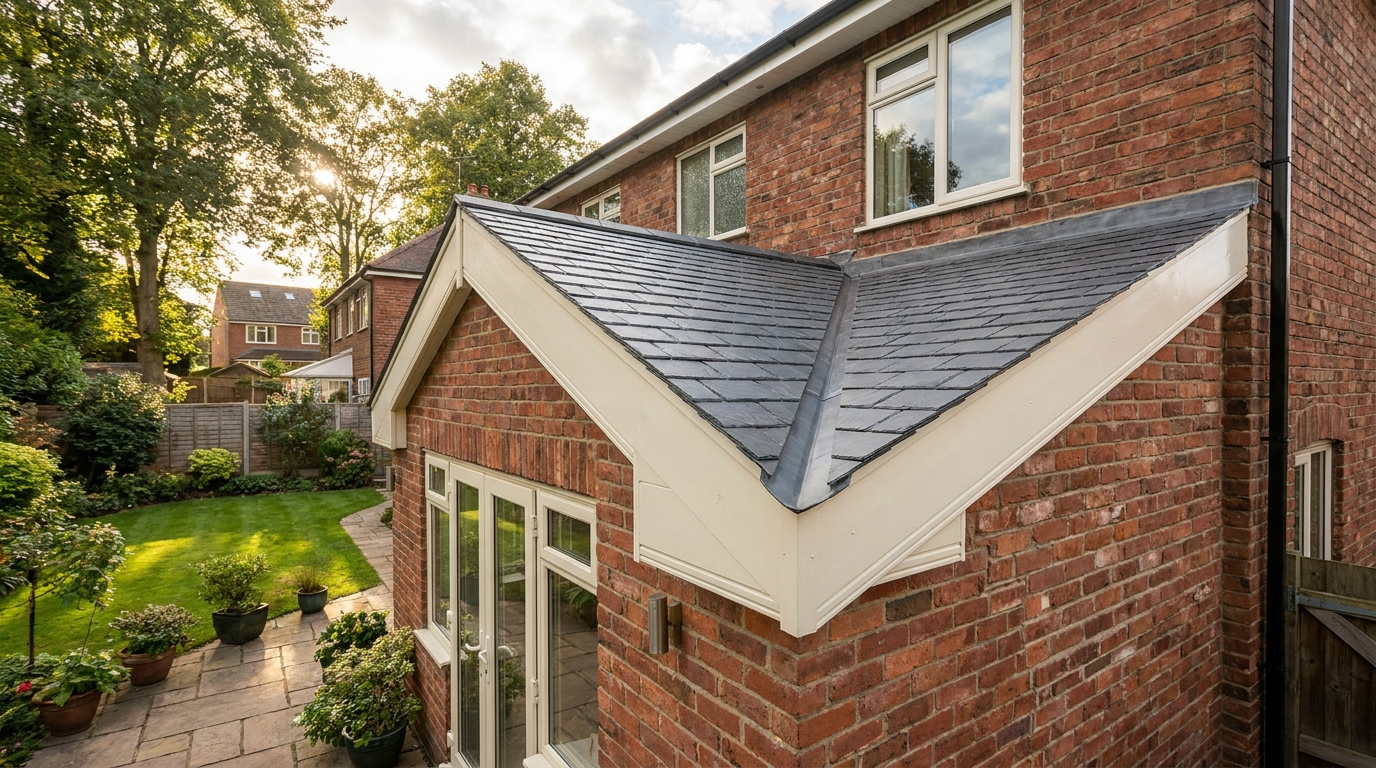
Pitched roofs have sloping surfaces and a ridge at the top. Flat roofs are level or have a slight fall for drainage. The insulation method differs for each. For pitched roofs, you fit insulation between and/or over the rafters (the sloping beams). For flat roofs, you install insulation above the deck (a warm roof) or between the joists (a cold roof). The Microgeneration Certification Scheme sets out installation standards for building fabric that apply to both types (MCS, 2026). Building Regulations Approved Document L also gives specific guidance on which method meets the required thermal performance (GOV.UK, 2026).
Check your roof type before buying materials. A pitched garage roof is more common in older houses, while modern extensions often have flat roofs. If you are unsure, look from outside or inside the garage. A pitched roof has a visible ridge line and sloping ceilings inside. A flat roof has no ridge and the ceiling inside is level.
The minimum U-value for a garage roof insulation is 0.18 W/m²K under current Building Regulations.
U-value measures how much heat passes through a material. A lower number means better insulation. For garage roofs, Approved Document L requires a U-value of no more than 0.18 W/m²K (GOV.UK, 2026). Achieving this target typically needs at least 100–150mm of PIR board (polyisocyanurate foam) or 200–250mm of mineral wool, depending on the roof type and the existing structure. The Energy Saving Trust provides recommended thicknesses for garage roof insulation based on the material you choose (Energy Saving Trust, 2026).
If you are not adding a habitable room in the garage, you might think Building Regulations do not apply. But if the garage is attached to the house, or if you are converting it, the regulations do apply. Even for a detached garage, meeting the 0.18 target is good practice and will save you more energy in the long run.
Quick numbers insulation thickness, cost, and U-value targets for garage roofs
| Roof type | Insulation material | Recommended thickness (mm) | Target U-value (W/m²K) | Typical cost per m² (£) |
|---|---|---|---|---|
| Pitched (between rafters) | PIR board | 100–150 | 0.18 | £20–£35 |
| Pitched (over rafters) | PIR board | 120–170 | 0.18 | £30–£45 |
| Flat (warm roof) | PIR board | 120–150 | 0.18 | £40–£60 |
| Flat (cold roof) | Mineral wool | 200–250 | 0.18 | £15–£25 |
Costs are for materials only. Labour adds £15–£30 per square metre if you hire a professional. Source for thickness and cost ranges: Energy Saving Trust (Energy Saving Trust, 2026). Source for U-value targets: MCS installation guidance (MCS, 2026).
The direct answer to “How do I insulate a garage roof?” is to install insulation between or over the roof structure, then seal with a vapour control layer and plasterboard.
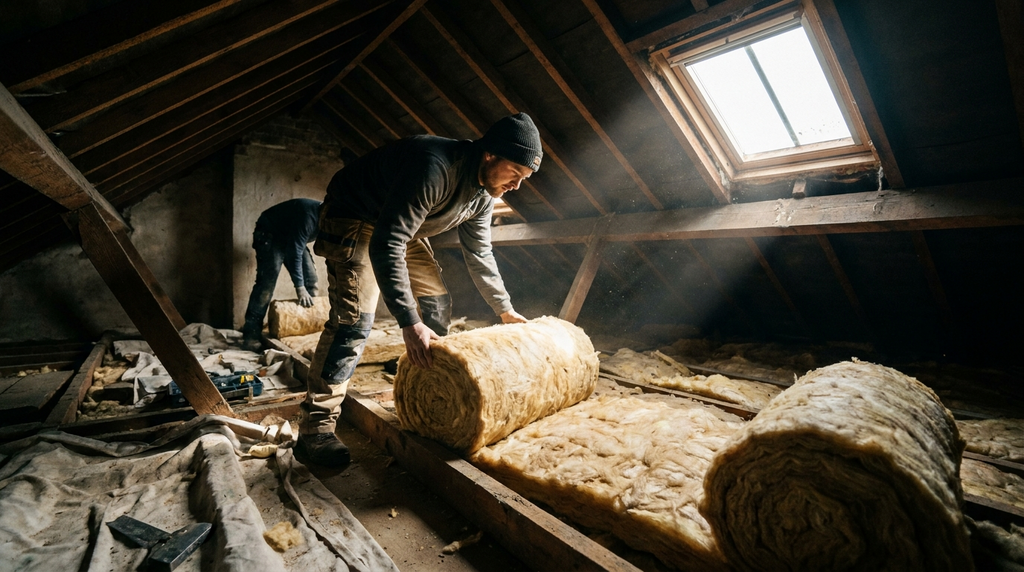
For a pitched roof, the standard method is to fit insulation boards between the rafters. Cut the PIR boards to fit snugly, then add a vapour control layer (a plastic sheet that stops moisture getting into the insulation) over the top. Finally, cover with plasterboard and skim or tape the joints. The Energy Saving Trust gives a step-by-step guide for this process (Energy Saving Trust, 2026).
For a flat roof, you have two options. A warm roof involves placing insulation above the roof deck, with the waterproof membrane on top. A cold roof puts insulation between the joists below the deck, but this requires ventilation gaps to prevent condensation. Building Regulations Approved Document L specifies the ventilation requirements for cold roofs (GOV.UK, 2026). Whichever method you choose, the vapour control layer is essential. Without it, moisture from the garage can condense inside the insulation and cause rot or mould.
If you are unsure about the ventilation details, hire a professional. A poorly ventilated cold roof can fail within a few years.
Step-by-step guide to insulating a garage roof
To check if you are eligible for any grants, you must first confirm your property is in England, Wales, or Scotland, and that your garage is attached or integral.
The Great British Insulation Scheme closed on 31 March 2026. It funded insulation measures only and never covered windows or glazing. You must live in England, Wales, or Scotland. The garage must be attached to the house or integral (built into the main structure). Detached garages are not covered. Full eligibility criteria are on the GOV.UK page for the scheme (GOV.UK, 2026).
The Energy Company Obligation (ECO4) also covers garage insulation but requires a minimum EPC rating of E, F, or G. If your home already has a D rating or above, you are not eligible. Ofgem’s ECO4 guidance states that garage insulation is a permitted measure under rule 4.2.1, provided the garage is attached and the insulation meets the required U-value (Ofgem, 2026).
If you qualify, the grant covers the full cost of installation. You do not need to pay anything upfront. Check your EPC rating and council tax band before applying.
You must verify that any installer you hire is MCS-certified or registered with TrustMark for grant-funded work.
If you are using a grant from GBIS or ECO4, the installer must be on the MCS register or approved by TrustMark. MCS certifies installers of insulation and renewable technologies (MCS, 2026). TrustMark is a government-endorsed quality scheme for home improvements (TrustMark, 2026). Using an unregistered installer means you lose the grant and may end up with substandard work.
For DIY projects, you need no certification. But you must still follow Building Regulations. If you sell the house later, the buyer’s solicitor may ask for evidence that the insulation meets the required standards. Keep photos, receipts, and a note of the U-value achieved. If you are not confident about the work, paying a certified installer is safer and often cheaper in the long run because mistakes are costly to fix.
How to find a certified insulation installer
Frequently Asked Questions
For a single-car garage roof of 15–20 m², materials cost £300–£800 according to the Energy Saving Trust. Labour adds £200–£400 if you hire a professional.
Yes, DIY is common for pitched roofs using PIR boards or mineral wool. Ensure you meet Building Regulations Approved Document L standards as set by GOV.UK.
PIR boards offer the best thermal performance for pitched roofs, while mineral wool is cheaper. The MCS sets installation standards for both types.
Yes, it reduces heat loss from an attached garage, lowering energy bills. The Energy Saving Trust confirms it is one of the cheapest ways to cut heat loss.
The ECO4 scheme may cover garage roof insulation if your garage is attached to your home. Check eligibility with Ofgem or your energy supplier.