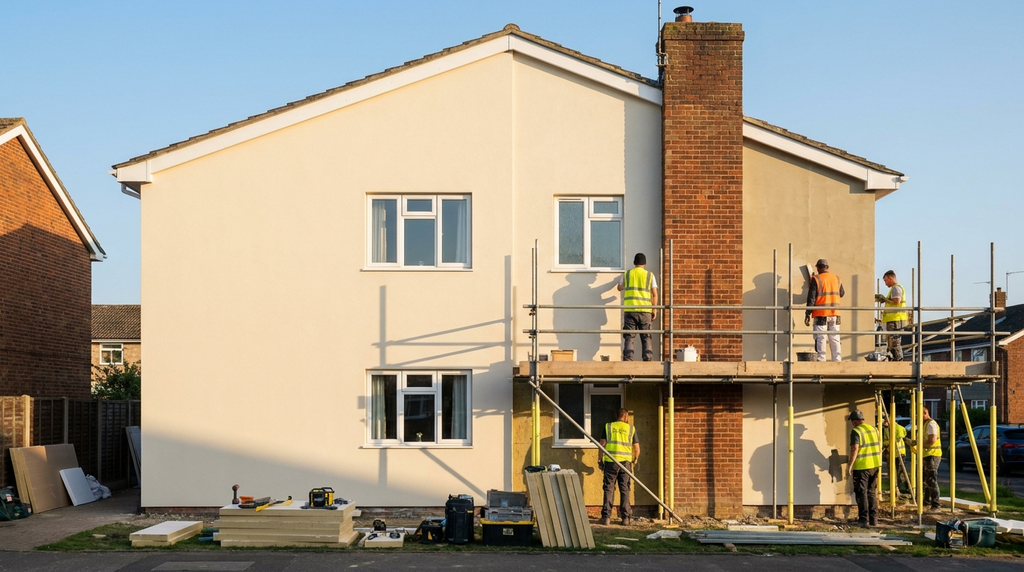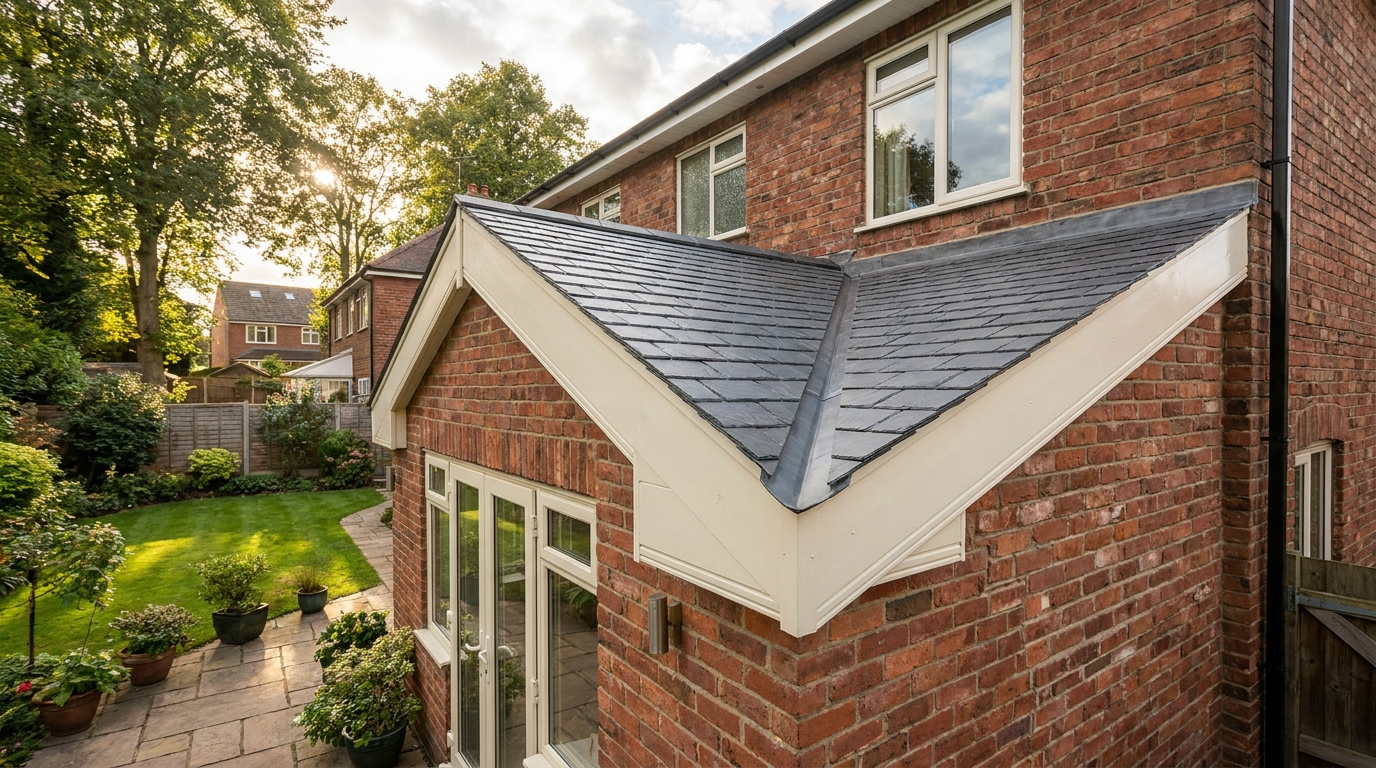
A solid conservatory roof replacement typically costs £8,000–£18,000 and requires Building Regulations approval
If your old conservatory is too cold in winter and like a greenhouse in summer, replacing the roof with a solid insulated version is the most effective fix. The total cost depends on roof size, materials (tiled versus lightweight composite), and structural reinforcement needed.
Labour accounts for roughly 40–50% of the price, while scaffolding and skip hire add £500–£1,500 (GOV.UK, 2026). Building Regulations approval is mandatory for a solid roof replacement because it changes the thermal envelope, a FENSA or competent person scheme certificate alone is not sufficient (Energy Saving Trust, 2026).
Why polycarbonate and glass roofs fail, and what a solid roof fixes
Polycarbonate roofs have typical U-values of 2.2–2.8 W/m²K, meaning they lose heat rapidly in winter and overheat in summer. Glass roofs, even double-glazed, still suffer from solar gain and condensation unless actively ventilated (Energy Saving Trust, 2026).
A solid insulated roof achieves a U-value of 0.15–0.25 W/m²K, cutting heat loss by up to 90% compared to polycarbonate. Manufacturer data from systems such as Ultraframe and Guardian Warm Roof confirms these figures (MCS Certified, 2026). The difference is dramatic: a polycarbonate roof leaks heat so fast that the room is barely usable for three months of the year, while a solid roof keeps the space comfortable year-round.
The two main solid roof systems, tiled warm roof vs lightweight composite
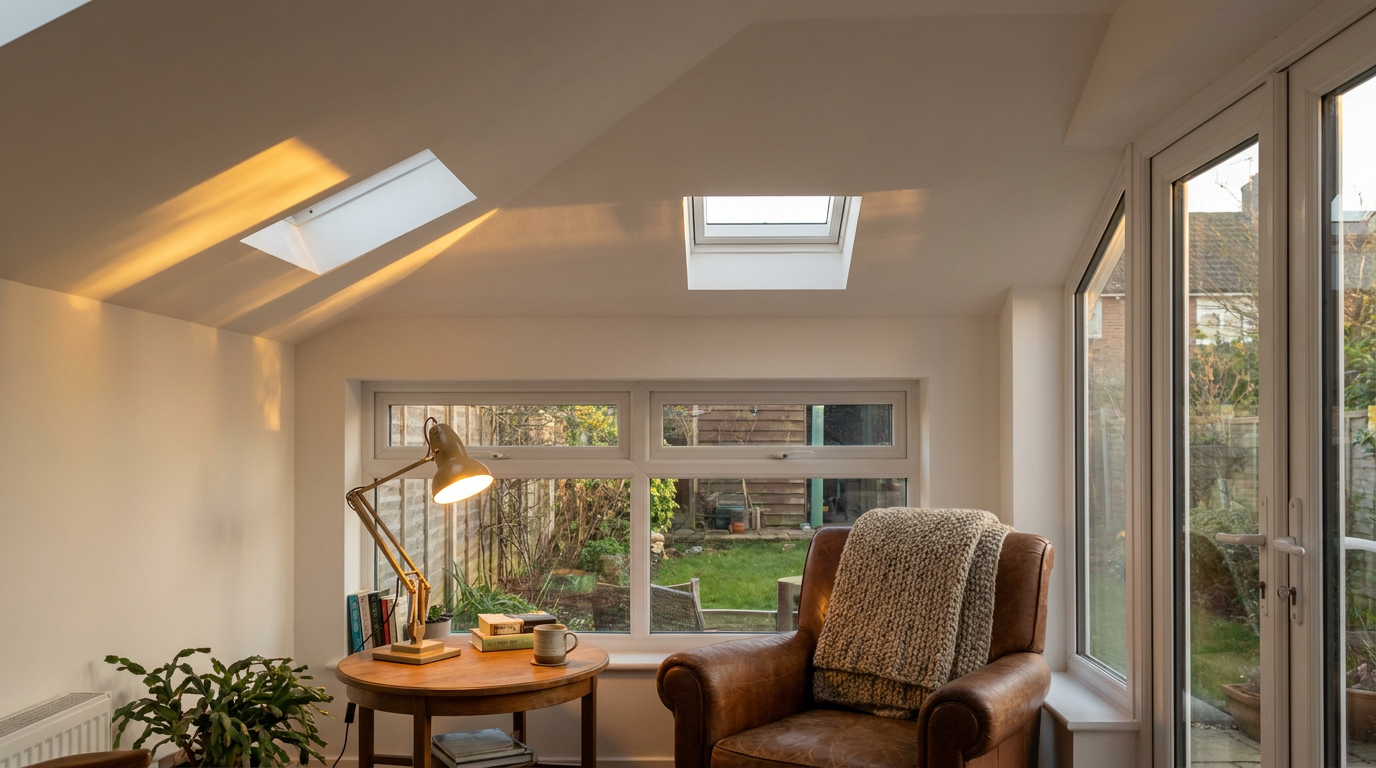
There are two primary systems. A tiled warm roof uses a timber frame, insulation board, OSB deck, and concrete or clay tiles. This is heavier and requires a structural assessment of existing dwarf walls and foundations (BRE, 2026).
A lightweight composite roof uses an aluminium frame with insulated panels, typically a polyurethane core. It is lighter and often avoids structural upgrades, but costs 15–25% more per m² (MCS Certified, 2026). Both systems must meet Building Regulations Part L for thermal performance and Part A for structural loading. If your dwarf walls are less than 300mm thick or the foundation is unknown, a structural engineer must assess them before work starts.
Quick numbers, cost, U-value, and timeline comparison
| Roof type | Typical U-value (W/m²K) | Installed cost range (£) | Installation time (days) | Building Regs required |
|---|---|---|---|---|
| Polycarbonate | 2.2–2.8 | £1,500–£3,000 | 1–2 | No (if unheated) |
| Glass | 1.2–1.8 | £3,000–£6,000 | 2–3 | No (if unheated) |
| Tiled warm roof | 0.15–0.25 | £8,000–£15,000 | 4–7 | Yes |
| Lightweight composite | 0.15–0.25 | £10,000–£18,000 | 3–5 | Yes |
These figures come from the Energy Saving Trust cost database and industry quotes for 2026 (Energy Saving Trust, 2026). The timeline for a solid roof includes stripping the old roof, fitting the new structure, and making good the interior.
Building Regulations approval is not optional, here is what you must comply with
A solid roof changes the conservatory from a “controlled fitting” to a “habitable room”. That means Part L (thermal performance), Part F (ventilation), and Part B (fire safety) all apply (GOV.UK, 2026). You must submit a Building Notice to the local authority or use a registered competent person scheme such as FENSA or CERTASS for self-certification.
Failure to obtain approval can cause issues when selling the house. A property search will flag the unapproved work, and buyers or their lenders may demand retrospective certification or a reduction in price (Planning Portal, 2026). Do not skip this step: a solid roof replacement without approval is a legal risk that can cost thousands to fix later.
How to find and verify a qualified installer, MCS, TrustMark, and structural engineer checks
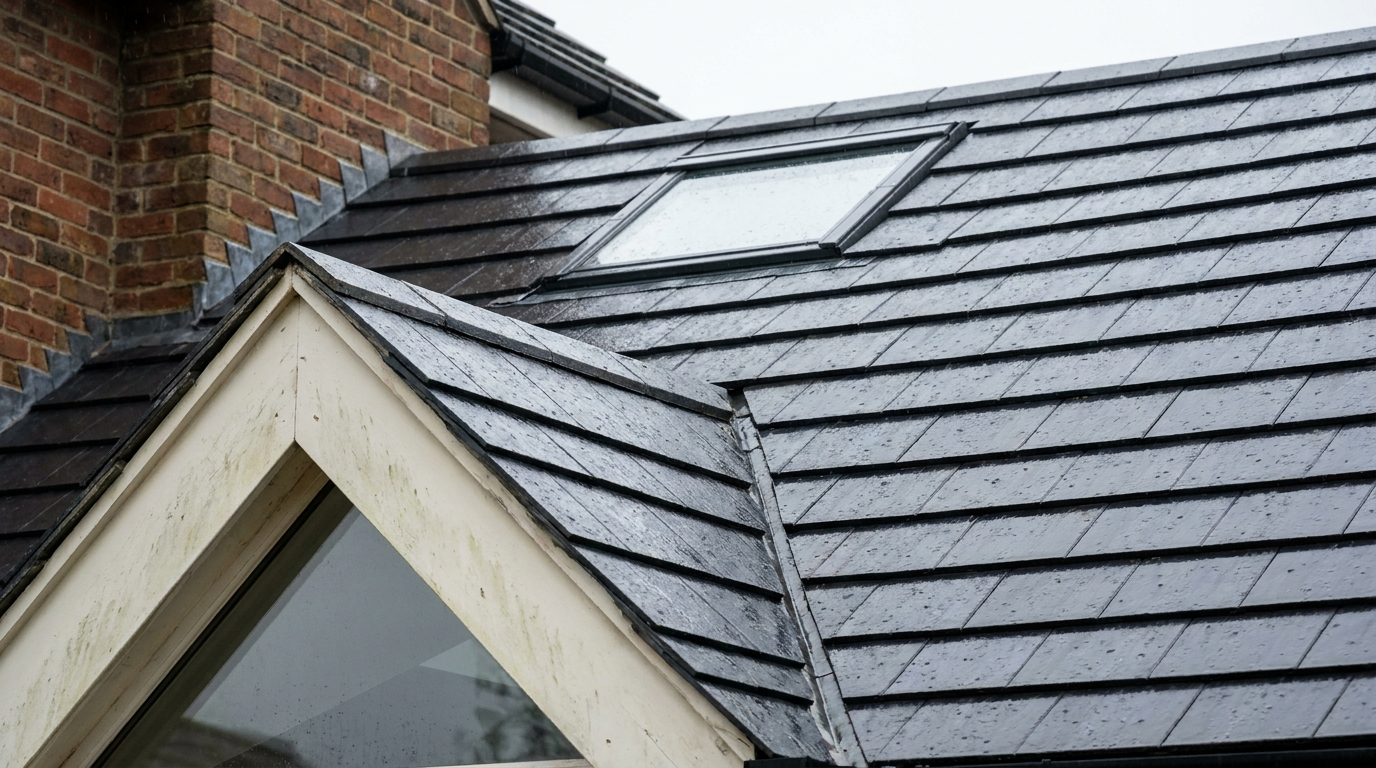
For a solid roof, the installer must hold MCS certification for insulation systems and be TrustMark-registered for consumer protection (MCS Certified, 2026; TrustMark, 2026). A structural engineer’s report is needed if the existing dwarf walls are less than 300mm thick or if the foundation is unknown, the installer should arrange this.
Check the installer’s warranty: at least 10 years for the roof structure and 5 years for workmanship. Many installers offer 15-year warranties on composite panels, but read the small print for exclusions such as discolouration or impact damage. Use the MCS and TrustMark directories to verify credentials before signing a contract.
Which conservatories are suited to a solid roof, and which are not
Best suited are conservatories with brick or block dwarf walls, a solid foundation, and a ridge height of at least 2.4m. These provide enough structural support for the weight of a tiled roof and enough headroom for a comfortable living space (BRE, 2026).
Not suited are lean-to conservatories without dwarf walls, glass-to-ground designs. These may need full demolition and rebuild because there is no masonry to support the new roof. If your conservatory is north-facing or shaded, a solid roof is ideal. If south-facing, a solid roof with a rooflight is better to avoid a dark room. How to choose the right conservatory roof system
The direct answer should you replace your conservatory roof with a solid one in 2026?
Yes, if you want year-round use without overheating or freezing. A solid roof transforms a seasonal sunroom into a genuine living space. Budget for £8,000–£18,000 plus structural checks, and expect 4–7 days of work with Building Regulations approval (Energy Saving Trust, 2026).
The payback is not in energy savings alone, the room is still a conservatory, not a full extension, but in added living space and property value. The RICS says a well-executed solid roof can add 5–10% to a home’s value by creating a usable room without the cost of a full extension (RICS, 2026). If you plan to stay in your home for at least five years, the investment is likely worth it. How to get Building Regulations approval for a conservatory roof
Frequently Asked Questions
A solid conservatory roof replacement costs £8,000–£18,000 on average. The final price depends on roof size, materials chosen, and any structural reinforcement needed, according to GOV.UK (2026).
Yes, Building Regulations approval is mandatory for a solid roof replacement because it changes the thermal envelope. A FENSA certificate alone is not sufficient, as confirmed by the Energy Saving Trust (2026).
The best system depends on your structure. A tiled warm roof is heavier and may need foundation reinforcement, while a lightweight composite roof costs 15–25% more per m² but avoids structural upgrades, per MCS Certified (2026).
A solid roof replacement typically takes 5–10 working days. The timeline varies based on roof size, system type, and whether structural reinforcement is required.
Yes, a solid roof can increase property value by making the conservatory usable year-round. However, it may require a change of use notification to your local council, as noted by the Energy Saving Trust (2026).