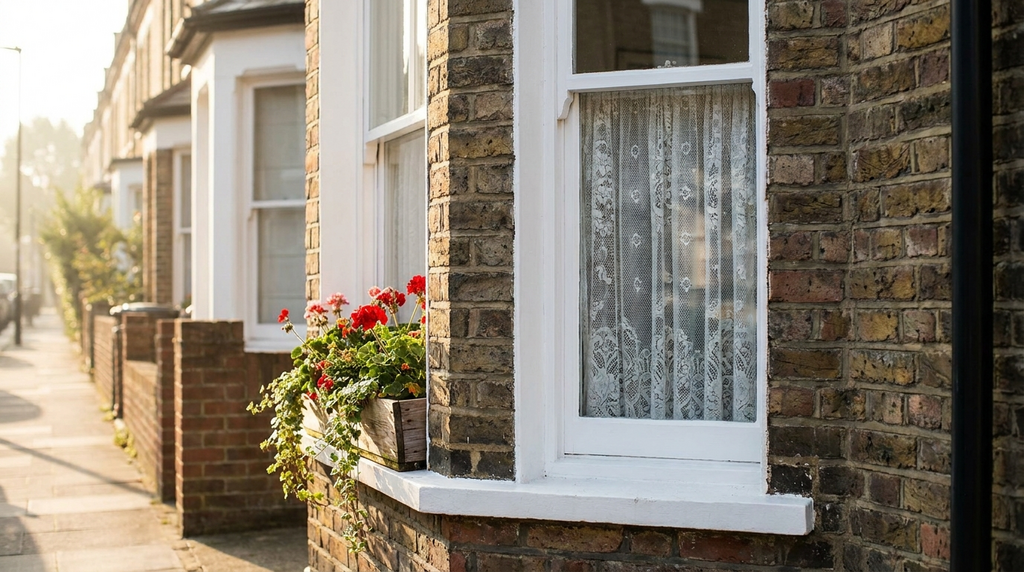
A full bay window replacement costs £3,500–£8,500 on average in 2026
Replacing a bay window is one of the larger home-improvement investments you can make, with costs varying significantly based on material, size, and style. The total depends on window style (box, angled, oriel), frame material, number of panels, and glazing type (Checkatrade, 2026).
Simple three-panel uPVC bay replacements start around £2,800, while large five-panel timber bays with triple glazing can exceed £12,000. These figures exclude scaffolding, building regulation fees, and waste disposal, which add £500–£1,800 (FENSA industry cost analysis, 2026). Every quote must be site-specific and verified by a FENSA-registered surveyor.
uPVC bay windows cost £3,500–£6,000 and are the most common choice
uPVC remains the cheapest frame material, with a three-panel 3m-wide bay averaging £4,200 installed (FENSA 2026 material cost report). uPVC requires minimal maintenance but has a shorter lifespan (25–30 years) than timber or aluminium. Colour finishes (woodgrain or dual-colour) add 10–20% to the base cost. uPVC is not repairable if the frame is severely damaged, full replacement is needed.
Timber bay windows cost £5,500–£10,000 and offer the longest lifespan
Hardwood (oak or mahogany) bays are more expensive but can last 50+ years with regular painting (Timber Trade Federation 2026 pricing). Softwood (pine) is cheaper (£4,500–£7,000) but requires repainting every 3–5 years. Timber frames provide better thermal performance (U-value 1.2–1.4 W/m²K) than standard uPVC (1.4–1.6) (FENSA material lifespan data, 2026). Listed building consent may be required for timber replacements in conservation areas.
Aluminium bay windows cost £6,000–£11,000 and are the most durable
Aluminium frames are stronger, slimmer, and more weather-resistant than uPVC, with a 40–50 year lifespan (Aluminium Federation UK 2026 market report). Thermal break aluminium achieves U-values as low as 0.8 W/m²K with triple glazing (FENSA installation standards, 2026). Cost includes powder-coating in any RAL colour, no additional paint costs. Aluminium is the most expensive option but has the highest resale value.
Quick numbers, bay window replacement cost factors
| Factor | Typical cost impact | Source |
|---|---|---|
| Frame material | uPVC +£0, timber +£2,000, aluminium +£3,500 | Checkatrade 2026 |
| Number of panels | 3-panel base, +£800 per extra panel | FENSA 2026 |
| Glazing type | Double standard, triple +£600–£1,200 | Energy Saving Trust, 2026 |
| Bay style | Box, angled, oriel, angled cheapest | Checkatrade 2026 |
| Scaffolding | £500–£1,200 | FENSA 2026 |
| Building regs fee | £200–£500 | GOV.UK, 2026 |
| Waste disposal | £100–£300 | Checkatrade 2026 |
You can replace bay windows without planning permission in most UK homes
Permitted development rights cover like-for-like replacements in England, Wales, and Scotland, but not listed buildings or conservation areas (GOV.UK Planning Portal, 2026). Building regulations approval is always required for replacement windows, your installer must issue a FENSA or CERTASS certificate (GOV.UK, 2026). If the replacement changes the opening style or size, planning permission may be needed. Always check with your local planning authority before ordering.
Only FENSA-registered installers can certify your bay window replacement
FENSA (Fenestration Self-Assessment Scheme) covers 85% of UK window installers and provides a 10-year insurance-backed guarantee (FENSA register, 2026). Check the installer on the MCS register if you are also adding solar glazing, but for standard windows, FENSA or CERTASS is sufficient (TrustMark 2026 consumer guidance). Ask for proof of public liability insurance (minimum £2 million) and a written contract detailing the specification. Without FENSA certification, you must apply for building regulations approval separately, this costs £200–£500 and delays the project.
The cheapest way to replace a bay window is a uPVC three-panel casement
A basic 3-panel 2.4m-wide uPVC casement bay with double glazing and white finish costs £2,800–£3,500 installed (Checkatrade 2026 budget range). This excludes any structural work, lintel repairs, or plastering, budget an extra £500–£1,000 for these (FENSA 2026 low-cost category). Getting at least three quotes from FENSA-registered installers is essential to find the best price. Do not accept a quote from an unregistered installer, it invalidates your building regulations compliance and home insurance.
How to choose the right window frame material for your home
Understanding FENSA certification and why it matters