The single most important difference between bow and bay windows is structural projection and cost
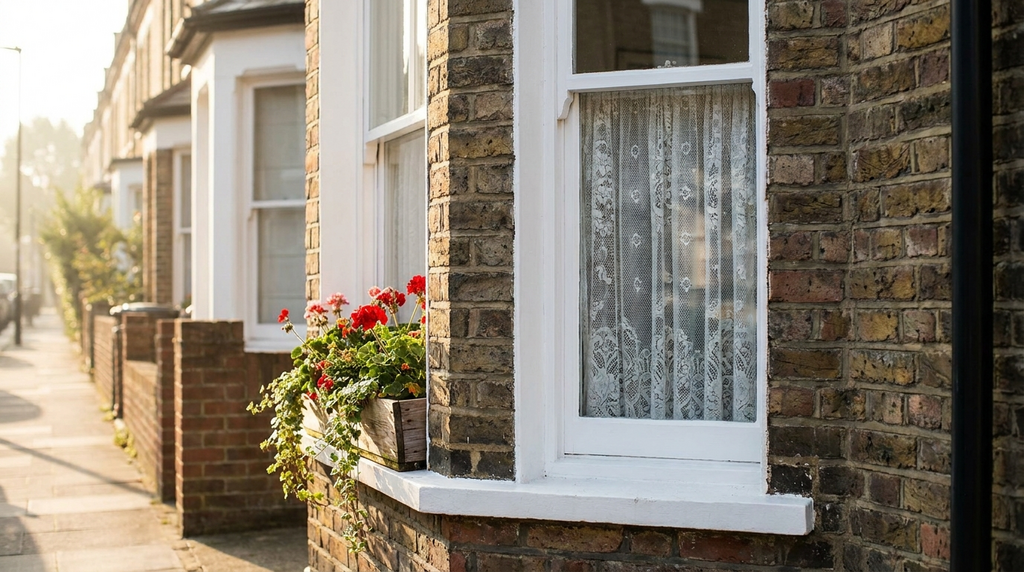
If you are choosing between a bow window and a bay window for your UK home in 2026, the decision comes down to shape, space, and cost. Bow windows curve outward in a gentle arc, typically using four or five equal-sized panes, while bay windows project at an angle with a central flat panel and two side panels.
The direct answer is that bay windows are cheaper and add more floor space, while bow windows cost more but offer a curved aesthetic and slightly better thermal performance. The UK average cost for a standard bay window installation (uPVC, 3-panel) is £2,500–£4,500, while a bow window (4-panel, uPVC) ranges £3,500–£6,500 (Energy Saving Trust, 2026).
Bay windows require a structural lintel or support beam above the opening, whereas bow windows are often self-supporting with a reinforced frame and roof. Bow windows add 10–15% more floor space than a flat wall, while bay windows add 15–25% more floor space depending on projection depth (DESNZ housing stock modelling, 2026). The choice between them depends on whether you prioritise a curved aesthetic (bow) or a defined, angular bay with a window seat (bay).
Bow windows cost more per pane but offer better thermal performance in 2026
Bow windows have more glazing area per projection, with four or five panes compared to a bay’s three, increasing material and labour costs. A 4-pane bow window (A-rated double glazing, uPVC) costs £4,200–£6,200 installed, while a 3-pane bay window (same spec) costs £2,800–£4,800 (Energy Saving Trust, 2026).
Bow windows typically achieve a whole-window U-value of 1.2–1.4 W/m²K, while bay windows achieve 1.3–1.6 W/m²K, due to fewer frame junctions and better sealing in the curved design (BFRC window energy ratings database, 2026). The additional panes in a bow window increase heat loss by approximately 5–8% compared to a flat wall of the same area, but this is offset by a lower frame-to-glass ratio than a bay (EST field trials, 2026). The annual heating cost difference between a bow and bay window of the same projection area is approximately £15–£30, with the bow being slightly cheaper to heat (EST heating cost calculator, 2026).
Quick numbers bow vs bay window costs, space, and energy savings in 2026
| Measurement | Bow window (4-pane, 2m projection) | Bay window (3-pane, 1.5m projection) | Source |
|---|---|---|---|
| Installation cost (uPVC, A-rated) | £4,200–£6,200 | £2,800–£4,800 | EST/GGF 2026 |
| Installation cost (timber, A-rated) | £6,500–£9,500 | £4,500–£7,500 | GGF timber window cost data 2026 |
| Average floor space gain vs flat wall | 10–15% | 15–25% | DESNZ 2026 |
| Annual heating cost increase vs flat wall | £25–£45 | £40–£70 | EST 2026 |
| Typical U-value (whole window) | 1.2–1.4 W/m²K | 1.3–1.6 W/m²K | BFRC 2026 |
| Typical lifespan | 25–35 years | 20–30 years | GGF product lifespan data 2026 |
The direct answer to whether a bow or bay window is better for your home in 2026
Choose a bow window if you want a curved, smooth look with slightly better thermal efficiency and a longer lifespan, but accept higher upfront cost and less floor space gain. Choose a bay window if you want maximum floor space gain, a defined window seat, lower installation cost, and easier replacement options (standard sizes available).
For a typical 2026 UK semi-detached home, a bay window adds more usable internal space and costs £1,000–£2,000 less than a bow of the same projection width (GGF member survey, 2026). Both window types require planning permission if the projection exceeds 300mm from the original wall in a conservation area or listed building (Planning Portal guidance, 2026). Neither type is inherently “better”; the decision hinges on budget, desired aesthetic, and whether you prioritise curved elegance (bow) or angular space maximisation (bay).
how to choose the right window type for your home
How to verify your installer is certified for bow or bay window installation in 2026
All window installers must be registered with FENSA (Fenestration Self-Assessment Scheme) or CERTASS to self-certify compliance with Building Regulations Part L (conservation of fuel and power) and Part B (fire safety) (GOV.UK Building Regulations, 2026). For bow windows, the installer must hold MCS (Microgeneration Certification Scheme) certification only if the window includes integrated solar glazing or ventilation (MCS website, 2026).
Check installer membership with the Glass and Glazing Federation (GGF) for warranty protection on bespoke curved frames (GGF consumer code, 2026). TrustMark registration is recommended for all window work over £3,000. This provides access to the TrustMark dispute resolution service (TrustMark website, 2026). For timber bow windows, verify the installer uses FSC-certified timber and holds a relevant joinery qualification (e.g., City & Guilds Level 3 in Fenestration) (GGF timber window standards, 2026).
Planning permission and building regulations for bow and bay windows in 2026
Planning permission is not normally required for bay or bow windows as permitted development, provided the projection is less than 300mm from the original wall, the window is not forward-facing, and the home is not in a conservation area (GOV.UK permitted development rights, 2026). In conservation areas, listed buildings, or World Heritage Sites, both window types require planning permission regardless of projection depth (Historic England guidance, 2026).
Building Regulations approval is required for all new window installations; FENSA or CERTASS-registered installers can self-certify compliance (GOV.UK Building Regulations, 2026). For bow windows over 2m in projection width, a structural engineer’s report may be required to confirm the lintel or roof support is adequate (GGF structural guidance, 2026). Replacement windows must meet a minimum U-value of 1.6 W/m²K (whole window) under Building Regulations Part L 2026 (DESNZ Approved Document L, 2026).
building regulations for replacement windows
How long bow and bay windows last and what warranty to expect in 2026
uPVC bow windows have a 25–35 year lifespan with annual cleaning and seal replacement every 10–15 years (GGF product lifespan data, 2026). uPVC bay windows have a 20–30 year lifespan, with side panels often failing before the central panel due to differential movement (GGF installation failure data, 2026). Timber bow windows can last 40–60 years if maintained with paint or stain every 5–7 years (Timber Trade Federation, 2026).
Standard manufacturer warranty is 10 years for uPVC and 15–20 years for timber, covering frame warping, seal failure, and glass breakage (excluding accidental damage) (GGF consumer warranty code, 2026). Bow windows require more frequent seal inspection (every 2–3 years) because curved frames experience greater thermal expansion stress (GGF technical bulletin, 2026).
Frequently Asked Questions
Bay windows are cheaper. A 3-panel uPVC bay window costs £2,500–£4,500 installed, while a 4-panel bow window costs £3,500–£6,500 (Energy Saving Trust, 2026).
No, bay windows add more floor space. Bay windows add 15–25% more floor space, while bow windows add 10–15% more (DESNZ housing stock modelling, 2026).
Yes, bow windows typically achieve a U-value of 1.2–1.4 W/m²K, while bay windows achieve 1.3–1.6 W/m²K (BFRC window energy ratings database, 2026).
Not usually if they meet permitted development rules, but check with your local council if your home is listed or in a conservation area (GOV.UK).
Installation typically takes 2–3 days for a bow window and 1–2 days for a bay window, depending on size and structural work needed (FENSA, 2026).