Stourport-on-Severn, A Canal Town With a Surprising Amount of Eco Potential
Stourport-on-Severn has one of the most distinctive origins of any town in Worcestershire. It was essentially built from scratch in the 1770s when engineer James Brindley chose this spot, where the River Stour meets the Severn, as the junction point for the Staffordshire and Worcestershire Canal. That industrial heritage shaped the town’s layout, and it still shows in the housing stock today.
Most homes in Stourport were built in waves, a cluster of Victorian terraces near the canal basin and town centre, a significant expansion of semi-detached properties through the 1930s to 1960s across areas like Areley Kings and Walshes Farm, and more recent estates pushing out toward the edges of town. That mix of eras matters enormously when you’re thinking about energy upgrades, because each type of home has different weak spots and different opportunities.
Add in the fact that Stourport sits in a low-lying river valley, sheltered by gentle hills on most sides, and you’ve got a town that’s naturally protected from the worst of the weather but also prone to mist and dampness that older homes really don’t cope well with. Getting your insulation right here is about keeping your home dry and healthy, as well as managing your bills.
For the bigger picture on eco improvements across the county, take a look at our eco homes in Worcestershire guide.
How Energy Efficient Are Stourport Homes, and What Does That Actually Cost You?
The average home in Stourport-on-Severn sits at EPC Band D, which puts it right in line with the national average. That sounds reassuring, but Band D is still a long way from where you want to be, it means your home is losing heat faster than it should and costing you more than it needs to.
In practical terms, a typical Band D semi-detached or terraced home in Stourport is spending around £1,600 to £2,100 per year on combined gas and electricity bills based on current tariff rates. The average gas usage here, 12,400 kWh per year, is broadly in line with the national median, which suggests most homes have some insulation but haven’t had the full treatment yet.
Compare that to towns like Bromsgrove (about 15km away), where a higher proportion of newer builds drags the average EPC up toward Band C, and you can see there’s genuine room for improvement. Neighbouring Kidderminster (6km away) has a very similar profile to Stourport, heavy on 1930s to 1960s stock, so upgrade costs and savings figures from that area are a reliable guide for what to expect here.
If you upgraded a typical Stourport Band D home to Band B, you’d be looking at annual savings of £600 to £900 depending on which measures you tackle. That’s a meaningful chunk of money every single year, not a one-off benefit.
What Band D Means Room by Room
- Your loft is probably losing 25–30% of your heat if it has thin or no insulation
- Uninsulated cavity walls (very common in 1930s–1960s Stourport semis) account for another 30–35% of heat loss
- Single-glazed windows or thin double glazing adds a further 10–15% to losses
- An ageing combi boiler running below 90% efficiency is burning money every time it fires up
Solar Panels in Stourport, Better Than You Might Expect
Stourport sits in the southern half of England, which means it benefits from solar irradiance of around 1,100 to 1,200 kWh per square metre per year, genuinely among the best in the UK. The town receives roughly 1,200 to 1,500 sunshine hours annually, which is comfortably above the West Midlands average and makes solar a very sensible investment here.
The town’s position in the Severn valley does mean more misty mornings than you’d get on higher ground, but solar panels generate well even under cloud cover, and those long summer afternoons more than compensate. South-facing roofs on the semi-detached estates in Areley Kings and the newer Walshes Farm development are particularly well-suited.
Most homes on Stourport’s post-war estates have reasonably pitched roofs with no major obstructions, making installation straightforward. Victorian terraces in the town centre are a different story, party wall arrangements and some narrow roof pitches mean you’ll want an installer who knows what they’re doing. Installers from Kidderminster and Worcester regularly cover Stourport and are your most likely source of competitive quotes.
| System Size | Typical Install Cost (2026) | Annual Generation | Estimated Annual Saving | Payback Period |
|---|---|---|---|---|
| 3 kW | £5,500 – £6,500 | ~2,700 kWh | £550 – £700 | 8–11 years |
| 4 kW | £6,800 – £8,000 | ~3,600 kWh | £700 – £900 | 8–11 years |
| 6 kW | £9,500 – £11,500 | ~5,400 kWh | £950 – £1,200 | 8–11 years |
Adding a battery storage system (typically £2,500–£4,500 extra) makes a real difference in Stourport because it lets you use your own generated power in the evenings rather than exporting it cheaply and buying it back at peak rates. Given the average electricity usage here is 3,100 kWh per year, a 4kW system with battery could cover a very significant portion of your electricity needs.
Quick tip, if your home is in or near the Stourport Conservation Area around the canal basin and town centre, check with Wyre Forest District Council (the local planning authority) before fitting panels. Solar on visible roof slopes of listed or locally designated buildings may need prior approval.
Choosing the Right Heating System for a Stourport Home
Stourport’s position in the Severn valley gives it a relatively mild winter climate, 1,200 to 1,500 heating degree days per year, which is genuinely good news if you’re weighing up a heat pump. The milder the climate, the better heat pumps perform compared to colder northern locations.
Here’s how the main options stack up for a typical Stourport semi-detached or terraced home.
Gas Boiler (Modern Condensing)
If your boiler is over 12 years old, replacing it with a modern A-rated condensing boiler is still one of the most cost-effective upgrades you can make. Annual running costs for a typical Stourport semi sit around £900–£1,100 with a modern gas boiler at current tariff rates. Installation runs £2,000–£3,500 including a new thermostat setup.
Air Source Heat Pump (ASHP)
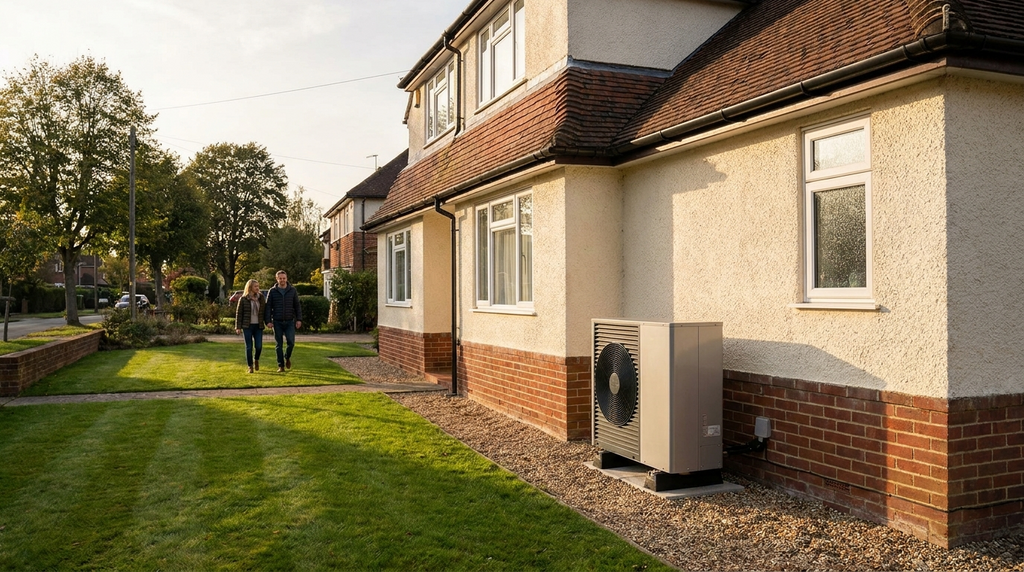
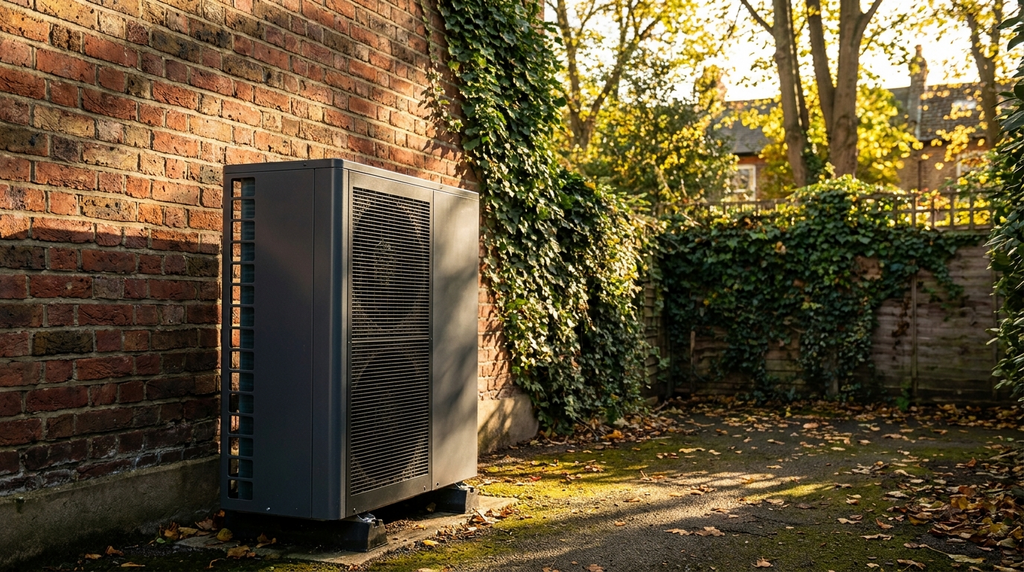
For well-insulated homes, particularly the 1970s and newer properties on the edges of Stourport, an ASHP is now a genuinely compelling choice. Running costs depend heavily on insulation quality, but a well-installed system in a properly insulated home can achieve running costs of £700–£1,000 per year, comparable to gas when you factor in the Boiler Upgrade Scheme grant (more on that below).
Supply and installation costs run £8,000–£14,000 before grants, but the government currently offers £7,500 off through the Boiler Upgrade Scheme. For a Stourport terraced home, make sure your installer checks radiator sizing, older small radiators may need upgrading to work efficiently at the lower flow temperatures heat pumps prefer.
Ground Source Heat Pump (GSHP)
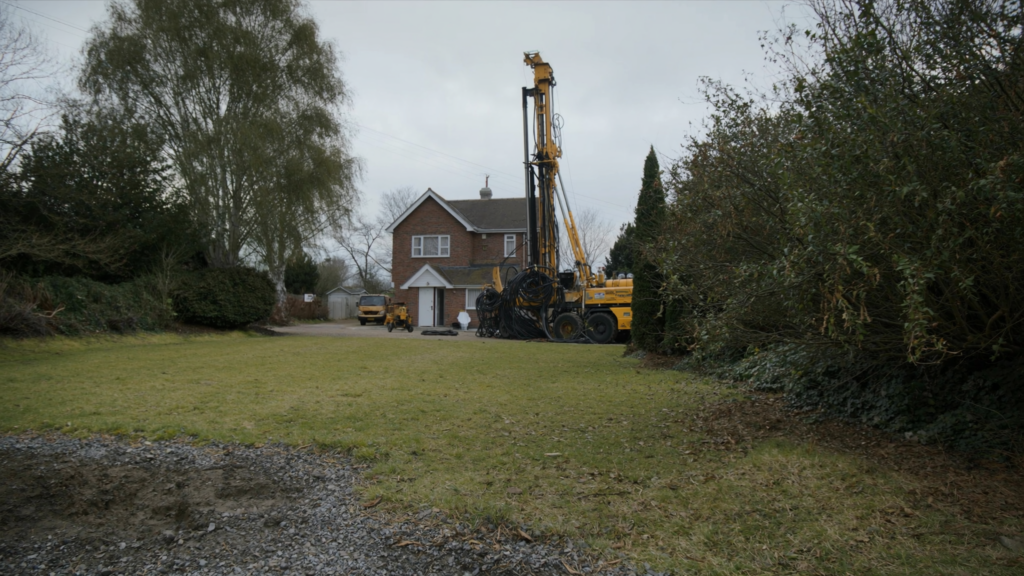
The flat riverside land around parts of Stourport does make ground loops feasible in theory, but you need significant garden space and the costs are high, £18,000–£30,000 installed. The Boiler Upgrade Scheme offers £7,500 for GSHPs too, but the remaining outlay is still substantial. Best suited to larger detached properties rather than typical Stourport semis and terraces.
| Heating System | Install Cost (Before Grants) | Est. Annual Running Cost | Best Suited To |
|---|---|---|---|
| Modern Gas Boiler | £2,000 – £3,500 | £900 – £1,100 | Most Stourport homes |
| Air Source Heat Pump | £8,000 – £14,000 | £700 – £1,000 | Insulated semis and newer homes |
| Ground Source Heat Pump | £18,000 – £30,000 | £650 – £950 | Larger homes with garden space |
Where to Start With Insulation, the Stourport Priority List
Given that so many Stourport homes are 1930s to 1960s semi-detached and terraced properties, cavity wall insulation is often the single highest-return upgrade available. The cavity walls on these homes were built to be filled, many simply never were, and the work takes less than a day with minimal disruption.
1, Cavity Wall Insulation
For the solid majority of post-war semis in areas like Areley Kings and the estates north of the town centre, cavity fill costs £400–£900 for a typical semi-detached and typically saves £200–£350 per year. That’s often a payback period of under three years. Start here if your walls haven’t been done.
2, Loft Insulation
If your loft has less than 270mm of insulation, topping it up is almost always worthwhile. Costs run £300–£600 for a standard semi, with annual savings of £150–£250. Many Stourport homes we come across still have the original 100mm of glass wool laid in the 1980s, nowhere near enough by modern standards.
3, Solid Wall Insulation (Victorian Terraces)
If you live in one of the Victorian terraces near the canal basin or around Lombard Street and the older town centre streets, your walls are solid brick, no cavity to fill. External wall insulation or internal wall insulation is more disruptive and more expensive (£8,000–£20,000 for a full treatment), but savings of £300–£500 per year are achievable. Check with Wyre Forest District Council about any conservation area restrictions before going external.
4, Floor Insulation
Often overlooked, but suspended timber ground floors, very common in pre-1950s Stourport terraces, can lose significant heat. Insulating beneath them costs £800–£1,800 and saves £50–£150 per year. Worth doing as part of a wider programme rather than on its own.
5, Double or Triple Glazing
If you still have single glazing, upgrading to A-rated double glazing typically costs £400–£700 per window and saves £30–£60 per window per year. The payback is slow on its own, but the comfort improvement is significant, particularly for damp valley-side winters in Stourport where cold draughts through old window frames are a real issue.
Grants Stourport Residents Can Actually Access in 2026
The funding landscape has improved noticeably for West Midlands homeowners. Here’s what’s genuinely available to you right now.
The Warm Homes Plan, Great British Insulation Scheme
This is the flagship national scheme and it’s worth knowing in detail. If your home is EPC Band D or below (which most Stourport homes are) and you’re on a low income or means-tested benefit, you could get insulation measures, cavity walls, loft, solid walls, fully funded or heavily subsidised. Apply through the government’s website or ask Wyre Forest District Council’s housing team to point you to the local delivery partner.
ECO4 Scheme
Energy companies are still required to fund upgrades for eligible households under ECO4. This covers insulation, heating system replacements, and even some renewables. Eligibility is linked to income, benefits, or living in a low EPC home. Households on Universal Credit, Pension Credit, or similar benefits are very likely to qualify. Don’t assume you won’t qualify, the threshold is broader than many people realise.
Boiler Upgrade Scheme
If you’re replacing a gas boiler with a heat pump, the government gives you £7,500 off the cost of an air source or ground source heat pump. Your installer applies on your behalf, you just see a reduced price on your quote. Available to any homeowner in England regardless of income.
West Midlands Combined Authority Retrofit Programme
Stourport falls within reach of West Midlands Combined Authority retrofit funding streams, which in 2026 continue to channel money toward home energy upgrades across the region. Wyre Forest District Council is the access point locally, contact their housing or environmental health team to ask what’s currently running in your area. These programmes often fund assessments and part-funded works for Band D and below homes.
VAT on Energy-Saving Materials
Solar panels, heat pumps, insulation, and other qualifying energy-saving products are charged at zero percent VAT. This effectively gives you a 20% saving on qualifying materials compared to standard VAT rates. It’s applied automatically by your installer, just make sure they’re registering it correctly on your quote.