Evesham’s Housing Story and Why Eco Upgrades Matter Here Right Now
Evesham sits in one of the most quietly beautiful spots in Worcestershire, a tight loop of the River Avon cutting through the Vale of Evesham, with the Bredon Hill ridge rising to the south and the Cotswold escarpment visible on clear days to the east. It’s a proper market town, with around 26,000 residents and a housing stock that tells the story of steady suburban growth across the twentieth century.
The majority of homes in Evesham were built between the 1930s and the 1970s, particularly across areas like Bengeworth on the east bank of the Avon, the Twyford Road corridor, and the Greenhill estate. These are predominantly semi-detached and detached properties with cavity walls that, in many cases, were never filled. That matters a lot, because unfilled cavity walls are one of the cheapest and most impactful fixes you can make to a home.
More recent development along the fringes, towards Badsey Road and out towards Hampton, added newer builds with better baseline insulation, but the town average still sits at EPC Band D. If you live in a 1950s semi in Bengeworth or a 1960s detached on one of the Greenhill roads, there’s a very good chance your home has significant room for improvement, and that improvement will pay back faster than you might think.
Evesham’s location in the southern Midlands also gives it a genuine solar advantage over most of the UK. The Vale of Evesham is one of the sunniest inland areas in England, and that has direct, measurable implications for solar panel returns, which we’ll get into properly below.
What EPC Band D Actually Means for Your Evesham Energy Bills
Band D is the national average, roughly half of UK homes sit in this band, but that doesn’t mean it’s something to be relaxed about. In practical terms, a Band D home in Evesham is typically losing heat through uninsulated loft spaces, partially or fully unfilled cavity walls, and an ageing boiler working harder than it needs to.
With Evesham’s average gas usage of around 11,000 kWh per year and electricity at around 3,000 kWh per year, a typical household here is spending approximately £1,450–£1,700 per year on gas and £900–£1,050 on electricity at current 2026 tariff rates. That’s a total energy bill in the region of £2,350–£2,750 annually for an average household.
Compared to neighbouring towns, Evesham’s consumption patterns are broadly similar to Pershore and Upton upon Severn, all three sit in the same climatic band with milder winters than, say, Worcester or Stratford-upon-Avon further north and west. Heating degree days in the Vale of Evesham run at roughly 1,200–1,400 per year, which is meaningfully lower than the UK average of around 2,000. Your heating system simply doesn’t have to work as hard here as it would in northern England.
The practical upshot is this, Evesham homes that move from Band D to Band B or C will typically see annual savings of £600–£1,100, depending on which improvements are made. Homes with unfilled cavities and poor loft insulation can often hit Band C with two relatively affordable interventions.
Solar Panels in Evesham, Genuinely Worth It Here
The Vale of Evesham receives around 1,200–1,500 sunshine hours per year and solar irradiance levels of roughly 1,100–1,200 kWh per square metre annually. That puts Evesham firmly in the top tier for UK solar performance, comparable to parts of the Home Counties and well ahead of cities like Manchester or Leeds.
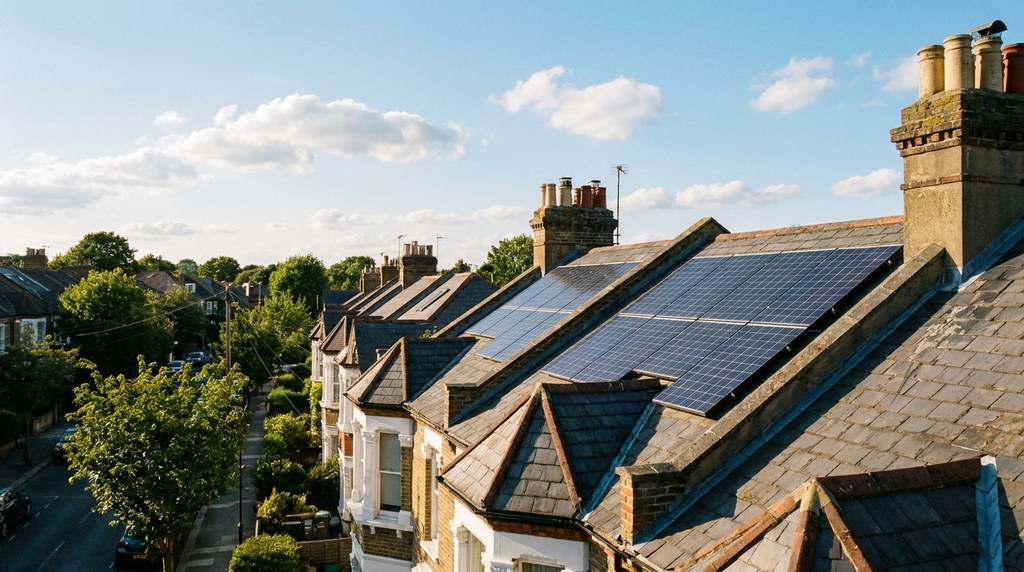
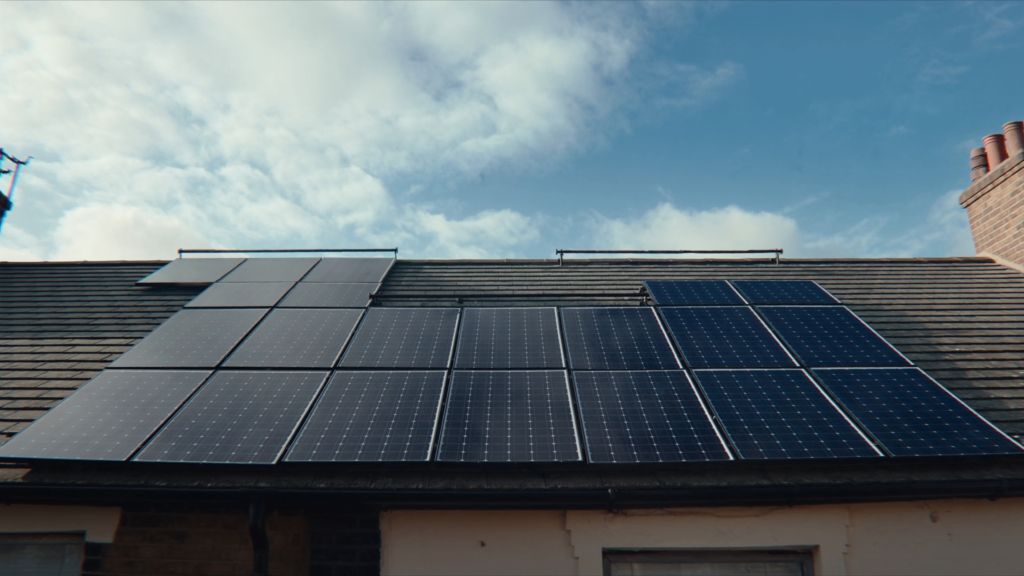
Most of the semi-detached and detached homes in areas like Bengeworth, Waterside, and the Greenhill estate have south or south-west facing roof sections that are well suited to panel installation. Roof pitches on the typical 1950s–1970s stock here tend to sit at 35–45 degrees, which is close to ideal for this latitude.
One thing to check if you’re in the older parts of town near the High Street or around the Abbey grounds, Evesham has a conservation area around the town centre, and Wychavon District Council (which handles planning applications for Evesham) takes a careful approach to visible changes in these zones. Most residential streets away from the centre won’t have any planning issues, but it’s worth a quick check before you commit.
| System Size | Typical Install Cost (2026) | Estimated Annual Generation | Estimated Annual Saving | Simple Payback Period |
|---|---|---|---|---|
| 3 kW | £5,500–£6,500 | 2,700–3,000 kWh | £500–£650 | 9–12 years |
| 4 kW | £7,000–£8,500 | 3,600–4,000 kWh | £680–£850 | 9–11 years |
| 6 kW | £9,500–£11,500 | 5,400–6,000 kWh | £950–£1,200 | 9–11 years |
Adding a battery storage system (typically £3,000–£5,000 for a 5–10 kWh unit) is increasingly popular in Evesham, it lets you store daytime generation for evening use, which is when most households here are actually home and using power. With the Smart Export Guarantee, you’ll also get paid for any surplus you export to the grid.
Local installers covering Evesham typically also serve Pershore, Stratford-upon-Avon, and the Worcester area, so you have reasonable competition and a decent pool of MCS-certified companies to choose from, more on that below.
Heating Systems That Actually Make Sense for Evesham’s Climate
Evesham’s milder winters are genuinely relevant when choosing a heating system. With fewer extreme cold days than much of the UK, air source heat pumps (ASHPs) perform particularly well here, they lose efficiency in very cold weather, but the Vale of Evesham rarely sees sustained freezing periods that would cause real problems.
Here’s a practical comparison for a typical semi-detached or detached Evesham home:
- Modern condensing gas boiler, Install cost £2,000–£3,500. Running costs around £1,200–£1,500 per year at current gas prices. Straightforward replacement for most homes. Limited long-term future as gas heating faces increasing regulation.
- Air source heat pump, Install cost £8,000–£14,000 (before grants). Running costs £900–£1,300 per year in a well-insulated Evesham home. Works best with underfloor heating or oversized radiators. The Boiler Upgrade Scheme grant of £7,500 makes this genuinely competitive right now.
- Ground source heat pump, Install cost £18,000–£28,000. More efficient than air source, but requires sufficient garden space for ground loops, less of an issue on the larger detached plots common in Greenhill and the newer estates. Grant support of £7,500 also available. Better suited to properties with larger gardens.
For most Evesham homeowners in standard semi-detached homes, an ASHP combined with improved insulation is the most practical low-carbon upgrade path right now, especially if your current boiler is approaching the end of its life. For older Victorian terraces near the town centre, a thorough insulation assessment first is essential before committing to heat pump installation.
Where to Start With Insulation in Evesham
Given the predominance of 1930s–1970s housing stock across Bengeworth, the Greenhill area, and the Hampton Road corridor, cavity wall insulation is almost certainly the single highest-priority item for most Evesham homeowners. It’s fast, relatively cheap, and makes an immediate difference.
Here’s a prioritised list based on what will save the most money fastest for typical Evesham properties:
- Cavity wall insulation, Cost £500–£1,200 for a typical semi. Annual saving £250–£400. Most 1930s–1970s homes in Evesham will have unfilled cavities. A quick survey (often free through grant schemes) will confirm this. This is the first thing to check.
- Loft insulation (top-up or new), Cost £300–£600 to top up to 270mm. Annual saving £150–£300. Many Evesham homes have some loft insulation but not enough, 270mm is the current recommended depth.
- Floor insulation, Cost £800–£1,500 for suspended timber floors common in pre-1950s Evesham homes. Annual saving £70–£150. Less impactful than walls and loft, but worth doing in older properties with obvious draughts.
- Solid wall insulation (external or internal), Cost £8,000–£20,000 for external. Annual saving £300–£500. Relevant for Victorian and Edwardian properties near the town centre and the Abbey area. More complex and expensive, but significant savings over time.
- Double or triple glazing, Cost £4,000–£10,000 for a full house. Annual saving £120–£200. Worth doing when windows are already due for replacement rather than as a standalone upgrade.
Grants and Funding Evesham Residents Can Actually Access in 2026
There are several real funding options available right now, but the eligibility criteria matter, so here’s the honest picture:
The Warm Homes Plan (Great British Insulation Scheme and ECO4)
These government schemes fund insulation and heating upgrades for households on means-tested benefits, or in lower-rated properties (EPC E, F, or G). If you’re on Universal Credit, Pension Credit, or similar, you could receive fully funded cavity wall and loft insulation with no upfront cost. Applications go through Ofgem-registered suppliers, your energy company is the first place to call.
Boiler Upgrade Scheme
This gives you £7,500 off the installed cost of an air source or ground source heat pump. There’s no means-testing, it’s available to any homeowner in England. Your installer claims it on your behalf, and you simply pay the reduced amount. Demand has been high, so expect some waiting times from popular local installers.
West Midlands Combined Authority Retrofit Programme
The WMCA runs its own retrofit funding stream, targeting homes across the West Midlands with top-up grants and subsidised assessments. Evesham sits within the wider West Midlands region for this purpose. Worth contacting Wychavon District Council directly, they can confirm current availability and whether any Evesham-specific allocations remain.
VAT on Energy-Saving Materials
Solar panels, heat pumps, insulation, and other qualifying eco upgrades are charged at 0% VAT in the UK. On a £10,000 heat pump installation, that’s £2,000 you’re not paying. Make sure any installer quotes you receive already reflect this.
Council Tax Rebates and Local Schemes
Wychavon District Council has aligned with Worcestershire County Council’s climate commitments, check their current pages for any top-up funding or discounted survey programmes. These smaller local pots come and go, but they’re worth checking at the point you’re ready to act.
Finding a Good Installer in and Around Evesham
Evesham is well served by installer networks, the town sits roughly equidistant between Worcester, Stratford-upon-Avon, and Pershore, meaning most regional eco-home companies will cover the area. You’re not in a remote rural spot where you’d struggle to get anyone out.
Here’s what to look for, and watch out for:
- MCS certification is non-negotiable for solar and heat pump installers. Without it, you can’t claim the Boiler Upgrade Scheme grant or the Smart Export Guarantee. Always check the MCS installer database yourself at mcscertified.com rather than taking the company’s word for it.
- TrustMark registration is the standard to look for with insulation and general retrofit work. It’s the government-backed quality mark for tradespeople working in and around the home.
- Get at least three quotes for any job over £2,000. For Evesham, this typically means getting one local company, one from the Worcester area, and one from the Stratford-upon-Avon direction, you’ll often find meaningful price variation.
- Be cautious of any company that discourages you from getting other quotes, or who pushes you to sign on the same day. Reputable installers in this area are busy but not that desperate for business.
- Waiting times for heat pump installation in the West Midlands are currently running at 6–14 weeks for popular installers. Plan ahead if you’re aiming for a seasonal installation.
A Practical Step-by-Step Upgrade Plan for a Typical Evesham Home
If you’re in a Band D semi-detached or detached home in Evesham, perhaps in Bengeworth, Greenhill, or on one of the Hampton Road estates, here’s how to approach this sensibly:
- Get a whole-house retrofit assessment first. A qualified retrofit assessor will look at your specific home and tell you exactly what to prioritise. Cost is typically £200–£400, and it pays for itself by helping you avoid expensive mistakes. Some grant schemes include this for free.
- Check your cavity walls. Ask a local installer for a free survey. If they’re unfilled, get this done as a first step, it’s fast, affordable, and immediately effective for a Evesham home with those typical 1950s–1960s cavity wall constructions.
- Top up your loft insulation. While someone is already coming out, get the loft checked at the same time. Topping up to 270mm is one of the highest return-on-investment improvements you can make.
- Consider solar panels. With Evesham’s excellent solar resource, this is worth moving up the priority list, especially if you’re planning a heat pump, as your own solar generation will offset running costs significantly.
- Replace your boiler, but think carefully about what with. If your boiler is over 15 years old, it’s probably running at 70–75% efficiency. A modern unit will run at 90%+. But if you’re in a position to go further, check heat pump eligibility and the £