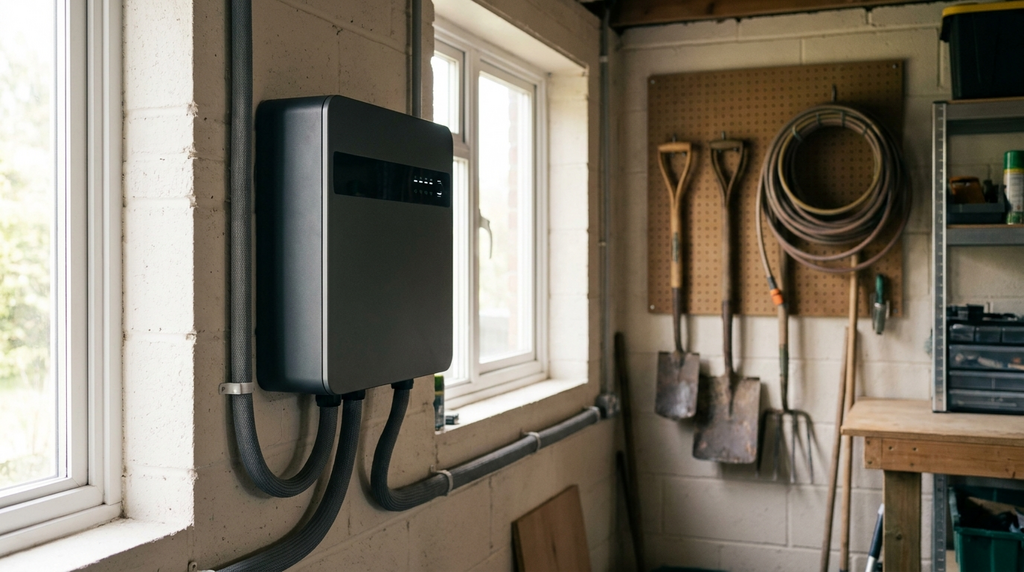
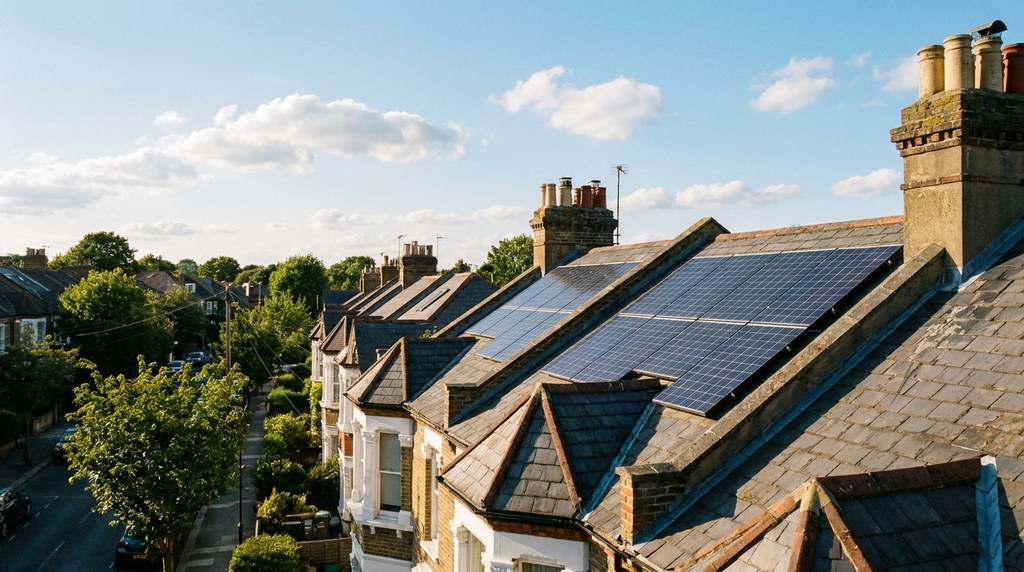
Solar battery storage costs around £4,500 to £6,500 installed, and saves roughly £170–£420 a year
Is adding a battery to your solar panel system a sensible investment? The answer depends on your electricity tariff and how much of your solar power you use at home.
A typical 5–10 kWh solar battery storage system costs between £4,500 and £6,500 fully installed (Energy Saving Trust, 2026). Annual savings on your electricity bills range from £170 to £420, depending on your solar output, tariff type, and how much power you use directly (DESNZ, Solar PV and Battery Cost Data, 2026). The payback period is typically 10 to 15 years, though this shortens if you are on a time-of-use tariff such as Octopus Flux or Agile (Ofgem, 2026). Most battery warranties cover 10 years or a fixed number of charge cycles, so you should factor this into your cost calculations (MCS, 2026).
Quick numbers, typical savings, costs, and payback for a 5 kWh battery
The table below shows typical costs and savings for three common battery sizes. All figures are based on a home with a 3.5–4 kWp solar panel system already installed.
| Battery size | Installed cost (£) | Annual saving (£) | Payback period (years) | Battery warranty (years) |
|---|---|---|---|---|
| 5 kWh | 4,500 – 5,500 | 170 – 350 | 13 – 15 | 10 |
| 10 kWh | 5,500 – 6,500 | 300 – 420 | 12 – 14 | 10 |
| 13.5 kWh | 7,000 – 8,500 | 400 – 550 | 13 – 16 | 10 |
Source: Energy Saving Trust, 2026; DESNZ, 2026.
Solar battery storage is worth it if you already have panels and use at least 50% of your solar power
The key metric is “self-consumption”, the portion of solar generation you use directly in your home (Energy Saving Trust, 2026). Without a battery, a typical UK home uses 30–40% of its solar generation. With a battery, this can rise to 60–80% (DESNZ, 2026).
If your daytime usage is low, for example, you are out at work all day, a battery nearly always pays back faster because you store excess solar electricity for evening use. The breakeven point is around 50% self-consumption. Below that level, a battery often does not pay back before the warranty expires.
Solar battery storage is NOT worth it if you are on a standard flat-rate tariff or use most solar during the day
On a standard flat-rate tariff, for example, 24p per kWh to import and 4p per kWh to export, the savings from storing solar are small. You export at 4p and import at 24p, but the battery loses around 10% of energy in the charge-discharge cycle, reducing the benefit further (Ofgem, 2026).
If you work from home and already use 60% or more of your solar generation directly, a battery adds little value. You are already self-consuming most of it. Homes with small solar arrays, under 3 kWp, may never see a payback because the total excess generation is too low (Energy Saving Trust, 2026). The Smart Export Guarantee (SEG) pays only 4–15p per kWh for exported solar. Storing for later use is usually better, but only if you can shift consumption to cheap-rate periods.
Time-of-use tariffs make battery storage more valuable, here is how to check if you qualify
Time-of-use tariffs such as Octopus Flux, Agile, and EDF GoElectric offer cheap off-peak rates, often 7–15p per kWh, and higher peak rates of 25–35p per kWh (Ofgem, 2026). With a battery, you can charge it from the grid during cheap hours and discharge during peak hours. This can double your savings compared to solar-only storage.
To benefit, you need a smart meter and a tariff that works with your battery model. Most modern batteries are compatible with Octopus, EDF, and OVO tariffs. You should also check your property’s grid connection. Some areas have limited capacity for export, which can cap your savings (DESNZ, 2026). how to switch to a time-of-use tariff
The direct answer, solar battery storage is worth it for most UK homes with solar panels on a time-of-use tariff
If you already have solar panels and can switch to a time-of-use tariff, a battery typically saves £300–£420 per year and pays back in 12–15 years (Energy Saving Trust, 2026). If you are installing solar panels for the first time, adding a battery at the same time saves on installation costs, no separate visit is needed, and reduces your overall payback period.
For homes without solar panels, a battery alone is rarely worth it. You would be charging from the grid at off-peak rates, but the savings are small unless you have very high evening usage (Ofgem, 2026). The “worth it” threshold is: a time-of-use tariff, at least 50% self-consumption, and a battery warranty of 10 or more years.
How to verify your installer and ensure your battery qualifies for grants or incentives
All solar battery storage systems must be installed by an MCS-certified installer to qualify for the Smart Export Guarantee (SEG) and any future government incentives (MCS, 2026). Check that your installer also holds TrustMark registration for consumer protection (TrustMark, 2026).
For batteries installed alongside solar panels, the whole system must meet MCS standards. Separate certification is not needed for the battery alone. Some local authorities offer interest-free loans for battery storage. Check with your council and ensure the installer is on their approved list (GOV.UK, 2026). how to find a certified solar installer