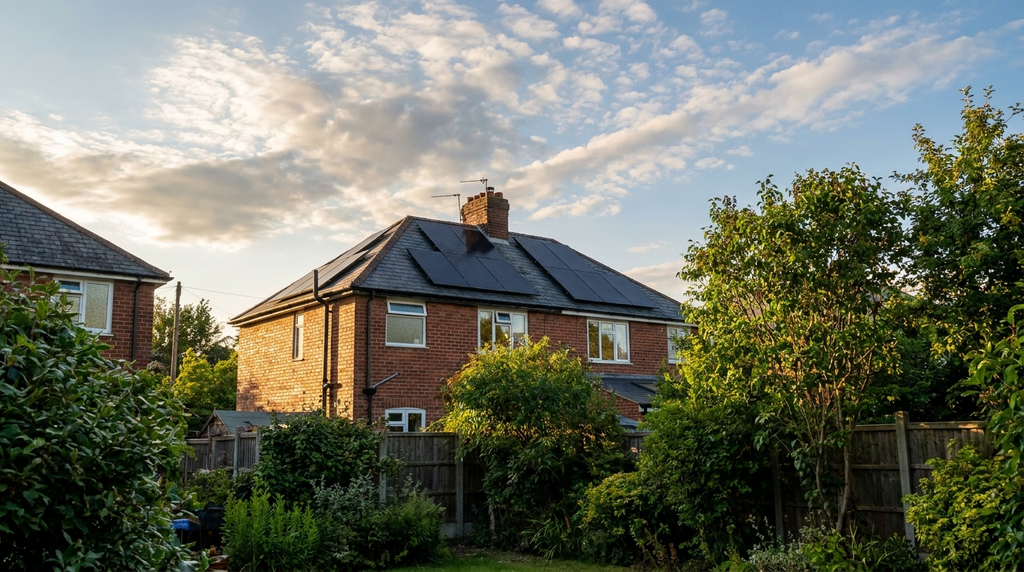
Solar panels and a battery work together to generate, store and use your own electricity, cutting grid reliance by up to 80% (Energy Saving Trust, 2026). The system converts sunlight into direct current (DC) electricity, then an inverter changes it to alternating current (AC) for home use, with surplus power stored in the battery for later.
- Solar panels generate DC electricity from sunlight, even on cloudy days.
- A battery boosts self-consumption from 30% to over 60%.
- Without a battery, surplus power is exported via SEG at 5-7p/kWh.
The core variable is whether your home has a battery. Without one, solar panels feed excess power to the grid under the Smart Export Guarantee (SEG) at around 5-7p/kWh (Ofgem, 2026). With a battery, you store that surplus for evening use, boosting self-consumption from 30% to over 60%. This setup applies to most UK homes with a south-facing roof, but not to listed buildings or shaded roofs without prior planning permission.
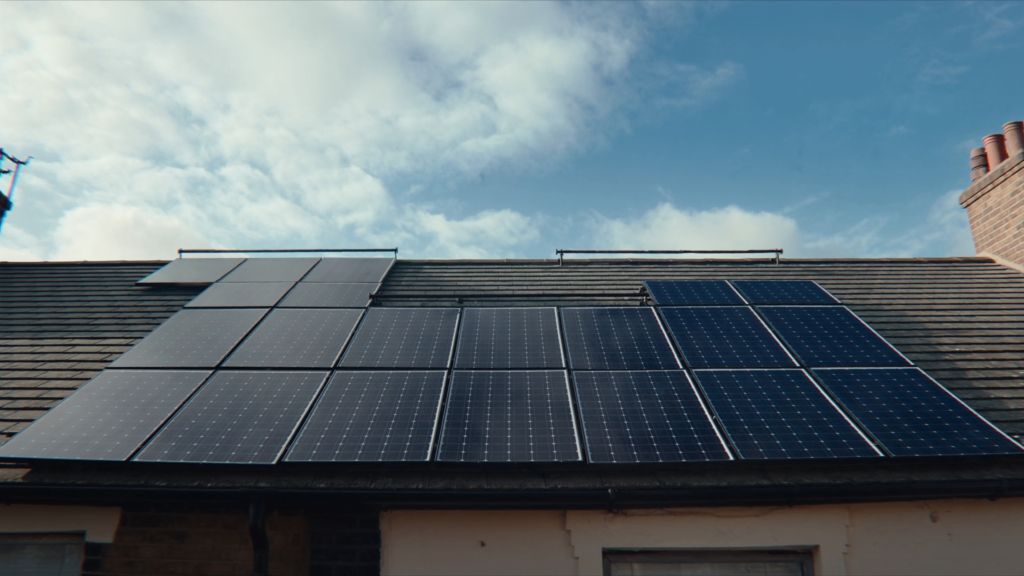
Solar panels capture sunlight and generate DC electricity
Photovoltaic (PV) cells in solar panels absorb sunlight and release electrons, creating a DC current. A typical 3.5kWp system in the UK generates around 3,000 kWh per year (Energy Saving Trust, 2026). Panels work in diffuse daylight, not just direct sun, so they still produce power on cloudy days. Output peaks between 10am and 2pm. The panels are wired into a string or microinverters, each feeding the inverter. Most panels carry a 25-year performance warranty, but efficiency degrades by about 0.5% annually.
An inverter converts DC to usable AC electricity
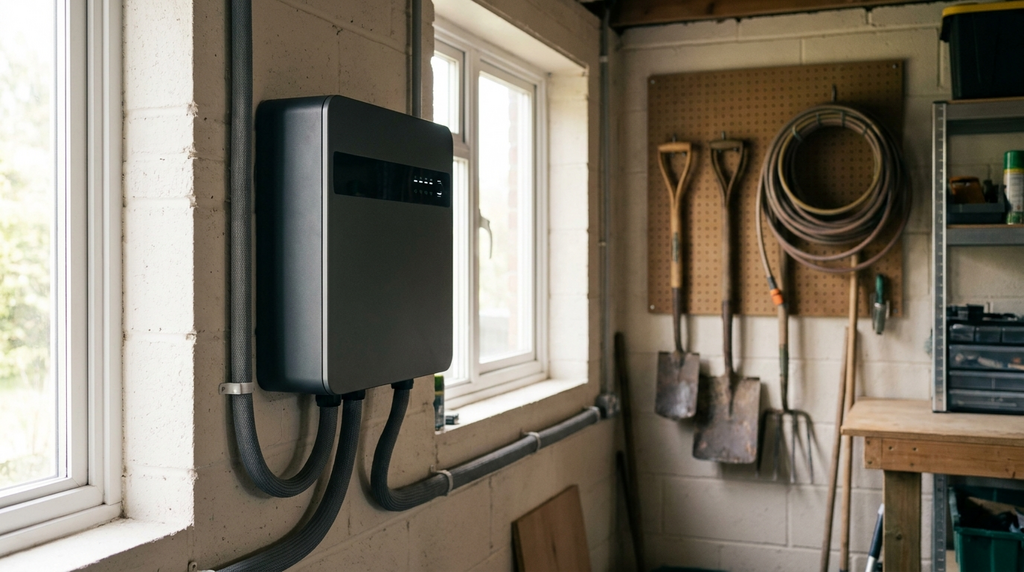
The inverter is the brain of the system. It converts DC from panels or battery into 230V AC that your home appliances use. A standard string inverter costs around £800-£1,200 installed, while a hybrid inverter (which works with a battery) costs £1,200-£1,800 (GOV.UK, 2026). Hybrid inverters manage both solar input and battery charging in one unit. Without an inverter, no appliance can use the solar power. All inverters must comply with UK Grid Code G99/G100 for safe connection.
A battery stores surplus energy for use after dark
When your solar panels generate more than your home uses, the hybrid inverter diverts the excess to charge the battery. A typical 5kWh lithium-ion battery stores enough for evening cooking and lighting (MCS Certified, 2026). The battery discharges automatically when solar output drops, usually from 4pm. This cuts your imported electricity by 60-80% compared to solar-only. Battery prices have fallen to around £1,000-£1,500 per kWh installed in 2026. A 0% VAT on battery storage installations applies until 2027 under UK government policy (GOV.UK, 2026).
A worked example
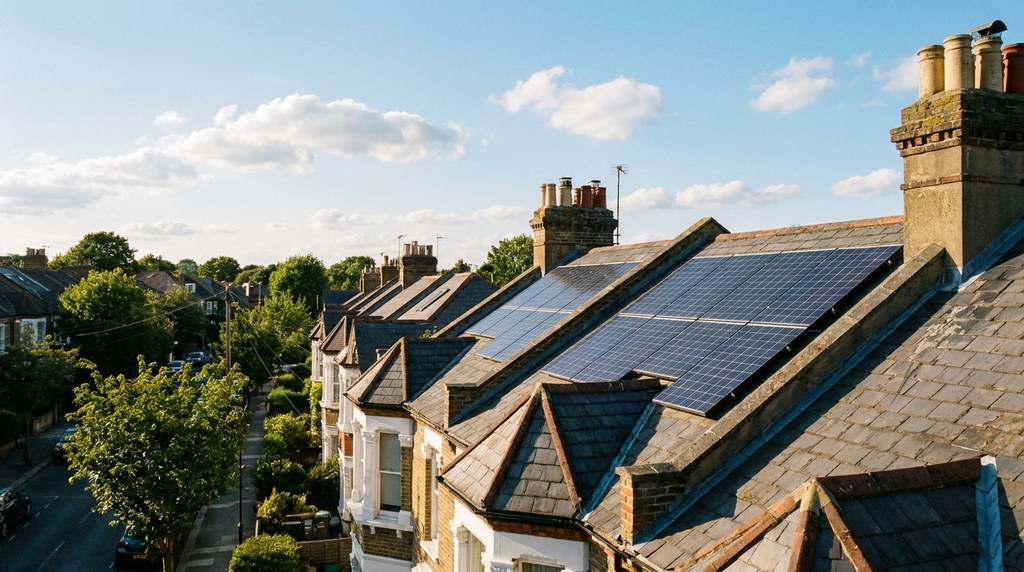
A typical 1930s semi-detached home in Manchester with a south-facing roof and a 3.5kWp solar panel system paired with a 5.2kWh battery costs roughly £6,500 after the 0% VAT saving (in place until March 2027). According to the Energy Saving Trust, this setup generates around 3,000 kWh per year and boosts self-consumption from 30% to over 60%, cutting your annual electricity bill by about £570. The battery stores surplus power generated during the day for use in the evening, meaning you draw far less from the grid. With the Smart Export Guarantee paying around 6p/kWh for any excess exported, your total yearly savings reach roughly £620. Over 25 years, that adds up to more than £15,500 in net savings, even after accounting for the battery’s expected 10- to 15-year lifespan and potential replacement cost.
| Item | Figure |
|---|---|
| Upfront cost after grants | £6,500 |
| Yearly savings | £620 |
| Payback period | 10.5 years |
| 25-year lifetime savings | £15,500 |
What homeowners often get wrong
The most common mistake is assuming solar panels alone will power your home at night and that a battery is optional for significant savings. Here are three frequent errors that cost homeowners money and reduce system performance.
- Believing panels stop working on cloudy days Many people think solar panels only generate power in direct sunlight, but modern photovoltaic cells still produce electricity in diffuse light. On an overcast UK day, a 3.5kWp system can still generate 10-20% of its peak output, meaning you still charge your battery and cut grid use.
- Skipping a battery to save upfront cost Without a battery, you export surplus power to the grid at the Smart Export Guarantee rate of roughly 5-7p/kWh, then buy it back in the evening at 24p/kWh or more. This mismatch wastes up to 70% of your generated power and adds years to your payback period.
- Installing panels on a shaded roof without a plan Putting panels under a chimney or tree shadow can slash output by 30-50% and void your inverter warranty if not managed with optimisers or microinverters. A professional survey using a solar irradiance tool is essential to avoid a system that never pays back.
Quick reference
- A typical 3.5kWp system with a 5.2kWh battery costs around £6,500 after the 0% VAT reduction that runs until March 2027.
- With a battery, you can use over 60% of your solar generation at home versus just 30% without one, according to the Energy Saving Trust.
- The Smart Export Guarantee pays you roughly 5-7p per kWh for any electricity you export to the grid, but you buy it back at a much higher rate.
- Solar panels still generate power on overcast days, producing 10-20% of their peak output in diffuse light.
- Installing a system on a shaded roof without microinverters or power optimisers can reduce yield by up to 50% and may void your warranty.
Frequently Asked Questions
Yes, solar panels generate DC electricity, an inverter converts it to AC for home use, and surplus charges the battery for later. Energy Saving Trust says this can cut grid reliance by up to 80%.
Yes, they still produce power in diffuse daylight, though output is lower. A typical 3.5kWp system generates around 3,000 kWh per year in the UK, according to Energy Saving Trust.
The Smart Export Guarantee pays around 5-7p per kWh for excess solar electricity exported to the grid. Ofgem sets the framework, but rates vary by supplier.