1. Size your battery for winter
A 4kW solar system generates only 2–4kWh per day in December, so you need at least 10–15kWh of usable battery storage to cover 3–5 winter days (Energy Saving Trust, 2026). Without enough capacity, you will face regular blackouts during the darkest months. Your battery must be sized for the lowest generation period, not the annual average.
- Work out your daily winter consumption first, then multiply by 3–5 days.
- Lithium-ion batteries allow deeper discharge (up to 90%) than lead-acid (50%), so you get more usable capacity per kWh.
- Monitor your generation and usage for at least one winter before finalising battery size.
2. Budget £8,000–£18,000 upfront
A complete off-grid solar PV system with battery and inverter costs £8,000–£18,000 installed, with no ongoing electricity bills (Energy Saving Trust, 2026). This covers panels, battery storage, inverter, charge controller, and installation labour. You will also need to budget separately for a backup generator and any electrical upgrades to your consumer unit.
- Get at least three quotes from MCS-certified installers before committing.
- Factor in VAT at 20% unless you qualify for reduced rates on energy-saving materials.
- Include scaffolding costs if your roof is high or difficult to access.
3. Check your roof orientation
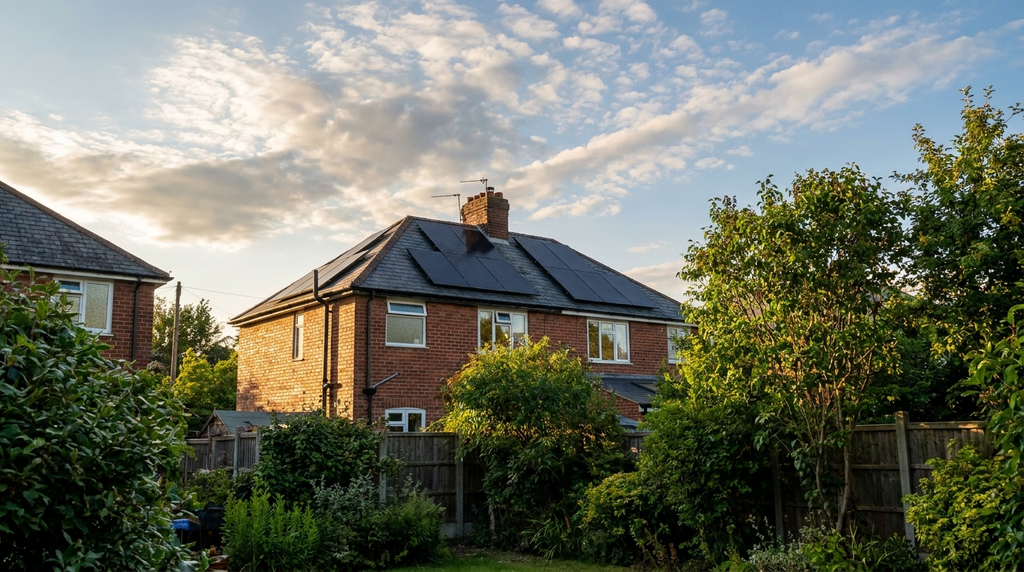
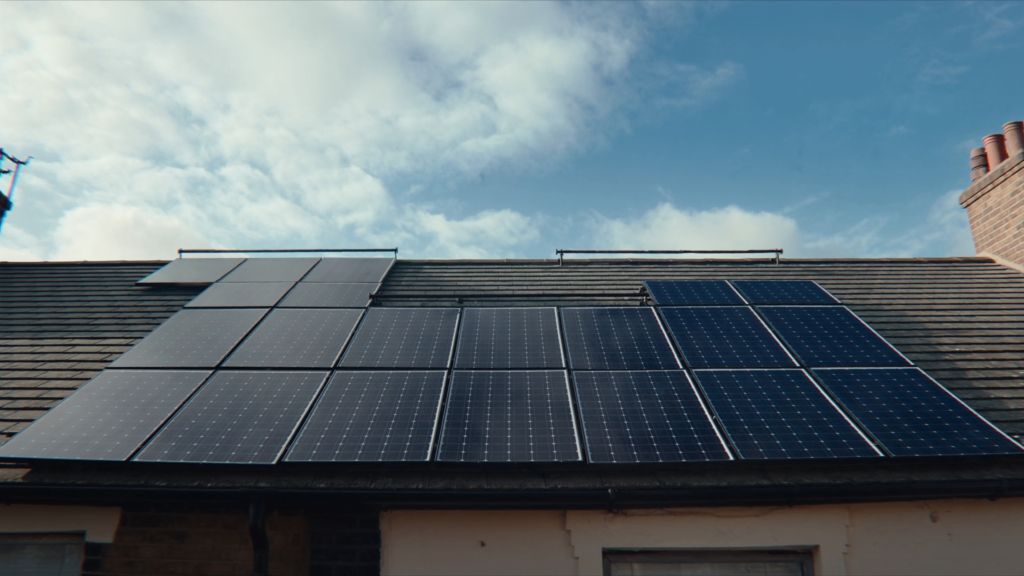
South-facing roofs at 30–40° tilt produce 20–30% more electricity than east/west-facing roofs, critical for off-grid self-sufficiency (Energy Saving Trust, 2026). A poor orientation means you will need more panels or a larger battery to compensate. If your roof faces north, off-grid solar is unlikely to be viable without a wind turbine or generator.
- Use the Energy Saving Trust’s online tool to estimate your roof’s generation potential.
- Ground-mounted panels can be oriented optimally if your roof is unsuitable.
- Shading from trees, chimneys, or neighbouring buildings can reduce output by 10–50%.
4. Add a backup generator
Most off-grid homes in the UK need a petrol or diesel generator (cost £500–£2,000) for extended cloudy periods, especially November–February (GOV.UK, 2026). A generator provides essential power when your battery runs low after several sunless days. Choose a model that can charge your battery bank directly, not just power appliances.
- Calculate the generator runtime needed: typically 2–4 hours per day in winter.
- Store fuel safely in a ventilated, lockable shed away from the house.
- Consider a dual-fuel generator that runs on both petrol and LPG for flexibility.
5. Register your system with MCS
Off-grid solar installations must be certified by the Microgeneration Certification Scheme (MCS) to qualify for the Smart Export Guarantee (SEG) tariff if you later connect to the grid (MCS, 2026). Even if you plan to stay off-grid permanently, MCS certification ensures your system meets industry safety and performance standards. It also makes your property easier to sell later.
- Only use MCS-accredited installers for your solar and battery work.
- Keep all certification documents with your property deeds.
- MCS certification is required for any future grid connection, even temporary.
6. Plan for battery replacement
Lithium-ion batteries last 10–15 years; lead-acid only 5–8 years, factor £5,000–£8,000 replacement cost into your long-term budget (Energy Saving Trust, 2026). Battery degradation is gradual but inevitable, and replacement is your single largest recurring off-grid expense. Choose lithium-ion for longer life and better depth of discharge.
- Set aside a sinking fund of £400–£600 per year for battery replacement.
- Check the manufacturer’s warranty: most offer 10 years or 6,000 cycles.
- Lead-acid batteries are cheaper upfront (£1,500–£3,000) but cost more over 20 years.
7. Reduce your household demand
Off-grid homes typically need to cut consumption to 5–10kWh/day (vs 10–15kWh for a grid-connected UK home) by using LED lights, A++ appliances, and no electric heating (Ofgem, 2026). Every watt you save reduces your solar and battery requirements, directly lowering your upfront cost. Start by replacing your largest energy users first.
- Switch to a heat pump or wood burner instead of electric heating.
- Use a smart meter or energy monitor to track your daily consumption.
- Replace old fridges, freezers, and washing machines with A+++ models.
8. Install a smart inverter
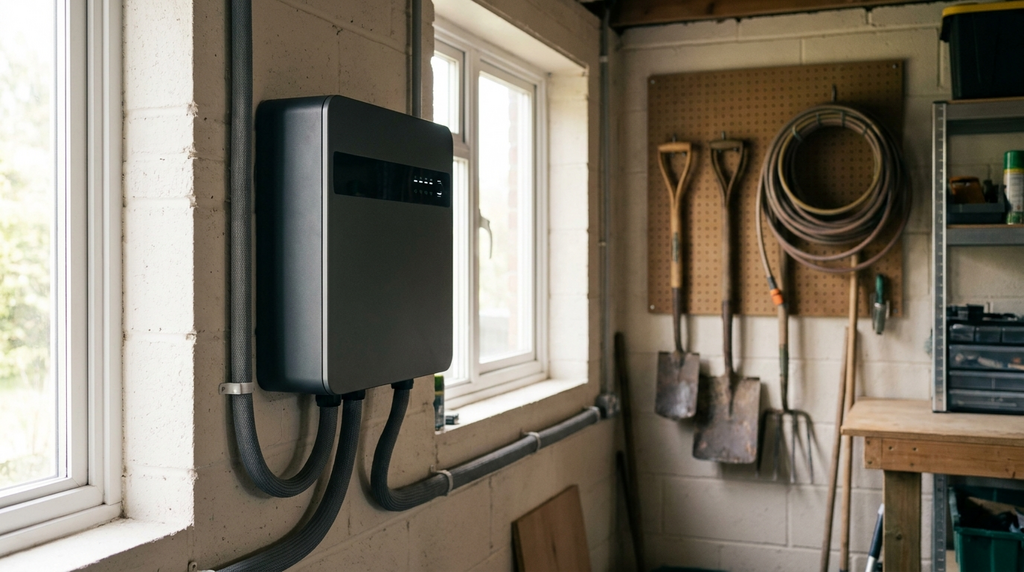
A hybrid inverter with MPPT (maximum power point tracking) is essential for off-grid systems, it manages solar input, battery charging, and generator backup automatically (MCS, 2026). Without MPPT, your panels will operate at lower efficiency, especially in cloudy UK conditions. A smart inverter also prevents overcharging and extends battery life.
- Choose an inverter rated at least 20% higher than your peak solar output.
- Look for models with remote monitoring via smartphone app.
- Ensure your inverter can accept generator input for battery charging.
9. Get planning permission if needed
Most solar panels are permitted development, but off-grid systems with multiple arrays or ground-mounted panels may require planning permission from your local council (GOV.UK, 2026). Listed buildings, conservation areas, and World Heritage sites have stricter rules. Check with your council before ordering equipment.
- Ground-mounted panels over 9 square metres typically need planning permission.
- Apply for a lawful development certificate if you are unsure about permitted development.
- Battery storage units over a certain size may also require building regulations approval.
10. Insulate your home first
A well-insulated home (loft insulation 270mm+ and cavity wall fill) can reduce heating demand by 30–50%, making off-grid solar more viable in winter (Energy Saving Trust, 2026). Insulation is far cheaper than adding extra solar panels or battery capacity. Prioritise draught-proofing, loft insulation, and solid wall insulation before installing your off-grid system.
- Check your current loft insulation depth, top up to 270mm if needed.
- Seal gaps around windows, doors, and pipework to reduce heat loss.
- Consider external wall insulation if you have solid walls and no cavity.
Going off-grid in the UK requires a realistic budget of £8,000–£18,000 for a solar and battery system, plus a backup generator for winter. The key is to size your battery for at least 3–5 days of winter use and reduce your household demand to 5–10kWh/day before you start.
Compare solar battery storage options for UK homes Cost of insulating a 3-bedroom house Heat pumps vs electric heating for off-grid homes
Frequently Asked Questions
A complete off-grid solar PV system costs £8,000–£18,000 installed, according to the Energy Saving Trust (2026). This includes panels, battery, inverter, and installation, but not a backup generator or electrical upgrades.
Yes, but it requires careful planning. The Energy Saving Trust states that a south-facing roof with 30–40° tilt is critical, and you will need a backup generator for winter months when solar generation drops to 2–4kWh per day.
For a typical UK home, you need at least 4kW of solar panels, which generates 2–4kWh per day in December (Energy Saving Trust, 2026). This requires 10–15kWh of usable battery storage to cover 3–5 winter days.
You need at least 10–15kWh of usable battery storage to cover 3–5 winter days, according to the Energy Saving Trust (2026). Lithium-ion batteries offer up to 90% usable capacity, while lead-acid only provides 50%.
Most roof-mounted solar panels are permitted development in the UK, but ground-mounted systems may need planning permission. Check with your local council, especially if your home is listed or in a conservation area (GOV.UK).