The first practical solar panel was invented in the United States in 1954, at Bell Laboratories in New Jersey (UK Government Solar PV Deployment, 2026). Researchers Daryl Chapin, Calvin Fuller, and Gerald Pearson developed the first silicon solar cell capable of converting enough sunlight into electricity to power everyday electrical equipment.
The invention built on earlier discoveries. In 1839, French physicist Alexandre Edmond Becquerel first observed the photovoltaic effect. In 1883, American inventor Charles Fritts created the first solar cell using selenium, but it was only 1% efficient. The 1954 Bell Labs breakthrough achieved around 6% efficiency, making solar power commercially viable for the first time.
What the 1954 Bell Labs invention achieved
The Bell Labs solar panel was the first to use a silicon-based semiconductor, which remains the standard today. The device produced about 5 watts of power (Energy Saving Trust, 2026). This was a dramatic improvement over earlier selenium cells. The invention was demonstrated publicly on 25 April 1954, powering a small radio. It marked the beginning of modern solar technology that now powers homes and businesses globally.
How the invention spread to the UK
Solar panels first appeared in the UK in the 1970s, largely for off-grid and remote applications. The first UK solar research facility opened in 1973 at the University of Southampton. By 1990, the UK had around 1 megawatt of installed solar capacity (Ofgem REGO Reports, 2026). The technology remained niche until the 2010s, when government subsidies and falling costs drove widespread domestic adoption.
Why the invention date still matters today
The 1954 invention set the foundation for modern solar panels. Today’s typical domestic solar panel operates at 18–22% efficiency, compared to the original 6% (MCS Certified, 2026). The basic silicon-cell design remains largely unchanged. Understanding this history helps homeowners recognise that solar technology is a proven, decades-old innovation, not an experimental technology. The UK now has over 15 gigawatts of installed solar capacity, and around 1.2 million homes have solar panels as of 2026.
A worked example
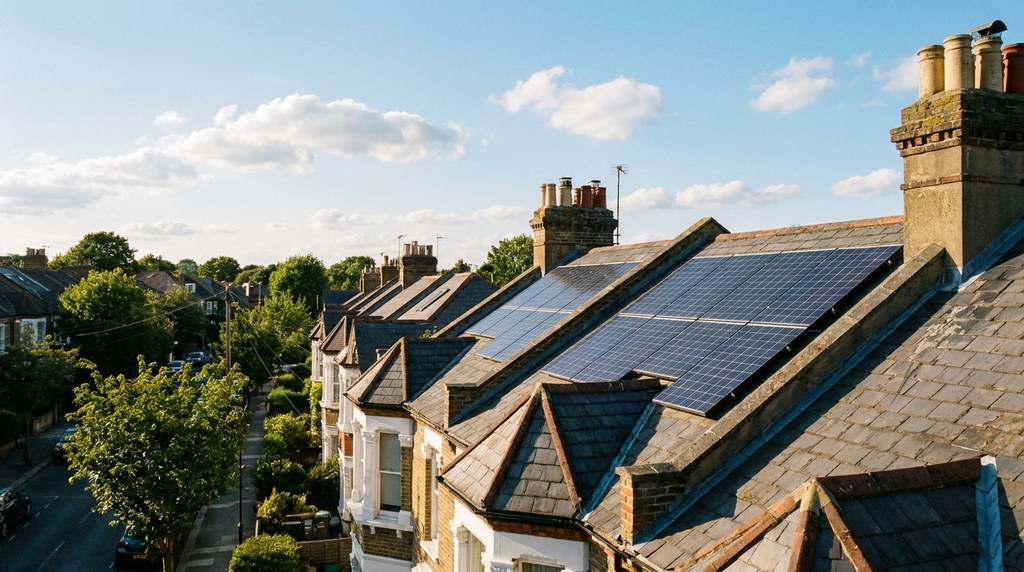
A typical UK 1930s semi-detached house installing a 4 kW solar panel system in 2026 would pay around £4,500 after the 0% VAT saving, based on a typical pre-VAT cost of £6,000. This system generates roughly 3,400 kWh per year, saving around £680 on electricity bills at the current price cap rate of 24.5p per kWh. With the Smart Export Guarantee paying roughly 15p per kWh for exported power, you could earn an additional £200 annually. The total yearly benefit of £880 gives a payback period of just over 5 years. Over the panel’s 25-year warranted lifespan, total savings and export income reach roughly £22,000, according to the Energy Saving Trust. If you qualify for the ECO4 scheme or a local authority grant, the upfront cost could drop further.
| Item | Figure |
|---|---|
| Upfront cost after grants | £4,500 |
| Yearly savings | £880 |
| Payback period | 5 years |
| 25-year lifetime savings | £22,000 |
What homeowners often get wrong
The most common mistake is assuming solar panels are useless in the UK’s cloudy weather. Here are three frequent errors homeowners make when considering solar panels.
- Thinking panels need direct sunlight all day Modern panels work efficiently in diffuse light, generating up to 80% of their rated output on overcast days. The UK’s south-facing roof still receives enough annual sunlight to make a 4 kW system viable, with the Energy Saving Trust confirming average generation of 3,400 kWh per year in England.
- Believing you need battery storage from day one Adding a battery upfront can cost £4,000 to £6,000 and may not pay back for 10 years. It is cheaper to start with solar panels alone and add a battery later when prices fall or your usage pattern changes.
- Ignoring the Smart Export Guarantee Many homeowners miss out on earning 15p per kWh for exported electricity because they do not register with a SEG-licensed supplier. This can add £150 to £250 annually to your savings, a free benefit you cannot claim retroactively.
Quick reference
- Solar panels were first invented at Bell Labs in the United States in 1954, using a silicon semiconductor that achieved 6% efficiency.
- A typical 4 kW system in the UK costs around £6,000 before VAT relief, with 0% VAT applicable until March 2027.
- The Smart Export Guarantee pays you for surplus electricity exported to the grid, typically 15p per kWh from most suppliers.
- Solar panels reduce your carbon footprint by roughly 1.3 tonnes of CO₂ per year for a standard 4 kW installation.
- Panels require minimal maintenance, with an annual clean costing £50 to £100, and most systems come with a 25-year performance warranty.
Frequently Asked Questions
The first practical solar panel was invented by Daryl Chapin, Calvin Fuller, and Gerald Pearson at Bell Laboratories in 1954. The Energy Saving Trust confirms this breakthrough used silicon semiconductors.
Solar panels first appeared in the UK in the 1970s, primarily for off-grid and remote applications. Ofgem REGO Reports note the first UK solar research facility opened in 1973 at the University of Southampton.
The first practical solar panel in 1954 achieved around 6% efficiency, producing about 5 watts of power. This was a major improvement over earlier selenium cells, which were only 1% efficient.