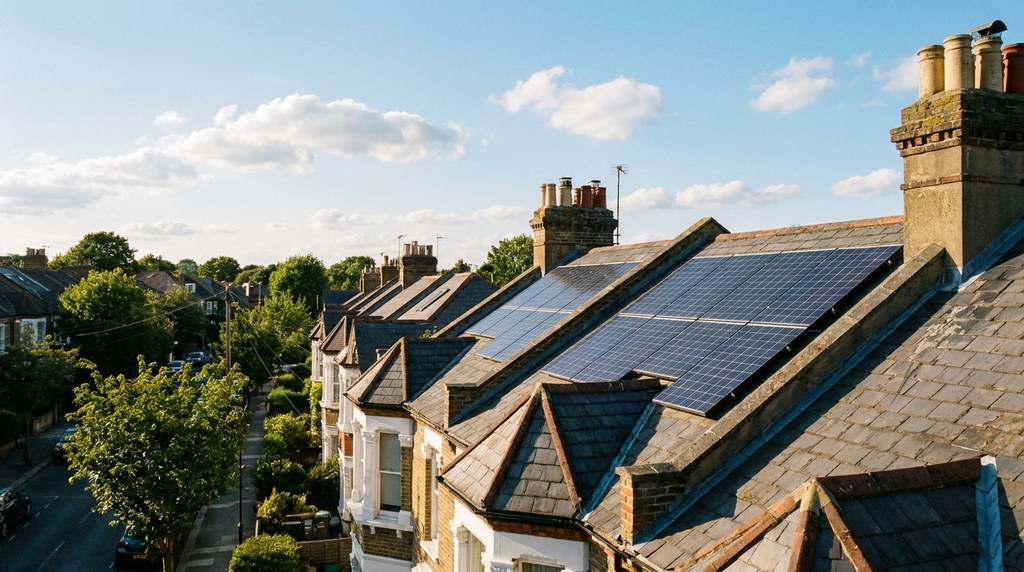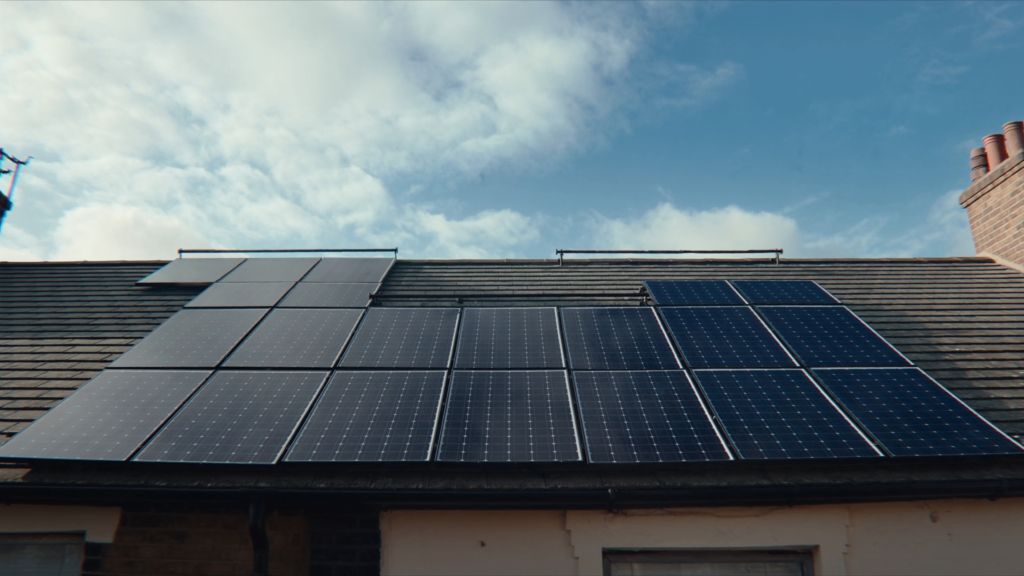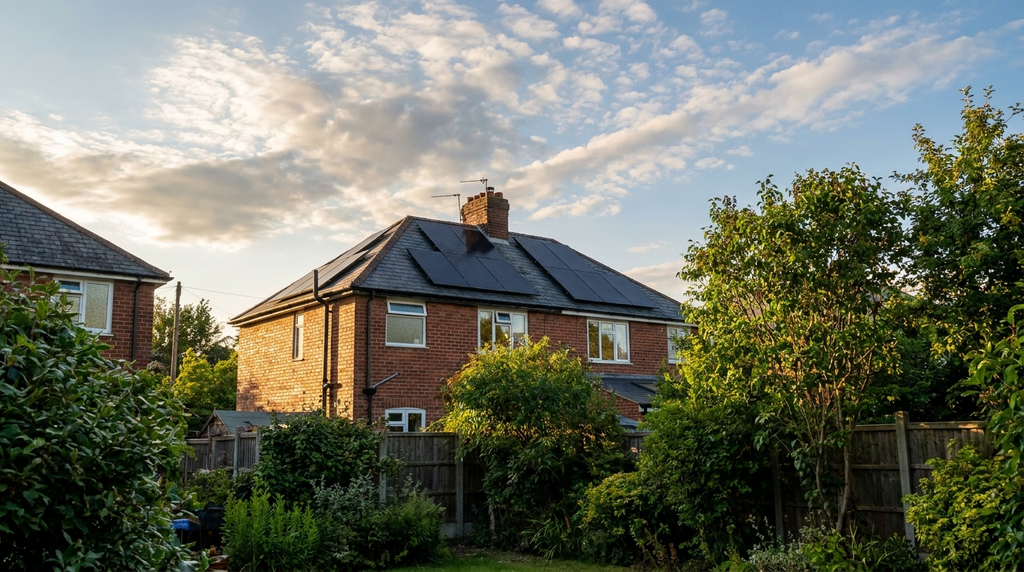
Solar panels can save a typical UK home £500–£1,000 a year on electricity bills in 2026, but the upfront cost of £5,000–£8,000 means the payback period is 6–10 years.
Many homeowners ask whether solar panels are a sensible investment in 2026. The answer depends on your electricity usage, how long you plan to stay in your home, and whether you can access available grants. For a typical three-bedroom semi-detached house, the numbers point to a clear financial case for most long-term owners.
Yes, solar panels are worth it for most UK homes in 2026, saving £500–£1,000 a year on electricity bills. With a payback period of 6–10 years on a £5,000–£8,000 system, long-term owners see net savings of £9,000–£21,000 over 25 years.
- Save £500–£1,000 a year on electricity bills with a 4 kWp system.
- Payback period is 5–9 years for typical UK homes.
- Smart Export Guarantee adds £100–£200 annual income.
- 25-year net savings range from £9,000 to £21,000.
- System lifespan is 25–30 years with minimal maintenance.
- Solar panels can save a typical UK home £500–£1,000 a year on electricity bills in 2026, but the upfront cost of £5,000–£8,000 means the payback period is 6–10 years.
- Quick numbers typical costs, savings, and payback for a 4 kWp solar panel system in 2026
- The upfront cost of solar panels in 2026 is £5,000–£8,000, but grants can reduce it by up to £1,500
- Solar panels are worth it if you use 60% or more of the electricity during daylight hours
- The main trade-off is between lower bills and a long payback period, not a quick financial win
- The direct answer to "are solar panels worth it" in 2026 yes for most homeowners who stay in their home 7+ years, no for short-term owners
- To claim the 0% VAT and sell electricity back to the grid, your installer must be MCS-certified
The average UK home uses around 2,700 kWh of electricity per year, according to Energy Saving Trust data (Energy Saving Trust, 2026). A standard 4 kWp solar panel system generates roughly 3,500 kWh per year, which can offset 70–100% of a household’s annual usage depending on when you use electricity. At the 2026 average electricity price of 27p/kWh under the Ofgem price cap from April 2026 (Ofgem, 2026), this translates to an annual saving of £540–£950 on your electricity bill.
The Smart Export Guarantee (SEG) adds further value. Most suppliers pay 5p–15p per kWh for electricity you export to the grid, worth approximately £100–£200 per year for a 4 kWp system (DESNZ, SEG statistics, 2026). Combined, the total annual benefit is £640–£1,150. On a typical installed cost of £6,000–£7,500, the payback period is 5–9 years.
Quick numbers typical costs, savings, and payback for a 4 kWp solar panel system in 2026
| Metric | Typical value (2026) | Source |
|---|---|---|
| System cost (installed) | £6,000–£7,500 | MCS register installation data (2025–2026 averages) |
| Annual electricity saving | £540–£950 | Ofgem price cap April 2026 |
| Annual SEG income | £100–£200 | DESNZ SEG statistics 2026 |
| Total annual benefit | £640–£1,150 | Calculated from above |
| Payback period | 5–9 years | MCS register averages |
| Estimated 25-year net saving | £9,000–£21,000 | Energy Saving Trust modelling |
| System lifespan | 25–30 years | BRE, solar panel durability report |
The upfront cost of solar panels in 2026 is £5,000–£8,000, but grants can reduce it by up to £1,500
The average installed cost for a 4 kWp solar PV system in the UK is £6,000–£7,500, based on MCS register data for 2025–2026 (MCS, 2026). Prices vary by region, roof type, and installer, but this range covers most standard installations on a south-facing or east-west roof.
The Great British Insulation Scheme closed on 31 March 2026. It funded insulation measures only and never covered windows or glazing. Eligibility is based on your property’s Energy Performance Certificate (EPC) rating and household income. This is the main national grant available in 2026.
The 0% VAT on solar panels and batteries, extended to 2027, saves a further £1,000–£1,600 on a typical system compared to the standard 20% rate (HMRC, VAT Notice 708/6, 2026). No other national grant schemes exist in 2026. Some local councils offer additional support, which you can find on the GOV.UK energy grants finder.
Solar panels are worth it if you use 60% or more of the electricity during daylight hours
The key variable that determines your savings is self-consumption: using solar-generated power when the sun shines. The more electricity you use during daylight hours, the less you need to buy from the grid at the full 27p/kWh rate.
Typical daytime usage patterns achieve 60–80% self-consumption. This includes households where someone works from home, electric vehicles are charged during the day, or appliances like washing machines and dishwashers run in daylight hours. At 60% self-consumption, a 4 kWp system saves around £750 per year. At 30% self-consumption, savings drop to roughly £400 per year (Energy Saving Trust, 2026).
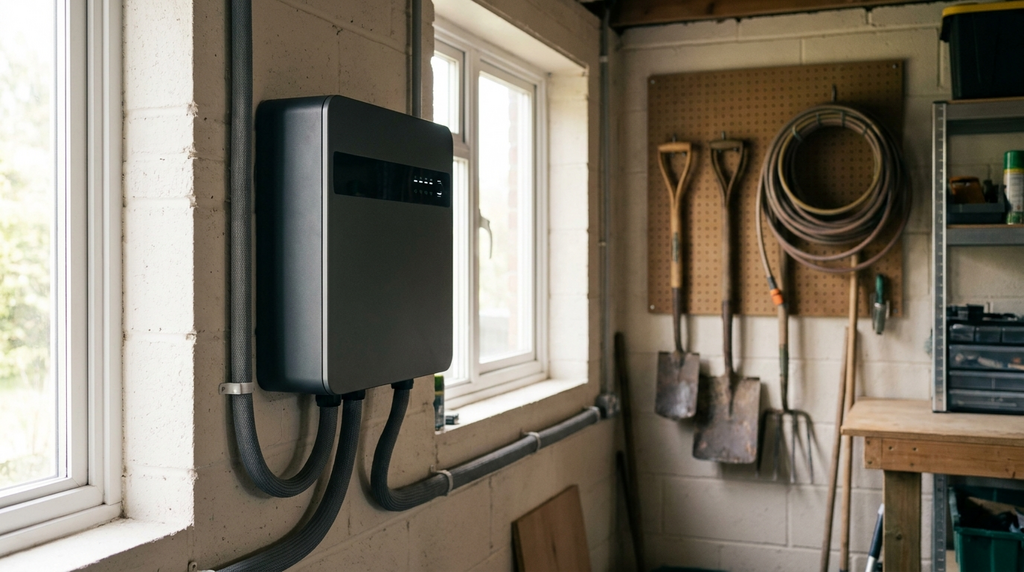
Installing a home battery (cost £2,000–£4,000) increases self-consumption to 80–90% by storing excess daytime generation for evening use. However, the battery adds 2–4 years to the payback period (Energy Saving Trust, solar battery report, 2026). If your daytime usage is already high, a battery may not be worth the extra cost.
The main trade-off is between lower bills and a long payback period, not a quick financial win
Solar panels are a long-term investment. The average payback is 6–10 years, and the system lifespan is 25–30 years (BRE, solar panel durability report, 2026). After the payback period, you benefit from free electricity for another 15–20 years.
If you plan to move house within 5 years, the financial return is uncertain. You must sell the house with the panels or remove them, which adds cost and complexity. Research from DESNZ shows that solar panels increase property value by 1–4% on average, but this varies by region (DESNZ, property value impact study, 2025). For a typical £300,000 home, that means an added value of £3,000–£12,000.
For homeowners who prioritise reducing carbon emissions over financial return, the break-even point is less relevant. Solar panels save around 1.3 tonnes of CO2 per year for a typical 4 kWp system, according to Energy Saving Trust data. Compare solar panels vs heat pumps for carbon savings
The direct answer to “are solar panels worth it” in 2026 yes for most homeowners who stay in their home 7+ years, no for short-term owners
The typical UK homeowner stays in their property for 12 years, according to ONS housing mobility data (ONS, 2025). For a 7-year stay, a 4 kWp system saves £4,500–£8,000, which covers most or all of the £6,000–£7,500 cost. For a 5-year stay, savings are £3,200–£5,750, which may not cover the full cost, especially if you sell the home without the panels.
The decision hinges on three factors: your occupancy period, your daytime electricity usage, and whether you can claim a grant. If you stay 7+ years and use 60% or more of your electricity during daylight hours, solar panels are likely to pay back within the payback period and deliver net savings. If you plan to move within 5 years or have low daytime usage, the financial case is weaker.
For most homeowners who fit the 7+ year profile, solar panels are worth it in 2026. The combination of 0% VAT, SEG payments, and falling installation costs makes the investment more attractive than in previous years. Learn about the best solar panel grants available in 2026
To claim the 0% VAT and sell electricity back to the grid, your installer must be MCS-certified
The Microgeneration Certification Scheme (MCS) is the UK standard for solar panel installers. It is required for SEG payments and to claim the 0% VAT rate on your installation (MCS website, 2026). Without MCS certification, you cannot receive payments for exported electricity under the SEG scheme.
To verify an installer, check the MCS register at mcs-certified.com for a valid certificate number. TrustMark accreditation is also recommended but not mandatory for solar PV installations. It covers consumer protection standards and gives you access to dispute resolution if something goes wrong (TrustMark, 2026).
For battery storage, the installer must also hold MCS battery certification. No Gas Safe or FENSA certification is needed for solar PV. Always get at least three quotes from MCS-certified installers before committing to a system. This ensures you get a competitive price and a properly installed system that qualifies for all available financial benefits.
Frequently Asked Questions
A typical 4 kWp solar panel system costs £6,000–£7,500 installed in 2026, according to MCS register data. Prices vary by roof type and panel quality.
The payback period is 5–9 years for most UK homes, based on Energy Saving Trust modelling. This depends on your electricity usage and export tariff.
Yes, for long-term homeowners. A typical 4 kWp system saves £540–£950 on bills plus £100–£200 from SEG income, per Ofgem and DESNZ data. Payback is 5–9 years.
Yes, solar panels still generate electricity on cloudy days, at around 10–25% of their peak output. The UK's diffuse light means they produce year-round, per Energy Saving Trust.
The Smart Export Guarantee (SEG) pays you for excess electricity exported to the grid. Rates range from 5p–15p per kWh, adding £100–£200 annual income, according to DESNZ.