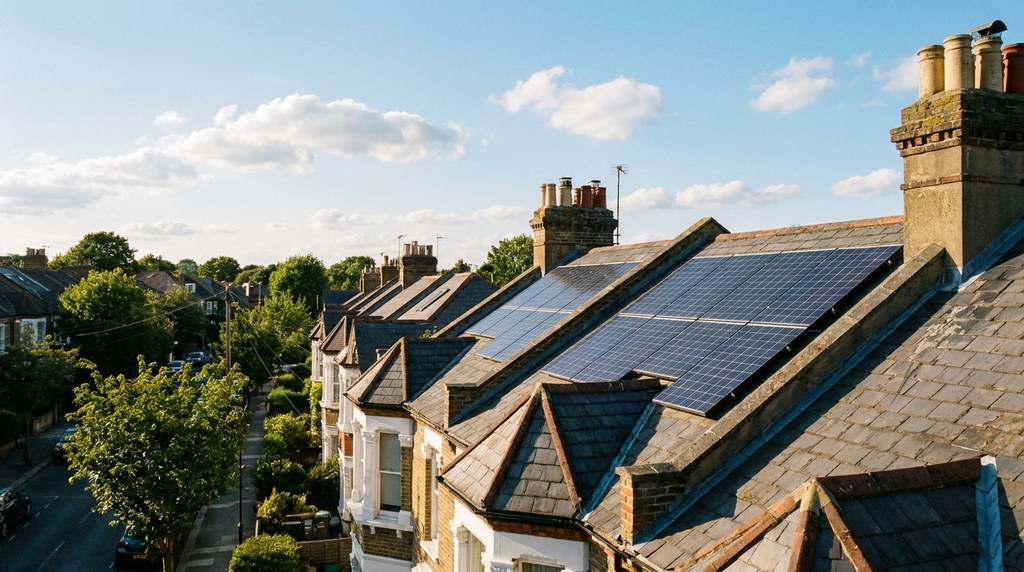
What matters when you choose
Before you invest, three factors dominate the decision: the direction and angle of your roof, how much direct sunlight it gets, and how much of the electricity you will use during the day. Each of these directly affects how quickly the system pays for itself.
| Roof orientation | Estimated annual generation (kWh) | Payback period (years) | Best for |
|---|---|---|---|
| South-facing | 4,200 | 8–10 | Maximum output |
| East/West-facing | 3,600 | 10–12 | Morning/afternoon generation |
| North-facing | 2,800 | 12–15 | Lower output, longer payback |
1. Your roof faces south
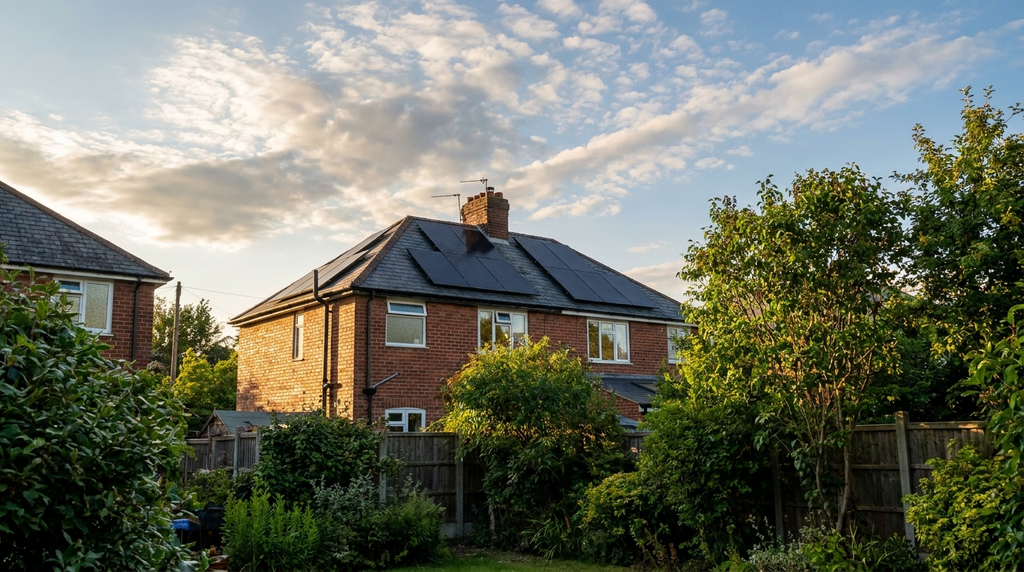
A south-facing roof receives the highest annual solar irradiation in the UK, which directly translates into the most electricity generation. The Energy Saving Trust estimates that a south-facing system in London or the South East can produce around 4,200 kWh per year for a typical 3.5kW array (Energy Saving Trust, 2026). East- or west-facing roofs still work well but produce roughly 20% less energy, while north-facing roofs deliver the lowest output. If your roof faces south, you are starting from the strongest possible position.
- South-facing roofs capture the sun for the longest period each day
- Generation drops by about 20% on east or west orientations
- North-facing roofs are usually not recommended unless you have very high daytime electricity use
2. Your roof pitch is between 30 and 40 degrees
The angle of your roof matters almost as much as its direction. A pitch between 30 and 40 degrees is the sweet spot for year-round generation across the UK, because it catches the sun at the optimum angle during both summer and winter months (Energy Saving Trust, 2026). Pitches outside this range still generate electricity but at reduced efficiency. Very flat roofs (below 10 degrees) need tilted mounting frames, which add cost and can look less tidy. Very steep roofs (above 60 degrees) lose significant output, especially in winter when the sun is low.
- 30–40 degrees is the standard pitch for most UK houses
- Flat roofs require additional mounting hardware, increasing installation costs
- Steep roofs above 60 degrees can reduce annual generation by 10–15%
3. Your roof receives direct sunlight most of the day
Shading is one of the biggest enemies of solar panel performance. Even partial shade from a chimney, a tree, or a neighbouring building can cut a panel’s output by up to 50% (Energy Saving Trust, 2026). You can check shading yourself using a free online tool such as the Energy Saving Trust’s solar panel calculator, but a professional survey from an MCS-certified installer will give you a precise figure. If your roof is shaded for more than a few hours in the middle of the day, the financial case weakens considerably.
- Partial shade on one panel can reduce the output of the whole string
- Micro-inverters or optimisers can help, but they add around £200–£400 to the system cost
- A shading survey is usually free when you request a quote
4. Your roof is structurally sound and not due for replacement
Solar panels have a typical lifespan of 25 years or more, so the roof underneath needs to last at least as long. If your roof is due for replacement within the next 10 years, you may need to remove and refit the panels, which adds significant cost (MCS, 2026). Check for cracked or missing tiles, sagging areas, or signs of damp in the loft. A structural survey by a qualified roofer or surveyor will confirm whether the roof can safely support the extra weight of the panels and mounting system.
- Panels weigh around 18–25 kg each, plus the mounting frame
- Removing and refitting panels for a roof replacement can cost £1,000–£2,000
- Newer roofs (less than 5 years old) are ideal for a 25-year solar investment
5. Your household uses electricity during daylight hours
The financial return on solar panels improves dramatically when you use the electricity you generate rather than exporting it to the grid. If you are at home during the day – working from home, retired, or with children – you can use 50% or more of the power your panels produce. The Energy Saving Trust notes that typical payback drops from 15 years to 8–10 years with 50% daytime self-consumption (Ofgem, 2026). Running appliances like washing machines, dishwashers or electric heaters during sunny hours makes a big difference.
- Self-consumption of 50% cuts payback by roughly a third compared to exporting most power
- A battery storage system can store surplus for evening use, but adds £4,000–£6,000
- Smart home controls can automatically shift appliance usage to sunny periods
6. You have space for at least 6 panels on your roof
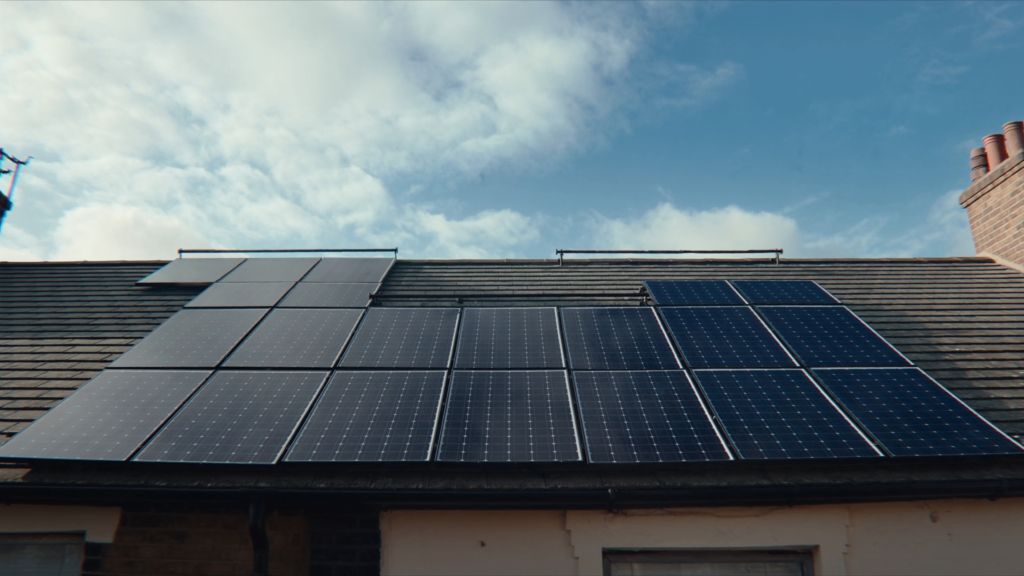
A typical 3.5kW solar panel system needs about 16 square metres of clear roof area, which equates to roughly 6–8 panels depending on their wattage (MCS, 2026). Smaller systems with fewer panels can still be worthwhile, but the fixed costs of installation (scaffolding, inverter, cabling) mean that smaller arrays have higher relative costs per kWh. If you only have room for 2 or 3 panels, the payback period will be longer and the financial benefit smaller.
- Each panel is typically 1.7m x 1.0m, so measure your roof area carefully
- 6 panels is the minimum for a system that covers a typical household’s base load
- Larger systems (10+ panels) benefit from economies of scale in installation costs
7. Your home has a smart meter or you can get one
A smart meter is essential for accessing the Smart Export Guarantee (SEG), which pays you for surplus electricity you send back to the grid. Without a smart meter, you cannot reliably measure how much you export, and most SEG tariff providers require one (GOV.UK, 2026). SEG rates vary by supplier but typically range from 3p to 15p per kWh. While the income is modest, it still improves the overall payback. If you do not have a smart meter, you can request a free installation from your energy supplier before the solar installation.
- SEG payments are guaranteed for 5 years from the date of installation
- Without SEG, you effectively give away surplus electricity for free
- Smart meters also help you track your self-consumption more accurately
8. Your local electricity grid has capacity for new generation
In some parts of the UK, the local electricity network is already at capacity, which can delay or prevent the connection of new solar arrays. Your Distribution Network Operator (DNO) is responsible for the local grid and can confirm whether there is spare capacity for your installation (Ofgem, 2026). Most domestic solar systems are small enough to be connected without issues, but if you live in a rural area or a street with many existing solar homes, a DNO check is wise before you commit.
- Your installer will usually handle the DNO notification as part of the quote
- In rare cases, the DNO may require a grid upgrade, which can cost thousands
- Check your area’s solar penetration rate – high density can mean less spare capacity
9. You plan to stay in your home for at least 5–10 years
Solar panel payback periods typically range from 8 to 15 years depending on your location, roof orientation, and how much power you use during the day (Energy Saving Trust, 2026). If you move home before the system has paid for itself, you may not recoup the full investment unless the buyer values the panels and pays a premium. Even so, solar panels can add to a property’s appeal and resale value, particularly if energy bills are high. If you are planning to move within 5 years, the financial case is weaker.
- Average payback for a south-facing system is around 8–10 years
- East/west-facing systems take 10–12 years to break even
- Some estate agents suggest solar panels can add 2–4% to a property’s value
10. Your property is not listed or in a conservation area without prior consent
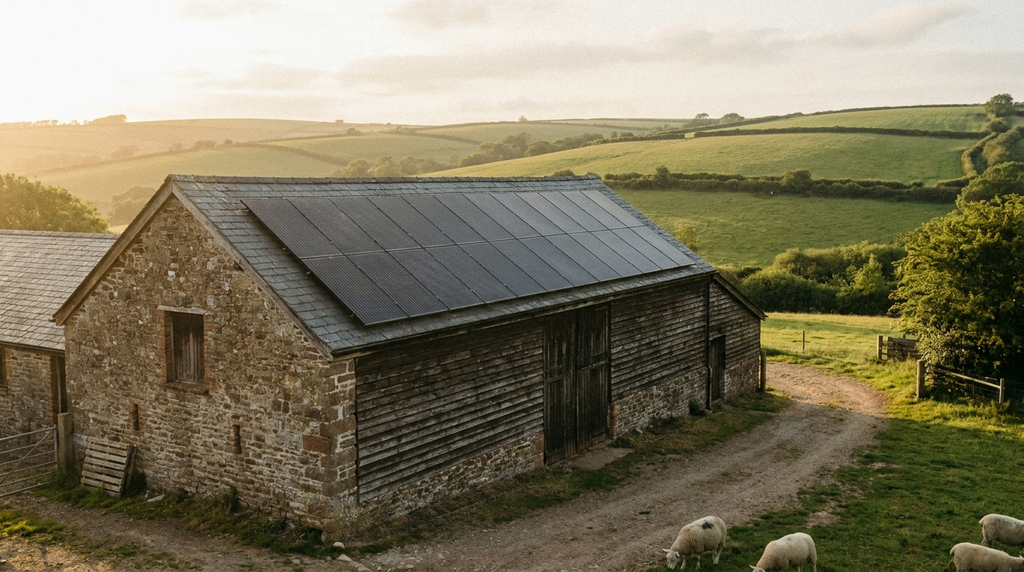
Listed buildings and properties in conservation areas often require planning permission for roof-mounted solar panels. The rules vary by local authority, but many councils restrict visible alterations to the front roof slope (GOV.UK, 2026). You should check with your local planning authority before getting quotes, because a refusal after installation can be costly and stressful. In some cases, you may be able to install panels on a rear roof slope or a ground-mounted frame in the garden instead.
- Permitted development rights do not apply to listed buildings
- Conservation area rules often allow rear-facing panels but not front-facing ones
- Ground-mounted panels are an alternative if roof mounting is not permitted
If most of these signs apply to your home, solar panels are likely to be a sound investment. For more detail on the financial side, see solar panel payback calculator guide. If your roof is shaded or north-facing, consider alternatives to roof-mounted solar panels.
Frequently Asked Questions
Yes, for most homes with a south-facing roof and daytime electricity use. The Energy Saving Trust estimates a typical 3.5kW system can save £300-£500 per year on bills, with a payback period of 8-12 years.
A typical 3.5kW solar panel system costs £5,000 to £8,000 installed, according to the Energy Saving Trust. Prices vary by roof complexity, panel type, and installer.
South-facing roofs are best, producing around 4,200 kWh per year for a 3.5kW system. East or west orientations still work well but yield about 20% less, while north-facing roofs are least efficient.
Yes, solar panels still generate electricity on cloudy days, though at reduced output. Modern panels can capture diffuse sunlight, and the UK's moderate climate means they work year-round.
Solar panels typically last 25 to 30 years, with most manufacturers offering a 25-year performance warranty. Inverters may need replacing after 10-15 years.