1. Install a solar battery
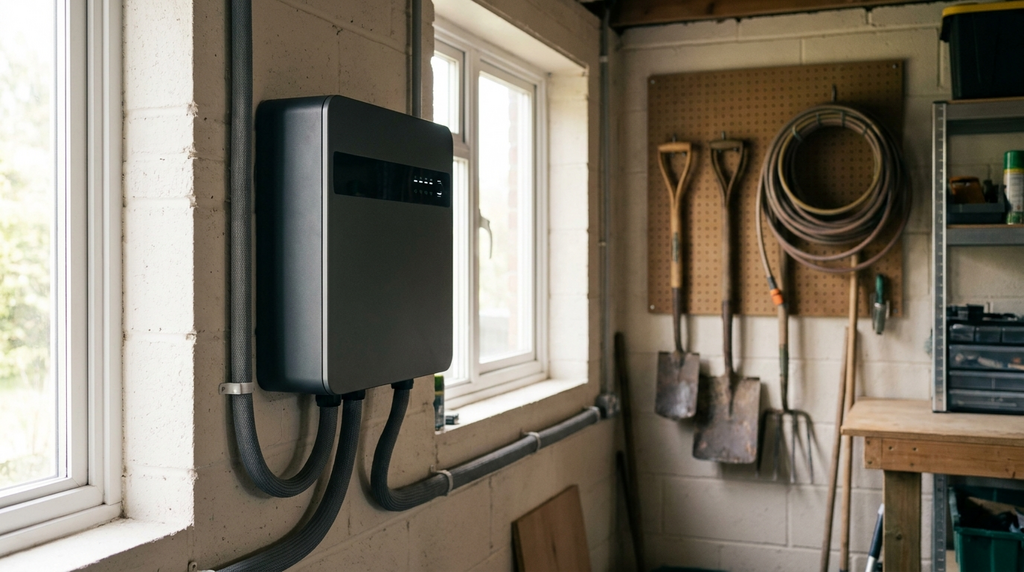
A solar battery is the single most effective upgrade you can make. It stores excess electricity your panels generate during the day so you can use it in the evening, when your panels are not producing. Without a battery, most homes use only around 30% of the solar power they generate. With a battery, that figure can rise to over 80% (Energy Saving Trust, 2026). A typical battery system costs between £1,500 and £5,000, and can save you £150–£300 per year on electricity bills. The payback period is usually 5–8 years, and the battery itself lasts 10–15 years.
- Raises self-consumption from ~30% to over 80%
- Typical savings of £150–£300 per year
- Payback period of 5–8 years
2. Use a solar diverter for hot water
If you have a hot water cylinder, a solar diverter is a cost-effective way to use surplus solar power. It sends excess electricity from your panels to your immersion heater, heating water that would otherwise be heated by gas or oil. This can save you around £80–£150 per year on water heating costs (Energy Saving Trust, 2026). A diverter costs between £400 and £800, and installation is straightforward if you already have a cylinder. It works best in homes that use a lot of hot water, such as those with larger families.
- Saves £80–£150 per year on water heating
- Costs £400–£800 to install
- Best for homes with a hot water cylinder
3. Shift high-energy tasks to daylight hours
The simplest and cheapest way to get more from your solar panels is to use electricity when the sun is shining. Running your washing machine, dishwasher, tumble dryer, or other high-energy appliances during daylight hours means you use free solar power directly, rather than importing electricity from the grid. This can boost your self-consumption by 10–20% (Energy Saving Trust, 2026). Timers on appliances or smart plugs can automate this, so you do not have to remember to switch things on at the right time.
- Boosts self-consumption by 10–20%
- Costs nothing to implement
- Smart plugs and timers automate the process
4. Clean your panels annually
Dirt, bird droppings, pollen, and leaves on your solar panels can reduce their output by 5–15% (Energy Saving Trust, 2026). A professional clean costs £50–£100 and typically pays for itself within a year through the regained generation. You can also clean panels yourself with a hose and soft brush, but be careful not to damage the surface. In most of the UK, rain is enough to keep panels reasonably clean, but if you live in a dusty area or near trees, an annual clean is worthwhile.
- Restores 5–15% of lost generation
- Professional cleaning costs £50–£100
- Payback within a year in most cases
5. Upgrade to a smart meter and monitor
A smart meter shows you how much electricity you are generating and using in real time. This helps you shift your usage to match your generation. Many smart meters come with an in-home display, and app-based monitors provide even more detail. Using this data can increase your self-consumption by 5–10% (Energy Saving Trust, 2026). Smart meters are installed free by your energy supplier, and monitoring apps are usually free or cost a small monthly fee.
- Increases self-consumption by 5–10%
- Smart meters are free from your supplier
- App-based monitors give detailed insights
6. Add panel-level optimisers
If some of your panels are shaded by trees, chimneys, or neighbouring buildings, panel-level optimisers can help. Microinverters or DC optimisers allow each panel to work independently, so shading on one panel does not reduce the output of the whole string. This can cut shading losses by up to 25% and improve annual yield by 5–15% (MCS, 2026). Retrofitting optimisers costs around £200–£600 for a typical home, depending on the number of panels affected.
- Reduces shading losses by up to 25%
- Improves annual yield by 5–15%
- Costs £200–£600 to retrofit
7. Adjust panel tilt seasonally
The angle of your solar panels affects how much sunlight they capture. The ideal tilt for UK homes is around 30–40 degrees. If your panels are on an adjustable frame or ground-mounted, you can change the tilt seasonally. A steeper angle (around 50 degrees) in winter can boost generation by 10–20% compared to a fixed 30-degree tilt (Energy Saving Trust, 2026). This is not practical for most roof-mounted panels, but if you have the option, it is worth doing twice a year.
- Winter generation boost of 10–20%
- Only possible with adjustable frames or ground mounts
- Adjust twice a year for best results
8. Sign up to a high-paying SEG tariff
The Smart Export Guarantee (SEG) pays you for electricity you export to the grid. Rates vary widely between suppliers, from around 4p per kWh to 15p per kWh (GOV.UK, 2026). Switching to a higher-paying tariff can add £50–£150 per year to your income. You are not locked into a single supplier, so shop around and switch if a better deal appears. The SEG is available to any home with a certified solar installation.
- Rates range from 4p to 15p per kWh
- Can add £50–£150 per year in export income
- Switch suppliers to get the best rate
9. Invest in an electric vehicle (EV) charger
If you own an electric vehicle, charging it during sunny hours uses your own solar power. This can save 50–80% per mile compared to charging from the grid (Energy Saving Trust, 2026). A solar-compatible EV charger with smart scheduling can automate charging when your panels are producing. This boosts your total self-consumption and reduces your reliance on grid electricity. The charger itself costs £800–£1,500, but the savings on fuel can be significant.
- Saves 50–80% per mile compared to grid charging
- Solar-compatible chargers automate daytime charging
- Boosts total self-consumption significantly
10. Check your inverter is working efficiently
Your inverter converts the DC electricity from your panels into AC electricity for your home. It typically lasts 10–15 years. A failing inverter can reduce your system’s output by 20–50% (MCS, 2026). Check your inverter’s display for error codes or use a generation log to spot unusual drops in output. If you notice a persistent drop, have it inspected. Replacing a faulty inverter promptly avoids long-term losses and keeps your system running at peak efficiency.
- Failing inverter reduces output by 20–50%
- Inverters last 10–15 years
- Monitor error codes and generation logs regularly
The most effective single step to get more from your solar panels is to install a battery, raising self-consumption from around 30% to over 80%. Combine that with smart usage habits and a high-paying SEG tariff to maximise your savings and return on investment.
Frequently Asked Questions
Yes, you can boost self-consumption by 10–20% by shifting high-energy tasks to daylight hours (Energy Saving Trust, 2026). A solar diverter for hot water also saves £80–£150 yearly without a battery.
Yes, a solar battery typically raises self-consumption from around 30% to over 80%, saving £150–£300 per year (Energy Saving Trust, 2026). Payback is 5–8 years, and the battery lasts 10–15 years.
The cheapest way is to run appliances during daylight hours, costing nothing and boosting self-consumption by 10–20% (Energy Saving Trust, 2026). Smart plugs or timers automate this for under £30.
Yes, a solar diverter can save £80–£150 per year on water heating by using surplus solar power (Energy Saving Trust, 2026). It costs £400–£800 and works best with a hot water cylinder.
Pairing solar panels with a heat pump can cut annual heating bills by £200–£400, as the pump runs on free solar electricity (Energy Saving Trust, 2026). This works best with a battery for evening use.