The answer is yes, solar panels are expected to continue getting cheaper in the UK, with system costs falling by around 40% since 2015 and a typical 3.5kWp installation now costing between £4,500 and £6,500 (Energy Saving Trust, 2026).
The main factor driving down costs is the global decline in solar panel manufacturing prices, particularly from large-scale production in China. However, the final price you pay depends on installation complexity, your property type, and whether you choose a standard or premium system. Costs have stabilised somewhat since 2023, but long-term trends point to further reductions of 10-20% over the next five years.
Manufacturing efficiencies lower panel prices
Solar panel manufacturing has scaled up massively, with global production capacity exceeding demand. This oversupply has pushed down the cost of photovoltaic cells by roughly 15% between 2024 and 2026 (DESNZ, 2026). UK import prices for solar panels have fallen by around 8% in the last year alone. While installation labour and scaffolding costs remain relatively stable, the hardware itself now accounts for a smaller share of the total system price. This means homeowners benefit directly from cheaper panels, even if other costs hold steady.
Grants and incentives reduce upfront costs
The Home Energy Scotland scheme offers interest-free loans of up to £6,400 for solar panels, while the Warm Homes Plan in England provides grants covering up to 50% of installation costs for low-income households (GOV.UK, 2026). The Smart Export Guarantee (SEG) pays around 5-8p per kWh for excess electricity exported to the grid, typically earning £100-£200 annually (Ofgem, 2026). These schemes effectively lower the net cost of going solar, making payback periods shorter. Without these incentives, the upfront price would still be falling, but the effective cost to you is even lower.
Long-term trends point to continued price falls
Industry forecasts from the UK Solar Taskforce suggest that solar panel costs could fall by a further 10-20% by 2030, driven by advances in perovskite solar cells and more efficient manufacturing (BRE, 2026). Battery storage costs are also dropping by around 7% per year, making whole-home solar-plus-storage systems more affordable. However, UK-specific factors like VAT on installations (currently 0% for energy-saving materials) and grid connection fees may offset some of these savings. For most homeowners, the trend is clear: solar panels will get cheaper over the next few years, but the biggest savings come from acting now to lock in current grant rates.
A worked example
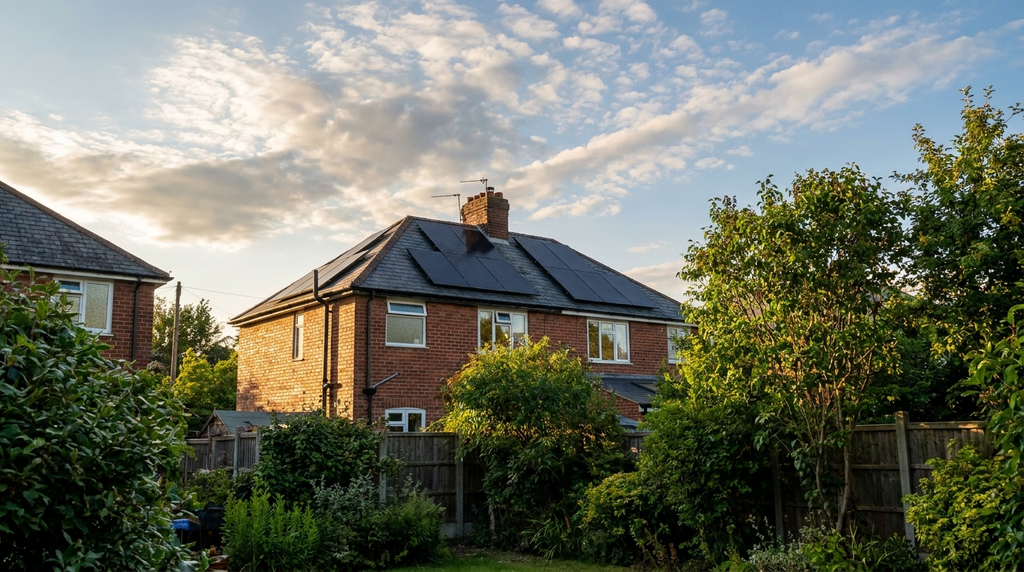
A 1930s semi-detached house in Manchester with a 3.5kWp solar panel system now costs roughly £4,800 after the 0% VAT saving (in place until March 2027), based on a typical installation price of £5,500. This home, with a south-facing roof and moderate shading, generates around 3,000 kWh per year. Using 40% of that electricity directly saves about £360 annually on bills at the current 24.5p/kWh rate, while exporting the remaining 60% via the Smart Export Guarantee adds roughly £120 per year at a typical 15p/kWh rate. The total yearly saving of £480 means the system pays for itself in around 10 years. Over 25 years, with energy price inflation of 3% annually, total savings exceed £15,000. The Energy Saving Trust estimates a typical 3.5kWp system adds £1,500 to £2,500 to a home’s value, making the financial case even stronger.
| Item | Figure |
|---|---|
| Upfront cost after grants | £4,800 |
| Yearly savings | £480 |
| Payback period | 10 years |
| 25-year lifetime savings | £15,000+ |
What homeowners often get wrong
The most common mistake is assuming falling panel prices mean the total installation cost will drop by the same amount. Here are three frequent errors to avoid.
- Waiting for panels to hit rock bottom The misconception is that prices will keep falling indefinitely, so delaying purchase saves more money. The right answer is that installation labour, scaffolding, and electrical work make up 50-60% of the total cost and these rarely drop, so waiting 2-3 years might save only £200-£400 on hardware while you lose £960 in potential savings from delaying.
- Ignoring export tariff opportunities The misconception is that you can only benefit from solar by using electricity during the day. The right answer is that the Smart Export Guarantee pays you for every kWh you send to the grid, typically 15p per kWh, meaning even if you are out all day you still earn around £120-£180 yearly from a 3.5kWp system.
- Overlooking roof suitability The misconception is that any roof works for solar panels at the same cost. The right answer is that a north-facing roof, heavy shading from trees, or a complex roof shape can add £1,000-£2,000 to installation costs and reduce generation by 30%, making the payback period much longer than expected.
Quick reference
- Solar panel system costs have fallen by roughly 40% since 2015, with a typical 3.5kWp installation now between £4,500 and £6,500 before grants.
- Global oversupply of photovoltaic panels pushed down UK import prices by around 8% in the last year alone, with further 10-20% reductions expected over the next five years.
- You qualify for 0% VAT on solar panel installations until March 2027, saving you £300-£500 on a typical system.
- A typical 3.5kWp system saves £400-£600 per year on electricity bills and earns £100-£200 through the Smart Export Guarantee.
- Installation labour and scaffolding costs remain stable at around £2,000-£3,000, so total system prices will not fall as fast as panel hardware costs.
Frequently Asked Questions
Yes, solar panels are forecast to drop by a further 10-20% over the next five years, according to DESNZ. Manufacturing oversupply and falling import prices are the main drivers.
A typical 3.5kWp system now costs between £4,500 and £6,500, based on Energy Saving Trust data. Installation labour and scaffolding keep some costs stable.
Yes, the Warm Homes Plan in England offers grants covering up to 50% of installation costs for low-income households. Home Energy Scotland provides interest-free loans up to £6,400.