Buying solar panels is a significant investment that can cut your electricity bills and carbon footprint, but getting the right system for your home requires careful planning. Before you commit, there are several critical checks that determine whether solar panels will actually work for you.
The single most important factor is your roof’s suitability, since even the best panels underperform on a shaded or north-facing roof. Start by confirming your roof orientation, shading, and structural condition before looking at any equipment or installer options.
What matters when you choose is matching the system to your specific property, not just picking the cheapest quote. Each check below helps you avoid common mistakes that cost homeowners thousands in lost generation or unexpected repairs.
| Check | What to look for | Why it matters | Typical impact |
|---|---|---|---|
| Roof orientation | South-facing (ideal) | Maximises sunlight exposure | Up to 20% more generation vs north |
| Shading | No obstructions (trees, chimneys) | Reduces panel output significantly | Loss of 5–25% annual generation |
| Roof condition | Good structural integrity, no repairs needed | Avoids costly removal/replacement later | Replacement cost £1,000–£2,000 |
| Insulation & EPC | EPC rating C or above | Ensures you benefit from solar generation | Higher savings with better insulation |
| Inverter type | String, microinverter, or optimiser | Affects performance under shade | 10–25% output difference on complex roofs |
| Installer certification | MCS certified | Required for SEG payments and finance | No SEG eligibility without MCS |
| SEG tariff rates | Compare export rates from suppliers | Determines payback from excess electricity | 1p–15p per kWh difference |
| Battery storage need | Self-consumption vs grid export | Boosts usage of generated solar power | 30% to 70% self-consumption increase |
| Planning permission | Listed building or conservation area | Legal requirement before installation | Delays or refusal without permission |
| Panel warranty terms | 25-year performance, 10–12 year product | Protects your investment long-term | Shorter terms mean higher replacement risk |
1. Check your roof orientation
Your roof’s direction directly determines how much electricity your panels can generate. South-facing roofs receive the most sunlight across the day and produce the highest output. East or west-facing roofs still work but yield around 15–20% less electricity annually (Energy Saving Trust, 2026). North-facing roofs are generally not recommended because they capture significantly less sunlight.
- South-facing roofs produce the most electricity per panel
- East/west roofs are viable but reduce annual generation by 15–20%
- North-facing roofs typically deliver poor returns on investment
2. Assess shading on your roof
Shading from trees, chimneys, or neighbouring buildings can cut your solar generation by 5–25% each year (Energy Saving Trust, 2026). Even partial shading on one panel can reduce the output of an entire string of panels if you use a standard string inverter. Check your roof at different times of day and across seasons to spot any obstructions.
- Trees, chimneys, and nearby buildings are common shading sources
- Partial shading can cause disproportionate losses with string inverters
- Microinverters or power optimisers help mitigate shading issues
3. Confirm your roof is in good condition
Solar panels typically last 25 years or more, so your roof must be structurally sound and free of major repairs for that entire period. If your roof needs replacing or repairing within a few years of installation, you will have to pay for panel removal and refitting, which can cost £1,000–£2,000 (MCS, 2026). Get a roofing survey before committing to panels.
- Panels last 25+ years, so roof condition must match that lifespan
- Removal and refitting costs £1,000–£2,000 if roof work is needed later
- A professional roofing survey is recommended before installation
4. Check your property’s EPC rating
Your Energy Performance Certificate (EPC) rating affects how much you benefit from solar panels. Homes with EPC rating C or above lose less heat, meaning more of the electricity you generate powers your home rather than being wasted. Lower-rated homes may need insulation upgrades first to maximise solar savings (GOV.UK, 2026).
- EPC rating C or above is ideal for solar panel efficiency
- Lower ratings mean more energy loss before you can use solar power
- Consider insulation upgrades before installing panels
5. Verify your inverter type and placement
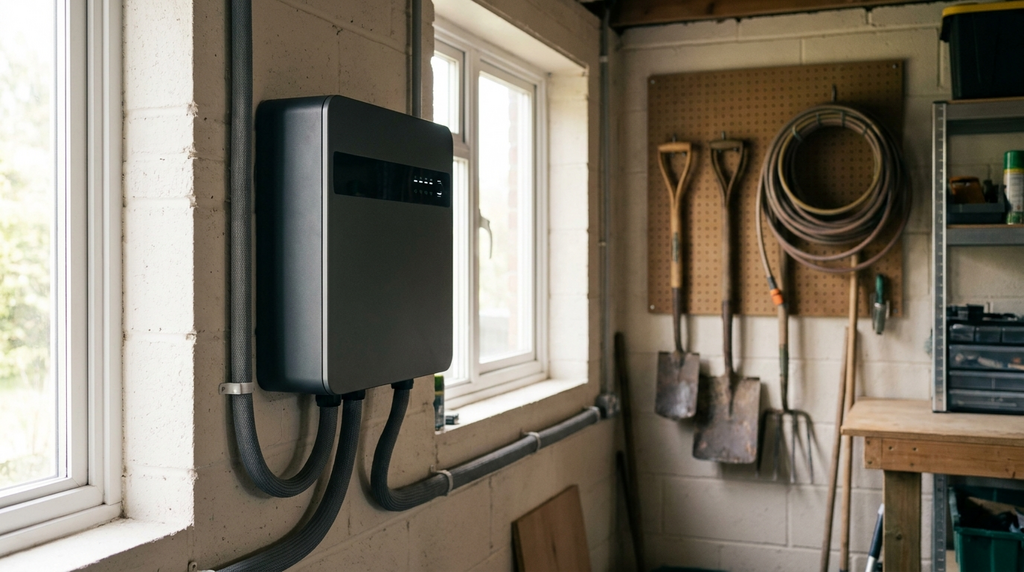
The inverter converts DC electricity from your panels into AC for your home. String inverters are the cheapest option but suffer when any panel is shaded. Microinverters or power optimisers cost more but allow each panel to work independently, boosting output on complex or shaded roofs (MCS, 2026). Choose based on your roof’s shading profile.
- String inverters are cheapest but affected by partial shading
- Microinverters or optimisers add cost but improve performance
- Place inverters in a cool, ventilated area for longer life
6. Confirm your installer is MCS certified
MCS (Microgeneration Certification Scheme) certification is essential for accessing the Smart Export Guarantee (SEG) and many finance schemes. Only MCS-certified installers can certify your system for SEG payments, which allow you to sell excess electricity back to the grid (MCS, 2026). Always verify an installer’s MCS number before signing a contract.
- MCS certification is required for SEG eligibility
- Check the installer’s MCS number on the official register
- Uncertified installers may void warranty or finance options
7. Check your SEG tariff options
The Smart Export Guarantee pays you for electricity you export to the grid. Rates vary widely between suppliers, from around 1p to 15p per kWh (Ofgem, 2026). Compare tariffs before installation because some suppliers require you to sign up within a specific window after your system goes live.
- SEG rates range from 1p to 15p per kWh depending on supplier
- Compare tariffs before installation to maximise export income
- Some suppliers have time limits for signing up after installation
8. Review your battery storage needs
Adding a battery lets you store excess solar electricity for use in the evening, increasing self-consumption from around 30% to up to 70% (Energy Saving Trust, 2026). Battery systems cost £4,000–£6,000 installed, so decide whether the extra savings justify the upfront cost based on your household’s evening electricity use.
- Batteries boost self-consumption from 30% to 70%
- Installed battery cost is £4,000–£6,000
- Consider your evening electricity usage to assess payback
9. Check planning permission requirements
Most homes in England and Wales do not need planning permission for solar panels under permitted development rights. However, listed buildings and properties in conservation areas or World Heritage Sites usually require permission (GOV.UK Planning Portal, 2026). Check with your local planning authority before you order panels.
- Permitted development covers most homes, but not all
- Listed buildings and conservation areas need planning permission
- Check with your local authority before installation
10. Verify the panel warranty terms
Panel warranties vary significantly between manufacturers. Look for a 25-year performance warranty that guarantees at least 80% output after 25 years, plus a 10–12 year product warranty covering defects (MCS Installer Code of Practice, 2026). Shorter warranty periods often indicate lower-quality panels that may degrade faster.
- 25-year performance warranty is the industry standard for quality
- Product warranty should cover 10–12 years for defects
- Shorter warranties signal lower panel quality and faster degradation
How to compare solar panel quotes effectively
Solar panel battery storage guide for UK homes
Understanding solar panel warranties and guarantees
Checking these ten items before buying solar panels helps you avoid costly mistakes and ensures your system delivers the savings you expect. Focus first on your roof’s suitability, then work through the technical and installer checks to build a system that fits your home and budget.
Frequently Asked Questions
Your roof's suitability is the most critical factor. South-facing roofs with minimal shading generate up to 20% more electricity than north-facing ones, according to the Energy Saving Trust.
Yes, MCS certification is required for eligibility under the Smart Export Guarantee (SEG). Ofgem states that without MCS, you cannot receive payments for excess electricity exported to the grid.
A typical solar panel system costs between £5,000 and £8,000 for a 3-bed semi in 2026, according to the Energy Saving Trust. Prices vary by system size and installer.
Microinverters perform best on roofs with shading, improving output by 10–25% compared to string inverters. The choice depends on your roof's complexity, as noted by MCS guidelines.
Compare quotes based on total system cost, inverter type, panel efficiency, and SEG tariff rates. The Energy Saving Trust recommends getting at least three quotes from MCS-certified installers.
More Solar Panels guides
- 10 solar panel mistakes UK homeowners make
- 10 ways to get more from your solar panels
- 10 questions to ask a solar panel installer
- 10 factors that affect solar panel payback
- 10 myths about solar panels in the UK
- 10 ways to cut your electricity bill with solar
- 10 things to know about the Smart Export Guarantee
- 10 reasons to add a solar battery