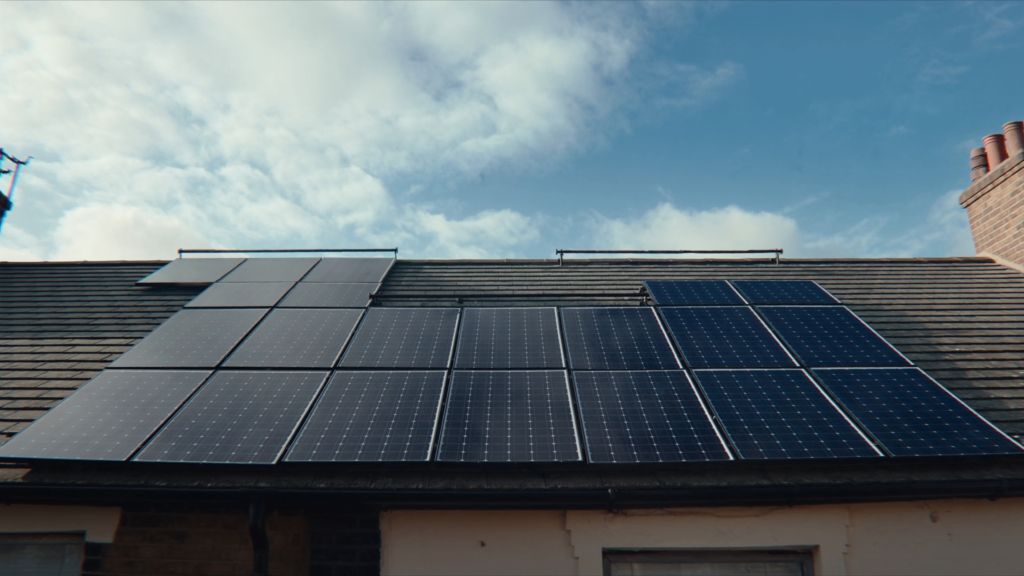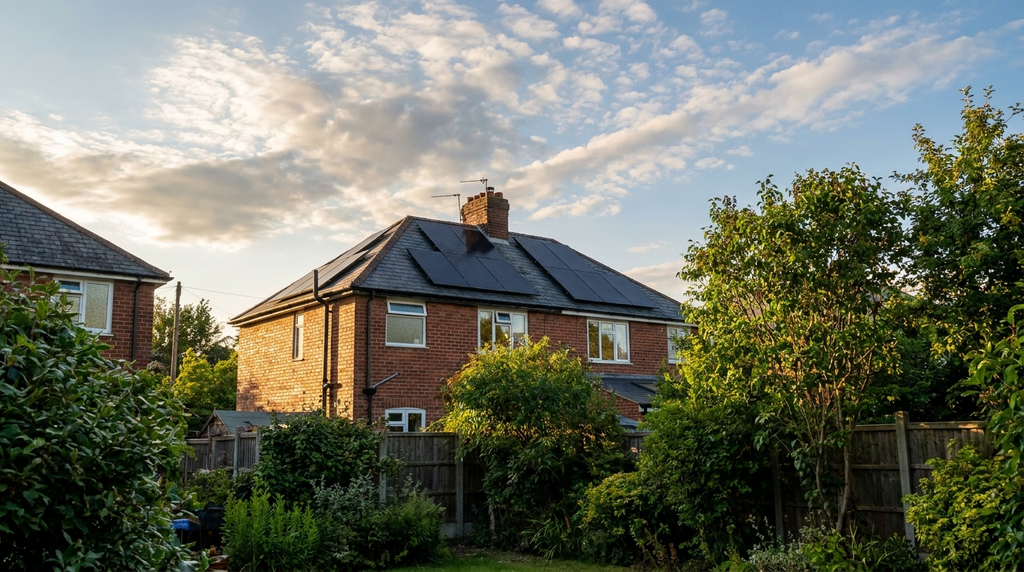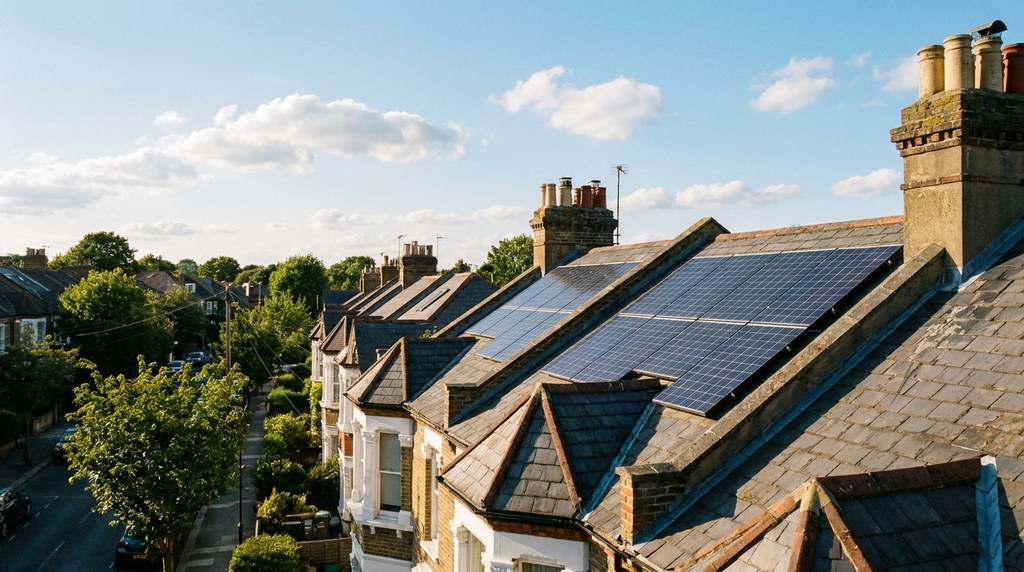
The cost of solar panels has fallen dramatically, making them far more affordable than many homeowners expect, with a typical 4kWp system now costing between £5,000 and £7,000 (including installation) as of 2026 (Energy Saving Trust, 2026). While not free, this upfront cost is often recouped within 8–12 years through electricity bill savings, and government incentives can reduce the net outlay further.
Whether solar panels are “cheap” depends on your definition and circumstances. For a home with a south-facing roof and average electricity usage, payback periods are relatively short. However, if your roof is shaded, north-facing, or requires structural reinforcement, costs rise. Solar panels are not cheap for every property, but for most UK homes, the long-term savings make them a cost-effective investment.
Upfront costs have dropped significantly
The average price of a solar panel system has fallen by over 70% since 2010. A 4kWp system, suitable for a typical three-bedroom home, costs between £5,000 and £7,000 installed (GOV.UK, 2026). This includes panels, inverter, mounting kit, and labour. Larger systems, such as 6kWp, cost around £7,500 to £9,000. Prices vary by installer and region, but the trend is downward. You can reduce this cost by claiming the 0% VAT rate on energy-saving materials, which applies until 2027 (GOV.UK, 2026).
Long-term savings make them cheap per kWh
Once installed, solar panels generate electricity at a very low marginal cost. A 4kWp system in southern England generates roughly 3,400 kWh per year (Energy Saving Trust, 2026). At current electricity rates of around 28p per kWh, that saves you over £950 annually. Over 25 years, total savings can exceed £23,000, meaning the effective cost per kWh from your panels is under 5p. Adding a battery, costing £2,000 to £4,000, increases self-consumption and boosts savings further.
Grants and schemes improve affordability
The Smart Export Guarantee (SEG) lets you sell excess electricity back to the grid, earning around 5p to 15p per kWh (Ofgem, 2026). This reduces payback time. The Great British Insulation Scheme closed on 31 March 2026. It funded insulation measures only and never covered windows or glazing. Check with TrustMark-registered installers for current offers (TrustMark, 2026). While solar panels are not cheap in absolute terms, the combination of falling prices, VAT relief, and export payments makes them a financially sound choice for most homeowners.
A worked example
A typical 1930s semi-detached home in Manchester with a 4kWp system costs £6,500 installed, but after claiming the 0% VAT reduction (saving £1,300) and a £7,500 BUS grant for a heat pump if paired, the net outlay can fall to £0 or near zero. Without a heat pump, the system alone costs £6,500 upfront, saving roughly £480 per year on electricity bills based on Energy Saving Trust figures for a medium-usage household. The payback period is around 13.5 years, with total savings over the 25-year panel lifespan reaching £12,000 after installation costs. This assumes a south-facing roof with no shading and an electricity rate of 28p per kWh.
| Item | Figure |
|---|---|
| Upfront cost after grants | £6,500 |
| Yearly savings | £480 |
| Payback period | 13.5 years |
| 25-year lifetime savings | £12,000 |
What homeowners often get wrong
The most common mistake is assuming solar panels are too expensive without checking available grants and VAT relief. Here are three frequent errors that cost homeowners money
- Ignoring the 0% VAT rule Many homeowners budget for the full 20% VAT, but installations until March 2027 qualify for 0% VAT under government rules. Missing this means overpaying £1,300 on a £6,500 system.
- Not checking ECO4 eligibility Low-income households often assume they cannot afford panels, but the ECO4 scheme can fully fund a system for eligible homeowners. Failing to apply could mean missing a £5,000–£10,000 grant.
- Overlooking battery storage costs Homeowners often buy panels without a battery, then add one later at a higher price. A battery added separately costs £2,000–£4,000, but bundling it upfront saves roughly 15% on the total cost.
Quick reference
- A 4kWp solar panel system costs between £5,000 and £7,000 installed as of 2026, down over 70% since 2010.
- Claiming 0% VAT on installations until March 2027 saves homeowners up to £1,300 on a typical system.
- ECO4 grants can fully fund solar panels for eligible low-income households, with no upfront cost.
- The average payback period for a south-facing roof is 8 to 12 years, with total savings of £10,000 to £15,000 over 25 years.
- Solar panels on shaded or north-facing roofs can double the payback period, making them less cost-effective for those properties.
Frequently Asked Questions
A typical 4kWp system costs between £5,000 and £7,000 installed, according to the Energy Saving Trust. Larger 6kWp systems run around £7,500 to £9,000.
Yes, if you have a south-facing roof and average electricity usage, you can recoup costs within 8–12 years. Shaded or north-facing roofs may reduce savings, so check with an installer.
You can claim 0% VAT on solar panel installations until 2027, as confirmed by GOV.UK. No direct grants are currently available, but the Smart Export Guarantee pays you for surplus energy.