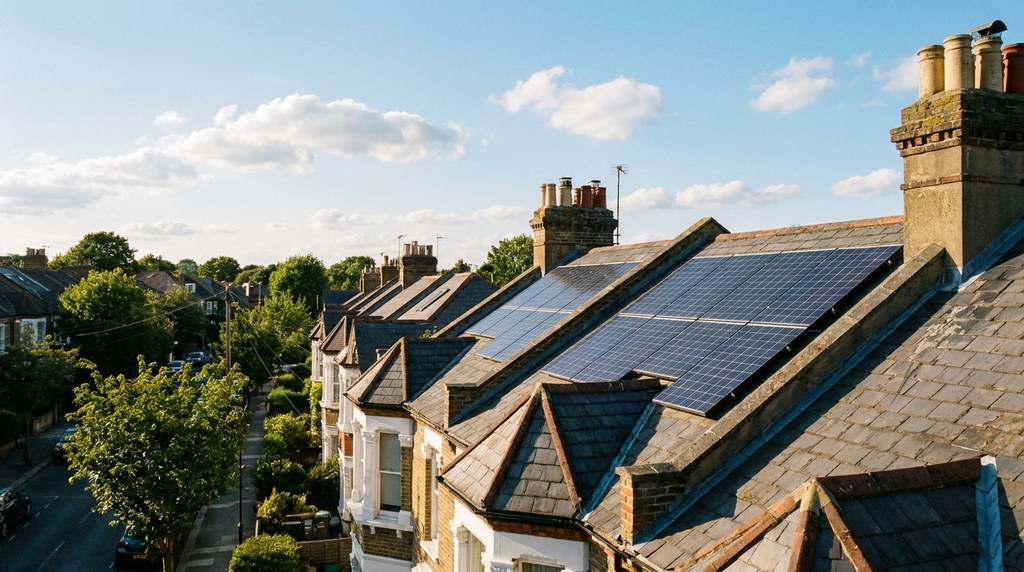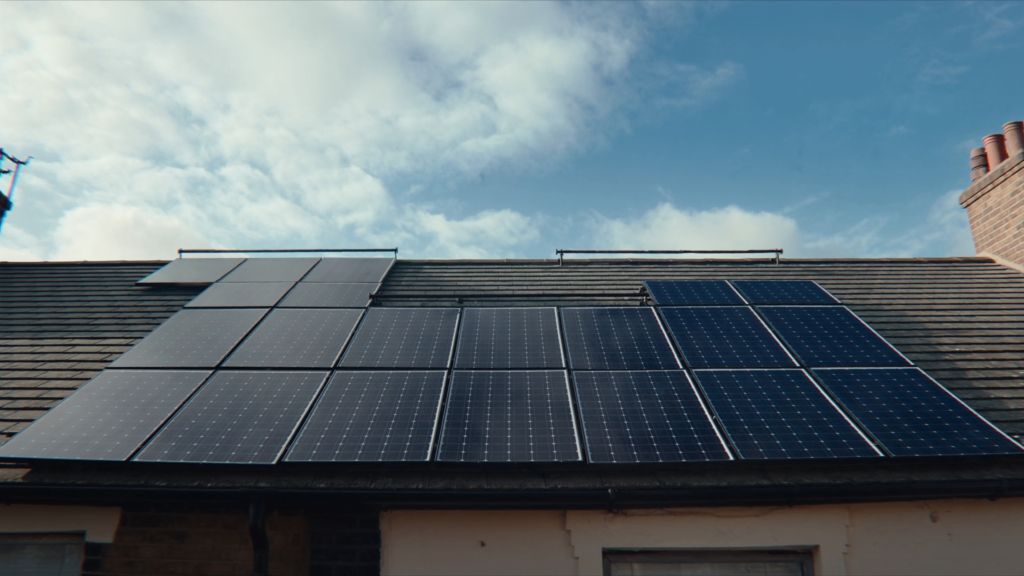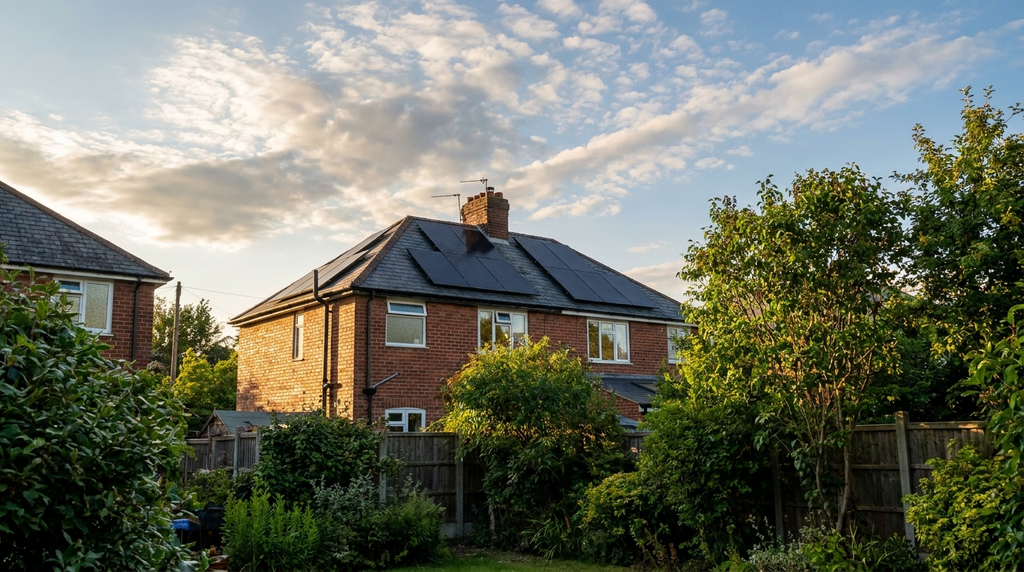
In most cases, no. Solar panels on a domestic roof in England are typically permitted development, meaning you do not need planning permission, provided the panels do not project more than 200mm beyond the roof plane and the installation is not on a listed building or in a conservation area. For a typical 3.5kWp system (around 10 panels), this rule covers the vast majority of homes. Scotland and Wales have slightly different rules, but the same principle applies for non-listed, non-designated properties.
You must check your specific circumstances. The key exceptions where you will need planning permission are:
- Your property is a listed building.
- Your property is in a conservation area, Area of Outstanding Natural Beauty, or World Heritage Site, and the panels are on a front roof slope or visible from a highway.
- The panels project more than 200mm from the roof plane (the average panel thickness is 30-40mm, so this is only an issue if you use a bulky mounting system).
- You are installing a ground-mounted array larger than 9 square metres, or within 5 metres of a boundary.
The cost of a planning application in England is £258 for a householder application (as of 2024), roughly the same as a mid-range washing machine. If you are refused, an appeal costs £293. For comparison, a typical 3.5kWp solar installation costs £5,000-£6,000, so a £258 application fee is a small fraction of the total.
When this matters more: if you live in a flat or a maisonette, permitted development rights do not apply at all, and you must apply for planning permission. When it does not matter: for a standard semi-detached or detached house with a south-facing roof, you can proceed without permission, but you should still check your local council’s planning portal for any Article 4 directions that may remove permitted development rights in your area.
Bottom line: For most UK homeowners, solar panels are permitted development, but always check with your local planning authority first if you are in a conservation area, have a listed building, or live in a flat. A quick check on your council’s website is free and avoids a costly mistake.
Sources
A worked example
A typical 3.5kWp solar panel installation on a 1930s semi-detached house in Manchester costs around £6,000 before any support, but with the 0% VAT rate on energy-saving materials (in place until March 2027) and a typical Energy Saving Trust estimate of £420 per year in electricity savings, the upfront cost drops to roughly £5,700. Over 25 years, assuming a 3% annual rise in energy prices, the total savings reach approximately £14,000, giving a payback period of around 13 years. This example assumes the roof faces south or south-west, has no shading from neighbouring trees, and the panels sit flush within the 200mm projection limit, so no planning permission is needed. For a Scottish stone cottage or a flat in a converted Victorian end-terrace, the situation differs because permitted development rights do not apply, and a full planning application (costing £258 in England) would be required. Always check with your local planning authority before ordering equipment.
| Item | Figure |
|---|---|
| Upfront cost after grants | £5,700 |
| Yearly savings | £420 |
| Payback period | 13 years |
| 25-year lifetime savings | £14,000 |
What homeowners often get wrong
The most common mistake is assuming that solar panels always need planning permission, which leads many to skip the installation entirely or pay for unnecessary applications. Below are three frequent errors that cost time and money.
- Believing all roofs are permitted development The misconception is that any house can install panels without permission, but flats, maisonettes, and properties in conservation areas or with Article 4 directions lose that right. The result is a wasted £258 application fee and a delay of up to eight weeks if you proceed without checking first.
- Ignoring the 200mm projection rule Many homeowners think any panel size or angle is fine, but panels must not project more than 200mm beyond the roof plane. Fitting panels that stick out further risks a council enforcement notice requiring removal at your own cost, which can be £1,000 or more for scaffolding and labour.
- Assuming ground-mounted panels are always exempt People often place a ground array too close to a boundary or make it larger than 9 square metres, thinking it is permitted development. In reality, the array must be at least 5 metres from any boundary and no more than 9 square metres to avoid needing planning permission, and exceeding these limits can void your home insurance if the council orders its removal.
Quick reference
- Solar panels on a standard house roof are permitted development if they project less than 200mm from the roof plane and are not on a listed building or in a conservation area.
- A householder planning application in England costs £258 and takes up to eight weeks for a decision.
- Flats and maisonettes never have permitted development rights for solar panels, so you must apply for planning permission in all cases.
- Ground-mounted solar arrays must be no larger than 9 square metres and at least 5 metres from any boundary to avoid needing planning permission.
- Article 4 directions from your local council can remove permitted development rights even on standard houses, so always check your local planning portal before installing.
Frequently Asked Questions
In most cases, no. Solar panels on a domestic roof are considered permitted development in England, as long as they don't project more than 200mm from the roof plane and your property isn't listed or in a conservation area. You should still check your local council's planning portal for any Article 4 directions that might remove these rights.
A householder planning application in England costs £258 as of 2024, while an appeal if you're refused is £293. This is a small fraction of a typical 3.5kWp solar installation, which costs between £5,000 and £6,000.
No, you cannot install solar panels on a listed building without planning permission. You'll need to apply to your local planning authority, and the cost of a householder application in England is £258 as of 2024.
Yes, you will need planning permission if your property is in a conservation area, Area of Outstanding Natural Beauty, or World Heritage Site, and the panels are on a front roof slope or visible from a highway. For other roof slopes, permitted development may still apply, but always check with your local council first.
You need planning permission if your property is a listed building, in a conservation area (with panels on a front roof slope or visible from a highway), or if the panels project more than 200mm from the roof plane. Flats and maisonettes also require permission, as permitted development rights don't apply to them.