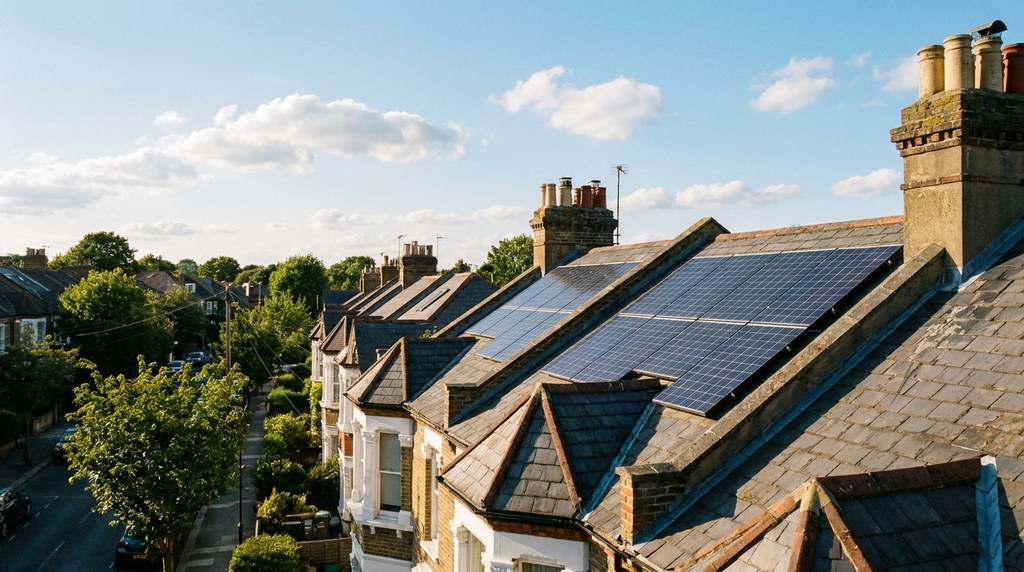
Solar panels need sunlight, a suitable roof or mounting surface, an inverter, and connection to your home’s electrical system or battery storage to generate usable electricity. The Energy Saving Trust confirms that a typical 3kWp solar photovoltaic (PV) system in the UK generates around 2,650 kilowatt-hours (kWh) per year, depending on location and orientation (Energy Saving Trust, 2026).
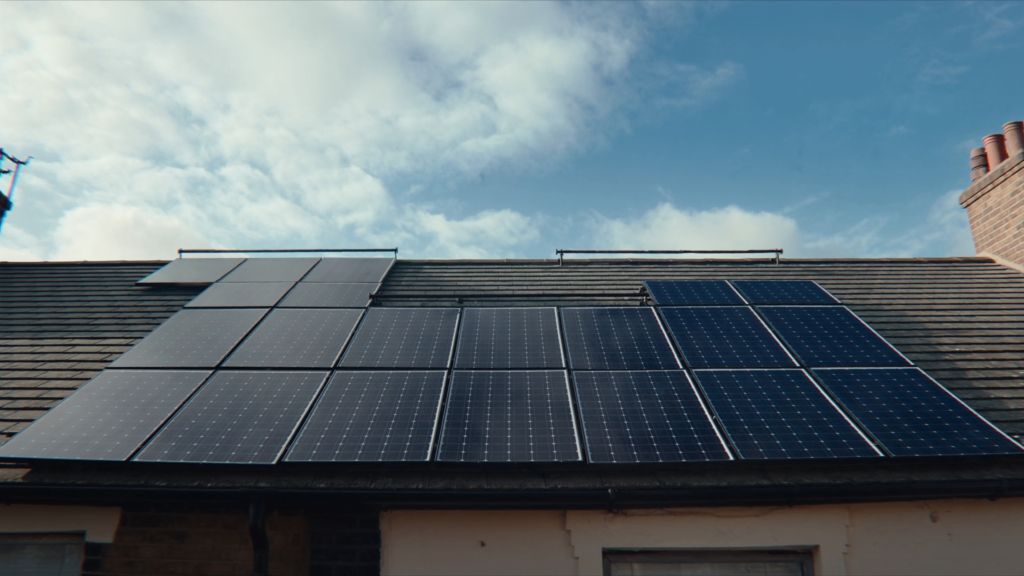
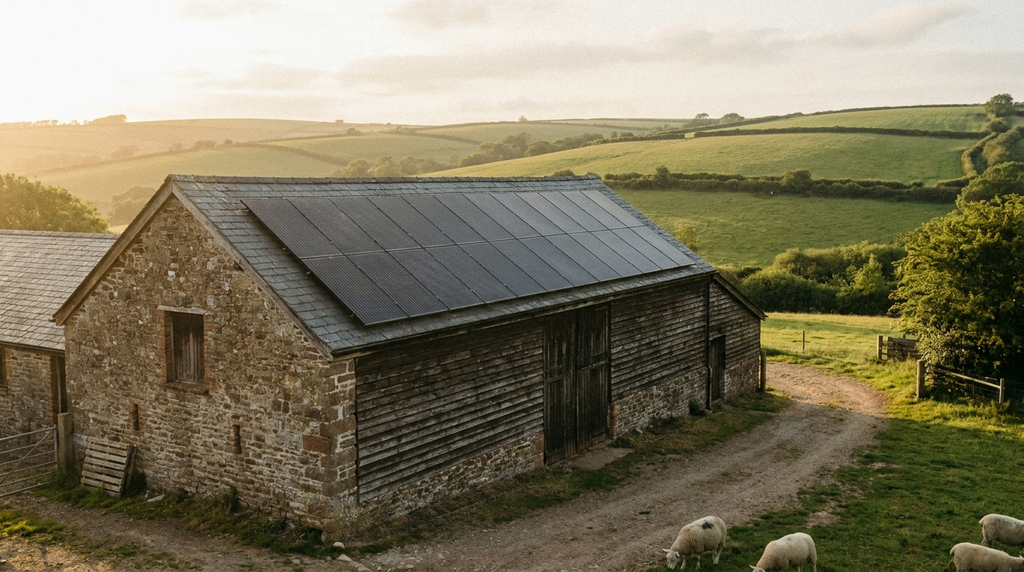
The single most important factor is direct sunlight, but solar panels also work on cloudy days, just at reduced output. A south-facing roof at a 30-40 degree tilt is ideal, but east or west-facing roofs can still produce 70-80% of the maximum. Shading from trees, chimneys, or neighbouring buildings significantly cuts performance, so a clear, unshaded location is critical. You also need enough roof space: a typical 3kWp system requires around 20 square metres.
Sunlight and roof orientation determine output
Solar panels require sunlight, not direct heat, to generate electricity. The UK average solar radiation is about 1,000 kWh per square metre per year, but this varies by region. The south of England receives roughly 20% more sunlight than Scotland. According to the Energy Saving Trust, a south-facing roof at a 30-degree tilt produces 100% of the optimum output, while east or west-facing roofs produce around 80% (Energy Saving Trust, 2026). A north-facing roof is generally unsuitable, producing as little as 50-60% of the maximum.
Inverter and electrical connection are essential
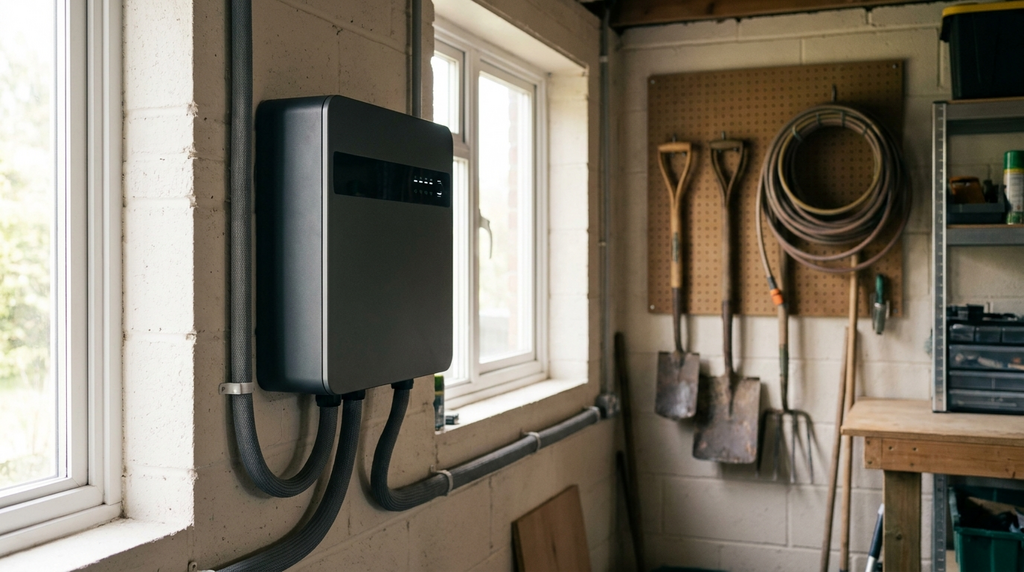
Solar panels produce direct current (DC) electricity, but your home uses alternating current (AC). An inverter converts DC to AC, making the power usable. Most modern systems use a string inverter, which connects all panels in a series, or microinverters attached to each panel. Without an inverter, the electricity from the panels cannot power your appliances or be exported to the grid. The Microgeneration Certification Scheme (MCS) certifies installers and equipment; using an MCS-certified inverter and installer is mandatory for eligibility under the Smart Export Guarantee (SEG) (MCS, 2026).
Grid connection or battery storage for full functionality
To use solar power when the sun isn’t shining, you need either a grid connection or battery storage. Without either, excess daytime generation is lost. Under the Smart Export Guarantee (SEG), licensed energy suppliers pay you for surplus electricity exported to the grid. Ofgem states that SEG rates are set by individual suppliers, typically between 4p and 15p per kWh (Ofgem, 2026). Battery storage allows you to store excess power for evening use, increasing self-consumption from around 30% to up to 70%.
A worked example
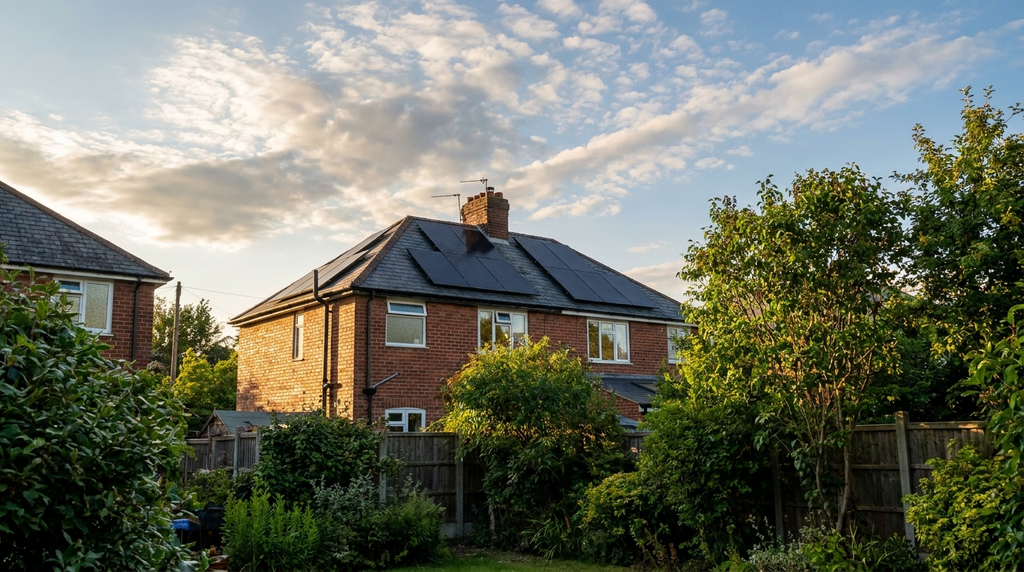
A typical 1930s semi-detached house in Manchester with a 3.5kWp solar PV system costs roughly £7,000 after the 0% VAT reduction (in place until March 2027). The Energy Saving Trust estimates this system generates around 3,000 kWh per year, saving about £480 annually on electricity bills with the current price cap of 24.5p per kWh. If you add a 5.2kWh battery for an extra £2,000, you can store excess daytime generation and use it in the evening, boosting savings to roughly £700 per year. Without a battery, you export surplus power to the grid via the Smart Export Guarantee at around 15p per kWh. The system pays back in about 10 years, and with a 25-year lifespan, total lifetime savings reach approximately £12,000. You need a south-facing roof with minimal shading, around 20 square metres of clear space, and a suitable inverter to convert DC to AC power for household use.
| Item | Figure |
|---|---|
| Upfront cost after grants | £7,000 |
| Yearly savings | £700 |
| Payback period | 10 years |
| 25-year lifetime savings | £12,000 |
What homeowners often get wrong
The most common mistake is assuming solar panels need direct, blazing sunshine to work. Here are three critical errors that can cost you money or void your warranty.
- Believing panels are useless in winter or on cloudy days Solar PV cells work with daylight, not direct heat, so UK panels still generate 10-25% of their summer output on overcast winter days. Ignoring this can lead to oversizing your system and wasting £1,000+ on unnecessary capacity.
- Thinking a south-facing roof is the only option East or west-facing roofs produce 70-80% of the maximum output, which still saves £350-£500 per year on a 3.5kWp system. Rejecting a perfectly good east-facing roof because of this myth can mean missing out on a 10-year payback period.
- Forgetting to check for shading before installation Shading from a single chimney or tree branch can cut a whole panel’s output by 50% or more, and standard string inverters can’t fix this. Installing without a shading survey risks voiding your warranty and losing £200+ in annual savings.
Quick reference
- Solar panels need daylight, not direct sunlight, to generate electricity even on cloudy UK days.
- A south-facing roof at a 30-40 degree tilt produces 100% of optimum output, while east or west-facing roofs achieve 70-80%.
- You need a minimum of 20 square metres of clear, unshaded roof space for a typical 3kWp system.
- The average UK solar PV system generates around 2,650 kWh per year, saving approximately £480 annually on electricity bills.
- Shading from trees, chimneys, or neighbouring buildings can reduce panel output by over 50% and may void your warranty.
Frequently Asked Questions
Yes, direct sunlight produces the highest output, but solar panels still generate electricity on cloudy days. The Energy Saving Trust confirms output drops to around 10-25% in overcast conditions.
South-facing roofs at a 30-40 degree tilt are ideal. According to the Energy Saving Trust, east or west-facing roofs still produce 70-80% of the maximum output.
A typical 3kWp system needs around 20 square metres of clear, unshaded roof space. The Energy Saving Trust recommends checking for shading from trees or chimneys.