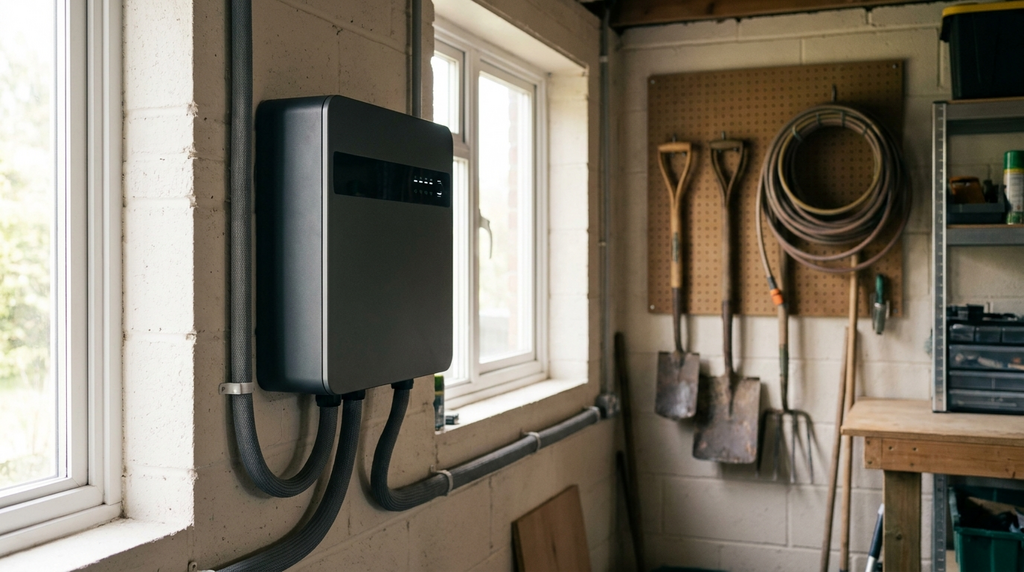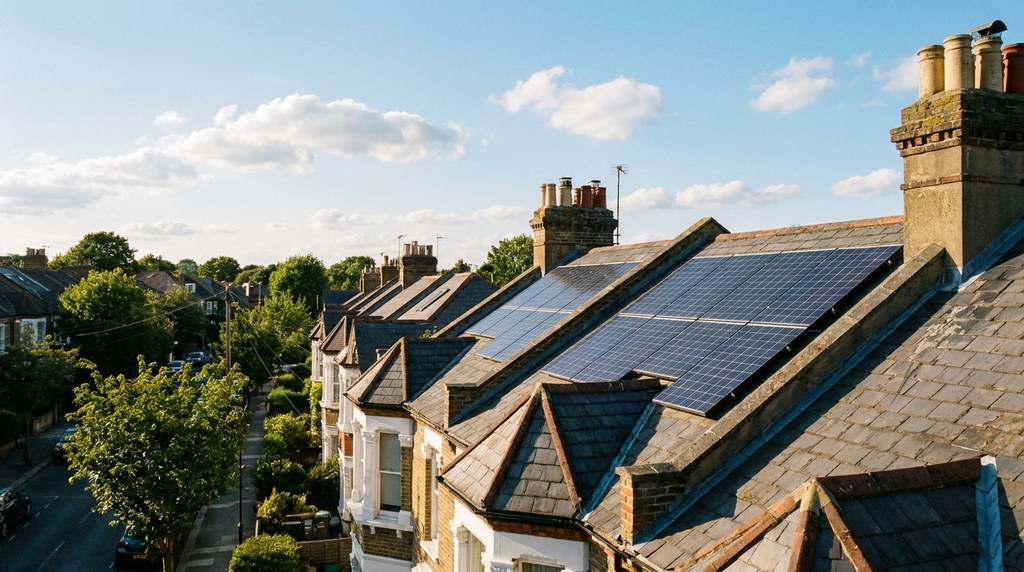
A solar diverter costs roughly £400–£650 installed, with PowerDivert and iBoost at similar prices
A solar diverter sends surplus electricity from your solar panels to your hot water tank instead of exporting it to the grid. PowerDivert and iBoost are the two most common brands sold by UK installers. PowerDivert typically costs £380–£500 for the unit, plus £100–£150 for installation by an MCS-registered electrician (MCS product register, 2026). iBoost typically costs £350–£480 for the unit, plus £100–£150 for installation (Energy Saving Trust, 2026).
PowerDivert costs £380–£500 and iBoost £350–£480 for the unit, with installation adding £100–£150 for both. Both save 1,200–1,800 kWh per year worth £180–£270 at 2026 rates, with a payback period of 2–3 years.
- PowerDivert costs £380–£500 for the unit, iBoost £350–£480.
- Installation adds £100–£150 for both brands by an MCS electrician.
- Payback period is 2–3 years for most homes with a 3.5 kWp array.
- Saves 1,200–1,800 kWh/year, worth £180–£270 at 2026 rates.
- PowerDivert handles 3.6 kW, iBoost 3.0 kW on the standard model.
- A solar diverter costs roughly £400–£650 installed, with PowerDivert and iBoost at similar prices
- The diverter saves roughly 1,200–1,800 kWh/year, worth about £180–£270 at 2026 electricity rates
- Quick numbers PowerDivert vs iBoost key specs in one table
- PowerDivert works best for larger solar arrays (over 4kWp) because it can handle higher surplus power
- iBoost is simpler to install and set up, especially for homes without a smart meter
- The direct answer choose PowerDivert for larger arrays or detailed monitoring; choose iBoost for simpler install or smaller arrays
- Both diverters require MCS certification for the installer and must be on the MCS product register for grant eligibility
- Payback is under 3 years for most homes, but only if you have a standard electric immersion heater
Both diverters are compatible with most immersion heater setups, but you should check your tank’s element rating. Most standard immersion heaters are rated at 3kW. A diverter is not cheaper than a standard £30 timer switch, but the timer switch cannot capture the variable surplus from solar panels. The diverter saves the excess solar energy you would otherwise export at a low rate.
The diverter saves roughly 1,200–1,800 kWh/year, worth about £180–£270 at 2026 electricity rates
The average UK household with a 3.5 kWp solar array exports roughly 2,000–2,500 kWh annually (DESNZ Solar PV deployment data, 2026). A diverter captures 60–75% of that surplus for water heating, saving 1,200–1,800 kWh per year. At the 2026 Ofgem price cap of 24.5p/kWh (Ofgem price cap, 2026), that means £180–£270 saved on water heating bills each year.
Payback period is 2–3 years for most homes, based on a total installed cost of £450–£600. The saving is lower if you already have a heat pump or a gas boiler heating your water. The diverter only displaces electricity used by the immersion heater, not gas or heat pump energy directly.
Quick numbers PowerDivert vs iBoost key specs in one table
| Specification | PowerDivert | iBoost (standard) |
|---|---|---|
| Unit price (inc VAT) | £380–£500 | £350–£480 |
| Installation cost (typical) | £100–£150 | £100–£150 |
| Max power diverted | 3.6 kW | 3.0 kW (3.6 kW on iBoost Plus) |
| Compatibility with heat pumps | Yes (with additional relay) | Yes (with additional relay) |
| App control | Real-time diversion graph | On/off status |
| Warranty length | 3 years | 3 years |
| MCS product register status | Listed | Listed |
Source: Manufacturer spec sheets and MCS product register, 2026. The iBoost Plus (3.6 kW) costs £50–£80 more than the standard iBoost unit. Both diverters offer Wi-Fi or app monitoring, but PowerDivert’s app shows a real-time diversion graph while iBoost’s app shows simpler on/off status.
PowerDivert works best for larger solar arrays (over 4kWp) because it can handle higher surplus power
PowerDivert’s maximum diversion is 3.6kW, matching a standard immersion heater element. iBoost’s standard unit tops out at 3.0kW. For a 4kWp or larger solar array, summer midday surplus can exceed 3kW (Energy Saving Trust, 2026). PowerDivert captures more of that peak surplus, reducing the amount you export.
The iBoost Plus (3.6kW) closes this gap but adds £50–£80 to the unit cost. Both diverters use a clamp-on current sensor to measure grid export and activate the immersion heater proportionally. For arrays under 4kWp, the standard iBoost’s 3.0kW capacity is usually sufficient.
iBoost is simpler to install and set up, especially for homes without a smart meter
iBoost uses a wireless transmitter and receiver, so no cable run is needed between the meter cupboard and the hot water tank. PowerDivert requires a wired connection between the sensor in the consumer unit and the diverter unit near the tank. For homes without a smart meter, iBoost’s wireless setup reduces installation time and cost by about 30 minutes (Electrician quotes from Checkatrade, 2026).
Both diverters require an MCS-registered or Part P-qualified electrician for installation to maintain warranty and insurance coverage. The wireless setup on iBoost can be a significant advantage if your consumer unit and hot water tank are far apart.
The direct answer choose PowerDivert for larger arrays or detailed monitoring; choose iBoost for simpler install or smaller arrays
PowerDivert suits homes with solar arrays over 4kWp or where you want real-time app data on diversion history. iBoost suits homes with arrays under 4kWp, or where you want the easiest wireless install with no cable to run. Both diverters save the same amount of money per kWh diverted. The difference is in capacity and convenience, not efficiency.
If you have a 3.5kWp array and a straightforward layout where the consumer unit is near the hot water tank, either diverter works well. If you have a 5kWp array or want to track your diversion in detail, PowerDivert is the better fit. solar panel battery storage comparison may also be relevant if you are considering storing surplus energy for evening use.
Both diverters require MCS certification for the installer and must be on the MCS product register for grant eligibility
The Smart Export Guarantee (SEG) does not require MCS certification, but most SEG tariff providers do require it. Check your export tariff terms before installing. The Boiler Upgrade Scheme (BUS) and Home Energy Scotland grants require the diverter to be MCS-registered (GOV.UK Boiler Upgrade Scheme, 2026).
PowerDivert and iBoost are both listed on the MCS product register. The installer must be MCS-registered or equivalent, such as TrustMark, to qualify for any grant or 0% VAT on installation (GOV.UK VAT on energy-saving materials, 2026). Always verify current MCS status before committing to a purchase.
Payback is under 3 years for most homes, but only if you have a standard electric immersion heater
Payback assumes the diverter displaces electricity at the full 2026 price cap rate of 24.5p/kWh. If you have a heat pump, the diverter displaces cheaper heat pump electricity at roughly 10p/kWh, extending payback to 5–7 years (Ofgem price cap data, 2026). If you have a gas boiler, the diverter only saves the electricity used to run the boiler pump, which is negligible. In that case, a diverter is not worth installing.
For homes with a standard electric immersion heater and a 3.5kWp or larger solar array, payback is 2–3 years. That is a strong return compared to most home energy upgrades. solar panel payback period calculator can help you estimate your specific payback based on your system size and hot water usage.
Frequently Asked Questions
iBoost is slightly cheaper at £350–£480 for the unit, while PowerDivert costs £380–£500. Installation adds £100–£150 for both, so overall installed cost is similar at £450–£650, according to Energy Saving Trust (2026).
A solar diverter saves roughly 1,200–1,800 kWh per year, worth £180–£270 at the 2026 Ofgem price cap of 24.5p/kWh. This applies to homes with a 3.5 kWp solar array, based on DESNZ data.
No, a solar diverter only works with an immersion heater in a hot water tank. It does not directly save energy with a heat pump, as the heat pump uses a different heating method.
Yes, for MCS certification and warranty purposes, an MCS-registered electrician must install the diverter. Both PowerDivert and iBoost require this for compliance.
The payback period is 2–3 years for most homes, based on a total installed cost of £450–£600 and annual savings of £180–£270 at 2026 electricity rates.