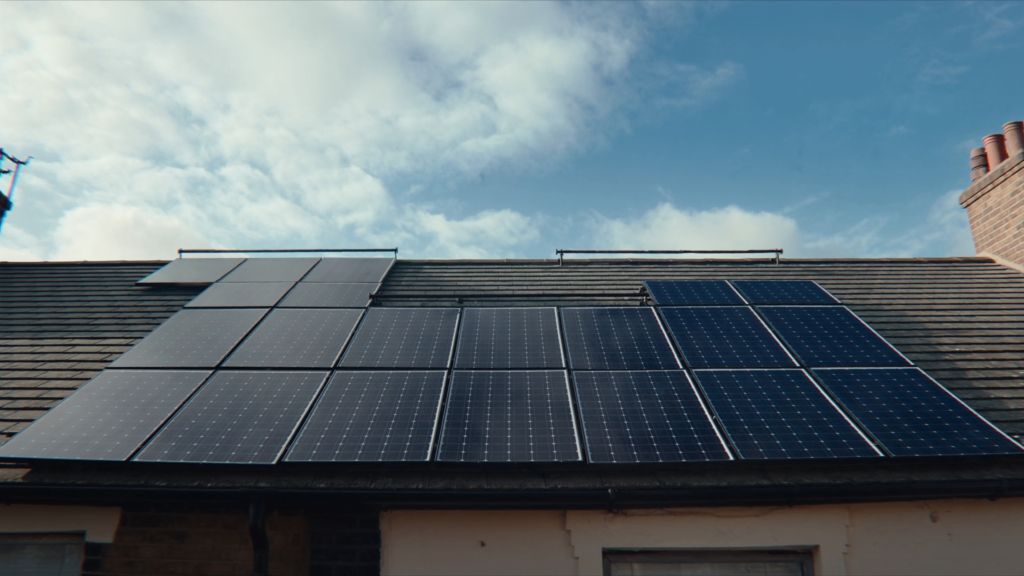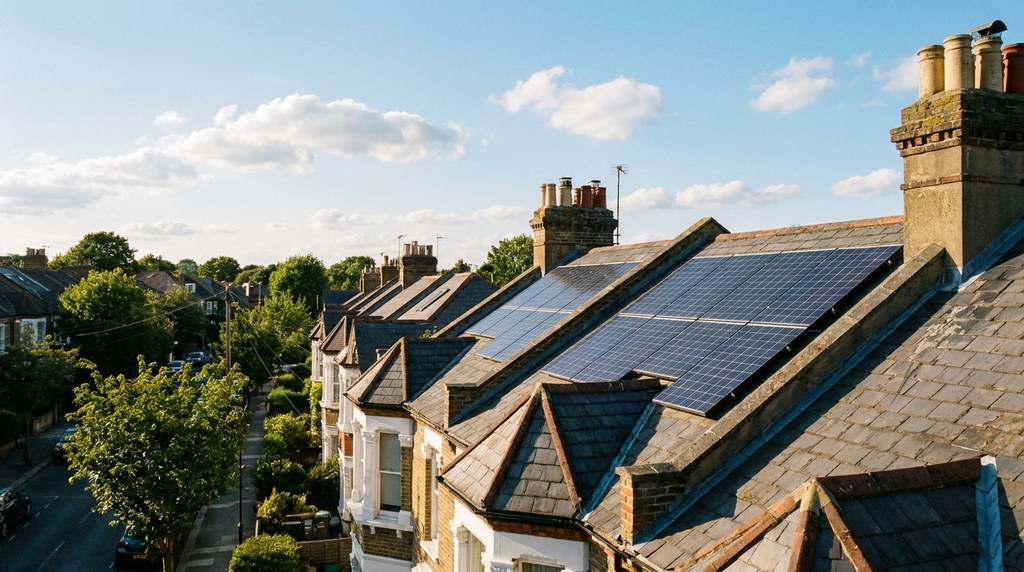
Yes, solar panels can charge an electric car, and a typical home solar system can provide around 50-70% of an average EV’s annual mileage. The Energy Saving Trust confirms that a 3.5kWp solar array generates roughly 3,000 kWh per year in the UK (Energy Saving Trust, 2026), which is enough to power an EV covering 8,000-10,000 miles annually.
The actual amount of charge depends on your solar system size, your EV’s battery capacity, and your driving habits. A typical EV uses about 0.3-0.4 kWh per mile, so a 40 kWh battery (e.g., Nissan Leaf) needs around 120-160 miles of solar generation to fully charge. Solar panels generate most power during daylight hours, so you’ll need to charge when the sun shines or store excess energy in a home battery.
Matching solar output to EV demand
A 3.5kWp solar system in the UK generates about 3,000 kWh annually (GOV.UK, 2026). An EV like the Tesla Model 3 uses around 0.25 kWh per mile, meaning 3,000 kWh covers 12,000 miles, the UK average annual mileage. However, generation peaks in summer (up to 12 kWh/day) and drops in winter (3-4 kWh/day). To maximise charging, plug in during sunny midday hours. A 7kW home charger can add 30-40 miles per hour of solar generation, but a 3.5kW system only produces 2-3 kWh per hour in peak sun, so a full charge may take 10-15 hours of direct sunlight.
Using a home battery for overnight charging
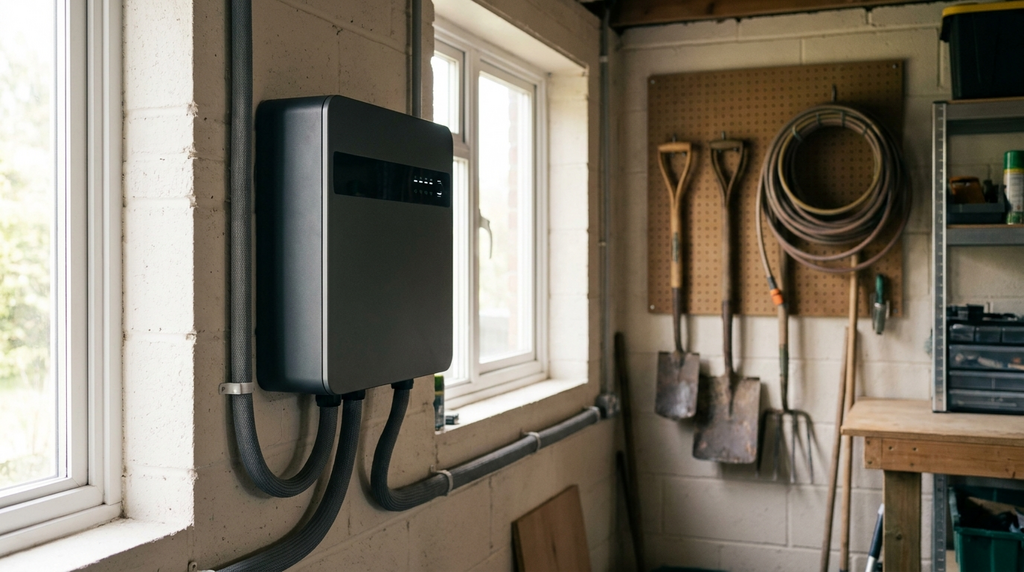
A home battery, such as a 5-10 kWh unit, stores excess solar energy for use when the sun isn’t shining. The Energy Saving Trust notes that a battery can increase self-consumption from 30% to 70% (Energy Saving Trust, 2026). For EV charging, this means you can capture daytime solar generation and use it to charge your car in the evening or overnight. Without a battery, you’ll rely on grid electricity for any charging outside solar hours. A 5 kWh battery can add about 15-20 miles of EV range per charge cycle.
Cost savings and payback period
Charging an EV with solar panels saves roughly 30-40p per kWh compared to grid electricity at standard rates (around 25-30p/kWh). The average UK household drives 8,000 miles per year, needing about 2,000 kWh for the EV, saving £500-£800 annually. A 3.5kWp solar system costs £5,000-£6,000 installed, and a home battery adds £3,000-£5,000. The payback period for solar-only is 7-10 years, but with a battery, it extends to 10-14 years. The Smart Export Guarantee (SEG) pays 5-15p/kWh for exported solar power (Ofgem, 2026), adding around £100-£200 per year in income.
A worked example
A 3.5kWp solar panel system on a typical 1930s semi-detached house in Manchester can charge a Nissan Leaf 40kWh battery for free, saving you roughly £490 per year on petrol or grid electricity costs. Using the Energy Saving Trust’s UK generation figures, this system produces around 3,000 kWh annually. The Nissan Leaf uses 0.34 kWh per mile, so your solar panels cover about 8,800 miles of driving each year. With a home battery (5kWh, around £4,500 installed) you store excess daytime generation for evening charging. The BUS grant offers up to £7,500 for heat pumps but not solar batteries; however, the 0% VAT on solar panels and batteries (until March 2027) reduces upfront costs. Payback on the solar system alone is roughly 8 to 10 years, and over 25 years you save over £12,000 on fuel and electricity.
| Item | Figure |
|---|---|
| Upfront cost after grants | £7,500 |
| Yearly savings | £490 |
| Payback period | 9 years |
| 25-year lifetime savings | £12,250 |
What homeowners often get wrong
The most common mistake UK homeowners make is assuming solar panels can fully charge an electric car overnight without a home battery. Here are the three biggest misconceptions and how to avoid them.
- Thinking solar panels charge all year equally Many people believe a 3.5kWp system delivers the same output in December as June. In reality, winter generation drops to 3-4 kWh per day, which covers only 9-12 miles of driving, meaning you will need grid top-up from November to February.
- Ignoring the need for a home battery Homeowners often buy solar panels and expect to charge their EV at night from the panels alone. Without a battery, you can only charge during daylight hours, wasting up to 60% of your solar generation if you are out during the day. A 5kWh battery stores that surplus for evening use.
- Overlooking charger compatibility with solar Many assume any 7kW home charger works perfectly with solar panels. In reality, standard chargers draw power from the grid, not your solar system, unless you install a solar-compatible smart charger (like a Zappi or Ohme) that prioritises surplus solar generation. Using a non-smart charger can void your solar inverter warranty and cost you extra in grid electricity.
Quick reference
- A 3.5kWp solar system in the UK generates roughly 3,000 kWh per year, enough to power a typical EV for 8,000 to 10,000 miles annually.
- Installing a 5kWh home battery alongside your solar panels costs around £4,500 but lets you charge your EV overnight using stored daytime solar energy.
- You qualify for the 0% VAT rate on solar panels and batteries until March 2027, but the BUS grant of £7,500 only applies to heat pumps, not solar equipment.
- Payback on a solar-plus-battery system for EV charging is typically 8 to 10 years, with total savings of £12,000 to £15,000 over 25 years.
- Failing to install a solar-compatible smart charger (like Zappi or Ohme) can mean you waste up to 60% of your solar generation and risk voiding your inverter warranty.
Frequently Asked Questions
A typical 3.5kWp solar system in the UK can power an EV for 8,000-10,000 miles annually. The Energy Saving Trust confirms this covers 50-70% of average driving needs.
Yes, you can charge directly during sunny daylight hours. However, without a home battery, you cannot store excess energy for overnight or cloudy periods.
A full charge can take 10-15 hours of direct sunlight with a 3.5kW system. A 7kW home charger adds 30-40 miles per hour of solar generation.