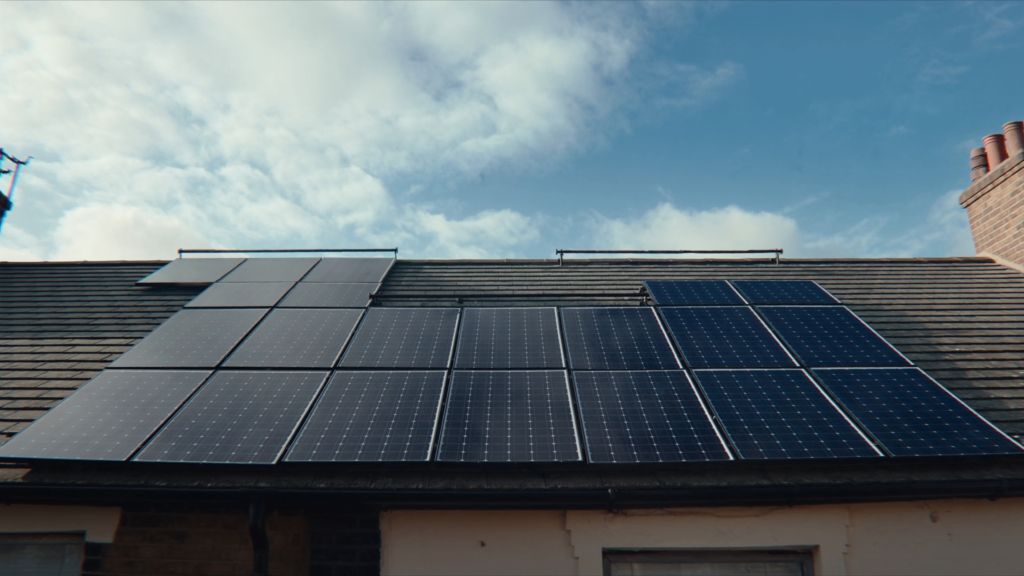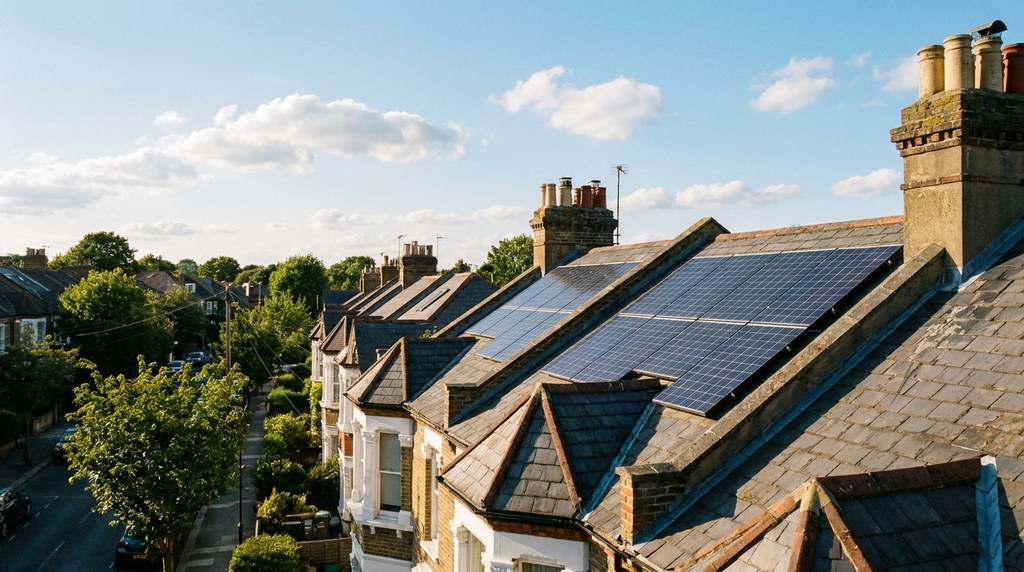
You could save £5,000–£8,000 by taking your solar panels, here is what that figure depends on
Moving house with a solar PV system raises a practical financial question. Should you take the panels with you or leave them for the next owner?
The direct answer is that if you own the panels outright, you could save between £5,000 and £8,000 by moving them instead of buying a new system. That saving is the gap between the cost of removal and reinstallation (£1,500–£3,000) and the cost of a brand-new 4 kWp system (£6,000–£11,000), according to MCS installer pricing data and DESNZ cost surveys (MCS Installer Pricing Index, 2026; DESNZ Solar PV Cost Data, 2026).
That saving assumes three things. First, the panels are still under warranty, most manufacturers offer 25-year performance warranties, but if your system is older than 10 years, the warranty may have expired or be non-transferable. Second, the roof you are moving to is straightforward: a standard pitched roof with no complex valleys, skylights, or fragile tiles. Third, the inverter, which typically lasts 10–15 years and costs £800–£1,500 to replace, is still in good condition (Energy Saving Trust, 2026). If the inverter needs replacing at the same time, the net saving shrinks by that amount.
Your legal right to take solar panels depends on your ownership and contract
Whether you can physically remove the panels comes down to one legal question: do you own them? If you bought the system outright with cash or an unsecured loan, you own the panels and can take them, subject to any decommissioning clause in the original installation contract. Some contracts require you to leave the system in place or pay a removal fee. Check the small print before you instruct a removal company (GOV.UK Solar Panel Ownership Guidance, 2026).
If the panels were installed under a “free solar” scheme, a lease or Power Purchase Agreement (PPA), you do not own them. The installer or a third-party company owns the panels, and you cannot remove them without written permission from the owner. In most cases, the lease or PPA transfers to the new homeowner as part of the sale, which can complicate the transaction.
If you took out a secured loan against the property to pay for the panels, the lender may have registered a charge on the system. You must settle the loan in full or obtain a formal release before removal. Your solicitor will handle this during the conveyancing process.
The legal steps to transfer ownership or remove panels when selling
If you decide to leave the panels for the buyer, you must disclose the system’s age, warranty status, and annual output in the Property Information Form (TA6). Failure to do so can void the sale or lead to a claim for misrepresentation after completion (Law Society Solar Panels and Conveyancing Practice Note, 2026).
If you plan to remove the panels, your solicitor will need to provide the buyer’s solicitor with a written statement confirming that the panels are excluded from the sale. That statement must also confirm that the roof will be made good, tiles replaced, felt and battens repaired, and the roof waterproofed to current building regulations. The cost of making good the roof is typically £200–£500 and is your responsibility.
The Smart Export Guarantee (SEG) registration is tied to the property, not the owner. If you leave the panels, you must cancel your SEG agreement, and the buyer must register a new one under their name and MPAN. If you take the panels, you must cancel the SEG agreement and register a new one at your new property (Ofgem SEG Guidance, 2026).
Quick numbers, removal costs, reinstallation costs, and lost export income
| Item | Typical cost range | What it covers | Who to hire |
|---|---|---|---|
| Removal | £1,000–£2,000 | Disconnect panels, inverter, and cabling; remove roof mounts; make good roof tiles | MCS-certified solar installer |
| Reinstallation | £1,500–£3,000 | New roof mounts, rewire, reconnect inverter, test system | MCS-certified solar installer |
| Roof compatibility check | Often included in reinstallation quote; £300–£600 separately | Structural engineer report to confirm roof can bear ~250 kg load | Structural engineer (via installer or direct) |
| Lost export income during downtime | £100–£150 per month (1–2 months) | No generation or export payments while system is disconnected and reinstalled | N/A |
| Total cost to move the system | £2,500–£5,000 | Removal + reinstallation + roof check + lost income | N/A |
These figures come from the MCS Installer Pricing Index (2026) and Ofgem’s average SEG export tariff data (MCS, 2026; Ofgem SEG Data, 2026). The total cost to move the system is £2,500–£5,000, compared with £6,000–£11,000 for a new system, so the net saving remains positive for most homeowners.
The direct answer, yes, you can take your solar panels, but only if you own them and the new roof is suitable
Ownership is the single condition that determines whether you can take your solar panels when you move. If you paid for the system outright and have no lease, PPA, or secured loan, you can physically remove them and reinstall them at your new property.
The new property must have a suitable roof. The ideal orientation is south-facing or within 45 degrees of south, with a pitch between 10 and 60 degrees. If the roof faces east or west, the system’s annual output drops by 15–20%; if it faces north, the drop can be 30–50% (MCS Standard MIS 3002, 2026). Significant shading from trees, chimneys, or neighbouring buildings can reduce output further.
You also need to check the structural capacity of the new roof. A standard 4 kWp array adds approximately 250 kg of load. A structural engineer’s report costs £300–£600 and is usually included in a full reinstallation quote. If the roof requires reinforcement, for example, if it is a lightweight timber frame or has existing structural issues, the cost can add £500–£2,000 to the project.
Eligibility and certification, what you need to verify before moving the system
To keep your system eligible for the Smart Export Guarantee (SEG) after reinstallation, the removal and reinstallation must be carried out by an MCS-certified installer. If you use a non-MCS installer, you lose the right to export electricity and receive payments, the SEG requires MCS certification for all new and relocated systems (MCS Transfer of Ownership and Reinstallation Guidance, 2026).
The reinstallation must comply with current MCS standards (MIS 3002), which include updated fire safety rules, for example, DC isolator placement and cable routing requirements that may not have been in place when your system was first installed. If your existing system does not meet these standards, the installer may need to upgrade components or reroute cables, adding £200–£500 to the cost.
The electrical connection, the DC isolator and the AC connection to the consumer unit, must be carried out by an electrician registered with NICEIC or NAPIT. This is a separate certification requirement from MCS, and the same installer may hold both qualifications (NICEIC Solar PV Installation Scope, 2026).
How the Smart Export Guarantee (SEG) changes when you move the system
When you remove the panels from your current property, your SEG agreement ends. You must notify your SEG licensee, the energy supplier you export to, within 30 days of removal. If you do not, you may be liable for overpayments or administrative penalties (Ofgem SEG Guidance for Generators, 2026).
When you reinstall the panels at your new property, you must register a new SEG agreement. The new agreement is tied to the new property’s MPAN (Meter Point Administration Number), and your old SEG tariff does not transfer. You will need to shop around for a new SEG tariff, which as of 2026 averages 6.5 pence per kilowatt-hour (p/kWh) across all suppliers.
Your annual export income will change based on the new property’s generation potential. If the new roof is less efficient, for example, east-facing instead of south-facing, your annual export volume will be lower, and your income will drop accordingly. Conversely, if the new property has a larger or better-oriented roof, you may actually increase your export income.
How to choose an MCS-certified solar installer
Smart Export Guarantee tariffs compared 2026