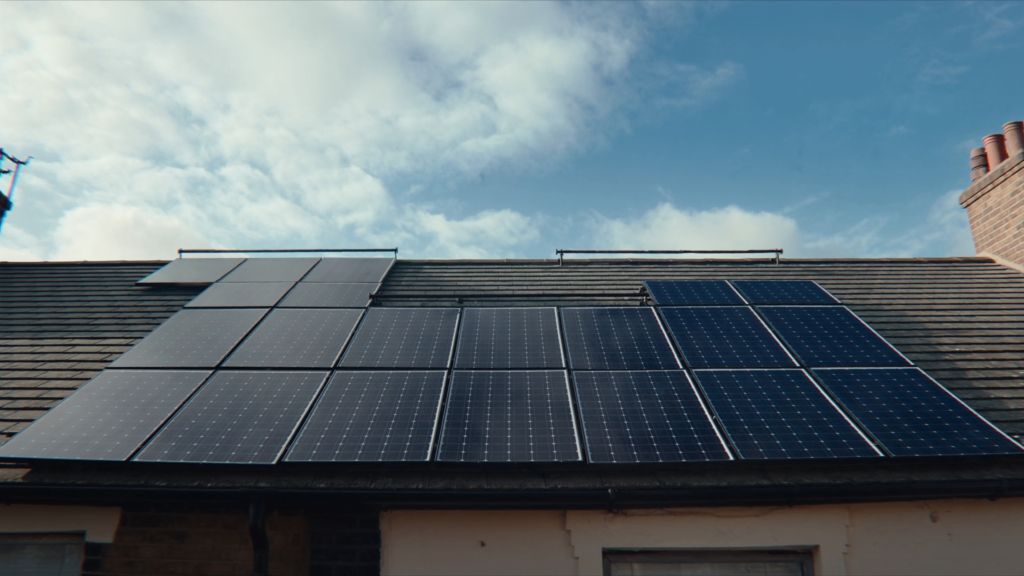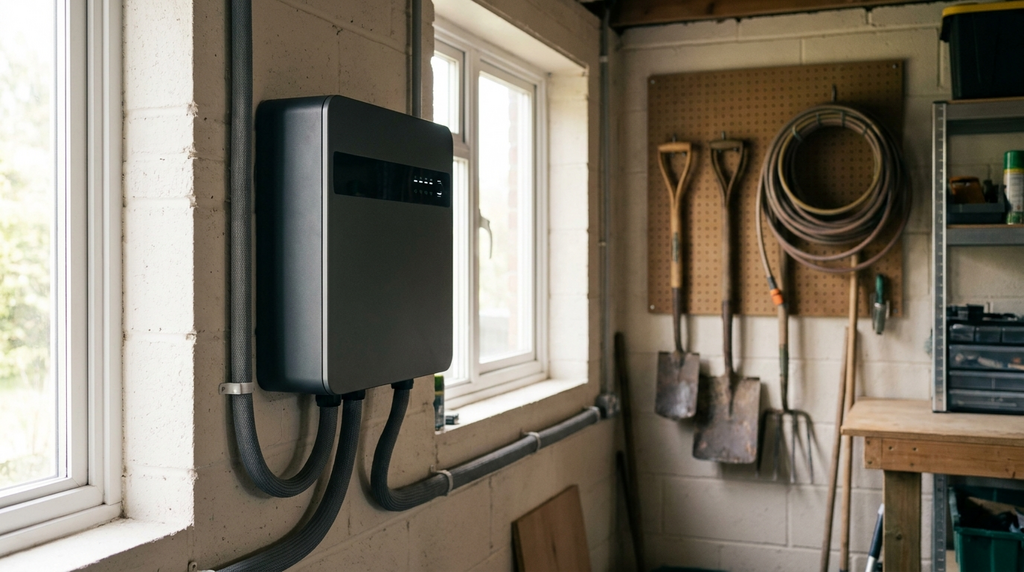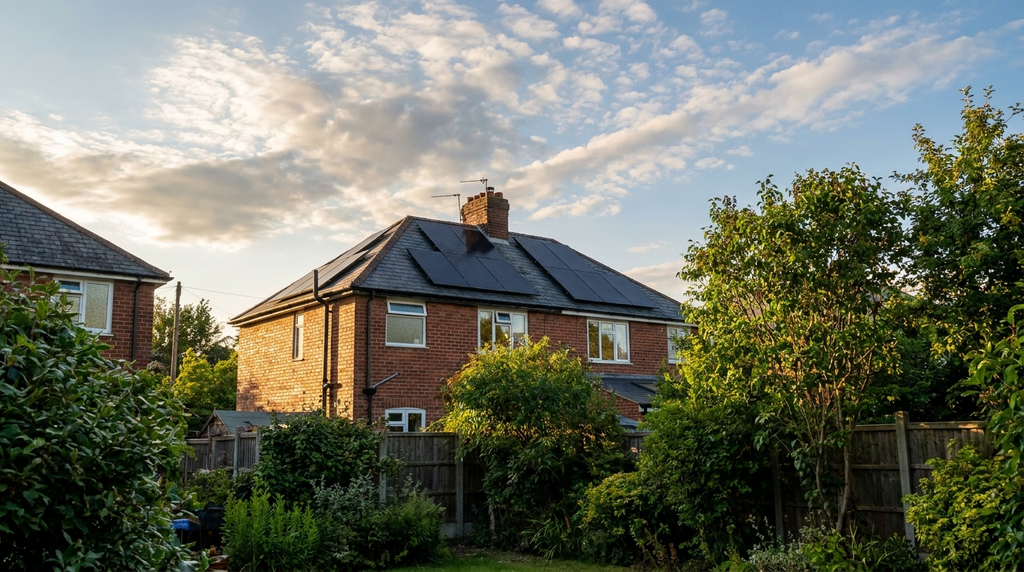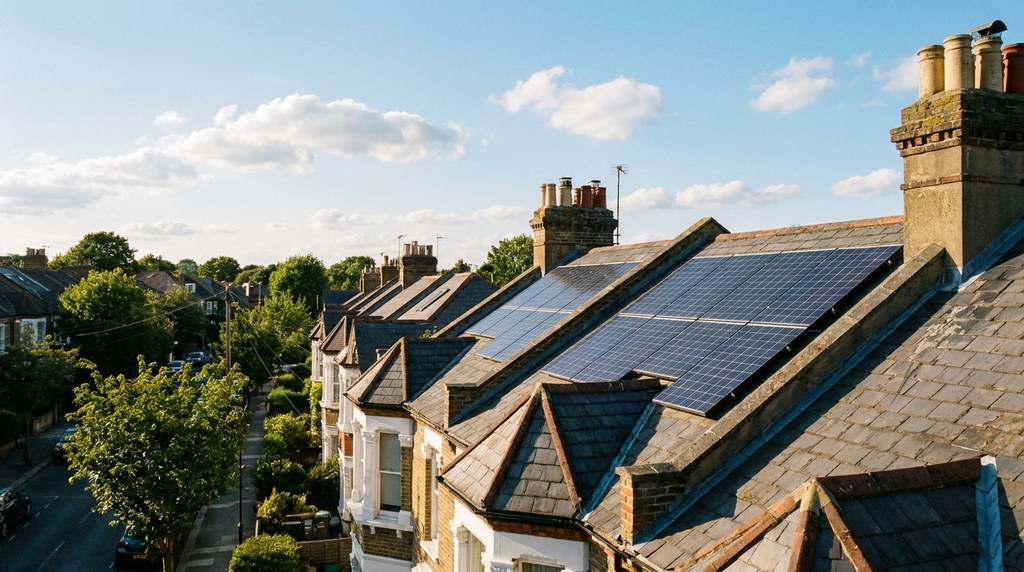
The average three-bedroom home in the UK needs between 8 and 12 solar panels, typically a 3.5kW to 4.5kW system, to cover around half of its annual electricity usage. Energy Saving Trust states a typical 3.5kWp system (10 panels) generates roughly 2,900 kWh per year (Energy Saving Trust, 2026).
The exact number depends on your household’s electricity consumption, roof orientation, and panel wattage. A three-bedroom home uses about 3,000–4,500 kWh annually, based on Ofgem’s typical domestic consumption figures (Ofgem, 2026). South-facing roofs with a 30–40° pitch generate the most electricity per panel. If your roof faces east or west, you may need one or two extra panels to compensate for lower output.
Panel wattage determines the count
Modern panels range from 400W to 450W each. A 3.5kW system using 400W panels requires 9 panels (9 x 400W = 3.6kW). Using 450W panels, you need only 8 (8 x 450W = 3.6kW). Higher-wattage panels reduce the physical count and roof space needed. The MCS (Microgeneration Certification Scheme) certifies panels for UK installations. This ensures they meet performance standards (MCS, 2026). Always verify your installer uses MCS-certified panels to qualify for the Smart Export Guarantee (SEG) payments.
Roof space and shading matter
A standard 400W panel measures about 1.7m by 1.1m (1.9m²). For 10 panels, you need roughly 19m² of usable south-facing roof space. Avoid shaded areas from chimneys, trees, or neighbouring buildings, shading can reduce system output by 20–30%. TrustMark-registered installers can assess your roof’s suitability and advise on optimising panel placement (TrustMark, 2026). If your roof is smaller, consider higher-wattage panels or a ground-mounted system.
Battery storage changes the calculation
Adding a battery allows you to store excess daytime generation for evening use, increasing self-consumption from 30% to 70% or more. This means you might need fewer panels to achieve the same energy savings. A typical 3.5kW system paired with a 5kWh battery can cover 60–80% of a three-bedroom home’s electricity needs, according to Energy Saving Trust (Energy Saving Trust, 2026). Without a battery, you export surplus power to the grid and receive SEG payments at around 5–15p per kWh.
A worked example
A typical 1930s semi-detached three-bedroom house in the UK with an annual electricity usage of 3,500 kWh would need 10 solar panels rated at 400W each, totalling a 4kWp system. This system would generate approximately 3,400 kWh per year based on a south-facing roof with a 35-degree pitch in the Midlands. The upfront cost after the 0% VAT reduction (valid until March 2027) and using the Smart Export Guarantee (SEG) payments is around £5,800. Yearly savings on electricity bills reach £600, with an additional £120 earned from SEG export payments at a typical rate of 15p per kWh. The payback period is roughly 8 years, and over the 25-year warranted lifespan, total savings amount to £18,000. According to the Energy Saving Trust, a 4kWp system suits a medium-sized home well.
| Item | Figure |
|---|---|
| Upfront cost after grants | £5,800 |
| Yearly savings | £720 |
| Payback period | 8 years |
| 25-year lifetime savings | £18,000 |
What homeowners often get wrong
The most common mistake is assuming panel count depends solely on roof size rather than your household’s actual electricity usage. Here are three frequent errors that cost homeowners money or void warranties.
- Buying too many panels for a small roof Many homeowners pick the highest-wattage panels without checking their roof’s usable area. A standard 400W panel needs about 1.9 square metres, and a roof with multiple chimneys or skylights may only fit 6 panels, not 10. This miscalculation forces a smaller system, wasting £1,000 on panels you cannot install and missing the £7,500 BUS grant for heat pumps if you later upgrade.
- Ignoring shading from nearby trees Homeowners often skip a shading survey, expecting full output from every panel. Even partial shade on one panel can reduce the whole string’s output by 30 percent. The correct approach uses microinverters or power optimisers, adding about £400 to the cost but preventing a 900 kWh annual loss that would otherwise waste £135 in lost savings each year.
- Forgetting to check MCS certification Many people hire the cheapest installer without verifying their panels are MCS-certified. Non-certified panels disqualify you from SEG payments, costing up to £120 per year in lost export income. The right solution is to ask for the MCS certificate number before signing. This ensures you receive the guaranteed 15p per kWh export tariff from your supplier.
Quick reference
- A 3.5kWp system with 9 panels generates roughly 2,900 kWh per year, enough to cover half of a typical three-bedroom home’s electricity use.
- Modern 450W panels reduce the count to 8 panels for a 3.6kW system, saving roof space compared to older 250W panels that needed 14 panels.
- You qualify for the 0% VAT rate on solar panels until March 2027 if your installation is under £25,000 and includes a battery or heat pump.
- The payback period for a 4kWp system in the UK averages 8 to 10 years, with total savings over 25 years exceeding £18,000 at current electricity prices.
- East or west-facing roofs need 1 to 2 extra panels to match the output of a south-facing array, adding £600 to £1,200 to the upfront cost.
Frequently Asked Questions
You typically need 8 to 12 solar panels for a 3-bedroom house. The Energy Saving Trust states a 3.5kWp system (around 10 panels) covers about half of a typical home's annual electricity use.
A 3.5kW to 4.5kW system is standard for a 3-bedroom UK home. Ofgem's typical annual consumption for such a home is 3,000–4,500 kWh.
You need about 19m² of usable roof space for 10 standard 400W panels. The MCS certifies panels for UK installations. This ensures they meet performance standards.