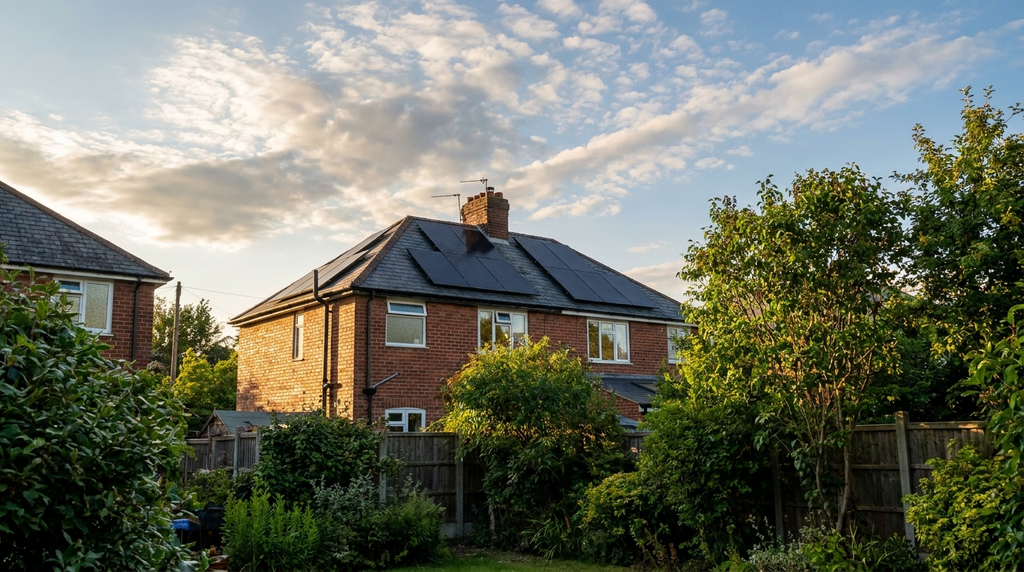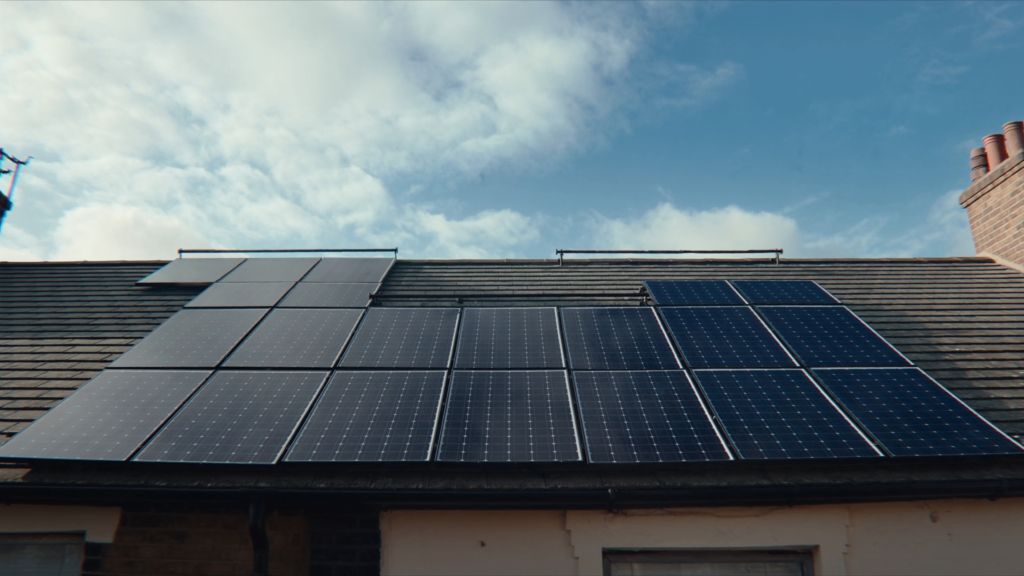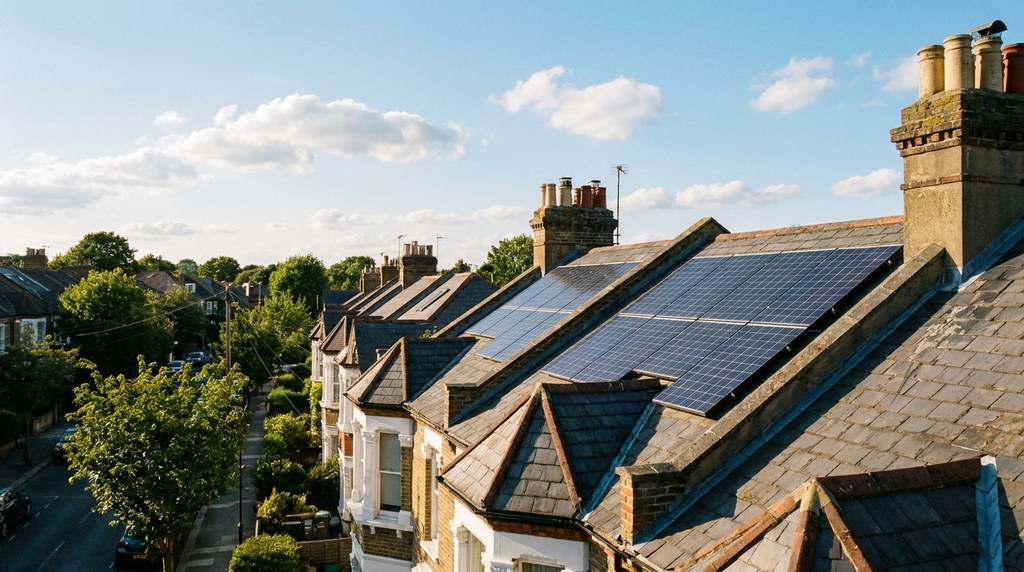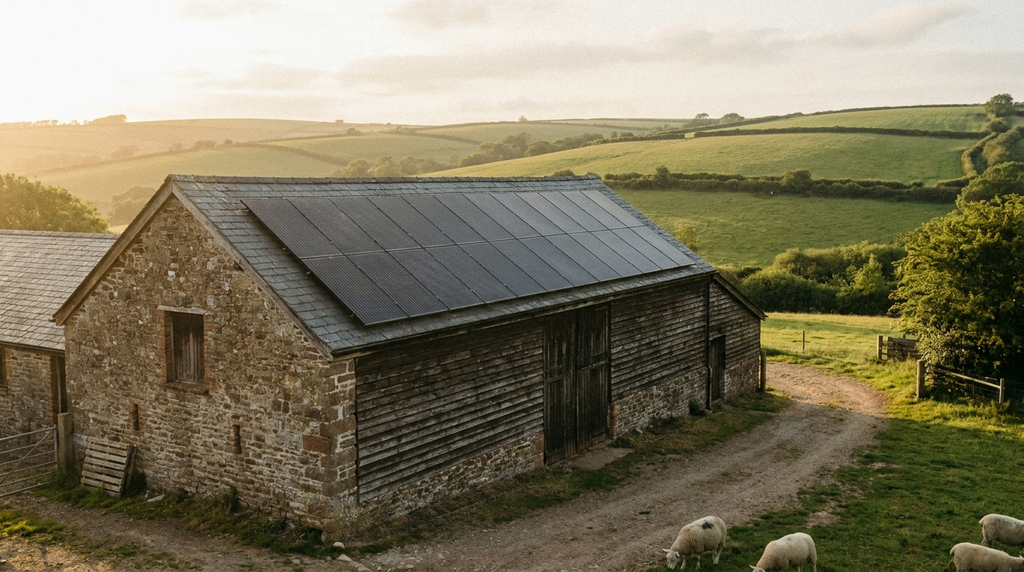
A 4 kW system typically needs 10–12 panels and costs around £7,000–£8,000 installed, while a 6 kW system needs 15–18 panels and costs roughly £9,500–£11,000.
There is no single answer to how many solar panels your roof can hold. The number depends on your roof’s usable area, the wattage of the panels you choose, and the roof’s orientation. A 4 kW system, which is a common size for a typical UK semi-detached house, usually requires 10 to 12 panels and costs between £7,000 and £8,000 to install (Energy Saving Trust, 2026). A larger 6 kW system needs 15 to 18 panels and costs roughly £9,500 to £11,000 (MCS installer data, 2026).
Most UK homes fit 10–14 solar panels for a 4 kW system, costing £7,000–£8,000 installed. The actual number depends on your roof's usable area, panel wattage, and orientation. Measure your roof and divide by 1.87 m² per 400 W panel.
- Measure usable roof area and divide by 1.87 m² per 400 W panel.
- Subtract 0.3 m from roof edges for fire safety setbacks (DESNZ, 2026).
- A typical semi-detached roof fits 10–14 panels for a 4–5.6 kW system.
- Account for obstructions like chimneys and skylights when calculating.
- Use MCS installer data to match panel count to your roof's orientation.
- A 4 kW system typically needs 10–12 panels and costs around £7,000–£8,000 installed, while a 6 kW system needs 15–18 panels and costs roughly £9,500–£11,000.
- How roof area limits the number of panels you can fit
- The average UK roof holds 10–14 panels for a 4 kW system
- Quick numbers panel count, roof area, and system size
- Higher-wattage panels reduce the number needed for the same output
- The direct answer how many solar panels can I fit on my roof?
- How to verify your installer is certified for the installation
- Roof shape, shading, and pitch affect the final panel count
How roof area limits the number of panels you can fit
The most direct limit is the physical space on your roof. A standard 400 W solar panel measures roughly 1.7 m by 1.1 m, which gives an area of 1.87 m² per panel (MCS 012 standard, 2026). To find the maximum number of panels, measure your roof’s usable area and divide by 1.87 m². Usable area is the roof surface that is free from obstructions like chimneys, dormers, or skylights. You should also subtract about 0.3 m from each roof edge for fire safety and maintenance setbacks (DESNZ, 2026). Round the result down to the nearest whole number.
The average UK roof holds 10–14 panels for a 4 kW system
For a typical UK semi-detached house, the usable south-facing roof area is often between 20 m² and 28 m² (Energy Saving Trust, 2026). At 400 W per panel, this translates to 10 to 14 panels, which gives a system size of 4.0 kW to 5.6 kW. Ofgem’s Microgeneration Certification Scheme (MCS) installation data shows that 4 kW systems are the most common size installed on UK homes (Ofgem, 2026).
Quick numbers panel count, roof area, and system size
| Usable roof area (m²) | Max panels (400 W) | System size (kW) | Typical annual generation (kWh) |
|---|---|---|---|
| 15 m² | 8 panels | 3.2 kW | ~2,600 kWh |
| 20 m² | 10 panels | 4.0 kW | ~3,300 kWh |
| 25 m² | 13 panels | 5.2 kW | ~4,300 kWh |
| 30 m² | 16 panels | 6.4 kW | ~5,300 kWh |
Generation figures are based on a south-facing roof with a 30–40° pitch in central England (Energy Saving Trust solar calculator, 2026; DESNZ generation factors, 2026).
Higher-wattage panels reduce the number needed for the same output
Newer solar panels have higher wattage ratings. A 450 W or 500 W panel produces more electricity from the same roof area than a 400 W panel (MCS product register, 2026). For example, a 4 kW system requires only 9 panels at 450 W instead of 10 panels at 400 W. If your roof area is limited, choosing higher-wattage panels can help you reach your target system size. The Energy Saving Trust notes that panel efficiency has increased by roughly 5% to 10% since 2020 (Energy Saving Trust, 2026).
The direct answer how many solar panels can I fit on my roof?
To get a rough estimate, follow these steps. Measure your roof’s width and height in metres. Subtract 0.3 m from each edge for setbacks. Multiply width by height to get the usable area in m². Divide that number by 1.87 m² (the area of one 400 W panel). Then multiply the result by 0.9 to account for pitch and shading losses (MCS installation guidelines, 2026; DESNZ best practice, 2026). Round down to the nearest whole number.
Worked example: a roof that is 5 m wide and 4 m high gives a usable area of 20 m² (after subtracting 0.3 m from each edge). 20 m² ÷ 1.87 m² = 10.7 panels. Multiply by 0.9 = 9.6 panels. Round down to 9 or 10 panels.
How to verify your installer is certified for the installation
Only MCS-certified installers can certify your solar panel system for the Smart Export Guarantee (SEG) payments, which pay you for electricity you export to the grid (Ofgem SEG guidance, 2026). Installers must also be registered with TrustMark for consumer protection (TrustMark, 2026). You can check an installer’s certification on the MCS website (MCS installer search, 2026) and verify their TrustMark registration on the TrustMark “Find a trader” database.
how to choose a solar panel installer
Roof shape, shading, and pitch affect the final panel count
Roofs with multiple slopes, chimneys, dormers, or skylights can reduce usable area by 10% to 30% (Energy Saving Trust, 2026). South-facing roofs with a pitch of 30° to 40° are ideal for solar panels. East or west-facing roofs reduce generation by 15% to 20%, so you may need more panels to reach the same annual output (DESNZ performance factors, 2026). Shading from trees, buildings, or nearby structures also reduces generation. A survey by a qualified installer is the only way to get an accurate panel count for your specific roof.
solar panel orientation and pitch guide
Frequently Asked Questions
Around 10 to 14 panels for a 4.0–5.6 kW system, based on a 20–28 m² usable south-facing roof. The Energy Saving Trust confirms this as the typical range for UK semi-detached homes (2026).
A 4-bed house often fits 15–18 panels for a 6.0–7.2 kW system, needing 28–34 m² of usable roof area. MCS installer data shows this is a common upgrade for larger homes (Ofgem, 2026).
You need at least 18.7 m² of usable roof area for 10 standard 400 W panels (each 1.87 m²). The Energy Saving Trust advises adding 10% for spacing and setbacks.
Yes, but it reduces generation by 10–20% compared to south-facing. The Energy Saving Trust says north-facing roofs are still viable if the roof is large enough and unshaded.
Around 10 panels (4.0 kW system) on a south-facing roof, generating ~3,300 kWh annually. The MCS estimate assumes 400 W panels and 850 kWh per kW installed (2026).