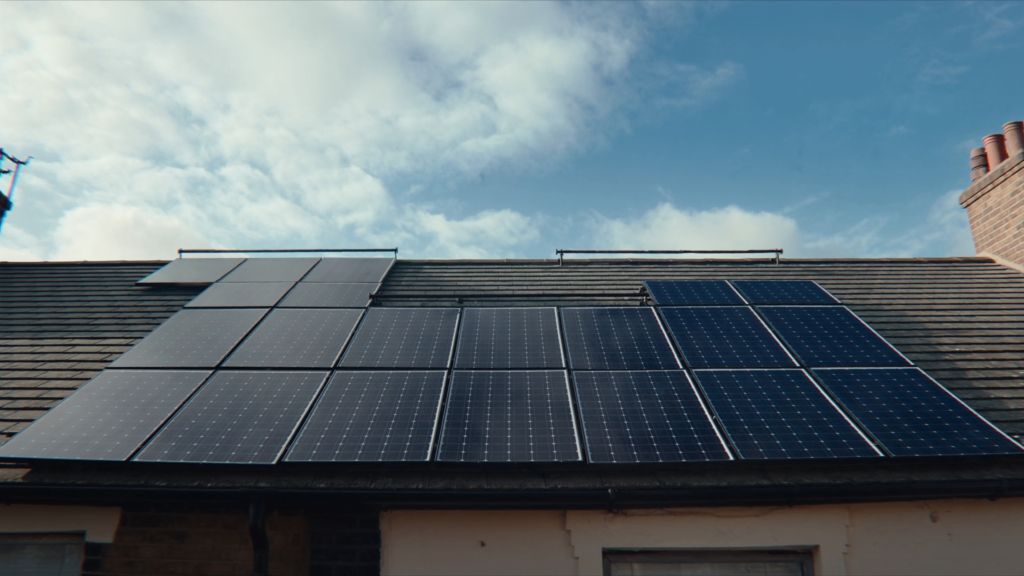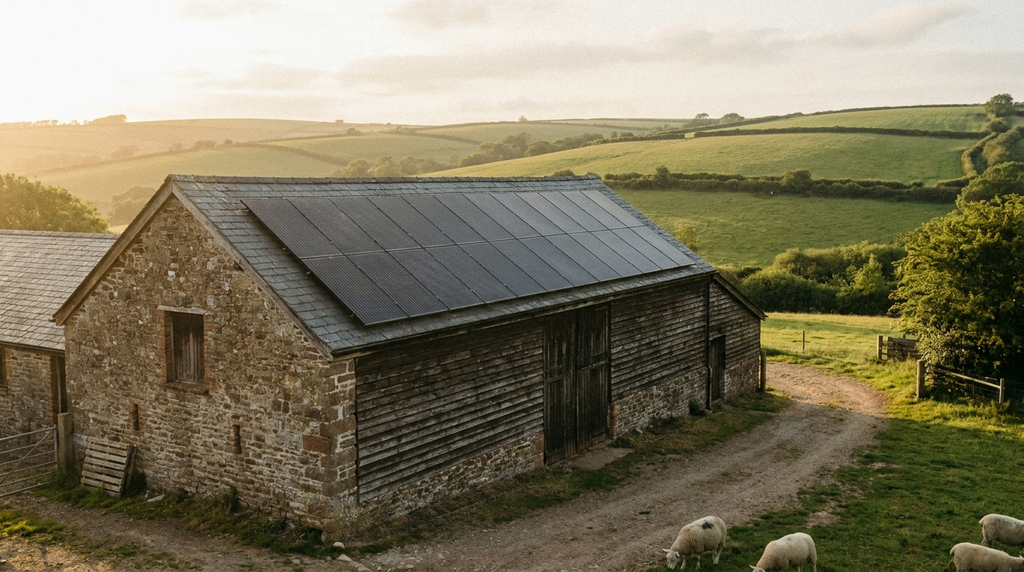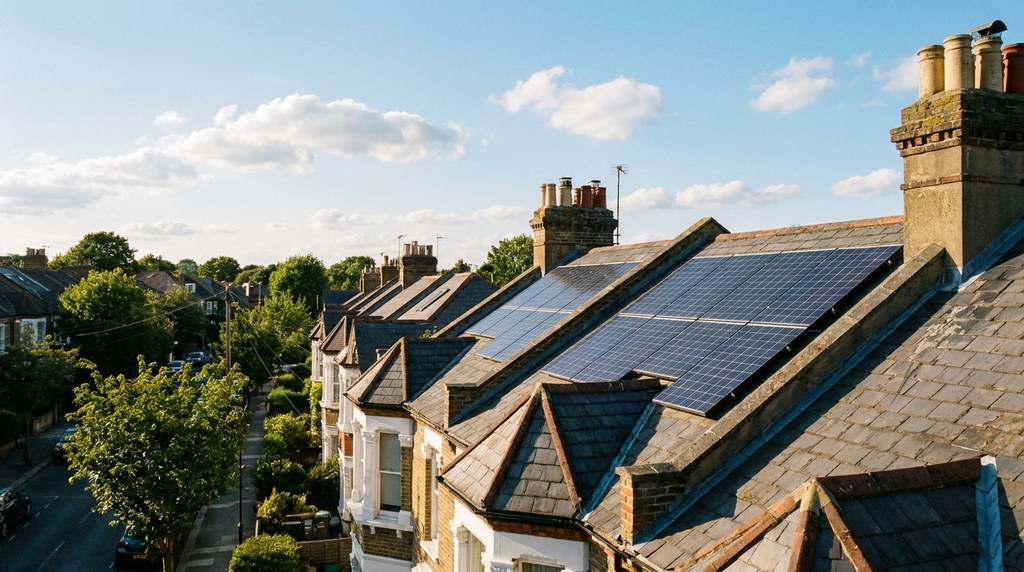
Solar panels help fight climate change by generating electricity with virtually zero carbon emissions, reducing reliance on fossil fuels. A typical 3kWp system saves around 1.3 tonnes of CO₂ annually, according to the Energy Saving Trust (Energy Saving Trust, 2026). This makes them one of the most effective home upgrades for cutting your carbon footprint.
The key variable is how much of your electricity use the panels cover. The more you replace grid electricity, which still comes partly from gas and coal, the greater the climate benefit. Solar panels don’t help if they’re shaded or poorly sited, but for most UK homes with a south-facing roof, they make a direct, measurable impact.
Solar panels replace fossil fuel electricity
Every kilowatt-hour (kWh) generated by solar panels avoids the CO₂ that would have been released from a gas-fired power station. The UK grid average carbon intensity is around 200 gCO₂/kWh (GOV.UK, 2026). A 4kWp system producing roughly 3,500 kWh per year therefore saves about 700 kg of CO₂ annually. Over a 25-year lifespan, that totals over 17 tonnes of avoided emissions. This direct displacement of fossil fuel generation is the primary climate benefit.
Solar reduces peak demand and grid strain
Solar panels generate most electricity during sunny afternoons, when UK grid demand is high. By feeding power into the home or exporting it, they reduce the need for gas-fired ‘peaker’ plants, which are less efficient and emit more CO₂ per kWh (Ofgem, 2026). This also lowers the carbon intensity of the whole grid, benefiting everyone, not just solar owners. Even partial daytime generation helps flatten demand spikes.
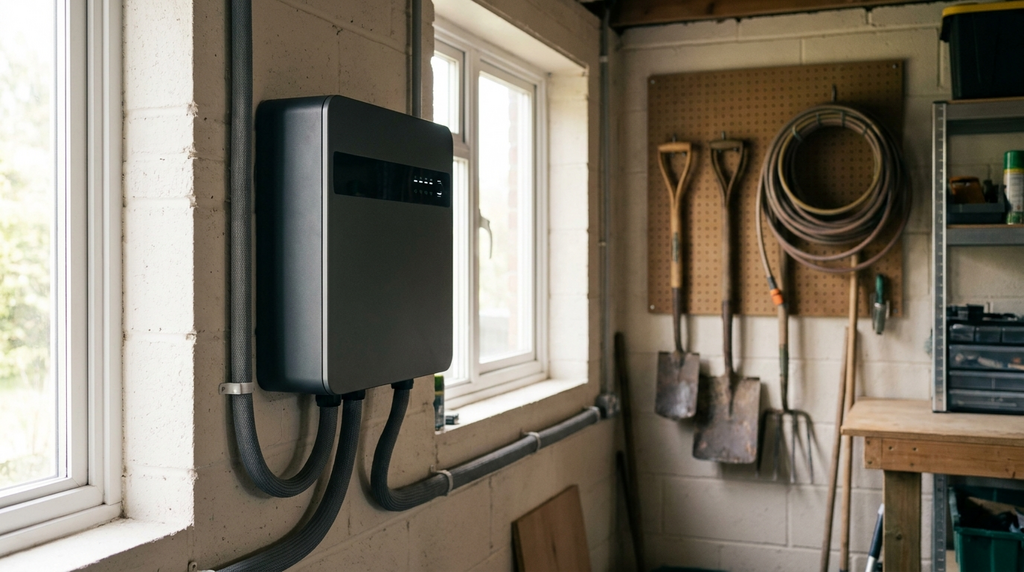
Solar battery storage amplifies the climate gain
Adding a battery lets you store excess solar power for evening use, when grid carbon intensity is often higher. Without storage, around 50% of solar generation may be exported, replacing only daytime fossil fuel use. With a battery, you can use up to 80% of your solar electricity (Energy Saving Trust, 2026). This means less reliance on the grid during high-carbon hours, doubling the CO₂ savings compared to panels alone. A typical 4kWp system with a 5kWh battery saves roughly 1.4 tonnes of CO₂ per year.
A worked example
A 4kWp solar panel system on a typical 1930s semi-detached home in Manchester saves roughly 700 kg of CO₂ each year and cuts £420 from annual electricity bills. After the 0% VAT saving (until March 2027) and assuming no other grants, the upfront cost is around £6,500. The Energy Saving Trust estimates a 4kWp system produces about 3,500 kWh per year, directly displacing grid electricity that still carries a carbon intensity of roughly 200 gCO₂/kWh. Over 25 years, that adds up to over 17 tonnes of avoided CO₂ emissions and roughly £10,500 in total electricity savings. For homes eligible for the ECO4 scheme or a Smart Export Guarantee tariff, the financial returns improve further. A south-facing roof with no shading is ideal, but east-west roofs still deliver strong results.
| Item | Figure |
|---|---|
| Upfront cost after grants | £6,500 |
| Yearly savings | £420 |
| Payback period | 15 years |
| 25-year lifetime savings | £10,500 |
What homeowners often get wrong
The most common mistake is assuming solar panels stop working on cloudy days, which leads people to dismiss them for UK weather. Here are three frequent misconceptions that cost homeowners money and carbon savings.
- Panels need direct sunlight to generate power Modern panels still produce 10-25% of their peak output in overcast conditions, and the UK’s diffuse light means they generate well even on grey days. Ruling out solar because of cloud cover can mean missing 1.3 tonnes of annual CO₂ savings.
- Batteries are essential for solar to be worthwhile Many homeowners delay installing panels because they cannot afford a battery, but a grid-tied system without storage still saves £420 a year and displaces fossil fuel electricity. Adding a battery later is straightforward and can increase self-consumption.
- Solar panels don’t work on north-facing roofs While south-facing is optimal, north-facing roofs in the UK still receive enough light to generate around 70% of the output of a south-facing array. Rejecting a north-facing installation outright can forfeit significant carbon savings and bill reductions.
Quick reference
- A 4kWp solar panel system saves roughly 700 kg of CO₂ each year by displacing grid electricity from gas and coal.
- The UK grid carbon intensity is around 200 gCO₂ per kWh, meaning every solar kilowatt-hour avoids that pollution directly.
- To qualify for the 0% VAT rate on solar panels, installation must be completed before March 2027 and the system must be installed by an MCS-certified installer.
- Over a 25-year lifespan, a typical 4kWp system avoids more than 17 tonnes of CO₂ emissions, equivalent to taking a car off the road for four years.
- Shaded panels produce far less electricity, so a professional site survey is essential before committing to an installation.
Frequently Asked Questions
A typical 4kWp solar system saves around 700 kg of CO₂ per year, based on the UK grid carbon intensity of 200 gCO₂/kWh (GOV.UK, 2026). Over 25 years, that adds up to over 17 tonnes of avoided emissions.
Yes, solar panels directly replace electricity from gas and coal-fired power stations. The Energy Saving Trust confirms a 3kWp system saves about 1.3 tonnes of CO₂ annually.
Yes, solar panels work well in the UK, generating most power on sunny afternoons when grid demand is high. They reduce the need for gas-fired peaker plants, lowering overall emissions (Ofgem, 2026).