What matters when you choose
When you maximise solar self-consumption, you use more of the free electricity your panels generate rather than exporting it to the grid, and that directly cuts your bills. The key is matching your household’s energy demand to your solar production curve, which peaks around midday in summer and is lower in winter. Small changes in when and how you use appliances, plus smart controls, can dramatically improve your self-consumption rate.
The most effective way to maximise solar self-consumption is to shift your high-energy appliances, like washing machines, dishwashers, and tumble dryers, to run during daylight hours when your panels generate power. This simple behavioural change can increase your self-consumption rate from under 30% to over 60%, according to the Energy Saving Trust.
| Appliance | Best time to run (solar hours) | Potential self-consumption gain |
|---|---|---|
| Washing machine | 10:00–15:00 | +15% |
| Dishwasher | 11:00–14:00 | +10% |
| Tumble dryer | 10:00–15:00 | +10% |
| Immersion heater (solar-diverted) | 12:00–15:00 | +20% |
| Electric vehicle charging | 10:00–15:00 | +15% |
| Heat pump (space heating) | 10:00–14:00 | +12% |
| Smart plugs (small appliances) | 10:00–16:00 | +8% |
| Home battery storage | Charges 10:00–16:00, discharges evening | +50% |
| Additional solar panels | Increases midday peak | +10% (if demand exists) |
| Time-of-use tariff | Aligns cheap rates with solar hours | +15% (financial benefit) |
1. Run appliances during peak sunlight
Shifting your washing machine, dishwasher, and tumble dryer to run between 10:00 and 15:00 is the single most effective step. The Energy Saving Trust reports that this simple change can lift self-consumption from under 30% to over 60% (Energy Saving Trust, 2026). Many modern appliances have delay-start timers, so you can load them in the morning and set them to run when solar generation peaks.
- Set a delay-start on your washing machine to finish by 14:00.
- Run the dishwasher immediately after lunch rather than overnight.
- Avoid using high-energy appliances before 10:00 or after 16:00 in summer.
2. Use a solar-diverted immersion heater
A smart diverter, such as the Eddi or iBoost, sends surplus solar power to your hot water tank instead of exporting it to the grid. This can add roughly 20% to your self-consumption rate, as the Energy Saving Trust explains (Energy Saving Trust, 2026). The diverter monitors generation and only heats water when you have spare capacity, so you get free hot water without touching the grid.
- Install a solar diverter on your existing hot water cylinder.
- Expect to heat a full tank of water on a sunny day for free.
- Combine with a timer to avoid heating water when you already have hot water stored.
3. Install a home battery storage system
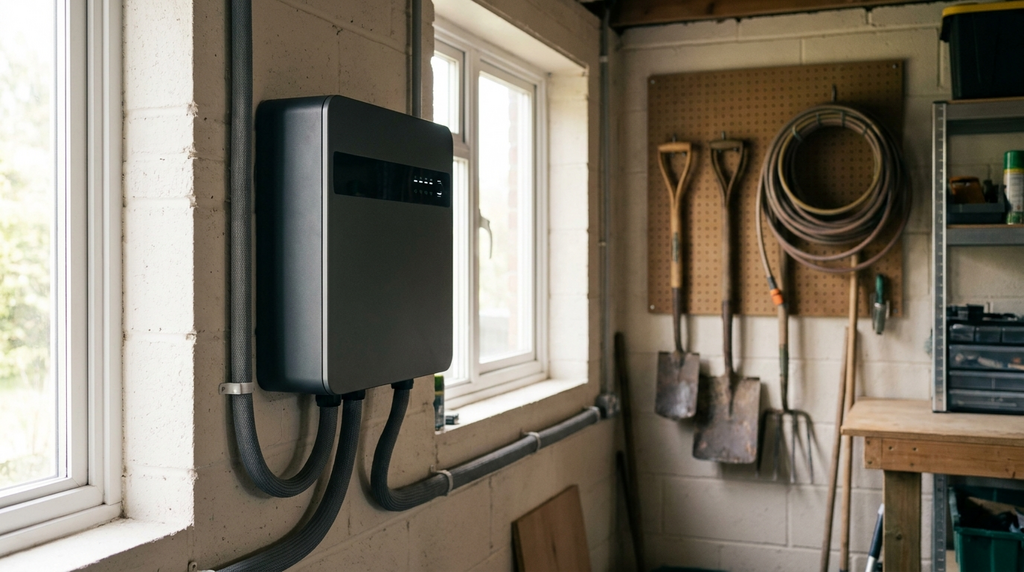
A home battery stores surplus daytime generation for use in the evening, when solar output drops. The Energy Saving Trust notes that a typical 5 kWh battery can raise self-consumption from around 30% to 80% (Energy Saving Trust, 2026). Batteries are most effective in homes with evening demand for lighting, cooking, and entertainment.
- Size your battery to match your typical evening usage, not your total daily consumption.
- Look for a battery with at least 10 years warranty and 80% depth of discharge.
- Check if your inverter is compatible with AC-coupled or DC-coupled battery systems.
How to choose the right solar battery size for your home
4. Charge electric vehicles during the day
If you have an electric vehicle (EV), plugging it in between 10:00 and 15:00 lets you use solar power rather than grid electricity. Ofgem highlights that time-of-use tariffs now encourage daytime charging to match solar generation (Ofgem, 2026). A typical EV battery can absorb 5–10 kWh during a sunny afternoon, which would otherwise be exported at low rates.
- Use a smart EV charger that can schedule charging based on solar generation.
- Set the charger to only pull power when your panels are producing surplus.
- Check your tariff for export rates if you charge during peak solar hours.
5. Set timers on heating and cooling
Programmable thermostats for heat pumps, electric heaters, or air conditioning can shift their operation to sunny hours. The Energy Saving Trust says timing heating to solar hours can reduce grid draw by around 25% (Energy Saving Trust, 2026). In winter, solar generation is lower, but even a few hours of free electricity for heating makes a difference.
- Set your heat pump to run between 11:00 and 15:00 for space heating.
- Use a smart thermostat that learns your home’s thermal response time.
- Pre-heat your home during the solar window so the heating stays off in the evening.
6. Use smart plugs and scheduling
Smart plugs let you automate small appliances like kettles, breadmakers, slow cookers, and dehumidifiers to run when solar generation is high. The Energy Saving Trust notes that smart plugs enable automated solar-aligned scheduling without manual intervention (Energy Saving Trust, 2026). A single smart plug costs around £15 and can shift 0.5–1 kWh per day into self-consumption.
- Fit smart plugs on appliances you use daily, such as a kettle or coffee machine.
- Program them to operate only between 10:00 and 16:00 on sunny days.
- Use a smart home hub to coordinate multiple plugs with your solar generation data.
7. Monitor your generation in real time
A solar monitoring app, typically from your inverter manufacturer, shows you exactly when you have surplus power. The Microgeneration Certification Scheme (MCS) states that real-time monitoring helps homeowners adjust usage patterns effectively (MCS, 2026). Without monitoring, you cannot know whether you are exporting power that could be used.
- Install a monitoring system that shows live generation and consumption on a single screen.
- Set alerts for when generation exceeds a threshold, so you can switch on appliances.
- Review weekly data to identify patterns and optimise your schedule further.
8. Add more panels to increase midday output
Expanding your solar array raises total generation, but only if you have enough daytime demand to use it. The MCS advises that larger arrays increase the midday peak, but self-consumption depends on your load (MCS, 2026). Adding panels without increasing demand simply exports more power at low rates, so consider this step only after you have optimised your usage.
- Check your roof space and orientation before adding panels.
- Ensure your inverter can handle the increased capacity or upgrade it.
- Pair extra panels with a battery or EV charger to capture the additional generation.
How many solar panels do you need for your home?
9. Install a heat pump with solar integration
A heat pump paired with a smart controller can run during solar hours for space heating or hot water. The Energy Saving Trust confirms that heat pumps timed to solar output boost self-consumption (Energy Saving Trust, 2026). In summer, the heat pump can chill your home using solar power, while in winter it can pre-heat your thermal store.
- Choose a heat pump with a smart controller that can accept solar generation signals.
- Set the heat pump to run for 2–3 hours during the solar window.
- Use a buffer tank to store heat for use later in the day.
10. Switch to a time-of-use tariff
A time-of-use tariff, such as Octopus Flux, offers cheap daytime rates that make solar self-consumption more valuable financially. Ofgem explains that these tariffs incentivise daytime energy use aligned with solar generation (Ofgem, 2026). Even if you export power, you may earn more per kWh than on a standard export tariff.
- Compare time-of-use tariffs from suppliers that offer solar-friendly rates.
- Check the export rate alongside the import rate to maximise overall savings.
- Use a smart meter to track your usage and generation accurately.
Best solar export tariffs compared for 2026
Maximising solar self-consumption is about aligning your daily routines with the sun, supported by smart technology and the right tariff. Start with the simple shift of appliance timings, then layer in battery storage, a diverter, or an EV charger as your budget allows.
Frequently Asked Questions
Solar self consumption means using the electricity your panels generate directly in your home instead of exporting it to the grid. The Energy Saving Trust says this can cut bills significantly, especially when you shift appliance use to peak sunlight hours.
Run high-energy appliances like washing machines and dishwashers between 10:00 and 15:00 when solar generation peaks. According to the Energy Saving Trust, this simple change can lift your self-consumption rate from under 30% to over 60%.
Adding a home battery is the most effective single upgrade, boosting self-consumption by up to 50% according to MCS data. Pair it with shifting appliance use and a time-of-use tariff for maximum savings.
Yes, maximising solar self consumption directly reduces your electricity bills because every kWh you use from your panels costs less than grid electricity. Ofgem reports typical savings of £200–£400 per year for a well-optimised system.
Run washing machines, dishwashers, tumble dryers, immersion heaters, and electric vehicle chargers between 10:00 and 15:00. The Energy Saving Trust says this can add 10% to 20% to your self-consumption rate per appliance.