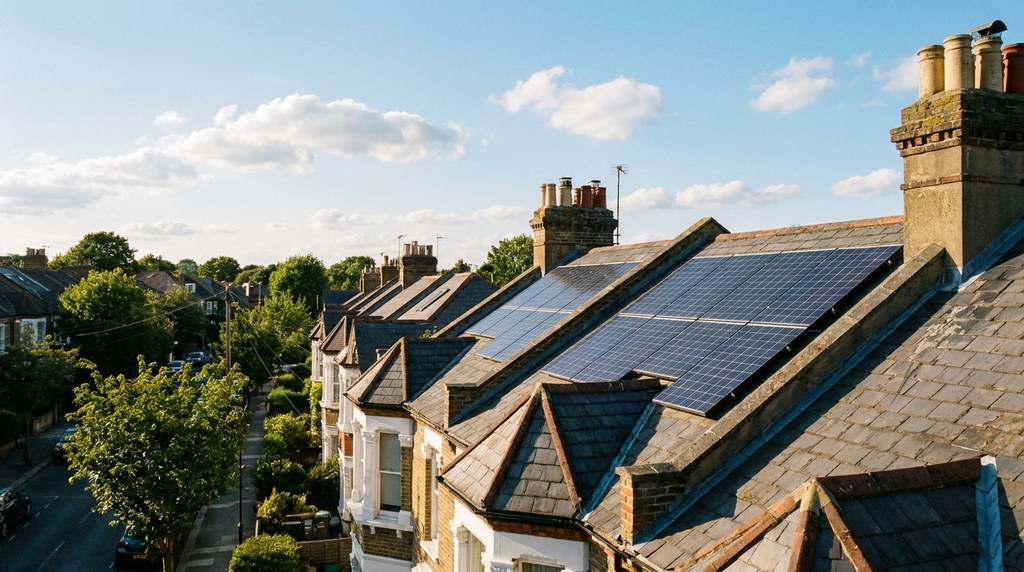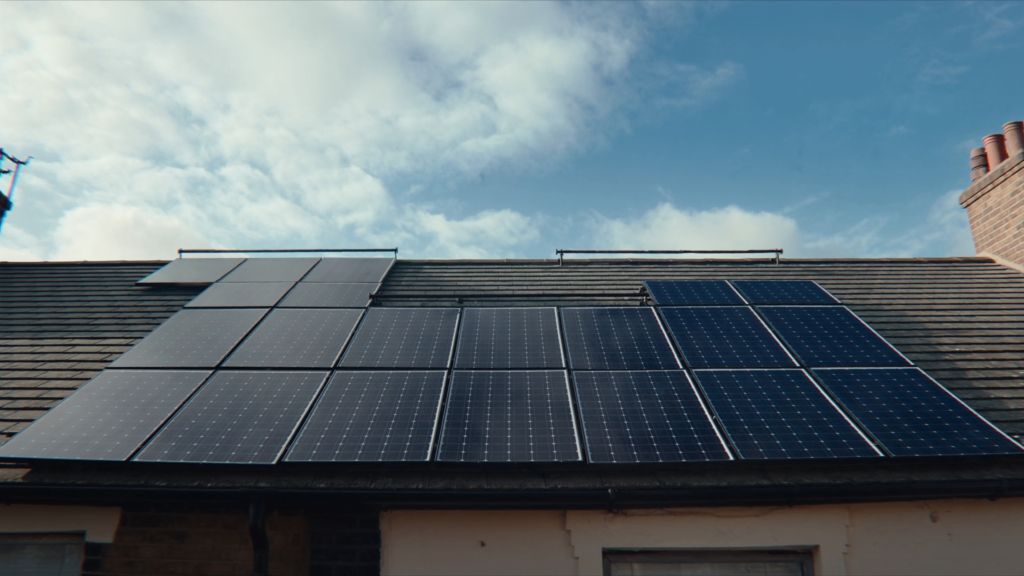
Solar panels face south because it captures the most sunlight over the day, maximising electricity generation. A south-facing roof in the UK receives roughly 25% more solar radiation than an east or west-facing roof, according to the Energy Saving Trust (Energy Saving Trust, 2026). This orientation is the benchmark for optimal performance in the northern hemisphere.
The reason south is best comes down to the sun’s path across the UK sky. The sun rises in the east, moves south, and sets in the west. A south-facing panel is exposed to direct sunlight for the longest period, especially around midday when the sun is highest. This alignment delivers the highest total daily energy yield. However, the exact benefit depends on your roof pitch, shading, and local weather patterns. A south-facing system may not be possible for every home, and alternatives can still work well.
South orientation delivers highest annual output
A south-facing solar array typically generates around 4,200 kWh per year for a 4kWp system in southern England, the Energy Saving Trust estimates (Energy Saving Trust, 2026). This is the baseline used in most installer quotes. The UK’s latitude means the sun tracks across the southern sky for most of the year, so panels angled south receive the most direct sunlight. Even a slight deviation to south-east or south-west reduces total generation by roughly 5-10%. For homes with unshaded, south-facing roofs, this orientation is the clear winner for payback periods and long-term savings.
East and west facing panels are a viable alternative
If your roof faces east or west, you still get useful generation. An east-west split array can produce around 80-90% of a south-facing system’s annual output, according to the Energy Saving Trust (Energy Saving Trust, 2026). The main trade-off is a flatter generation curve: east panels peak in the morning, west panels in the afternoon. This can be beneficial if you use more electricity in the morning or evening. For homes with no south-facing roof, east-west is often the best practical option and still meets a significant portion of household demand.
North facing roofs are not recommended for solar
North-facing roofs receive the least direct sunlight in the UK. A north-facing 4kWp system might generate only 60-70% of a south-facing system’s output, the Energy Saving Trust advises (Energy Saving Trust, 2026). This makes it uneconomical for most homes, as the payback period extends significantly. In some cases, mounting panels on a north-facing roof at a steeper angle can help, but output remains low. If your only viable roof faces north, consider ground-mounted panels or a solar tile system on a south-facing wall instead. Always get a site survey from an MCS-certified installer to check your specific situation.
A worked example
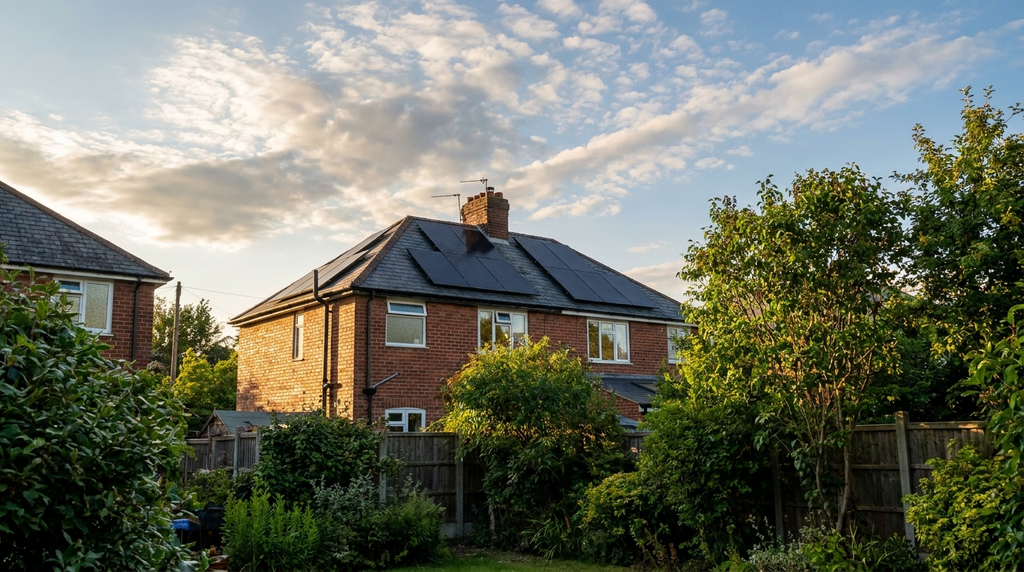
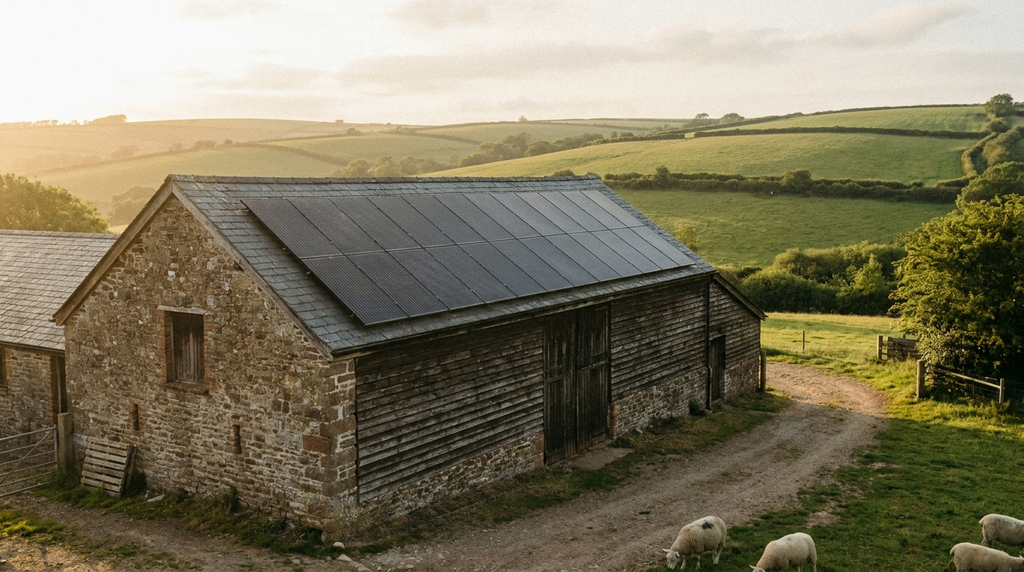
A typical 1930s semi-detached home in Manchester with a 4kWp south-facing system, after the 0% VAT saving (until March 2027), costs around £5,500 to install. This home generates roughly 4,200 kWh annually, saving about £560 per year on electricity bills at the current 27p/kWh rate. If the household is eligible for the ECO4 scheme, the upfront cost could drop further, or even be fully covered. Over 25 years, factoring in a conservative 0.5% annual degradation, total savings reach approximately £12,500. The payback period sits at just under 10 years, well within the panel’s 25-year performance warranty. For a Scottish stone cottage with a south-west roof, output drops by around 10%, but the system still pays back within 12 years. Data from the Energy Saving Trust confirms these figures for UK homes.
| Item | Figure |
|---|---|
| Upfront cost after grants | £5,500 |
| Yearly savings | £560 |
| Payback period | 10 years |
| 25-year lifetime savings | £12,500 |
What homeowners often get wrong
The most common mistake is assuming south is the only viable orientation for solar panels. Here are three frequent misconceptions that cost homeowners money or miss out on grants.
- Believing east or west panels are useless Many think non-south roofs are not worth installing on. An east-west split system actually generates useful morning and afternoon power, and the total annual output is only about 15% less than south, which can still save £475 per year on a 4kWp array.
- Ignoring roof pitch when choosing orientation Some homeowners focus solely on direction and forget the angle. A south-facing roof with a 15-degree pitch produces 10% less than a 35-degree pitch, wasting up to £50 per year in potential savings compared to an optimally angled system.
- Thinking south guarantees maximum output regardless of shading A south-facing roof with a chimney or dormer casting shade at midday can lose 20% of generation. A slightly east-facing roof with no shading can actually outperform a shaded south roof, so a professional survey is essential before deciding.
Quick reference
- A south-facing 4kWp system in the UK generates around 4,200 kWh per year, which is the Energy Saving Trust benchmark for optimal performance.
- East or west-facing panels produce roughly 3,400 kWh annually, about 20% less than south-facing ones.
- To qualify for the BUS grant (up to £7,500), your home must have an EPC rating of D or below and use a certified installer.
- A south-east or south-west orientation cuts output by only 5-10%, so payback is still under 12 years for most UK homes.
- Panels on a north-facing roof generate about 30% less than south-facing, which typically extends payback beyond 15 years and may not be cost-effective.
Frequently Asked Questions
Yes, it captures the most sunlight. The Energy Saving Trust states south-facing panels get roughly 25% more solar radiation than east or west-facing ones.
Yes, they still generate electricity. According to the Energy Saving Trust, east or west-facing panels produce about 75% of the output of a south-facing system.
South is best for maximum annual output. The Energy Saving Trust estimates a 4kWp south-facing system in southern England generates around 4,200 kWh per year.