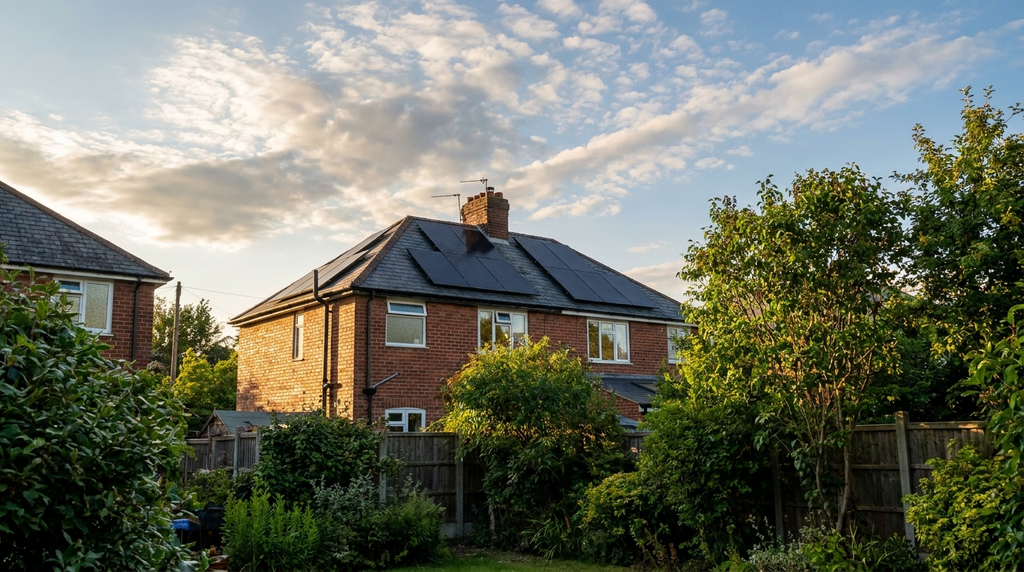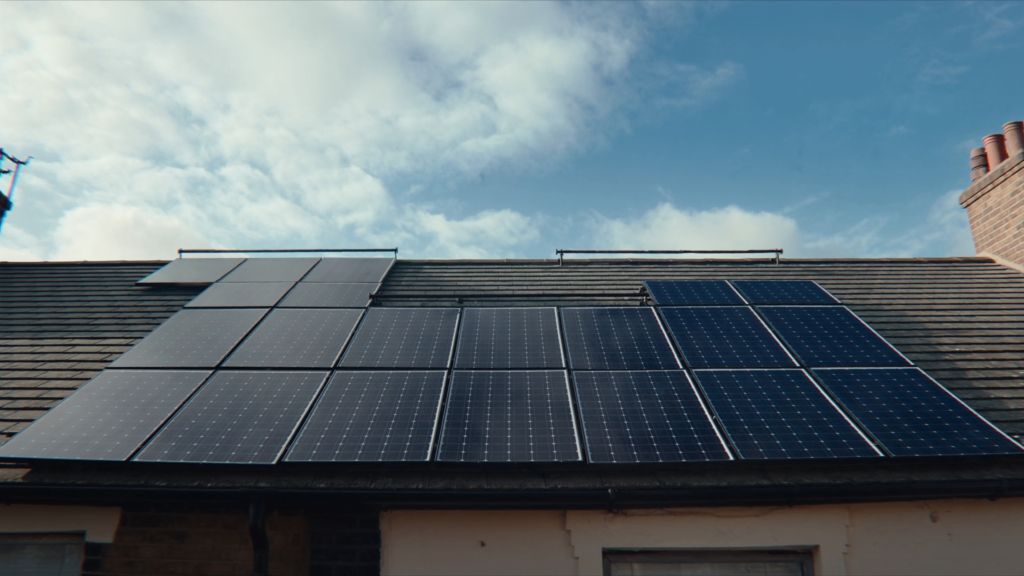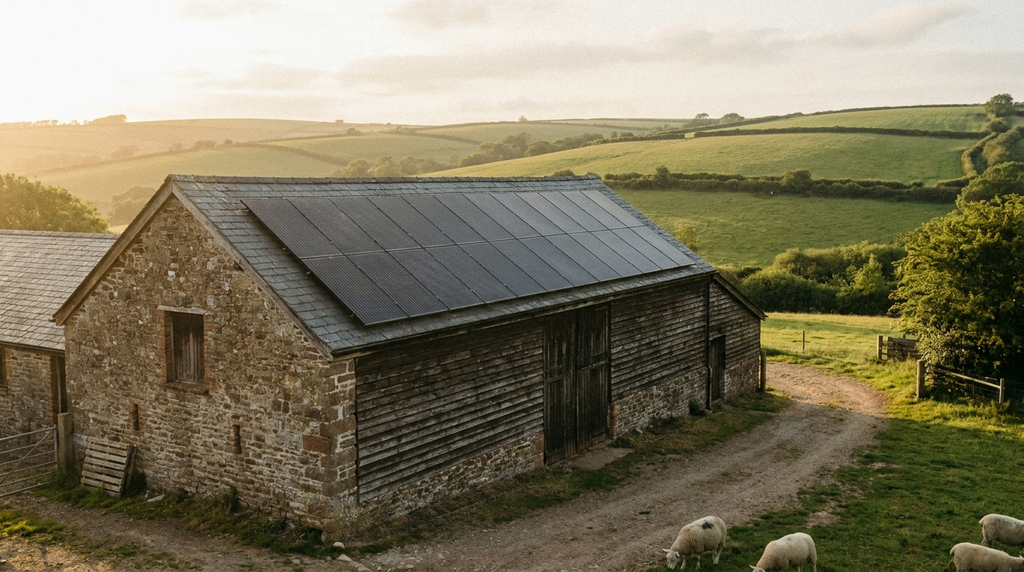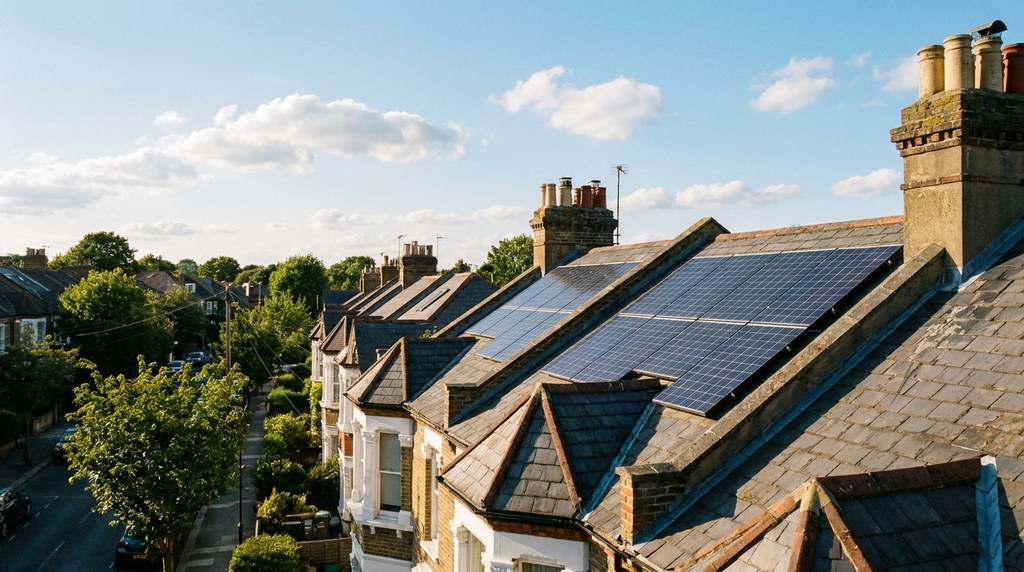
No, solar panels do not have to face south, but south-facing panels produce the most electricity in the UK. A south-facing roof at a 35-degree tilt generates around 100% of optimal output, according to the Energy Saving Trust (Energy Saving Trust, 2026). However, east- or west-facing panels still deliver strong returns.
The key variable is your roof orientation and shading. South-east or south-west roofs lose only about 5-10% of output compared to true south. East or west orientations reduce generation by roughly 15-20%. If your roof faces north, output drops to around 70-80% of the maximum, which may still be viable with a larger system. The decision depends on your energy usage patterns and available roof space.
South-facing panels maximise annual generation
A south-facing 3.5kWp solar system in the UK typically generates around 3,000 kWh per year, based on Energy Saving Trust data (Energy Saving Trust, 2026). This is the highest possible output for a given array size. The optimal tilt angle is 30-40 degrees, with 35 degrees being the most common recommendation. South-facing panels produce a balanced spread of electricity throughout the day, peaking at midday. This suits typical household consumption patterns, especially if you are home during the day.
East and west orientations suit morning or evening use
East-facing panels generate more electricity in the morning, while west-facing panels produce more in the afternoon and early evening. The Energy Saving Trust notes that east- or west-facing panels produce around 80-85% of the output of a south-facing system (Energy Saving Trust, 2026). For households that use most energy in the evening, such as after work, west-facing panels can be a better match. This reduces the amount of electricity you export to the grid and increases self-consumption, which is financially beneficial under the Smart Export Guarantee (SEG). Ofgem reports SEG rates typically range from 3p to 15p per kWh (Ofgem, 2026).
North-facing panels are less efficient but still viable
North-facing roofs receive significantly less direct sunlight, reducing output to around 70-80% of a south-facing system. According to the Energy Saving Trust, north-facing panels can still generate about 2,100-2,400 kWh per year for a 3.5kWp array (Energy Saving Trust, 2026). This may be worthwhile if you have no other roof space, especially with modern high-efficiency panels. However, you may need to install a larger system to meet your energy needs. The Microgeneration Certification Scheme (MCS) certifies installers for all orientations (MCS, 2026).
A worked example
For a typical 1930s semi-detached home in Manchester with a 3.5kWp solar panel system on a south-facing roof at a 35-degree tilt, the upfront cost after the 0% VAT reduction (until March 2027) is roughly £5,500. The Energy Saving Trust estimates this setup generates around 3,000 kWh per year, saving approximately £600 annually on electricity bills based on current Ofgem price cap rates. The payback period is just over nine years, and over a 25-year system lifetime, total savings can reach £15,000. If the same system were installed on an east-west roof, generation drops by 15-20%, pushing the payback period closer to 11 years. Homeowners in Scotland may also qualify for the BUS grant of up to £7,500 if combining solar panels with a heat pump. Check your eligibility on the gov.uk website.
| Item | Figure |
|---|---|
| Upfront cost after grants | £5,500 |
| Yearly savings | £600 |
| Payback period | 9 years |
| 25-year lifetime savings | £15,000 |
What homeowners often get wrong
The most common mistake UK homeowners make is believing solar panels are not worth installing unless they face true south. This misconception leads to missed savings for thousands of households with east, west, or north-facing roofs. Here are three specific errors to avoid.
- Assuming north-facing roofs are worthless Many people think a north-facing roof produces no useful electricity. In reality, north-facing panels still generate 70-80% of optimal output, and with a larger 4.5kWp system you can match the yearly generation of a 3.5kWp south-facing array, saving around £500 per year.
- Ignoring east-west split systems Some homeowners reject panels if they cannot fit them all on one south-facing roof plane. East-west split systems, with panels on both roof slopes, actually produce a flatter generation curve that better suits households where nobody is home during the day, reducing grid imports by up to 25% compared to a south-only setup.
- Overlooking the 0% VAT deadline Many delay installation thinking they can wait for a better deal. The 0% VAT on solar panels and batteries ends in March 2027, meaning a £6,000 system today costs £1,200 more after that date, effectively wiping out several years of savings.
Quick reference
- South-facing panels at a 35-degree tilt generate 100% of optimal output, around 3,000 kWh per year for a 3.5kWp system.
- East or west-facing panels produce roughly 15-20% less electricity than south-facing panels of the same size.
- You can qualify for the BUS grant of £7,500 if you install a heat pump alongside solar panels, regardless of roof orientation.
- A north-facing system typically pays back within 12-14 years, compared to 9-10 years for a south-facing system.
- Installing panels on a flat roof with adjustable tilt frames can achieve near-optimal output even if the roof faces north.
Frequently Asked Questions
East-facing panels generate roughly 15-20% less electricity than south-facing panels in the UK, according to the Energy Saving Trust. This still provides strong financial returns for most households.
Yes, north-facing panels still work but output drops to around 70-80% of a south-facing system, based on Energy Saving Trust data. A larger array can offset this reduction.
The optimal tilt angle for solar panels in the UK is 30-40 degrees, with 35 degrees recommended by the Energy Saving Trust for maximum annual generation.