1. Size solar panels for your driving
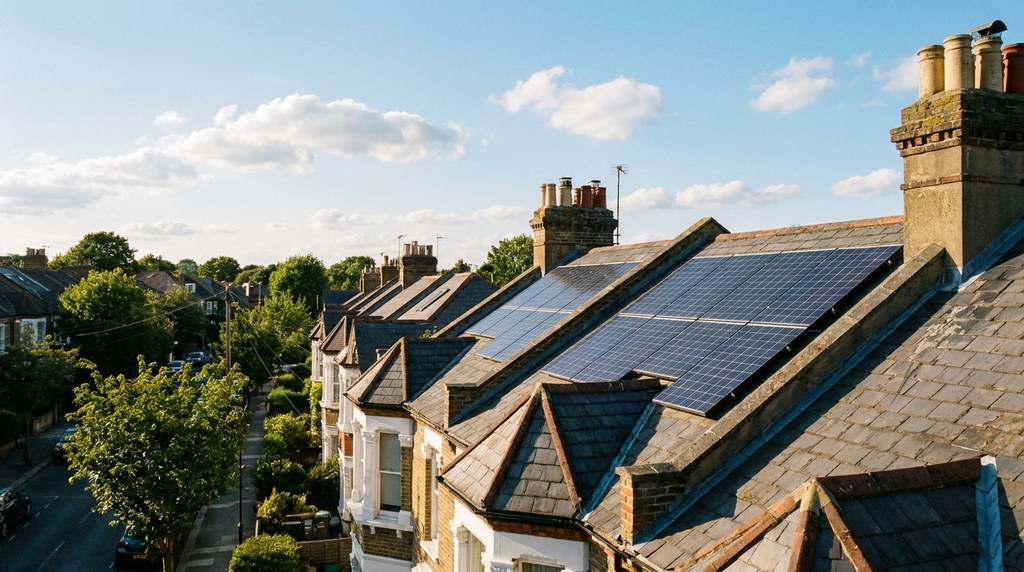
A solar PV system must generate enough electricity to cover both your household use and your electric car’s annual mileage. A typical EV consumes between 3,000 and 4,000 kWh per year, while a standard 3.5kWp solar system produces roughly 2,800 to 3,000 kWh annually (Energy Saving Trust, 2026). For most UK drivers, a 5–6kWp system is more realistic if you want to cover the majority of your driving from solar alone.
- Calculate your annual car mileage and multiply by 0.2–0.3 kWh per mile to estimate your EV’s yearly energy need.
- A larger 6kWp system can generate around 5,000–5,500 kWh per year, enough to power both a home and a medium-mileage EV.
- Check your roof space and orientation with an MCS-certified installer before committing to a system size (MCS, 2026).
2. Install a solar-compatible smart charger
Standard EV chargers draw power from the grid regardless of solar generation. A solar-compatible smart charger with a “solar-only” or “eco” mode diverts surplus PV power to your car before pulling from the grid, maximising free energy use (Energy Saving Trust, 2026). Models like the Zappi or Myenergi are OZEV-approved, which means you can claim the EV chargepoint grant.
- Look for chargers certified by OZEV (Office for Zero Emission Vehicles) to qualify for grant funding (GOV.UK, 2026).
- Smart chargers also let you schedule charging during sunny hours and export surplus to the grid when your car is full.
- Installation costs range from £800 to £1,200, with the grant covering up to £350 off the total.
3. Add a home battery for evening charging
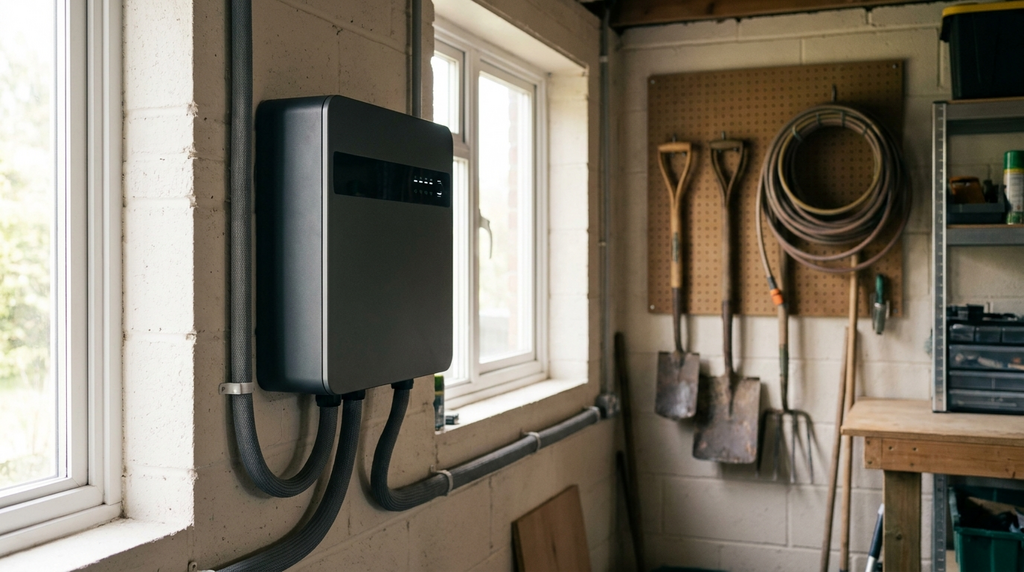
Without a battery, solar energy generated during the day must be used immediately or exported. A 5–10kWh home battery stores daytime solar surplus so you can charge your EV after dark, when grid electricity is often more expensive (Energy Saving Trust, 2026). This can double the amount of solar energy you use for driving.
- A 5kWh battery costs £3,000–£5,000 installed and can store enough for 15–25 miles of EV range.
- Batteries also reduce your reliance on peak-rate grid electricity, saving around £100–£200 per year on home energy bills (Ofgem, 2026).
- Ensure your battery is MCS-certified if you want to qualify for future grant schemes or the Smart Export Guarantee.
4. Use solar generation forecasts daily
Checking tomorrow’s solar forecast lets you schedule EV charging for the sunniest hours, reducing grid imports. Apps from providers like Octopus Energy or SolarEdge predict next-day output based on weather data (Ofgem, 2026). This is a low-cost way to improve your solar-to-car ratio without extra hardware.
- Most smart charger apps now include a forecast feature that shows expected solar generation for the next 24 hours.
- Schedule charging to start mid-morning on sunny days and avoid charging on overcast days when solar output is low.
- Pair forecasts with a time-of-use tariff to buy cheap grid power when solar generation is poor.
5. Charge during peak solar hours (10am–3pm)
UK solar generation peaks between 10am and 3pm, especially in summer months (Energy Saving Trust, 2026). Plugging in your EV during these hours means a larger share of the charge comes directly from your panels, with little or no grid draw. For a typical daily commute of 20–30 miles, this can cover 50–80% of the energy needed.
- Set your smart charger to start at 10am and stop by 3pm on sunny days.
- If you work from home, park on the driveway and plug in during your lunch break for maximum solar capture.
- In winter, peak solar hours are shorter (11am–1pm), so a battery becomes more important for storing that limited generation.
6. Pair solar with a time-of-use tariff
Time-of-use tariffs like Octopus Flux or Agile pay higher rates for exported solar power and offer cheap off-peak electricity for charging your EV (Ofgem, 2026). This lets you sell surplus solar to the grid during peak hours and buy low-cost power at night when solar isn’t available. It’s especially useful if your solar system is larger than your household and car needs.
- Export rates under the Smart Export Guarantee (SEG) are typically 5–15p per kWh, while off-peak import rates can be as low as 7p per kWh.
- This approach works best with a home battery that stores cheap off-peak power for use during the day.
- Check your current tariff and compare it with solar-friendly options to see if switching saves more than charging directly from panels.
7. Monitor your solar-to-car ratio
Tracking how much of your EV’s charge comes from solar versus the grid helps you adjust your habits for maximum savings. Most smart charger apps display a “solar fraction” or “self-consumption” percentage (Energy Saving Trust, 2026). Aim for a solar fraction of 60–80% to cut your motoring fuel costs significantly.
- Review your charger’s monthly report to see which days had the highest solar usage.
- If your solar fraction is below 50%, consider adding a battery or adjusting your charging schedule to sunnier hours.
- Some chargers let you set a minimum solar surplus before charging starts, preventing small amounts of grid import.
8. Orient panels for afternoon generation
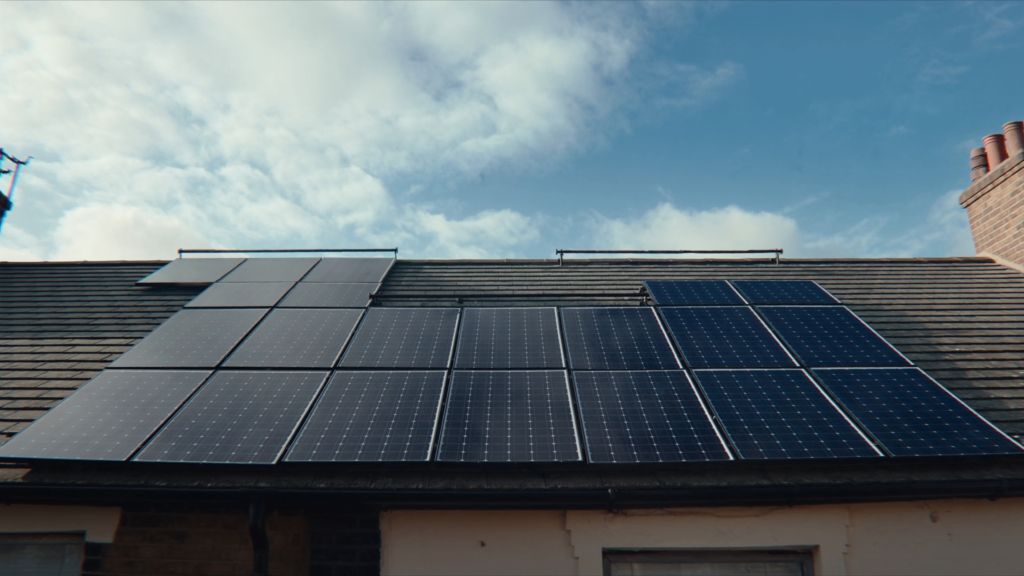
Most UK solar installations face south to maximise total annual output. But if you drive home in the late afternoon, west-facing panels can produce more power when you actually need it (Energy Saving Trust, 2026). A south-west orientation can boost afternoon generation by 15–20% compared to a south-only system.
- Ask your installer to model east-west or south-west panel layouts if you typically charge your EV after 3pm.
- West-facing panels also generate more power in summer evenings, reducing the need for a large battery.
- This trade-off reduces total annual generation by about 5% but improves the timing of when you produce solar power.
9. Use a portable solar charger for top-ups
Folding 100–200W solar panels can trickle-charge an EV at a rate of 1–2 miles per hour in direct sunlight (Energy Saving Trust, 2026). They are not a primary charging solution but can be useful for campervans, emergency top-ups, or topping up at a festival or remote location.
- A 200W panel will add around 10–15 miles of range on a full sunny day, enough for a short local trip.
- Portable panels are much cheaper than a full solar installation, costing £200–£500 for a 200W kit.
- They require direct sunlight and a compatible charge controller, so they work best in summer months.
10. Check eligibility for the EV chargepoint grant
Homeowners with off-street parking can get up to £350 off the cost of installing a smart EV charger through the government’s EV chargepoint grant (GOV.UK, 2026). The grant requires that your solar installer is MCS-certified and your charger is OZEV-approved, and the work must be done by a TrustMark-registered installer.
- The grant covers 75% of the installation cost, capped at £350, for a single smart charger per household.
- You must have off-street parking and the charger must be installed by a TrustMark-registered electrician (TrustMark, 2026).
- Apply through your installer before the work begins, as the grant is claimed by the installer on your behalf.
How to choose the right solar panel system for your home
The most effective way to charge an EV with solar is to install a system sized for your driving needs, pair it with a solar-compatible smart charger, and add a battery to store daytime surplus. With the right setup and a time-of-use tariff, you can cover 60–80% of your annual EV mileage from free solar power.
Guide to home battery storage for solar panels
| Component | Typical cost (GBP) | Typical output/saving | Key certification |
|---|---|---|---|
| Solar PV system (3.5kWp) | 5,000–7,000 | 2,800–3,000 kWh/year | MCS |
| Solar-compatible smart EV charger | 800–1,200 | Prioritises solar surplus | OZEV-approved |
| Home battery (5kWh) | 3,000–5,000 | Stores excess solar for evening charging | MCS |
| Portable solar panel (200W) | 200–500 | 1–2 miles per hour in sun | None required |
| EV chargepoint grant | Up to 350 off | 75% of installation cost | OZEV + TrustMark |
| Time-of-use tariff (e.g. Octopus Flux) | No upfront cost | Export 5–15p/kWh, import from 7p/kWh | Ofgem-approved |
| Solar generation forecast app | Free with many providers | Improves solar fraction by 10–20% | None |
| West-facing panel orientation | Same cost as south-facing | 15–20% more afternoon output | MCS |
| 5kWh home battery (installed) | 3,000–5,000 | 15–25 miles EV range stored | MCS |
| Larger PV system (6kWp) | 8,000–11,000 | 5,000–5,500 kWh/year | MCS |
Smart Export Guarantee explained for homeowners
Frequently Asked Questions
Yes, but you need a 5-6kWp solar system and a solar-compatible smart charger. Ofgem confirms this setup can cover most of your driving from solar alone.
For a typical EV using 3,000-4,000 kWh yearly, you need 12-15 panels (5-6kWp). Energy Saving Trust data (2026) shows this size covers both home and car use.
The Zappi and Myenergi are top solar-compatible smart chargers, both OZEV-approved for the EV chargepoint grant. Energy Saving Trust recommends them for maximising solar use.
Installation costs £800-£1,200, but the OZEV grant covers up to £350. GOV.UK (2026) confirms eligibility for homeowners with off-street parking.
Yes, with a home battery. A 5-10kWh battery stores daytime solar surplus for evening charging, doubling your solar usage. Energy Saving Trust advises this setup for night-time drivers.