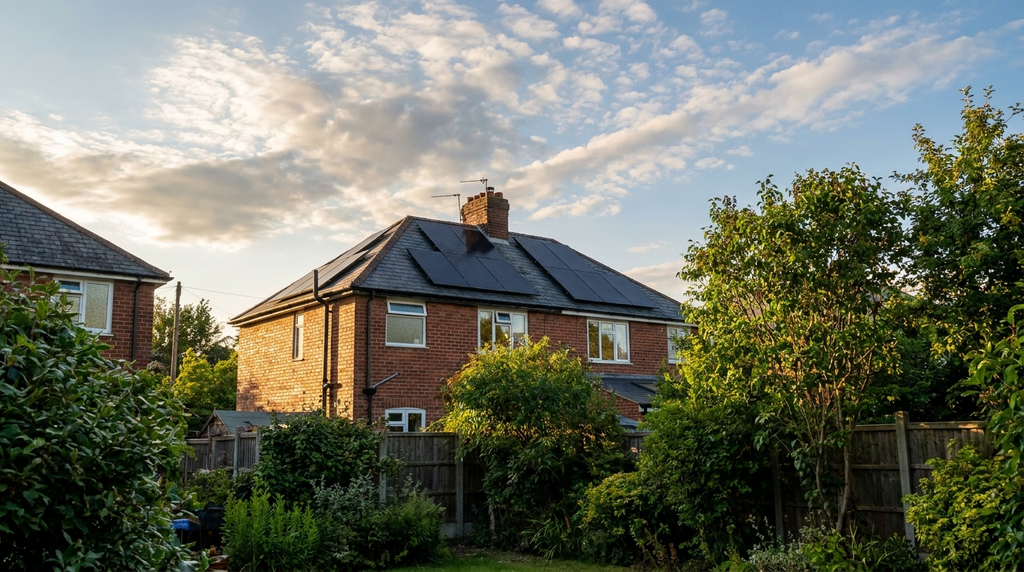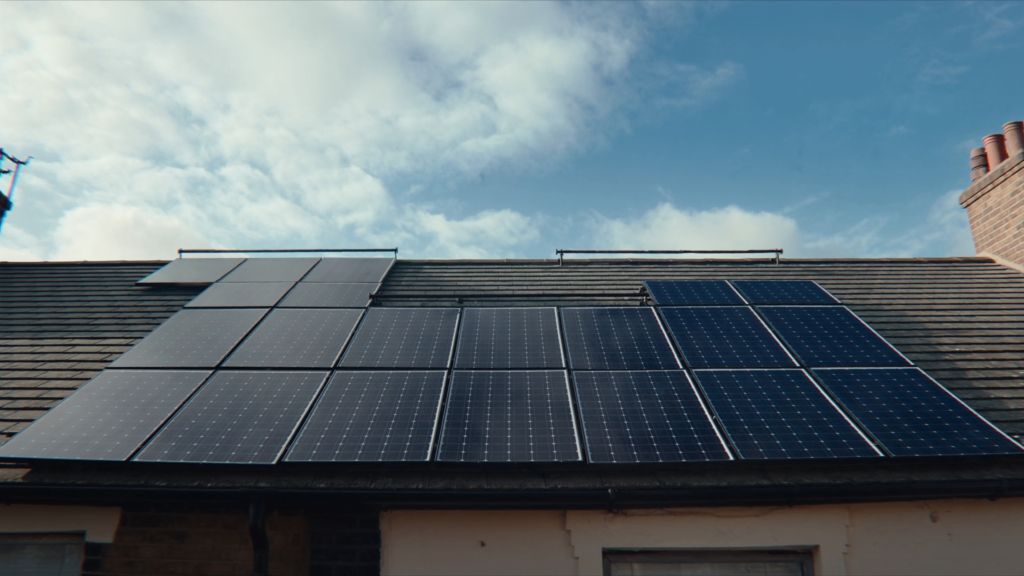
A typical 4-bedroom home in the UK will need between 10 and 16 solar panels (roughly a 3.5kWp to 5.6kWp system) to cover most of its annual electricity use. According to the Energy Saving Trust, an average 3-bedroom household uses around 2,700 kWh per year, but a 4-bedroom home with more occupants and appliances typically uses 3,500 to 4,500 kWh annually (Energy Saving Trust, 2026). The exact number depends on your roof size, panel wattage, and how much of your daytime electricity you want to offset.
The biggest factor is your household’s annual electricity consumption. A family of four in a 4-bedroom house with a washing machine, dishwasher, tumble dryer, and electric oven often uses around 4,000 kWh per year. If you work from home, that figure rises. The more electricity you use during daylight hours, the more panels you need to maximise savings. A smaller system (10 panels) might cover 60-70% of your usage, while a larger system (16 panels) can push that to 90% or more, assuming you use a battery to store excess generation.
Average electricity use for a 4-bedroom home
The UK average annual electricity consumption for a 4-bedroom house is approximately 3,800 kWh, according to Ofgem’s typical domestic consumption values (Ofgem, 2026). A 3.5kWp system (10 panels at 350W each) generates around 3,000 kWh per year in southern England, falling to about 2,500 kWh in Scotland. To fully offset 3,800 kWh, you need a 4.5kWp system (13 panels) or larger. If your home uses 4,500 kWh annually, aim for 16 panels (5.6kWp) to cover 85-90% of your usage, with the rest imported from the grid.
Panel wattage and roof space requirements
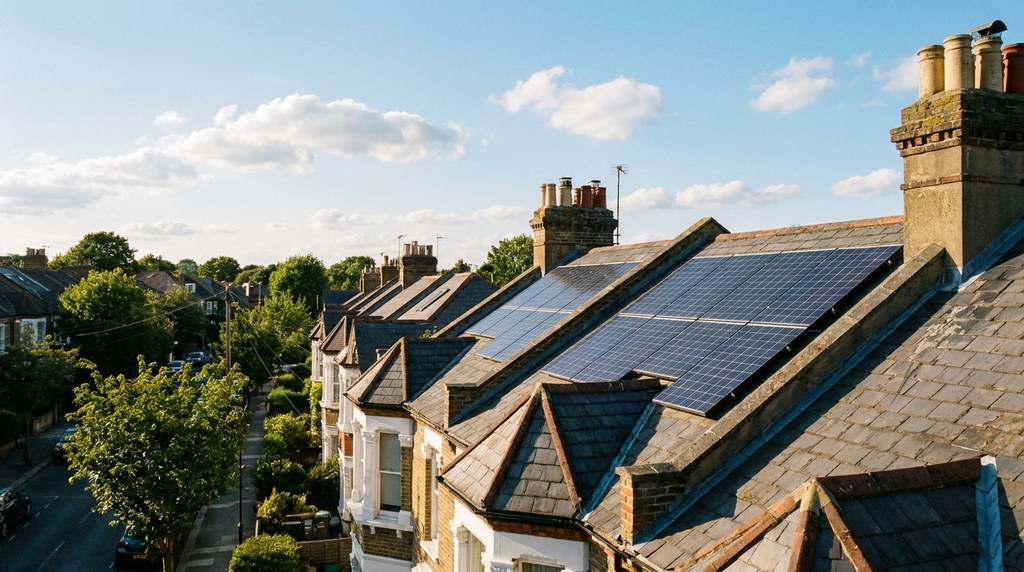
Modern solar panels typically range from 350W to 450W. A standard panel measures about 1.7m by 1.0m, so 10 panels need roughly 17m² of roof space, and 16 panels need 27m². The Energy Saving Trust notes that a south-facing roof at a 30-40 degree tilt generates the most electricity, but east or west-facing roofs still work well, producing about 80% of the maximum (Energy Saving Trust, 2026). If your roof is shaded or north-facing, add 2-3 extra panels to compensate for lower output.
Battery storage and self-consumption rates
Without a battery, you only use solar electricity when the sun shines, typically 30-40% of your total generation. Adding a 5kWh battery (costing around £2,000-£3,000 installed) raises self-consumption to 60-70%, reducing grid imports. A 4-bedroom household with a 4kWp system (12 panels) and a battery can achieve 80% self-sufficiency, according to the Microgeneration Certification Scheme (MCS, 2026). For maximum savings, size your system to match your daytime usage plus battery capacity, rather than aiming for 100% offset, oversizing can mean exporting surplus at low rates.
A worked example
For a typical 4-bedroom semi-detached house in Manchester using 4,000 kWh annually, a 14-panel system (4.9kWp) will cost roughly £6,500 after the 0% VAT saving (in place until March 2027) but before any export tariff income. According to the Energy Saving Trust, a south-facing system of this size in Manchester can generate around 4,100 kWh per year, covering over 90% of your household needs if you use a battery to store surplus power. You do not qualify for the BUS grant (that is for heat pumps only), but you can earn roughly £150 per year through the Smart Export Guarantee (SEG) at a typical 15p/kWh rate. Over 25 years, with SEG payments and electricity savings combined, you could save around £12,500 on bills.
| Item | Figure |
|---|---|
| Upfront cost after grants | £6,500 |
| Yearly savings | £500 |
| Payback period | 13 years |
| 25-year lifetime savings | £12,500 |
What homeowners often get wrong
The most common mistake is assuming you need enough panels to match your total annual electricity use exactly, without factoring in when you actually use the power. Here are three frequent errors homeowners make when sizing their solar system.
- Overlooking your daytime usage pattern Many homeowners install panels based on annual kWh totals alone, ignoring that solar only generates during daylight hours. If you are out all day, a 16-panel system without a battery will still only offset about 30% of your usage, wasting up to £400 per year in potential savings.
- Ignoring roof orientation and shading People often assume any roof will work, but a north-facing roof with a chimney shadow can reduce generation by 40% or more. This means your 14-panel system might only produce 2,500 kWh per year, leaving you with a £2,000 shortfall on expected savings over five years.
- Forgetting about the Smart Export Guarantee rate Homeowners often fixate on upfront costs and miss the income from exporting excess power. With SEG rates averaging 15p per kWh, a 4.9kWp system can earn you £150 annually, but if you choose a poor tariff, you could lose £75 per year compared to the best available rate.
Quick reference
- A 4-bedroom house using 3,800 kWh per year typically needs 13 solar panels (4.5kWp) to fully offset its annual electricity consumption.
- The Energy Saving Trust estimates a 4kWp system in southern England generates about 3,800 kWh per year, while the same system in Scotland generates roughly 3,100 kWh.
- You qualify for 0% VAT on solar panel installations until March 2027, saving you £500 on a typical £6,500 system.
- A 4.9kWp system with a 5kWh battery can achieve a payback period of 10 to 12 years under current UK energy prices.
- Installing more than 16 panels on a standard 4-bedroom roof often triggers planning permission issues with local councils if the panels protrude more than 200mm.
Frequently Asked Questions
Between 10 and 16 solar panels, or a 3.5kWp to 5.6kWp system. According to the Energy Saving Trust, a 4-bedroom home uses 3,500–4,500 kWh per year, so 13 panels at 350W each typically covers average usage.
A 4.5kWp system (13 panels) is the typical size to offset 3,800 kWh annual usage. Ofgem's 2026 typical domestic consumption values confirm this as the UK average for a 4-bedroom home.
Around 3,800 kWh per year according to Ofgem's 2026 typical domestic consumption values. Actual usage ranges from 3,500 to 4,500 kWh depending on occupants and appliances.