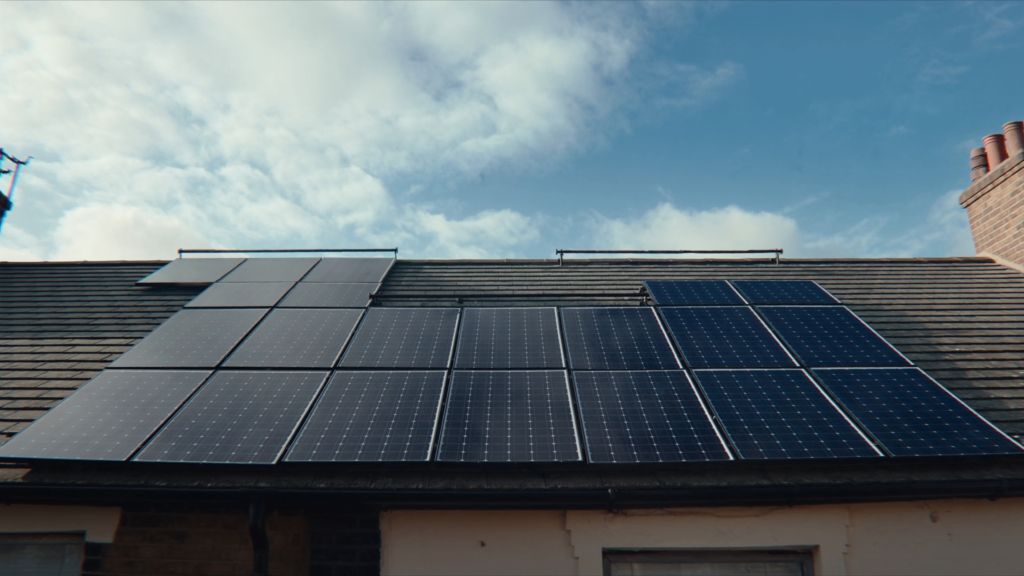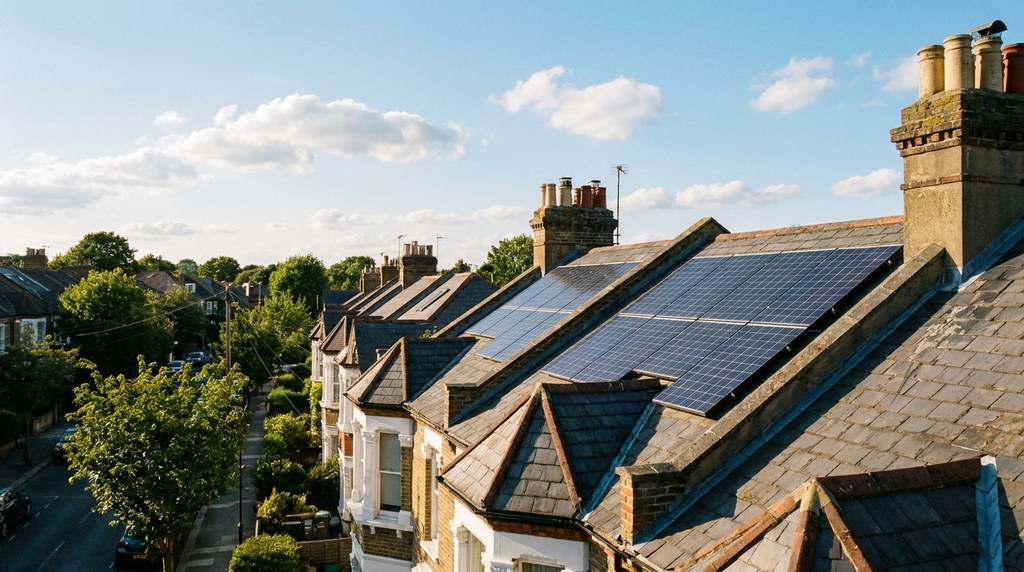
Solar panels after 25 years typically generate 80% to 88% of their original rated power.
If you own a solar photovoltaic (PV) system installed in the early 2000s, you may be wondering whether it still works after 25 years. The short answer is yes, but with a measurable drop in output. The industry-standard degradation rate for silicon solar panels is 0.5% to 0.8% per year, meaning after 25 years a 4 kW system might produce 3.2–3.5 kW at peak (DESNZ Solar Photovoltaic Degradation Factsheet, 2026; IEA PVPS Task 12).
Actual output depends on panel quality, local climate, and whether the system was cleaned and maintained. Homeowners should not expect a sudden failure. Performance drops gradually, not abruptly at the 25-year mark. A 4 kW system that originally generated 3,400 kWh per year will still produce roughly 2,720–2,990 kWh annually after 25 years.
The 25-year manufacturer power warranty is the main guarantee you have left.
Most Tier-1 panel manufacturers guarantee at least 80% of nameplate output at year 25. Some premium warranties from manufacturers such as SunPower and LG guarantee 86–88% (MCS installer standards and manufacturer warranty statements, 2026). After 25 years, the warranty expires, so any further degradation is the homeowner’s full financial responsibility.
Check your original warranty paperwork or the MCS certificate to confirm your specific panel’s guaranteed output at year 25. If your panels are from a manufacturer that has ceased trading, you may have no warranty cover at all. Once the warranty expires, you bear the cost of any performance loss or panel failure.
Quick numbers solar panel output, degradation, and lifespan at year 25
| Column | Row content |
|---|---|
| Panel type | Typical 25-year degradation rate |
| Average system output loss after 25 years | 12–20% of original rating |
| Typical remaining power warranty at year 25 | 80–88% of nameplate |
| Estimated annual degradation after year 25 | 0.5–0.8% per year (no change) |
| Median system lifespan (MCS data) | 30–35 years before inverter or panel failure becomes common |
| Source for all figures | DESNZ (2026), IEA PVPS Task 12, MCS installer survey data |
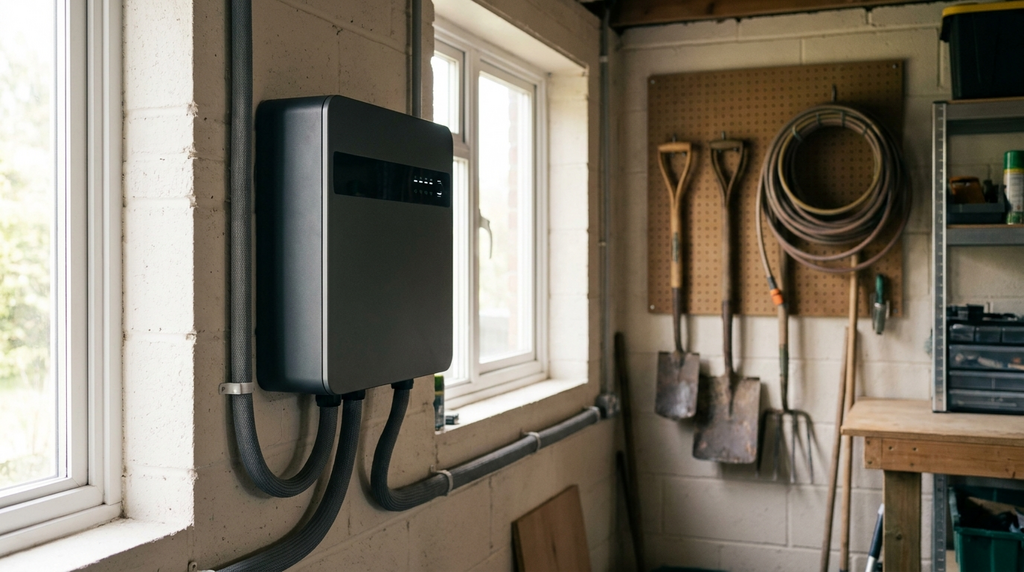
Your inverter will likely fail before the panels do, budget for a replacement around year 10–15.
String inverters have a typical lifespan of 10–15 years. Microinverters and power optimisers last 20–25 years (Energy Saving Trust Inverter Lifespan Guidance, 2026; MCS installation records, 2026). If you are at year 25 and have not replaced the inverter yet, it is almost certainly overdue for replacement.
A new inverter costs £800–£1,500 installed (2026 prices, per EST cost database, 2026). This is a key cost to factor into the decision to keep or replace the system. If you replace the inverter but keep the panels, you may still face panel degradation and eventual panel failure.
After 25 years, the panels still work, but the financial case for keeping them depends on your export tariff and roof condition.
Panels continue generating electricity. The question is whether the electricity saved is worth the roof space and maintenance. If you are on an expired Feed-in Tariff (FiT) that paid for 20 years, you now receive only the export payment, typically 5–15p/kWh under the Smart Export Guarantee (Ofgem Smart Export Guarantee rate tables, 2026).
Compare the annual generation from a 25-year-old 4 kW system (say 2,800 kWh) at your current electricity unit rate (e.g., 28p/kWh) to the cost of replacing the panels. The saved electricity is worth roughly £784 per year, but you also get the export payment for any surplus. If your roof is in good condition and the panels are still performing, keeping them may be financially sensible. If the roof needs work, the calculation changes.
You can keep, replace, or upgrade, but a full system replacement is usually the best value at year 25.
Keeping the 25-year-old panels means accepting lower output and no warranty. Upgrading to modern panels, which now achieve 22–24% efficiency versus 15–18% in 2001, can double the energy harvest from the same roof area (DESNZ Solar PV Cost and Performance Report, 2026; MCS installer cost database, 2026).
A typical 4 kW replacement system costs £5,000–£7,000 installed (2026) and pays back in 8–12 years. If the roof needs re-tiling soon, combine the panel replacement with the roofing work to save on scaffolding and labour. roof-integrated solar vs roof-mounted panels Replacing just the panels while keeping the existing inverter may be a cheaper interim option, but the inverter will still need replacing within a few years.
To keep your system running safely after 25 years, get a professional inspection every 5 years.
Electrical connections, roof penetrations, and cable insulation degrade over time. A visual and electrical check costs £100–£200 (MCS Maintenance Guidelines for Solar PV, 2026; HSE guidance on domestic electrical safety, 2026). The inspection should include a DC insulation resistance test and a check for hot spots on the panels using a thermal camera.
Only use an MCS-certified installer for this inspection. Non-certified electricians may not be familiar with PV-specific risks such as high DC voltages or arc faults. If you decide to keep the panels beyond 25 years, schedule an inspection every 5 years to catch developing faults early.
Solar panels after 25 years the direct answer
After 25 years, solar panels still generate electricity at 80–88% of their original rated output, but the manufacturer power warranty has expired, the inverter likely needs replacement, and modern panels are significantly more efficient. The most cost-effective option is usually to replace the full system, which pays back in 8–12 years, rather than to keep the old panels running.