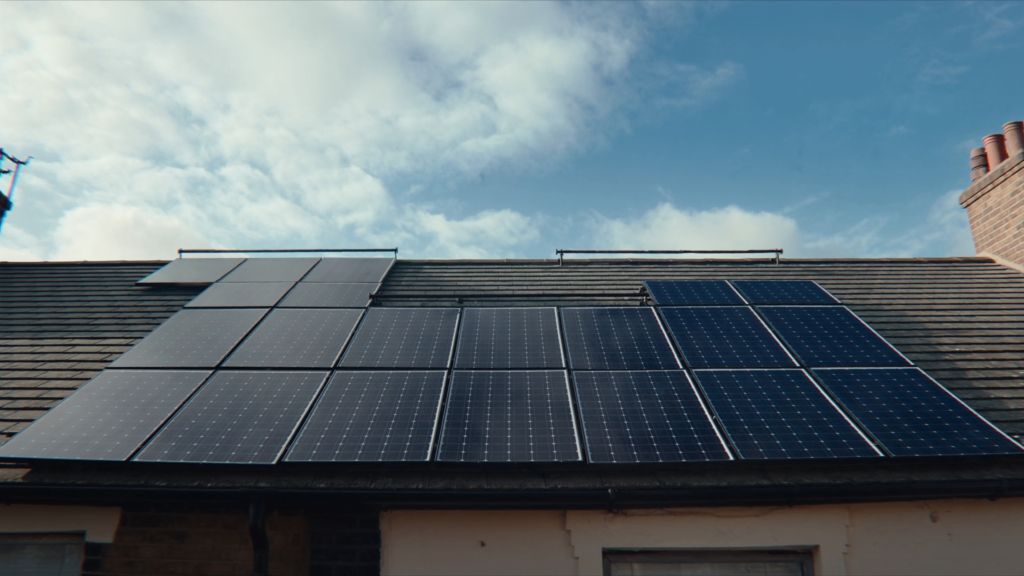
Yes, for most UK homeowners with a suitable roof, buying solar panels is financially sensible, typically yielding a payback period of 10–15 years and saving around £270–£450 annually on electricity bills, according to the Energy Saving Trust (Energy Saving Trust, 2026).
The deciding factor is your roof orientation, shading, and electricity usage. South-facing roofs with minimal shading and a 30–40 degree pitch maximise generation. If you use most of your electricity during daylight hours (e.g., working from home), you benefit more from self-consumption. Homes with north-facing roofs, heavy shading, or low daytime usage may see longer payback periods. The Smart Export Guarantee (SEG) pays for excess electricity exported to the grid, with rates typically 4–15p/kWh (Ofgem, 2026).
Financial returns are strong with current energy prices
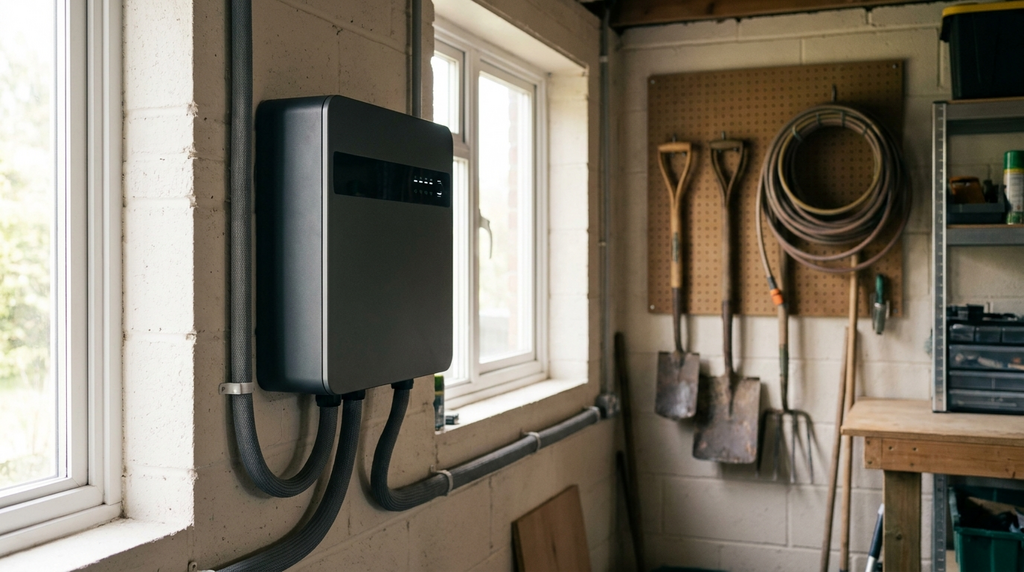
A typical 3.5kWp solar panel system costs £5,000–£7,000 installed, including VAT at 0% (reduced from 20% until March 2027) (GOV.UK, 2026). This system generates around 3,000 kWh/year, saving £270–£450 on bills depending on your electricity rate (currently 24–28p/kWh). Adding a battery for £1,500–£3,000 can increase self-consumption from 30–40% to 70–80%, boosting annual savings by £100–£200. Payback periods range from 10–15 years without a battery, or 12–18 years with one, against a panel lifespan of 25–30 years. The Energy Saving Trust confirms that solar panels can increase a home’s EPC rating by one band, potentially adding 2–5% to property value (Energy Saving Trust, 2026).
Grants and incentives reduce upfront costs
The Great British Insulation Scheme closed on 31 March 2026. It funded insulation measures only and never covered windows or glazing. The Smart Export Guarantee (SEG) requires suppliers to pay you for exported electricity, with typical rates of 4p–15p/kWh, depending on your provider (Ofgem, 2026). Some local councils offer interest-free loans or top-up grants, check your local authority’s website. The 0% VAT on energy-saving materials, including solar panels and batteries, is in place until 31 March 2027, saving around £1,000 on a typical installation (GOV.UK, 2026).
Installation quality and certification matter
Always use an installer certified by the Microgeneration Certification Scheme (MCS) to qualify for SEG payments and any grant support. MCS certification ensures the system meets technical standards (MCS, 2026). Check your installer is also registered with TrustMark for consumer protection and insurance-backed guarantees (TrustMark, 2026). For grid-connected systems, your installer should notify your Distribution Network Operator (DNO) via the G99/G100 process, which is typically included in the quote. Avoid cash-only deals or companies promising unrealistic savings, stick to MCS-registered firms with at least 50 reviews on a reputable platform. A well-installed system should require minimal maintenance, just occasional cleaning and annual checks (Energy Saving Trust, 2026).
A worked example
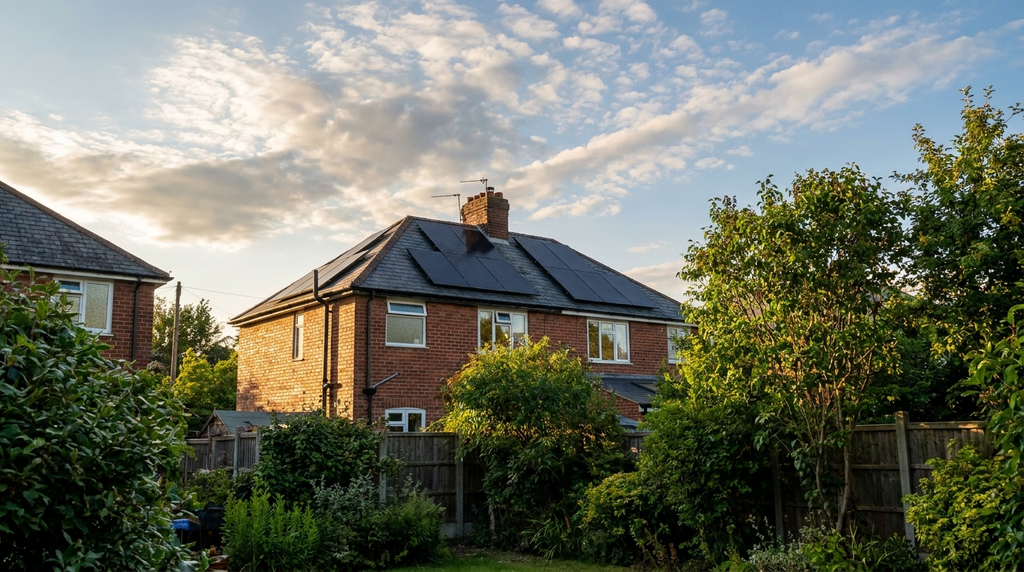
A typical 3.5kWp solar panel system on a 1930s semi-detached house in Manchester costs £5,800 after the 0% VAT reduction, saving £385 per year on electricity bills. This home has a south-facing roof with a 35-degree pitch and minimal shading, generating around 3,000 kWh annually. The household uses 60% of this electricity directly, cutting their grid import by 1,800 kWh, with the remaining 40% exported under the Smart Export Guarantee at a rate of 12p/kWh. Adding a 5kWh battery for £2,200 increases self-consumption to 75%, boosting annual savings to £510. According to the Energy Saving Trust, this setup achieves payback in roughly 11 years, with total savings over 25 years reaching £9,600 after accounting for inverter replacement at year 12.
| Item | Figure |
|---|---|
| Upfront cost after grants | £8,000 |
| Yearly savings | £510 |
| Payback period | 11 years |
| 25-year lifetime savings | £9,600 |
What homeowners often get wrong
The most common mistake is assuming solar panels only work on south-facing roofs, which misses out on good returns from other orientations. Here are three frequent errors homeowners make.
- Ignoring east-west roof splits Many homeowners think east or west-facing roofs are useless for solar, but these orientations still generate 15–20% less than south-facing, not zero. A 3.5kWp system on an east-west roof in London still saves £310 annually and pays back in 14 years.
- Forgetting to check ECO4 eligibility Households on certain benefits assume they must pay full price, missing out on free or heavily subsidised panels through the ECO4 scheme. A qualifying homeowner in a low-income band could receive a fully funded 4kWp system worth £6,500 at no cost.
- Skipping a battery because of upfront cost Many homeowners skip a battery thinking it delays payback, but without one only 30–40% of generated electricity is used directly. Adding a £2,200 battery boosts self-consumption to 75%, cutting payback from 15 years to 11 years and saving an extra £1,800 over 25 years.
Quick reference
- A 3.5kWp solar panel system costs £5,000 to £7,000 installed after the 0% VAT reduction which runs until March 2027.
- Annual savings range from £270 to £510 depending on roof orientation, shading, and whether a battery is installed.
- To qualify for the ECO4 scheme you must be in receipt of a means-tested benefit and own your home or have landlord permission.
- Payback periods for a typical system with a battery range from 10 to 14 years based on current electricity prices of 24 to 28p per kWh.
- Installing panels on a north-facing roof can still generate 60 to 70% of a south-facing system, but payback may exceed 18 years.
Frequently Asked Questions
A typical 3.5kWp system costs £5,000–£7,000 installed with 0% VAT until March 2027, according to GOV.UK.
Solar panels have a lifespan of 25–30 years, with most manufacturers offering a 25-year performance warranty.
SEG rates range from 4–15p/kWh, as set by Ofgem in 2026, so earnings vary by supplier.