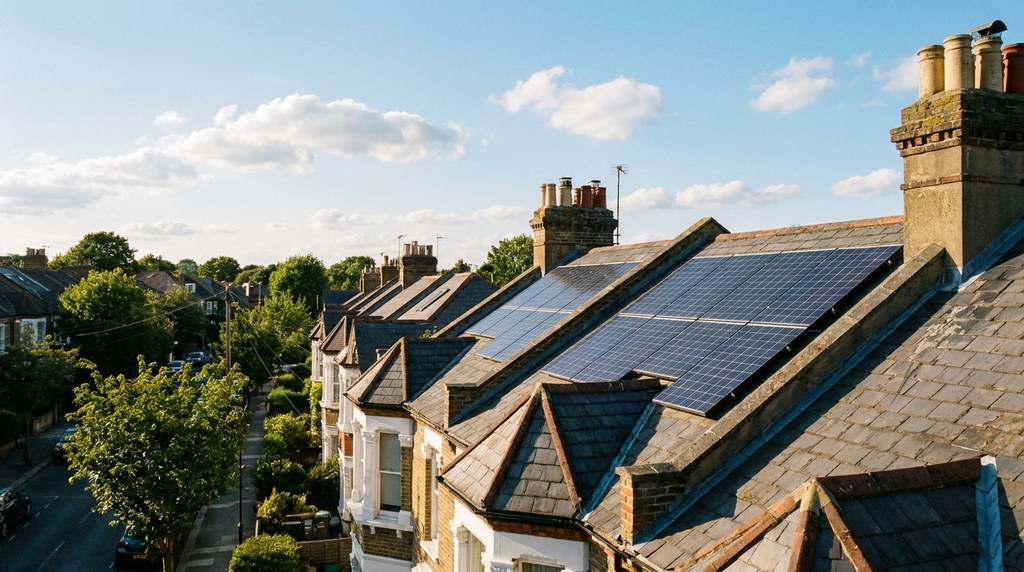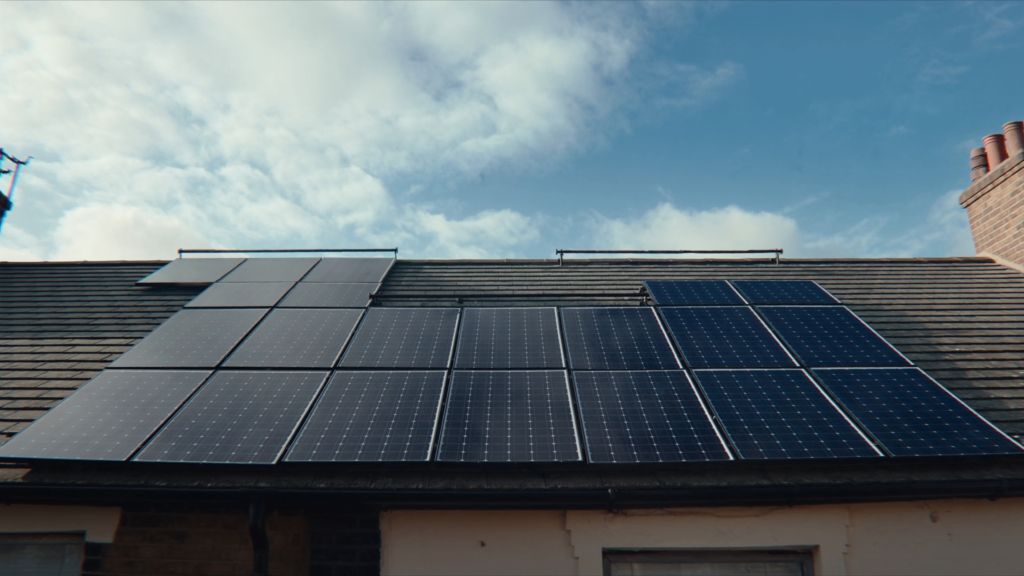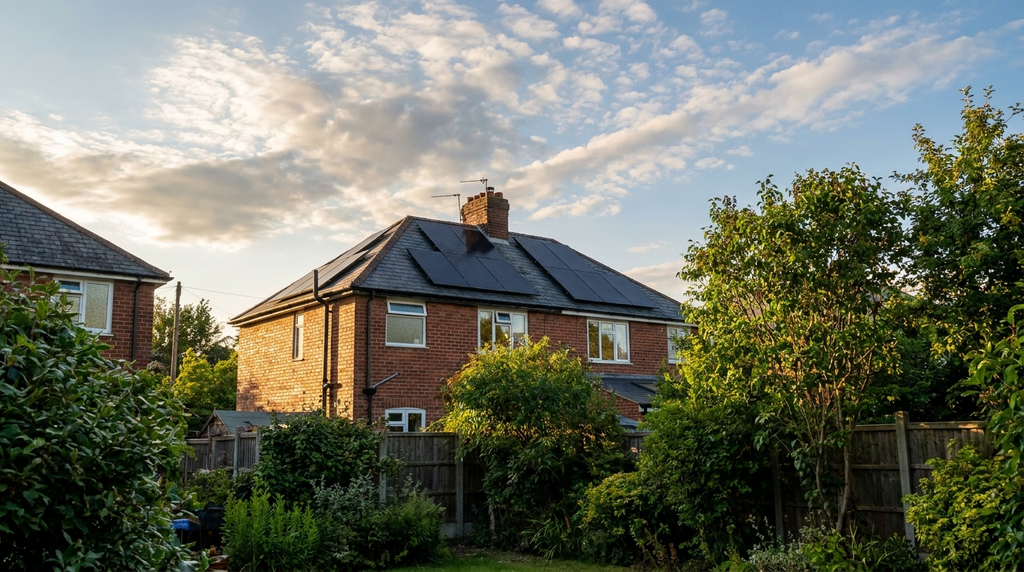
A typical 4 kW solar panel system costs £5,000 to £7,000 installed in 2026
The question of how much solar panels cost for a house is the first hurdle for most homeowners. For a standard 3-bedroom home, the direct answer is that a 4 kW system typically costs between £5,000 and £7,000 installed in 2026.
Solar panels cost £5,000 to £7,000 for a 4 kW system installed on a typical 3-bed house in 2026. The final price depends on your roof type, panel brand, and local installer rates.
- A 4 kW system costs £5,000 to £7,000 installed in 2026.
- South-facing roofs are cheapest; east-west adds £500 to £1,500.
- Premium panels from SunPower or REC add £1,000 to £2,000.
- London and South East installers cost 10–15% above UK median.
- Payback for a 4 kW system is 8 to 12 years based on savings.
- A typical 4 kW solar panel system costs £5,000 to £7,000 installed in 2026
- The real price depends on your roof type, panel brand, and installer
- Quick numbers cost breakdown, savings, and payback period
- You can cut costs by up to 50% with the 0% VAT and the Smart Export Guarantee
- Who is eligible for the 0% VAT and how to claim it
- How to check if your installer is MCS-certified and why it matters
- The direct answer to “how much do solar panels cost” for a typical house
- Battery storage adds £2,000–£5,000 to the price but boosts self-consumption
This figure applies to a roof-mounted, grid-tied system with a standard inverter and conventional panels. A smaller 3 kW system ranges from £4,500 to £5,500, while a larger 5 kW system costs £7,000 to £9,000, according to the Solar Energy UK market report and the Energy Saving Trust cost database (Energy Saving Trust, 2026; Solar Energy UK, 2026).
The real price depends on your roof type, panel brand, and installer
The headline cost is a useful benchmark, but the final price varies significantly based on three main factors. South-facing roofs are the simplest and cheapest to install, while east-west or flat roofs require more complex mounting, adding £500 to £1,500 to the total (Energy Saving Trust regional cost survey, 2026).
Premium panels from brands such as SunPower or REC add £1,000 to £2,000 to the system cost but offer higher efficiency and longer warranties. Local installer labour rates also differ by region; London and the South East average 10–15% more than the UK median, according to the MCS Installer Database (MCS Installer Database, 2026).
Quick numbers cost breakdown, savings, and payback period
The table below summarises typical installed costs, annual generation, savings, and payback for common system sizes, based on UK average solar irradiance for a south-facing roof.
| System size (kWp) | Installed cost (£) | Annual generation (kWh) | Annual savings (£) | Payback period (years) |
|---|---|---|---|---|
| 3 kWp | £4,500–£5,500 | 2,650 | £400–£500 | 10–12 |
| 4 kWp | £5,000–£7,000 | 3,550 | £500–£700 | 8–12 |
| 5 kWp | £7,000–£9,000 | 4,400 | £650–£900 | 9–13 |
Annual generation figures are from the DESNZ Solar PV Cost and Performance Data (DESNZ, 2026). Savings assume a standard electricity tariff and typical self-consumption of 30% without battery storage.
You can cut costs by up to 50% with the 0% VAT and the Smart Export Guarantee
The single biggest cost reduction available in 2026 is the permanent 0% VAT on solar panel installations, announced in the Spring Budget 2025 and effective from April 2026 (GOV.UK VAT relief for energy-saving materials, 2026). This removes the previous 5% VAT rate, saving you roughly £250–£350 on a typical 4 kW system.
The Smart Export Guarantee (SEG) pays you for excess electricity exported to the grid. Typical SEG rates range from 5p to 15p per kWh, depending on your supplier (Ofgem SEG annual report, 2026). Combined with bill savings, a 4 kW system can deliver £500–£700 per year on bills plus £100–£200 from SEG, effectively reducing your payback period by two to three years.
Who is eligible for the 0% VAT and how to claim it
All homeowners in England, Scotland, and Wales are eligible for the 0% VAT rate on solar panels and batteries, provided the installation is carried out by a VAT-registered installer. The installer must apply the 0% rate at the point of sale; you do not need to claim it separately on your tax return (HMRC policy paper on energy-saving materials VAT relief, 2026).
DIY installations or systems installed by unregistered traders are not eligible for the relief. If you are buying panels yourself and hiring a separate electrician, you will pay the standard 20% VAT on the equipment and labour.
How to check if your installer is MCS-certified and why it matters
MCS (Microgeneration Certification Scheme) certification is essential if you want to benefit from the Smart Export Guarantee or apply for certain grants. Without MCS certification, your system will not be eligible for SEG payments, and you may struggle to sell your home with the panels in place (MCS website, 2026).
You can verify an installer’s MCS number on the MCS register at mcsfoundation.org.uk. Also check for TrustMark registration for consumer protection and NICEIC or NAPIT certification for electrical safety (TrustMark website, 2026). How to choose a solar panel installer
The direct answer to “how much do solar panels cost” for a typical house
For a standard 3-bedroom semi-detached home with a south-facing roof, the installed cost of a solar panel system is £5,000 to £7,000 in 2026. This includes panels, inverter, mounting, and labour, but not battery storage (Energy Saving Trust cost database, 2026).
The system typically pays for itself in 8 to 12 years and lasts 25 years or more, based on DESNZ Solar PV lifecycle analysis (DESNZ Solar PV lifecycle analysis, 2026). The 0% VAT and SEG payments improve both the payback period and the lifetime return on investment.
Battery storage adds £2,000–£5,000 to the price but boosts self-consumption
Adding battery storage increases upfront costs but significantly improves the financial case for solar panels. A 5 kWh battery costs £2,000 to £3,000, while a 10 kWh battery costs £4,000 to £5,000 (Energy Saving Trust battery storage cost guide, 2026).
Without a battery, you typically use only 30% of the electricity your panels generate, exporting the rest. A battery can increase self-consumption to 70%, reducing your reliance on grid electricity and making SEG payments less critical. Not all installers offer battery integration, so check for MCS-compliant system design (MCS standards for battery systems, 2026). Solar battery storage guide
Frequently Asked Questions
A 4 kW system for a typical 3-bed house costs £5,000 to £7,000 installed in 2026, according to the Energy Saving Trust. A smaller 3 kW system ranges from £4,500 to £5,500.
Three main factors: roof type (south-facing is cheapest, east-west adds £500 to £1,500), panel brand (premium adds £1,000 to £2,000), and installer labour rates, which are 10–15% higher in London and the South East per the MCS Installer Database (2026).
A 4 kW system saves £500 to £700 per year on electricity bills, based on DESNZ Solar PV Cost and Performance Data (2026). Savings assume a standard electricity tariff and typical UK solar irradiance.
Payback for a 4 kW system is 8 to 12 years, according to Energy Saving Trust cost data (2026). This varies with system cost, savings, and whether you use the Smart Export Guarantee.
Yes, solar panel costs have fallen by about 20% since 2020, according to Solar Energy UK (2026). A 4 kW system now costs £5,000 to £7,000. That makes it more affordable for homeowners.