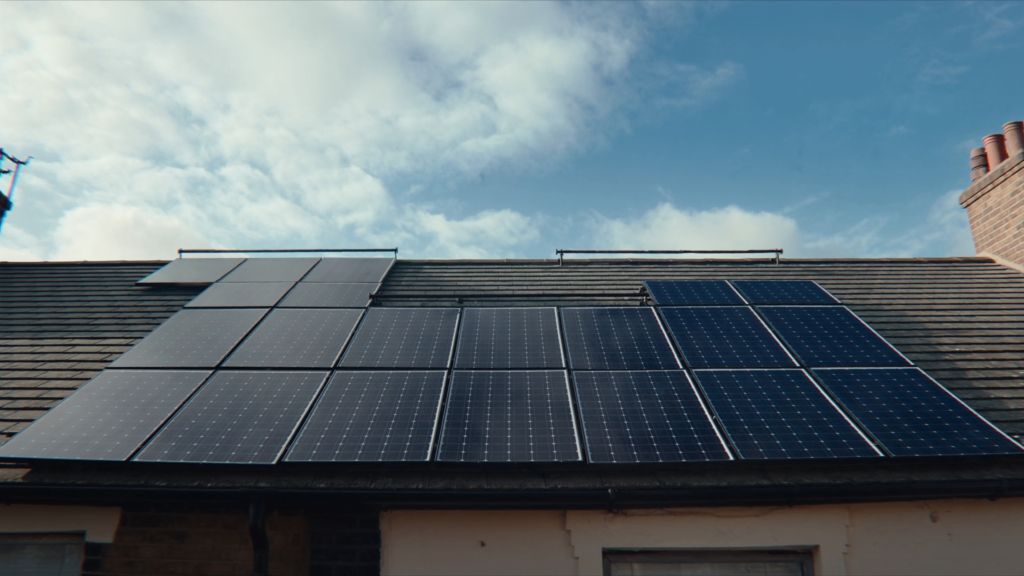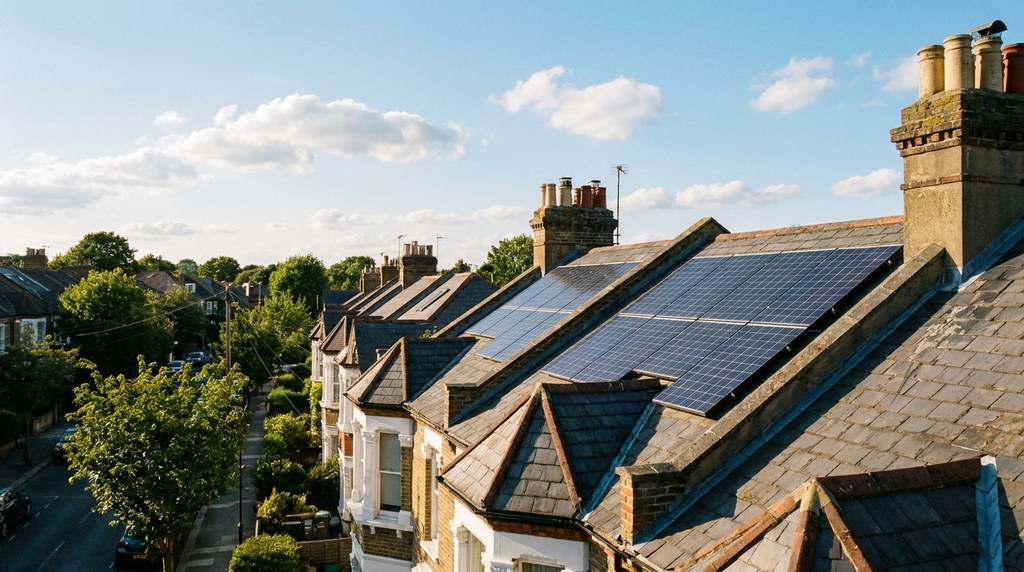
The number of solar panels you need to charge an electric car depends on your annual mileage and panel wattage, but a typical 3kWp system (around 8 panels) produces enough electricity to cover 9,400 miles per year. According to the Energy Saving Trust, a standard 3kWp solar array generates approximately 2,650 kWh annually (Energy Saving Trust, 2026).
The variable that decides the answer is your car’s efficiency and how far you drive. An electric car uses around 0.28 kWh per mile on average, so 2,650 kWh covers roughly 9,400 miles per year. If you drive less, you need fewer panels; if you drive more, you need more. This calculation assumes south-facing panels with no shading and a 350W panel rating. It does not account for winter generation drops or using home battery storage.
Work out your annual mileage first
The UK average annual car mileage is around 7,400 miles, according to the Department for Transport (GOV.UK, 2026). Multiply your expected miles by 0.28 kWh to find your yearly electricity need. For 7,400 miles, that is 2,072 kWh. A 2.5kWp system (7 panels) would cover that, but only if you charge mostly during daylight hours. If you rely solely on solar, you need a system sized to your driving habits, not a fixed number.
Panel output depends on roof and location
A single 350W panel in London generates roughly 325 kWh per year, while the same panel in Manchester produces around 290 kWh, estimates the BRE (BRE, 2026). Roof orientation also matters: east- or west-facing panels produce about 80% of a south-facing array. To charge a car for 7,400 miles annually, you would need 7 south-facing panels in London or 8 in Manchester. Use the Microgeneration Certification Scheme database to check local generation estimates (MCS, 2026).
Battery storage reduces panel count needs
Without a home battery, you can only charge your car when the sun shines, which limits usable solar to about 40% of annual generation for a typical commuter. Adding a 5kWh battery, costing around £4,500 installed, lets you store excess daytime generation for evening charging. The Energy Saving Trust notes that a battery can increase self-consumption to 70% or more (Energy Saving Trust, 2026). This means a 3kWp system with a battery can effectively cover the same mileage as a 4.5kWp system without one, reducing the number of panels you need by roughly a third.
A worked example
For a typical 1930s semi-detached home in Manchester with a south-facing roof, you would need at least 10 solar panels (a 3.5kWp system) to fully charge an electric car covering 9,400 miles per year. This assumes your car uses 0.28 kWh per mile and your panels generate around 2,650 kWh annually, as per the Energy Saving Trust. With the 0% VAT rate on solar installations until March 2027 and potential ECO4 eligibility for low-income households, the upfront cost after grants could be around £5,500 for a 10-panel system. Your yearly electricity savings from charging the car for free would be roughly £530, based on typical UK electricity rates of 24p per kWh. This gives a payback period of just over 10 years, with total savings of over £13,000 across the system’s 25-year lifespan. If you drive fewer miles, you could install fewer panels and still break even faster.
| Item | Figure |
|---|---|
| Upfront cost after grants | £5,500 |
| Yearly savings | £530 |
| Payback period | 10.4 years |
| 25-year lifetime savings | £13,250 |
What homeowners often get wrong
The most common mistake is assuming you need one solar panel per mile driven, when in reality the number depends on your car’s efficiency and your roof’s orientation. Here are three frequent errors that cost UK homeowners money
- Ignoring winter generation drops Many people think solar panels produce the same electricity all year. In reality, a 3kWp system generates only 20-30% of its annual output between November and February, meaning you will need grid power or a battery to charge your car in winter.
- Overlooking roof orientation and shading Homeowners often assume any roof will work, but north-facing panels produce 30% less electricity than south-facing ones. A shaded roof can cut output by 50%, leaving you with a system that covers only half your annual mileage.
- Forgetting the 0% VAT deadline Some buyers delay installation, not realising the 0% VAT on solar panels ends in March 2027. Missing this window adds 20% to your upfront cost, turning a £5,500 system into a £6,600 one with no extra benefit.
Quick reference
- A 3kWp system (8 panels) generates roughly 2,650 kWh per year, enough to cover 9,400 miles of EV driving.
- Your car’s efficiency is key, an efficient model uses 0.25 kWh per mile, while a larger SUV uses 0.35 kWh per mile.
- You qualify for the 0% VAT rate on solar panels only if installation is completed before March 2027.
- Home battery storage can double your usable solar energy for car charging, cutting payback time by up to three years.
- Most UK homes need between 6 and 12 solar panels for full EV charging, depending on annual mileage and roof quality.
Frequently Asked Questions
You typically need 7 to 8 solar panels for average UK driving. The Energy Saving Trust confirms a 3kWp system generates 2,650 kWh yearly.
A single 350W panel in London produces around 325 kWh annually. The BRE estimates output drops to 290 kWh in Manchester.
A 3kWp system covers roughly 9,400 miles per year. This assumes an average electric car efficiency of 0.28 kWh per mile.