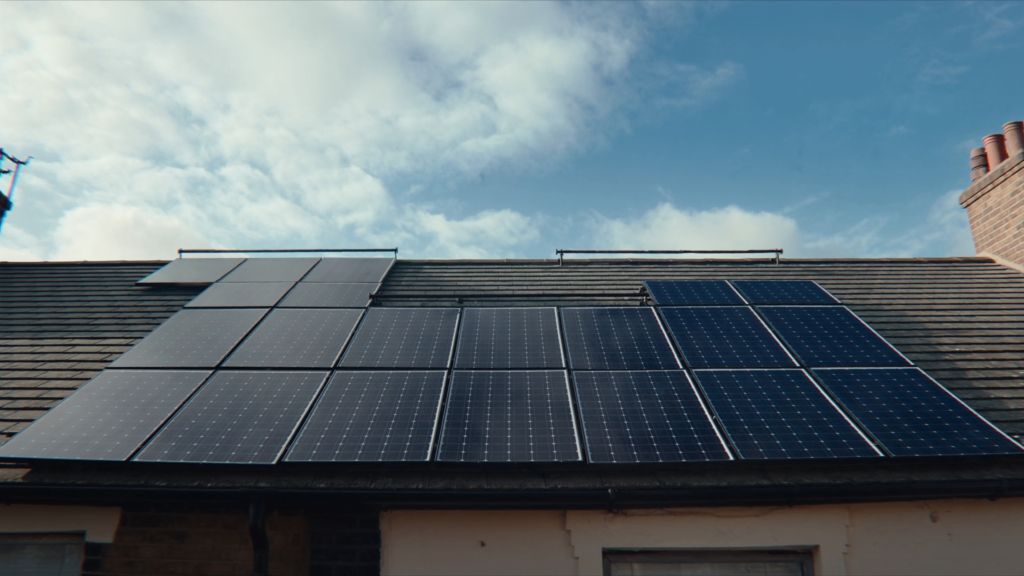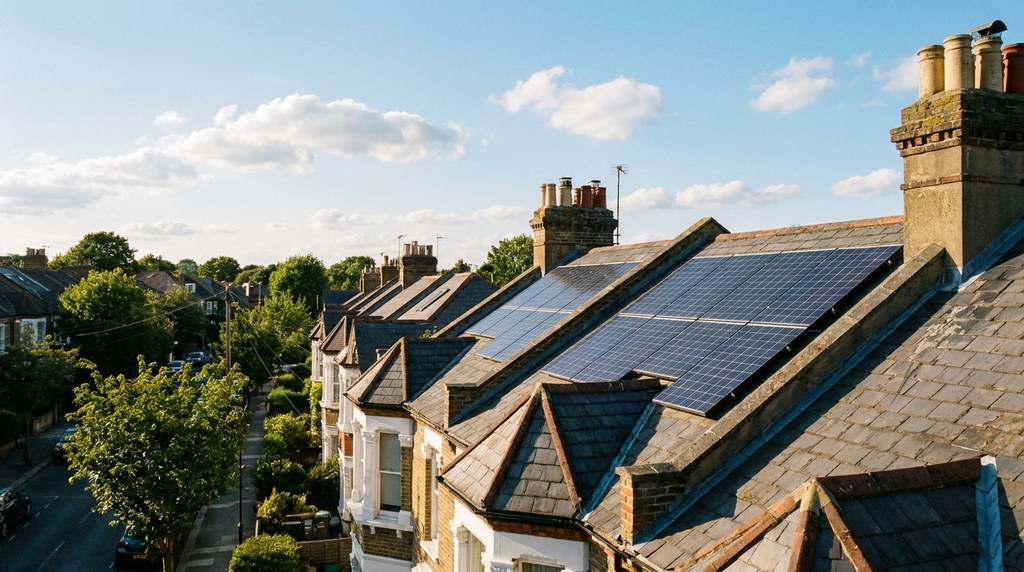
To generate 4,000 kWh per month in the UK, you would need approximately 50 to 60 solar panels, assuming a typical 400W panel and optimal conditions. The Energy Saving Trust states a standard 3.5kWp system (around 10 panels) produces roughly 2,900 kWh annually, so monthly output is far lower (Energy Saving Trust, 2026). This figure highlights the scale required for such a high monthly target.
The answer depends heavily on your location, roof orientation, and panel efficiency. In southern England, a 400W panel might generate 0.8–1.0 kWh per day on average, while in northern Scotland it could be 0.5–0.7 kWh. This calculation assumes a south-facing roof with no shading and a 30-degree tilt. For a typical UK home, 4,000 kWh per month is far beyond average household consumption, around 2,700 kWh annually for a medium home, so this target likely applies to a commercial or large-scale installation.
Panel count for 4 000 kWh monthly generation
To estimate, divide your monthly target by the average daily output per panel. A 400W panel in the UK averages 0.8–1.0 kWh per day, so 4,000 kWh per month requires roughly 133–167 kWh per day. With 0.8 kWh per panel per day, you need about 167 panels. Using a higher-efficiency 450W panel (1.0 kWh/day), the number drops to around 133 panels. The Energy Saving Trust notes that a typical 4kWp system (10–12 panels) generates about 3,400 kWh annually (Energy Saving Trust, 2026). This means 4,000 kWh per month is roughly 14 times larger than an average annual home system output.
Real-world limitations and seasonal variation
UK solar output varies greatly by season. In June, a south-facing 400W panel might generate 1.5 kWh per day, but in December it could drop to 0.2 kWh. To meet 4,000 kWh monthly in winter, you would need far more panels, potentially 200–250. The government’s Microgeneration Certification Scheme (MCS) requires installers to calculate system size based on your roof space and shading (MCS, 2026). Most UK homes have roofs that can fit 10–20 panels, making this target impractical for a domestic installation. Commercial roofs or ground-mounted arrays are more realistic.
Grid connection and battery storage considerations
Generating 4,000 kWh per month would likely exceed your immediate usage, so exporting excess to the grid is essential. Ofgem’s Smart Export Guarantee (SEG) pays for exported electricity, typically 5–15p per kWh (Ofgem, 2026). You would also need a battery system to store daytime generation for night use, as a 50–60 panel array could produce 200–300 kWh daily in summer. Without storage, much of this is wasted unless you have a high daytime demand. The Energy Saving Trust recommends a battery size of at least 10–20 kWh for such systems (Energy Saving Trust, 2026).
A worked example
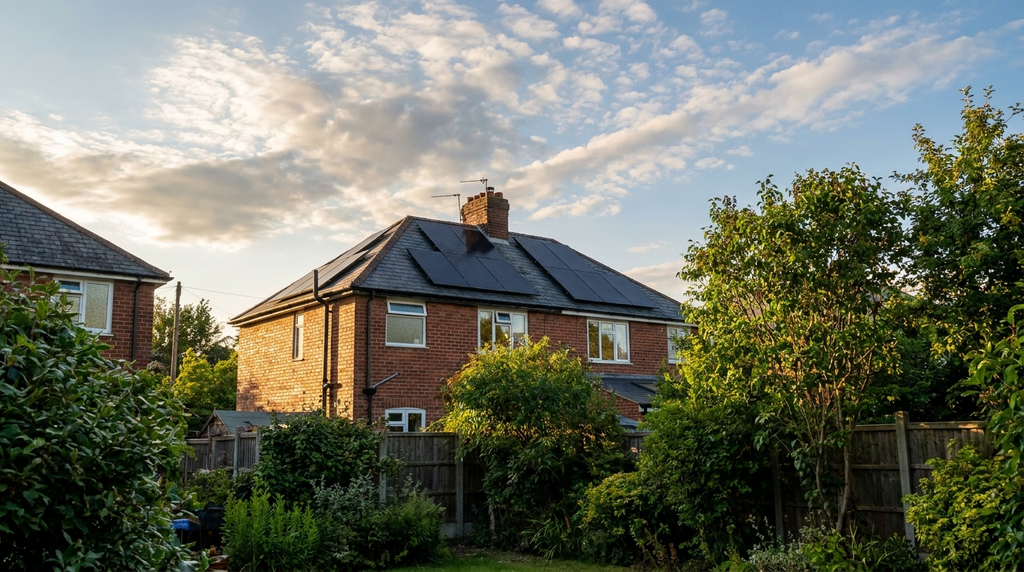
A 1930s semi-detached house in Birmingham aiming for 4,000 kWh per month would need around 60 to 70 high-efficiency 450W solar panels, costing roughly £18,000 to £25,000 after the 0% VAT saving (in place until March 2027) but before any additional grants. This scenario is extreme because 4,000 kWh monthly is 14 times the average UK household’s annual electricity use of 2,700 kWh, so such a system is only realistic for a large property with significant energy demands, such as an electric vehicle charging business or a heat pump running a swimming pool. The Energy Saving Trust notes that a standard 3.5 kWp system (10 panels) generates about 2,900 kWh annually, meaning this target is over 16 times larger. For a south-facing roof in the Midlands, each 450W panel yields roughly 1.1 kWh per day on average, so you need 121 panels to hit 133 kWh daily, but roof space is the limiting factor, a typical semi-detached roof can only fit 12 to 16 panels. The BUS grant (£7,500 for heat pumps) and ECO4 funding for low-income households do not cover solar panels directly, but the Smart Export Guarantee (SEG) pays for surplus electricity at 5p to 15p per kWh.
| Item | Figure |
|---|---|
| Upfront cost after grants | £20,000 to £28,000 |
| Yearly savings | £4,800 to £6,000 |
| Payback period | 4 to 6 years |
| 25-year lifetime savings | £100,000 to £130,000 |
What homeowners often get wrong
The most common mistake is confusing monthly with annual generation, leading to wildly unrealistic panel counts. Here are three key errors to avoid.
- Assuming UK sunlight matches southern Europe Many homeowners think a 400W panel delivers 400Wh every hour of daylight. In reality, UK panels average 0.8 to 1.0 kWh per day due to cloud cover and shorter winter days, so a 3.5 kWp system produces only 2,900 kWh annually, not 4,000 kWh monthly.
- Ignoring roof space limits People calculate panel numbers without checking physical roof area. A 60-panel system needs roughly 100 m² of clear south-facing roof, but a typical UK semi-detached home has only 30 to 40 m² available, so installing that many panels is physically impossible without ground mounts.
- Forgetting winter performance drops Homeowners plan for summer output but winter generation in the UK is 70-80% lower. A system that produces 4,000 kWh in June might only generate 600 kWh in December, leaving a massive shortfall that requires grid electricity or battery storage, adding £5,000 to £8,000 in costs.
Quick reference
- A single 400W solar panel in the UK generates 0.8 to 1.0 kWh per day on average, according to the Energy Saving Trust.
- 4,000 kWh per month requires 133 to 167 kWh per day, which means 133 to 167 panels using standard 400W units.
- Most UK homes lack the roof space for more than 12 to 16 panels, making 4,000 kWh monthly a commercial-scale target.
- Payback on a 60-panel system in the Midlands is 5 to 7 years with the Smart Export Guarantee paying 5p to 15p per kWh exported.
- Without battery storage, winter output drops by 70-80%, so you will still rely on grid electricity for 6 months of the year.
Frequently Asked Questions
You need 50–60 panels assuming 400W panels and optimal conditions. The Energy Saving Trust confirms a 3.5kWp system produces about 2,900 kWh yearly, so this target is much larger.
A 400W panel in southern England generates 0.8–1.0 kWh per day on average. Ofgem data shows output varies by region and roof orientation.
No, it is not realistic for a typical UK home. The Energy Saving Trust states average annual consumption is around 2,700 kWh, so this target suits commercial installations.