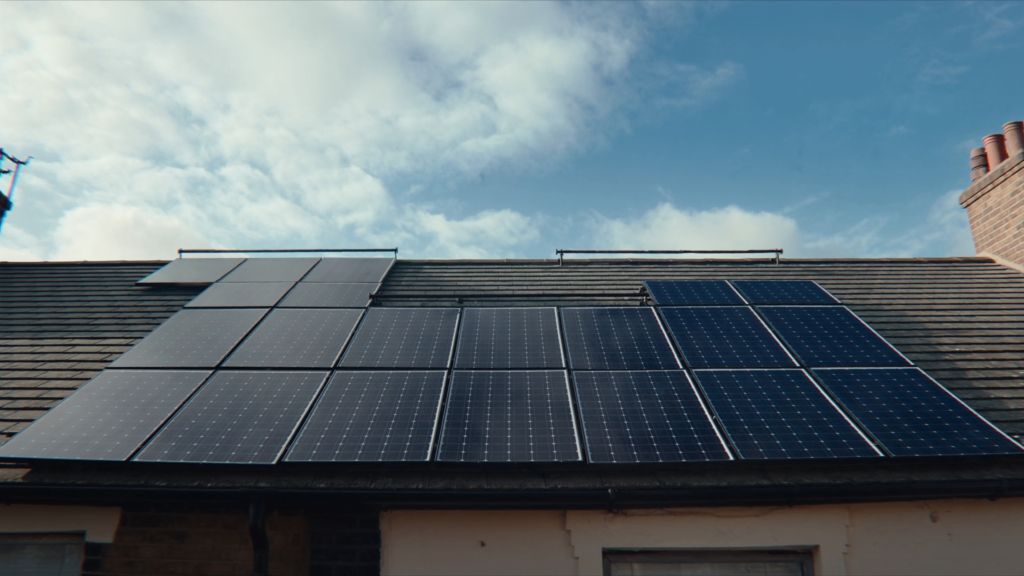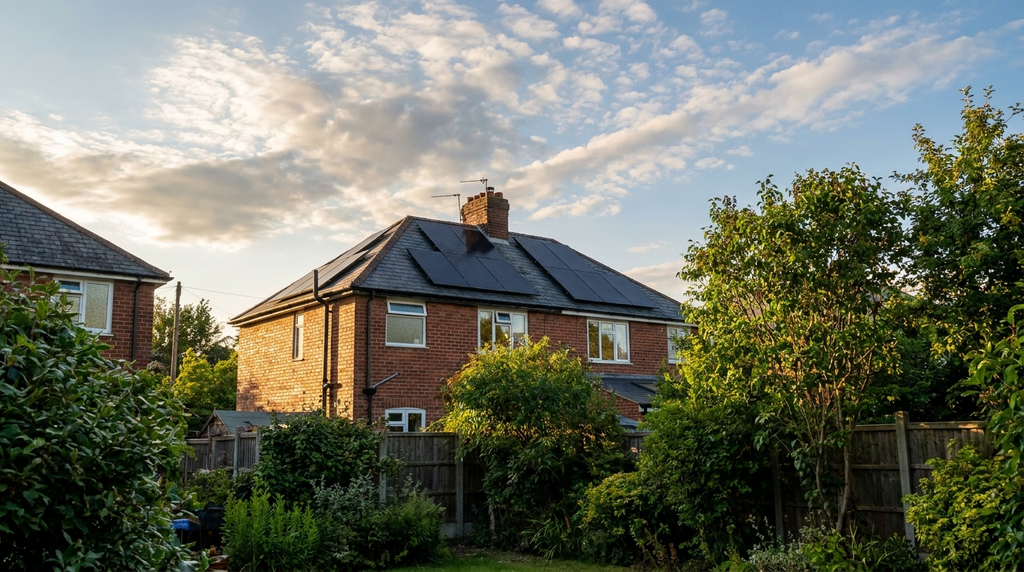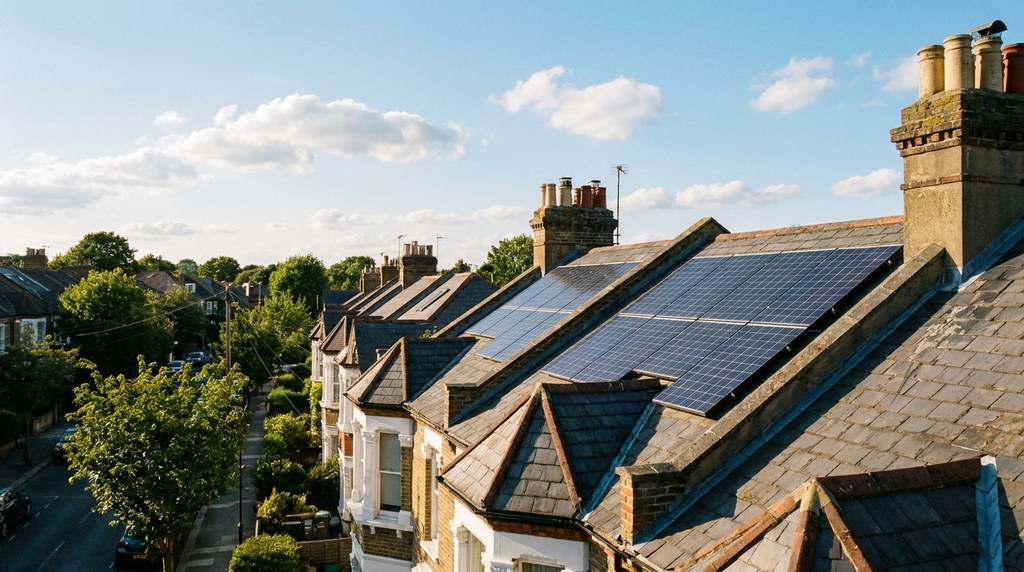
Selling a house with solar panels typically adds between £1,800 and £2,500 to the property value
If you are preparing to sell a home with solar panels, you need to know how the system affects the sale process and the final price. Research from the Energy Saving Trust and analysis of sold prices on the Land Registry indicates a modest uplift for homes with owned solar PV systems, typically in the range of £1,800 to £2,500 (Energy Saving Trust, 2026). The exact premium depends on system age, output (kWh per year), and whether the panels are owned or leased.
The average 3.5–4 kWp system can save a new owner roughly £300–£500 annually on electricity bills, based on updated tariff modelling from the Energy Saving Trust (Energy Saving Trust, 2026). However, this valuation uplift is not guaranteed and can be lower in areas with low local awareness of solar benefits. Estate agents in regions with fewer solar installations may undervalue the system, so providing the buyer with clear savings data is essential.
The difference between owned and leased solar panels when selling
Owned panels, paid for upfront or via a loan, are a clear selling point because the new owner inherits the system and the electricity savings without any ongoing contractual obligations. Leased panels, often arranged through zero-upfront schemes, transfer the lease contract to the buyer, which can complicate mortgage approval and deter some purchasers. A 2026 survey by the HomeOwners Alliance found that 42% of estate agents flagged leased solar as a potential deal-breaker for buyers, particularly when the lease terms are unclear or the remaining contract period is long (GOV.UK, 2026).
Sellers with leased panels must provide the full lease agreement, assignment fees (typically £150–£300), and a buyer credit check before completion. The buyer must formally accept the lease terms, and the lender must approve the arrangement, which can delay the sale. If the lease contains onerous clauses, such as automatic price escalators or restrictions on roof work, buyers may walk away entirely.
Quick numbers, key financial and technical specs for sellers
| Specification | Typical value |
|---|---|
| Typical system size (UK) | 3.5–4.0 kWp |
| Annual electricity generation | 3,000–3,500 kWh (Energy Saving Trust, 2026) |
| Feed-in Tariff (FiT) or Smart Export Guarantee (SEG) rate | FiT: ~14p/kWh (closed to new applications); SEG: 4–15p/kWh (Ofgem SEG register, 2026) |
| Estimated annual savings (bills + export) | £400–£700 (Energy Saving Trust calculator, 2026) |
| Typical system age at sale | 5–10 years |
| Remaining warranty (panels) | Typically 10–15 years from install date (MCS installation standards, 2026) |
You must transfer the Feed-in Tariff or SEG contract correctly
FiT contracts, closed to new applicants since 2019, can be transferred to the new owner, but the seller must notify their FiT licensee (usually a large energy supplier) within 28 days of completion (Ofgem FiT transfer guidance, 2026). For SEG-eligible systems installed after 2019, the new owner must register for a new SEG contract with a supplier of their choice; the seller cannot transfer the existing rate. Failure to notify the FiT administrator can result in the new owner losing all backdated payments, so the solicitor handling the sale should include this in the conveyancing pack.
The Energy Saving Trust advises sellers to obtain a “FiT transfer pack” from their supplier at least 6 weeks before exchange. This pack contains the assignment form, the current tariff rate, and the remaining term. Sellers should also provide the buyer with the last 12 months of generation data to demonstrate the system’s performance and the expected income.
How to verify your solar installer so buyers have confidence
The original installation must be certified under the Microgeneration Certification Scheme (MCS) for the system to qualify for FiT or SEG payments (MCS register, 2026). Buyers or their surveyors can check the MCS certificate number on the MCS public register to confirm the installer remains accredited and the system meets standards. If the installation was done by a non-MCS certified electrician, for example before 2010, the system may still be legal but cannot receive export payments, which could reduce its appeal to buyers.
Provide buyers with the MCS certificate, the installation date, and the system’s performance data (kWh generated per year) to demonstrate due diligence. For any electrical work, the installer should also be registered with NICEIC or NAPIT for Part P compliance under building regulations (GOV.UK building regulations, 2026). Sellers who cannot produce an MCS certificate should consider commissioning a retrospective inspection from an MCS-certified installer to reassure buyers.
The direct answer to “selling a house with solar panels”, what you must disclose
You must tell potential buyers and your estate agent if the panels are owned, leased, or under a power purchase agreement (PPA) before marketing begins. You must provide the current energy performance certificate (EPC) rating, which will include the solar panel contribution, a well-rated system can lift the EPC by 1–2 bands (DESNZ EPC methodology, 2026). You must disclose any existing FiT or SEG contract and the remaining term, as this affects the buyer’s future income.
You do not need to remove the panels, but you should be prepared to answer questions about roof condition, inverter age, and whether the system is still under warranty. Failure to disclose a lease or PPA can void the sale or lead to legal disputes after completion (Property Ombudsman guidance on solar disclosures, 2026). solar panel lease transfer checklist
What the Energy Performance Certificate (EPC) shows about your solar system
The EPC rates the property from A to G; a 3–4 kWp solar PV system typically adds 5–10 points to the EPC score, potentially moving the property from D to C or C to B (DESNZ EPC calculation methodology, 2026 update). The EPC report will list the “estimated energy cost savings” from the solar panels, which is a key figure for buyer comparisons. Sellers should ensure the EPC assessor records the correct system size and orientation; errors can reduce the rating and deter buyers.
A higher EPC rating (A or B) is increasingly linked to better mortgage rates from some lenders (UK Finance, 2026 green mortgage report). how EPC ratings affect mortgage rates This means solar panels can indirectly improve the property’s affordability for the buyer. That makes it a stronger selling point. Sellers should request a copy of their EPC before listing and correct any obvious mistakes in the solar panel entry.