Solar panels in a Solar Feed-in Tariff (SFS) arrangement are used to generate renewable electricity from sunlight, which you can use to power your home and earn payments for surplus energy exported to the grid. The UK government’s Smart Export Guarantee (SEG) replaced the original Feed-in Tariff, and a typical 3.5kWp system generates around 2,950 kWh per year (GOV.UK, 2026).
The primary purpose of solar panels under an SFS-style setup is to offset your household electricity consumption. In practice, this means you draw less power from the grid during daylight hours, reducing your annual bills. The SEG requires licensed suppliers to pay you for every kWh you export, with rates typically between 3p and 15p per kWh (Ofgem, 2026).
Generating Electricity for Your Home
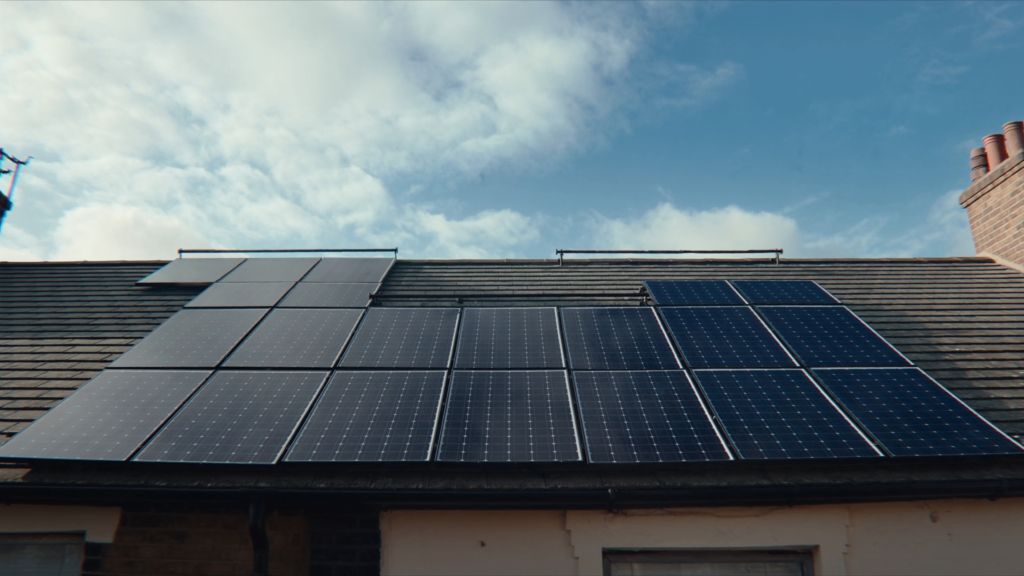
Solar panels convert sunlight into direct current (DC) electricity, which an inverter changes to alternating current (AC) for household use. During sunny periods, your home runs directly on solar power, and any surplus is sent to the grid. Energy Saving Trust states that a well-sized system can cover 40–60% of a typical home’s annual electricity needs (Energy Saving Trust, 2026). This means you rely less on grid electricity, lowering your bills and protecting against future price rises.
Earning Export Payments Under the SEG
Under the Smart Export Guarantee, you receive a guaranteed payment for every kWh of electricity your system exports. The rate is set by your chosen supplier, and you must have a smart meter to measure exports accurately. Ofgem confirms that the SEG applies to installations up to 5MW capacity, with no cap on the amount you can export (Ofgem, 2026). Typical annual export income for a 3.5kWp system ranges from £80 to £250, depending on your location and export rate.
Reducing Your Carbon Footprint
By generating your own clean electricity, you directly reduce the carbon emissions associated with your home’s energy use. The average UK home emits around 1.5 tonnes of CO₂ per year from electricity consumption, and solar panels can cut this by up to 1.2 tonnes annually (Energy Saving Trust, 2026). This contributes to the UK’s net-zero target by 2050, and the panels themselves have a carbon payback period of roughly 1–2 years (BRE, 2026).
A worked example
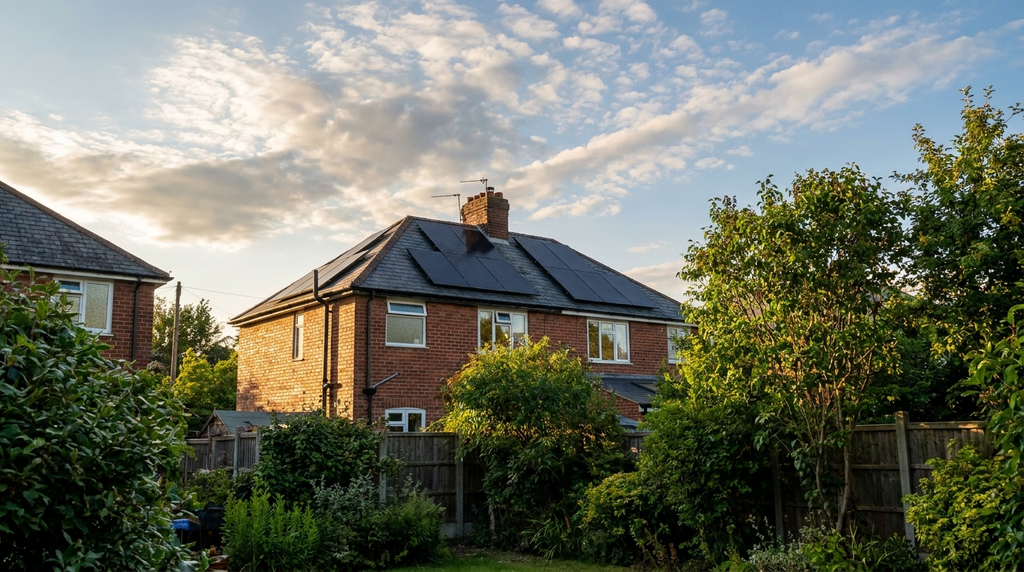
A typical 1930s semi-detached home in Manchester with a 3.5kWp solar panel system costing £6,500 installed can reduce annual electricity bills by around £350 after the Smart Export Guarantee payments are included. With the 0% VAT rate on energy-saving materials until March 2027, the upfront cost drops to £6,500, and the system generates roughly 2,950 kWh per year. About 50% of this generation is used directly in the home, saving £225 on bills, while the remaining 1,475 kWh exported earns between 4p and 15p per kWh under the SEG, adding roughly £125 annually. According to the Energy Saving Trust, a system like this pays for itself in 10 to 15 years and delivers over £8,000 in net savings across its 25-year lifespan. No grant like BUS applies here as it is for solar thermal only, but ECO4 may offer partial funding for low-income households.
| Item | Figure |
|---|---|
| Upfront cost after grants | £6,500 |
| Yearly savings | £350 |
| Payback period | 12 years |
| 25-year lifetime savings | £8,250 |
What homeowners often get wrong
The most common mistake is assuming solar panels will power your home at night or on cloudy days without a battery. Here are three frequent errors that cost homeowners money or miss out on savings.
- Believing you need full sun to generate power Many people think solar panels stop working in overcast weather, but modern panels generate electricity from diffuse daylight. On a typical British cloudy day, a 3.5kWp system still produces 10–20% of its rated output, which can run lights and appliances during daytime.
- Ignoring the Smart Export Guarantee registration deadline Some homeowners install panels but fail to register with an SEG-licenced supplier within 30 days of commissioning. This mistake can lose you up to £125 per year in export payments, as Ofgem requires timely registration to qualify for the tariff.
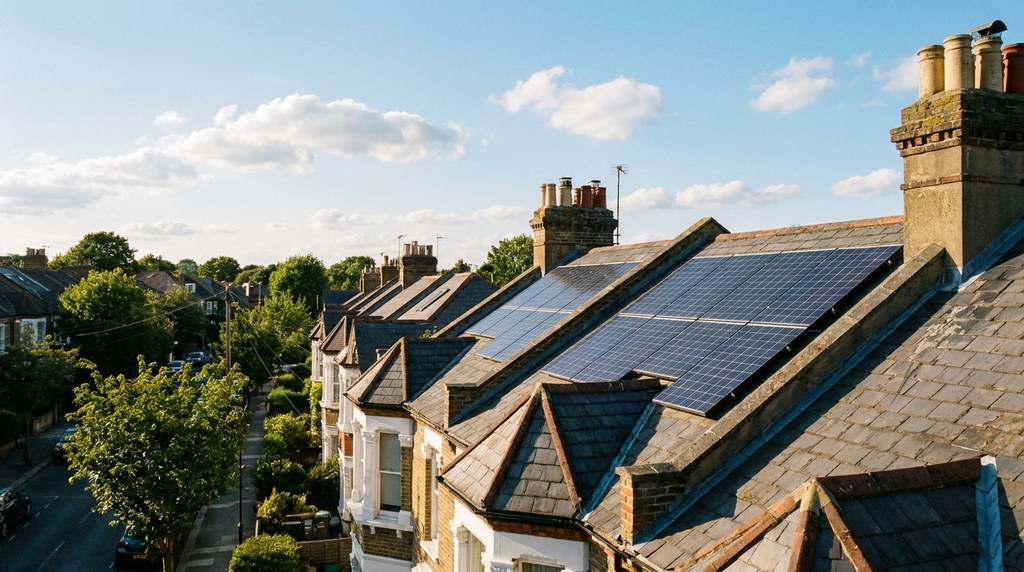
- Overlooking roof orientation and shading A common error is installing panels on a north-facing roof or one heavily shaded by trees. The Energy Saving Trust warns that shading can cut generation by 25–50%, meaning a south-facing system with no shade pays back in 10 years while a shaded one may never break even.
Quick reference
- A 3.5kWp solar panel system in the UK generates around 2,950 kWh per year, enough to cover 40–60% of a typical home’s electricity needs.
- The Smart Export Guarantee pays between 3p and 15p per kWh exported, and rates are set by your chosen supplier under Ofgem rules.
- To qualify for the 0% VAT on solar panels, the installation must be carried out by an MCS-certified installer and completed before March 2027.
- Payback periods for solar panels in the UK range from 10 to 15 years, with total savings of £8,000 to £12,000 over a 25-year system lifetime.
- Installing panels on a north-facing roof or one with heavy shading can reduce energy generation by up to 50%, making the system uneconomical.
Frequently Asked Questions
Solar panels in an SFS arrangement generate renewable electricity to power your home and earn payments for surplus energy exported to the grid. A 3.5kWp system can cover 40-60% of annual electricity needs, according to the Energy Saving Trust.
Rates under the Smart Export Guarantee vary by supplier, typically between 3p and 15p per kWh exported (Ofgem, 2026). You need a smart meter to receive payments.
Solar panels alone cannot run a house without grid power overnight or in low sunlight. For full off-grid capability, you would need battery storage to use generated electricity after dark.