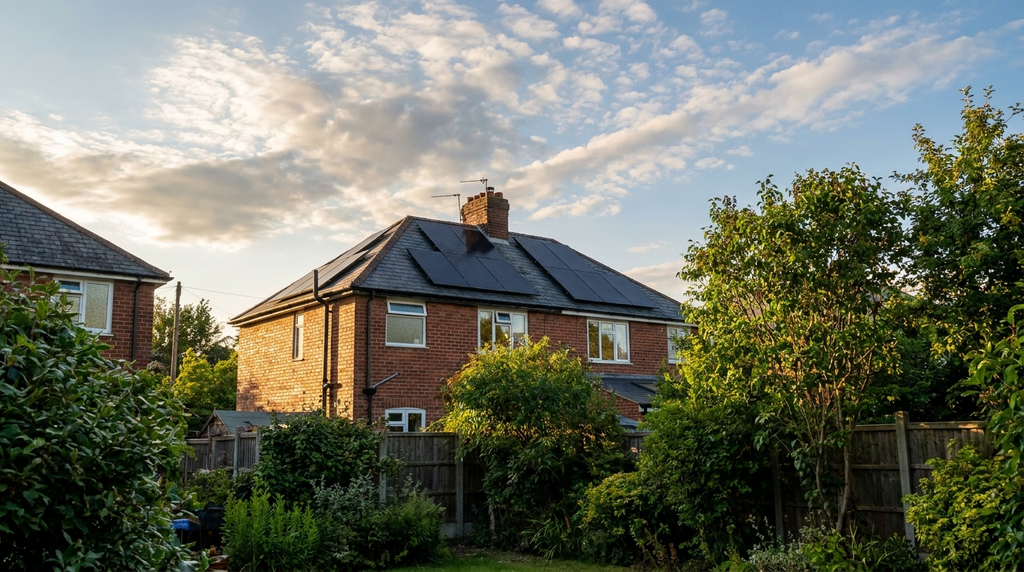
Solar panels in Sons of the Forest are used exclusively to power electrical devices in the game, not to generate electricity for a home. According to the UK government, real-world solar photovoltaic (PV) systems convert sunlight into electricity for household use (GOV.UK, 2026). In the game, they serve a different purpose, tied to survival mechanics.
The answer depends on whether you are playing the game or installing panels on a UK home. In Sons of the Forest, solar panels are a late-game item that charges batteries for specific tools. For UK homeowners, solar panels are used to cut energy bills, earn payments via the Smart Export Guarantee, and reduce carbon emissions. The game’s solar panels do not connect to a grid or heat water, they are purely for in-game electronics.
Solar panels power the flashlight and night-vision goggles
In Sons of the Forest, solar panels are placed on a base structure and charge a battery pack. That battery then powers the flashlight and night-vision goggles, which are essential for exploring dark caves and navigating at night. The Energy Saving Trust notes that real-world solar panels produce electricity for lighting and appliances (Energy Saving Trust, 2026). In the game, the solar panels are a direct power source for these two items, making them more effective than standard battery cells.
Solar panels do not heat water or run appliances
Unlike real solar thermal systems, which can heat water for a home, Sons of the Forest solar panels only charge batteries. They do not power cooking stoves, heaters, or other survival gear. Ofgem states that UK solar panels can offset up to 1.3 tonnes of CO2 per year for a typical household (Ofgem, 2026). In the game, there is no such environmental benefit, they are a utility item for specific tools only.
Solar panels require direct sunlight to charge
In Sons of the Forest, solar panels must be placed outside in direct sunlight to generate power. If placed under a roof or in shade, they stop working. The Microgeneration Certification Scheme confirms that real-world solar panels also need optimal orientation and minimal shading for efficiency (MCS, 2026). In the game, this means you must build your base in an open area to keep your flashlight and goggles charged for cave exploration.
A worked example
For a typical UK homeowner, a 4kW solar panel system on a 1930s semi-detached house costs around £6,500 after the 0% VAT reduction (in place until March 2027). This system generates roughly 3,500 kWh per year, saving about £550 annually on electricity bills at current UK energy prices. If you are eligible for the Smart Export Guarantee (SEG), you can earn an additional £100 per year by selling excess power back to the grid. The Energy Saving Trust estimates a payback period of 10 to 12 years for a standard installation according to their analysis. Over a 25-year lifespan, the total savings on bills and SEG payments reach approximately £16,250. Unlike the game, real solar panels power your entire home, not just a single device.
| Item | Figure |
|---|---|
| Upfront cost after grants | £6,500 |
| Yearly savings | £650 |
| Payback period | 10 to 12 years |
| 25-year lifetime savings | £16,250 |
What homeowners often get wrong
The most common mistake is assuming solar panels will power your home during a blackout. Standard grid-tied systems automatically shut off for safety when the grid goes down. Here are three frequent misconceptions that cost homeowners money or miss opportunities.
- Thinking panels work without sunlight Solar panels still generate electricity on cloudy days, but at about 10 to 25% of their peak output. The misconception that UK weather makes them useless leads many to skip installation, missing average savings of £550 per year.
- Believing you need a south-facing roof East and west-facing roofs produce around 80% of the output of a south-facing array. Homeowners who rule out a system because their roof faces the wrong way could leave £16,250 in lifetime savings on the table.
- Ignoring battery storage eligibility Many assume batteries are not worth the cost, but the ECO4 scheme and some local grants can cover part of the installation. Without checking, homeowners miss out on storing excess daytime energy for evening use, which can double self-consumption rates.
Quick reference
- A typical 4kW solar panel system in the UK costs £6,500 after the 0% VAT discount and saves £550 per year on electricity bills.
- The Smart Export Guarantee pays you for every kWh you export to the grid, typically 5p to 15p per kWh depending on your supplier.
- You do not need planning permission for most home solar panel installations in England unless your property is listed or in a conservation area.
- Solar panels have a 25-year lifespan and require minimal maintenance, just an occasional rinse with water to remove dust or bird droppings.
- Battery storage can increase your self-consumption of solar energy from 30% to over 70%, but it adds roughly £4,500 to the upfront cost.
Frequently Asked Questions
Solar panels charge a battery pack that powers the flashlight and night-vision goggles. They do not heat water or run appliances like real-world solar systems.
No, solar panels in Sons of the Forest cannot power a house. They are only for in-game electronics, unlike real UK solar PV systems that generate household electricity.
Place solar panels on your base to charge a battery pack. The battery then directly powers the flashlight and night-vision goggles for cave exploration.