Solar shingles cost roughly twice as much per watt as traditional panels, but the payback gap narrows when roof replacement savings are included.
If you are thinking about solar power but dislike the look of standard panels, solar shingles may have caught your eye. These tile-sized units blend into the roof line rather than sitting on top of it. In 2026, the installed cost of a 4 kWp solar shingle system is £8,000 to £12,000, compared to £5,000 to £7,000 for a comparable traditional panel system (Energy Saving Trust, 2026). The higher upfront price is partly offset if you need a new roof anyway, because shingles replace roof tiles and can save you the cost of separate roofing materials.
Solar shingles cost £8,000-£12,000 for a 4 kWp system, roughly double traditional panels at £5,000-£7,000. The gap narrows if you need a new roof, as shingles replace tiles and save on separate roofing materials.
- Solar shingles cost £8,000-£12,000 for a 4 kWp system in 2026.
- Traditional panels cost £5,000-£7,000 for the same 4 kWp output.
- Shingles replace roof tiles, saving on separate roofing materials.
- Shingles have 15-18% efficiency versus 18-22% for standard panels.
- Full roof replacement adds £2,000-£5,000 if existing roof is old.
- Solar shingles cost roughly twice as much per watt as traditional panels, but the payback gap narrows when roof replacement savings are included.
- How solar shingles differ from traditional panels in appearance and function
- The real cost of solar shingles in 2026
- How much electricity solar shingles actually generate
- Quick numbers
- Will solar shingles save you money over their lifetime
- What you need to check before buying solar shingles
- Direct answer Solar shingles are a viable but premium option for UK homeowners who need a new roof and want a discreet appearance
How solar shingles differ from traditional panels in appearance and function
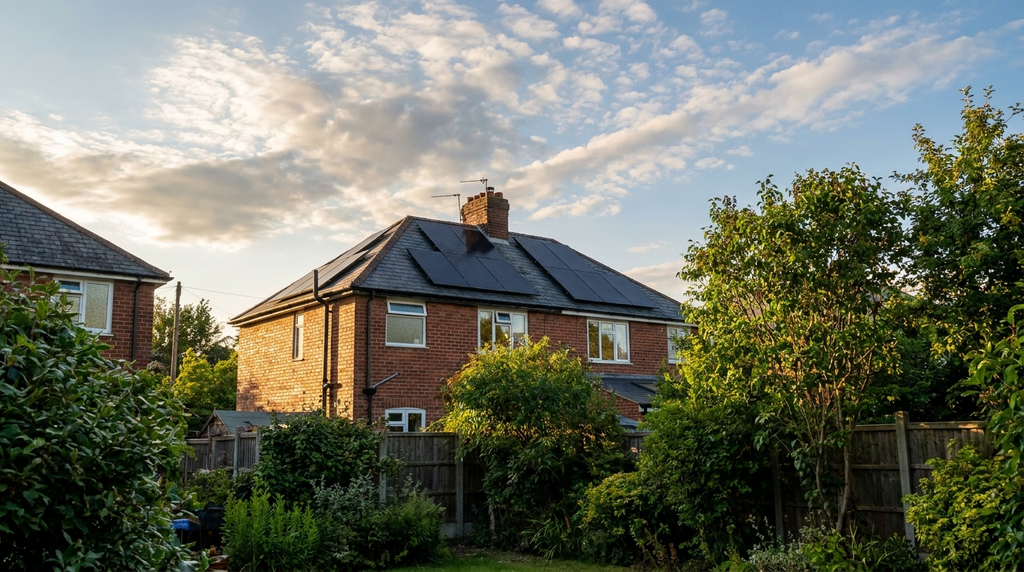
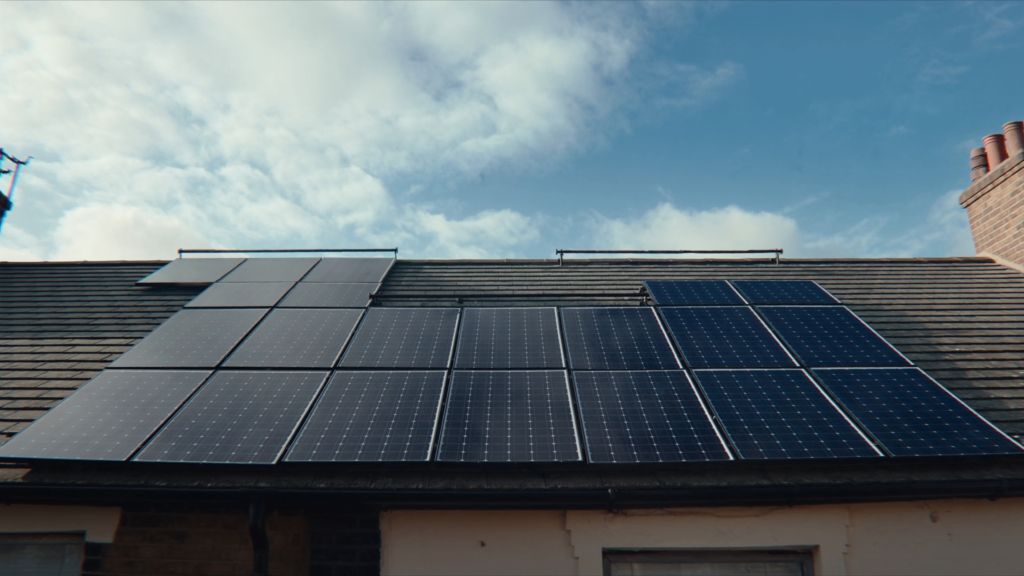
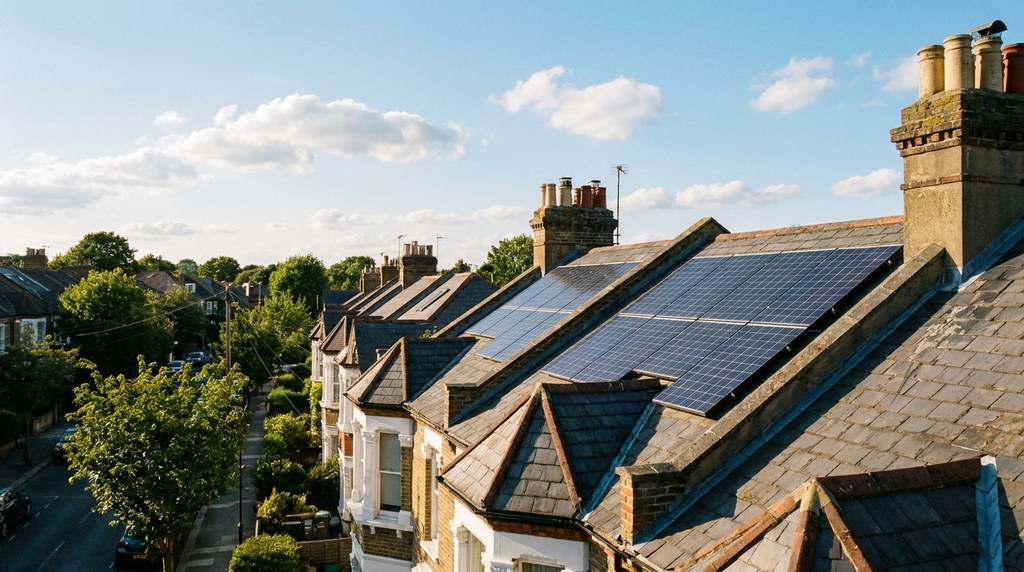
Solar shingles replace roof tiles entirely, whereas traditional panels are mounted on top of existing tiles or slates. Shingles are smaller, tile-sized units that integrate into the roof line, making them less obtrusive from street level. Traditional panels are larger, framed glass units that sit above the roof surface, creating a visible profile.
Both technologies use photovoltaic cells to generate electricity, but shingles typically have a lower peak efficiency per square metre. Shingles operate at around 15–18% efficiency, while traditional panels achieve 18–22% (Energy Saving Trust, 2026). This means you need more roof area with shingles to produce the same amount of power.
The real cost of solar shingles in 2026
The average installed cost for a 4 kWp solar shingle system is £8,000 to £12,000, versus £5,000 to £7,000 for a comparable traditional panel system. On a cost-per-watt basis, shingles come to roughly £2.00 to £3.00 per watt, while panels cost £1.25 to £1.75 per watt (MCS Installation Standards, 2026).
Shingles require a full roof replacement if the existing roof is nearing end of life, adding £2,000 to £5,000 for roof deck preparation that is not included in the shingle system price. If your roof is already due for replacement, that cost would be incurred anyway with traditional tiles, so the net additional spend for shingles is lower.
How much electricity solar shingles actually generate
A 4 kWp solar shingle system in the UK generates roughly 3,400 to 3,800 kWh per year, depending on roof orientation and location. Traditional panels of the same rated capacity generate 3,600 to 4,200 kWh per year (DESNZ Solar PV Performance Data, 2026).
The generation difference is more pronounced in summer. Shingles run hotter because they are integrated into the roof structure with less airflow underneath, reducing output by 5–10% compared to panels in warm weather. In winter the gap narrows because ambient temperatures are lower and sunlight is weaker.
Quick numbers
| Solar shingles | Traditional panels | |
|---|---|---|
| System size (4 kWp example) | 4 kWp | 4 kWp |
| Average cost | £8,000–£12,000 | £5,000–£7,000 |
| Annual generation (kWh) | 3,400–3,800 | 3,600–4,200 |
| Typical payback period | 15–20 years | 10–15 years |
| Lifespan | 25–30 years | 25–30 years |
Cost and generation figures are based on MCS Installation Database 2026 and the Energy Saving Trust solar cost guide (Energy Saving Trust, 2026).
Will solar shingles save you money over their lifetime
With the Smart Export Guarantee (SEG) rate averaging 5.5p/kWh in 2026, a 4 kWp shingle system earns roughly £190 to £210 per year from exported electricity (Ofgem Smart Export Guarantee, 2026).
Total lifetime savings over 25 years, combining export income and avoided grid electricity at 28p/kWh, come to approximately £7,500 to £9,000 for shingles. Traditional panels deliver £8,500 to £10,500 over the same period (Energy Saving Trust Solar PV Payback, 2026).
The payback period for shingles is 15 to 20 years, compared to 10 to 15 years for panels. If you need a new roof anyway and factor in the cost of tiles you would have paid for, the shingle payback can shorten by 3 to 5 years.
What you need to check before buying solar shingles
The installer must hold MCS certification for solar PV and be registered with TrustMark or the Renewable Energy Consumer Code (RECC) (MCS Find a Certified Installer, 2026). Check that the shingle product is MCS-listed on the MCS Product Directory; non-listed products may void eligibility for SEG payments (MCS Product Directory, 2026).
Verify that your roof is structurally sound and has a minimum 15-year remaining life before installation. Shingles are not easily removable for roof repairs, so a failing roof underneath would cause expensive problems (TrustMark Consumer Guide, 2026).
guide to MCS certified solar installers
Direct answer Solar shingles are a viable but premium option for UK homeowners who need a new roof and want a discreet appearance
Solar shingles are most cost-effective when installed during a scheduled roof replacement, as they eliminate the separate cost of traditional tiles. For roofs in good condition, traditional panels offer better value and faster payback.
Shingles are not suitable for all roof types, such as flat roofs or complex valleys, and require a south, east, or west-facing slope with minimal shading (Energy Saving Trust Solar Tiles and Slates, 2026). If appearance is your main concern and you are already planning a new roof, shingles make financial sense. In all other cases, traditional panels remain the more economical choice.
how to compare solar panel quotes
Frequently Asked Questions
Yes, solar shingles cost roughly twice as much per watt. According to the Energy Saving Trust (2026), a 4 kWp shingle system costs £8,000-£12,000, while traditional panels cost £5,000-£7,000.
They can be if you need a new roof, as shingles replace tiles and save on separate roofing costs. The MCS Installation Standards (2026) note that payback improves when roof replacement savings are included.
Solar shingles are less efficient, at 15-18%, while traditional panels achieve 18-22%. The Energy Saving Trust (2026) states you need more roof area with shingles for the same power output.
Yes, solar shingles replace roof tiles entirely, integrating into the roof line. If your existing roof is nearing end of life, full replacement can add £2,000-£5,000 for deck preparation, per MCS Installation Standards (2026).
Yes, solar shingles are tile-sized and blend into the roof line, making them less obtrusive than traditional framed panels. This aesthetic advantage is a key reason homeowners choose them.
Solar shingles typically last 25-30 years, similar to traditional panels. The Energy Saving Trust (2026) confirms they come with performance warranties of 25 years for power output.