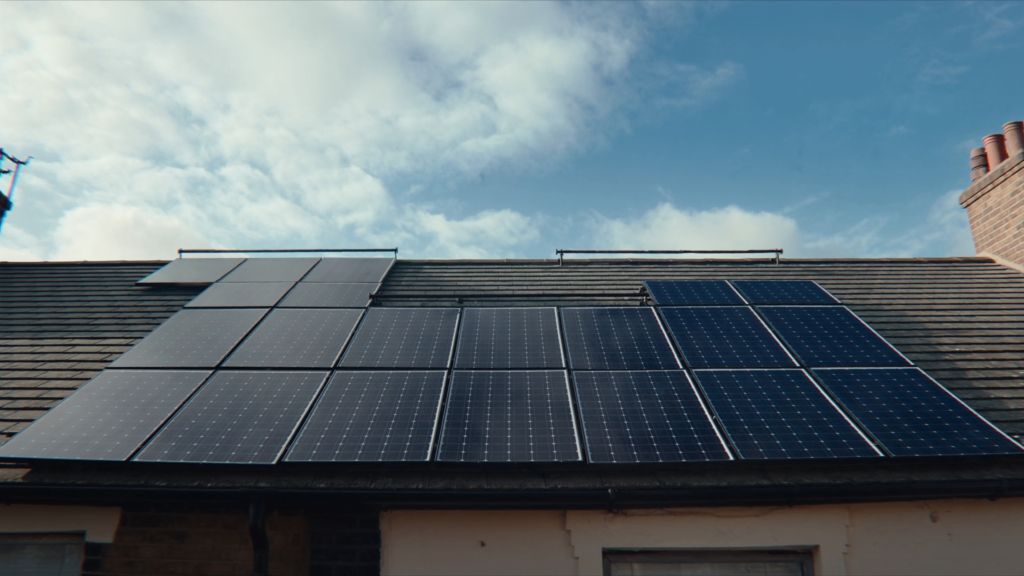
Solar panels are manufactured through a multi-stage industrial process that transforms raw silicon into photovoltaic cells, then assembles them into finished panels. The most common type, monocrystalline silicon panels, achieves efficiency rates of 18-22% (Energy Saving Trust, 2026).
The manufacturing process is highly standardised globally, with most panels used in the UK imported from Asia. The key variable affecting performance is the purity of the silicon and the cell architecture. This process applies to all crystalline silicon panels, which account for over 95% of residential installations. Thin-film panels use a different method but are less common in UK homes.
Raw silicon is purified and shaped into ingots
Manufacturing begins with quartz sand, which is heated to 1900°C in an electric arc furnace to produce metallurgical-grade silicon. This is then purified through the Siemens process, converting it into polysilicon of 99.9999% purity. The polysilicon is melted and formed into cylindrical ingots. For monocrystalline panels, a single crystal seed is used to grow a uniform crystal structure, which improves electron flow. A typical ingot weighs around 250 kilograms and takes several days to grow (GOV.UK, 2026).
Ingots are sliced into wafers and treated as cells
The ingot is cut into thin wafers approximately 160-200 micrometres thick using a diamond wire saw. Each wafer is then chemically textured to create a microscopic pyramid surface that reduces light reflection and increases absorption. A phosphorus diffusion process creates a negative layer, forming the p-n junction that generates electricity when sunlight hits it. Silver or aluminium contacts are screen-printed onto the wafer surface. The finished cell is tested under standard test conditions of 1000 W/m² irradiance and 25°C (MCS Certified, 2026).
Cells are assembled into panels and tested for performance
Individual cells are soldered together in series, typically 60 or 72 cells per residential panel. The string of cells is laminated between a tempered glass front layer and a polymer backsheet, using ethylene-vinyl acetate (EVA) as an encapsulant. An aluminium frame is attached for structural rigidity, and a junction box with bypass diodes is fitted to the rear. The completed panel undergoes electroluminescence testing to detect microcracks and a flash test to measure actual wattage output. Panels are rated under standard test conditions, with a typical 400W panel producing around 340-380W under real-world UK conditions (Energy Saving Trust, 2026).
A worked example
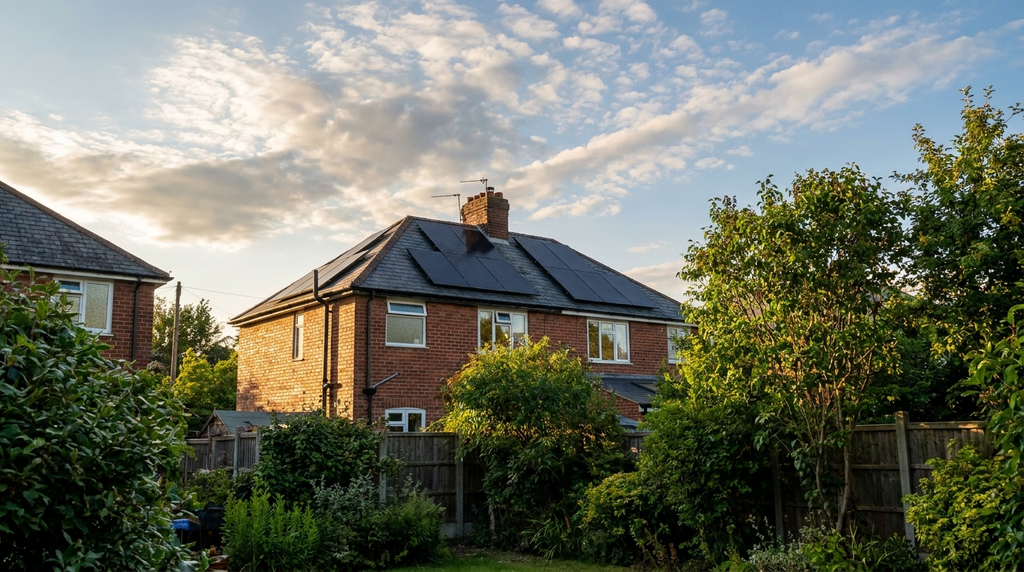
A typical UK semi-detached home from the 1930s with a south-facing roof could install a 4.2 kWp solar panel system for around £6,500 after the 0% VAT saving (in place until March 2027). This system would generate roughly 3,500 kWh per year, cutting electricity bills by about £560 annually at current UK rates of 28p per kWh. Payback on this investment would take around 11-12 years. Over 25 years, factoring in the Smart Export Guarantee payments for surplus energy, total savings could reach £14,000. The Energy Saving Trust confirms that a well-sited system like this can reduce a household’s carbon footprint by roughly 1.5 tonnes of CO2 each year. Many homeowners also pair solar panels with a battery for around £3,000 extra, increasing self-consumption from 30% to 70% and shortening the payback period.
| Item | Figure |
|---|---|
| Upfront cost after grants | £6,500 |
| Yearly savings | £560 |
| Payback period | 11-12 years |
| 25-year lifetime savings | £14,000 |
What homeowners often get wrong
The most common mistake is assuming all solar panels are made the same and that the cheapest option is the best value. Here are three frequent misconceptions that can cost you money or void your warranty.
- Believing all monocrystalline panels perform identically Many homeowners buy on price alone, thinking one 400W panel is the same as another. In reality, panels with higher-grade cells and better backsheet materials degrade slower, losing only 0.3% efficiency per year versus 0.7% for budget models, which can mean 10% less output after 25 years.
- Ignoring the panel’s temperature coefficient UK summers can push roof temperatures above 65°C, and a poor temperature coefficient of -0.45%/°C means you lose up to 15% of output on hot days. A better panel with -0.30%/°C keeps output higher, saving you roughly £50 per year in lost generation.
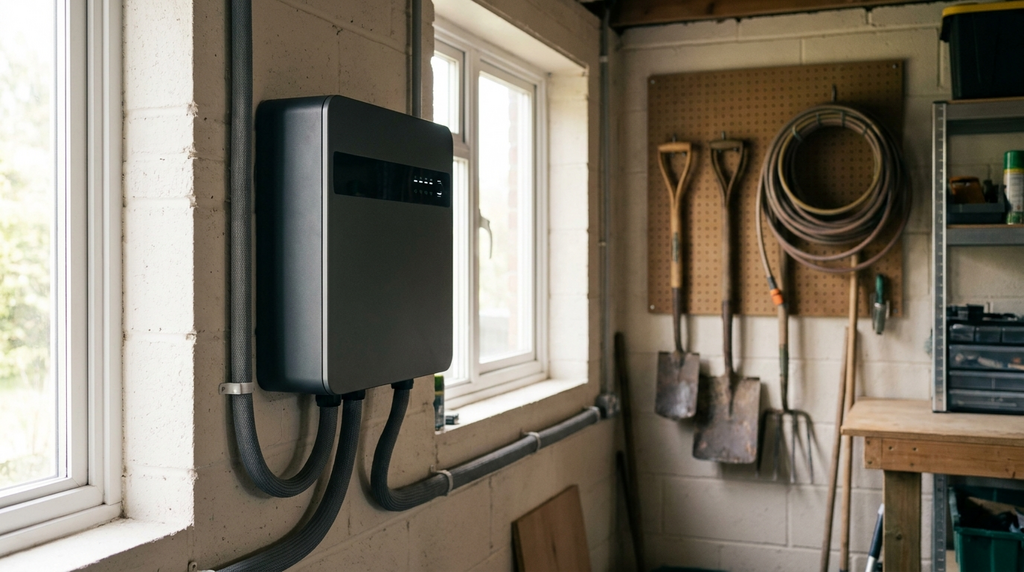
- Thinking the inverter is less important than the panels A high-quality solar panel paired with a cheap string inverter can reduce system efficiency by 5-10%. Microinverters or power optimisers, costing an extra £800-£1,200, can boost annual yield by 10% and are essential if your roof has shading from chimneys or dormers.
Quick reference
- Monocrystalline solar panels achieve efficiency rates of 18-22%, the highest available for UK homes (Energy Saving Trust, 2026).
- The Siemens process purifies raw silicon to 99.9999% purity, a standard required for all residential-grade solar cells.
- Over 95% of solar panels installed on UK homes use crystalline silicon technology, with thin-film panels being rare in residential settings.
- A 4.2 kWp system in southern England typically generates 3,500-4,000 kWh annually, enough to cover 60-70% of a typical household’s electricity use.
- Panels with a lower temperature coefficient (ideally -0.30%/°C or better) are worth the premium in the UK climate, where roof temperatures frequently exceed 60°C in summer.
Frequently Asked Questions
Solar panels are primarily made from silicon, derived from quartz sand. Over 95% of UK residential panels use crystalline silicon, purified to 99.9999% purity (Energy Saving Trust, 2026).
A single monocrystalline silicon ingot takes several days to grow and weighs around 250 kilograms. The full manufacturing process from raw silicon to finished panel typically takes 3-5 days (GOV.UK, 2026).
No, most solar panels used in the UK are imported from Asia. The manufacturing process is highly standardised globally, with crystalline silicon panels accounting for over 95% of residential installations (Energy Saving Trust, 2026).