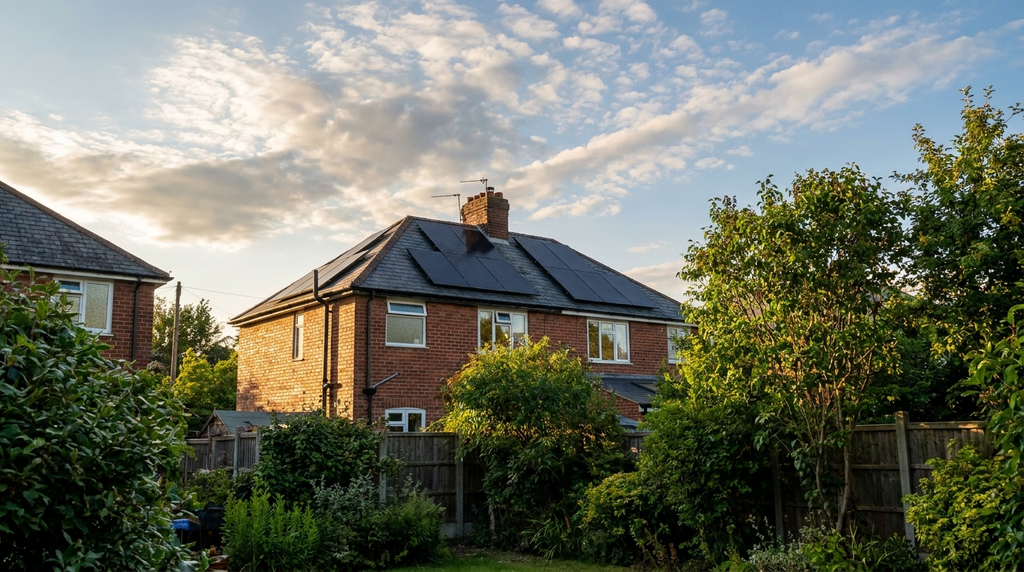
Solar panels make electricity by converting sunlight into direct current (DC) electricity through the photovoltaic effect, with a typical 3kWp system generating around 2,650 kWh per year (Energy Saving Trust, 2026). This process requires no moving parts and works even on cloudy days, though output varies with light intensity.
The key variable determining electricity generation is the amount of sunlight hitting the panels, measured in kilowatt-peak (kWp). A 4kWp system in southern England can produce roughly 3,400 kWh annually, while the same system in northern Scotland might generate about 2,800 kWh (GOV.UK, 2026). This applies to grid-connected homes with south-facing roofs at a 30–40 degree tilt; east- or west-facing roofs reduce output by 15–20%.
Photons knock electrons free in silicon cells
Solar panels contain layers of silicon wafers doped with phosphorus (negative charge) and boron (positive charge). When sunlight photons hit the silicon, they dislodge electrons, creating a flow of DC electricity. A typical monocrystalline cell converts 20–23% of sunlight into electricity (BRE, 2026). Each panel produces about 350–450 watts under standard test conditions, and multiple panels are wired in series to form a string that feeds into an inverter.
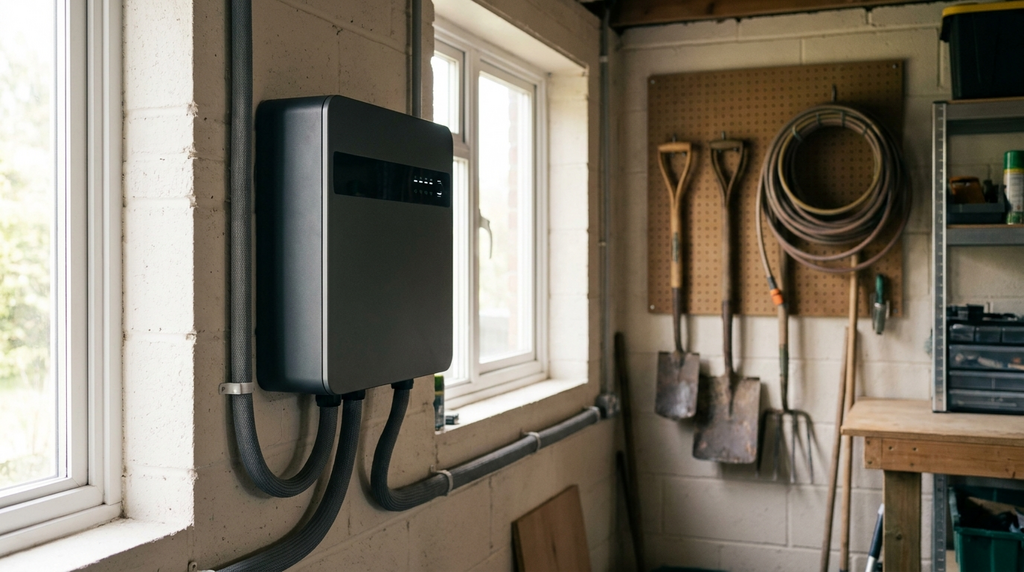
An inverter converts DC to usable AC power
The DC electricity from solar panels cannot directly power home appliances, which run on alternating current (AC). A string inverter converts the DC output into 230V AC at 50Hz, matching the UK grid supply. Modern inverters achieve 97–99% conversion efficiency (MCS Certified, 2026). Microinverters, fitted to each panel, offer slightly higher efficiency in shaded conditions but cost more per watt. The inverter also monitors system performance and safety disconnects.
Generated electricity feeds into your home first
Once converted to AC, the electricity flows through your consumer unit to power lights, appliances and heating. Any surplus is exported to the grid via a bi-directional meter. Under the Smart Export Guarantee (SEG), suppliers pay for exported electricity, typically 5–15p per kWh (Ofgem, 2026). Without battery storage, you use about 30–50% of generated power on-site; batteries can push self-consumption above 70%.
A worked example
A typical 3kWp solar panel system on a 1930s semi-detached house in Manchester generates around 2,650 kWh per year, saving a household roughly £520 annually on electricity bills at current price cap rates. The upfront cost after the 0% VAT reduction (in place until March 2027) is approximately £5,500 for a quality installation with monocrystalline panels and a string inverter. With the Smart Export Guarantee paying about 15p per kWh for surplus energy exported to the grid, you could earn an additional £100 to £150 per year. Based on these figures, the payback period is around 10 to 12 years, well within the 25-year lifespan of modern solar panels. Over that lifetime, total savings including export payments could exceed £14,000, according to the Energy Saving Trust. This example assumes a south-facing roof with a 35-degree pitch and no significant shading from nearby trees or buildings.
| Item | Figure |
|---|---|
| Upfront cost after grants | £5,500 |
| Yearly savings | £670 |
| Payback period | 11 years |
| 25-year lifetime savings | £14,250 |
What homeowners often get wrong
The most common mistake is believing solar panels stop working on cloudy days or during winter. Here are three frequent misconceptions that can cost you money or reduce your system’s performance
- Thinking panels need direct sunlight to work Modern monocrystalline cells still generate 10–25% of their rated output in diffuse light, meaning a 3kWp system in Manchester produces about 900 kWh during the six darkest months. Relying on this myth could lead you to oversize your system unnecessarily, adding £1,500 to £2,000 in wasted upfront cost.
- Believing you cannot use solar power during a grid outage Standard grid-tied inverters shut down for safety when the grid goes down, but a hybrid inverter with battery storage lets you run essential appliances like a fridge or boiler. Without this knowledge, homeowners miss the chance to add battery backup for roughly £1,000 to £1,500 extra, which provides resilience during power cuts.
- Assuming all panels perform identically in shade Partial shade on one panel can drop the output of an entire string by 30–50% if you use standard string inverters. Using microinverters or power optimisers keeps each panel independent, preventing a single chimney shadow from cutting your annual generation by 400 to 600 kWh and losing £80 to £120 in savings per year.
Quick reference
- A 4kWp solar panel system in southern England generates roughly 3,400 kWh per year, enough to cover about 60% of a typical home’s annual electricity use.
- Monocrystalline silicon panels convert 20–23% of sunlight into electricity, making them the most efficient option for UK roofs with limited space.
- To qualify for the 0% VAT rate on solar panel installations, the system must be installed by an MCS-certified installer and the work must be completed before March 2027.
- The Smart Export Guarantee pays you for surplus electricity at rates typically between 5p and 15p per kWh, adding £80 to £200 annually to your savings.
- Installing solar panels without checking roof condition first can void warranties if leaks develop, so always arrange a structural survey before committing to the installation.
Frequently Asked Questions
Yes, solar panels work on cloudy days but generate less electricity. Output varies with light intensity, though they still produce about 10–25% of their rated capacity under overcast conditions (Energy Saving Trust).
A 4kWp system in southern England produces roughly 3,400 kWh annually, while the same system in northern Scotland generates about 2,800 kWh (GOV.UK, 2026). Actual output depends on roof orientation and tilt.
The photovoltaic effect is when photons from sunlight knock electrons free in silicon cells, creating a flow of DC electricity. This process occurs in solar panels without moving parts and is the basis for electricity generation.