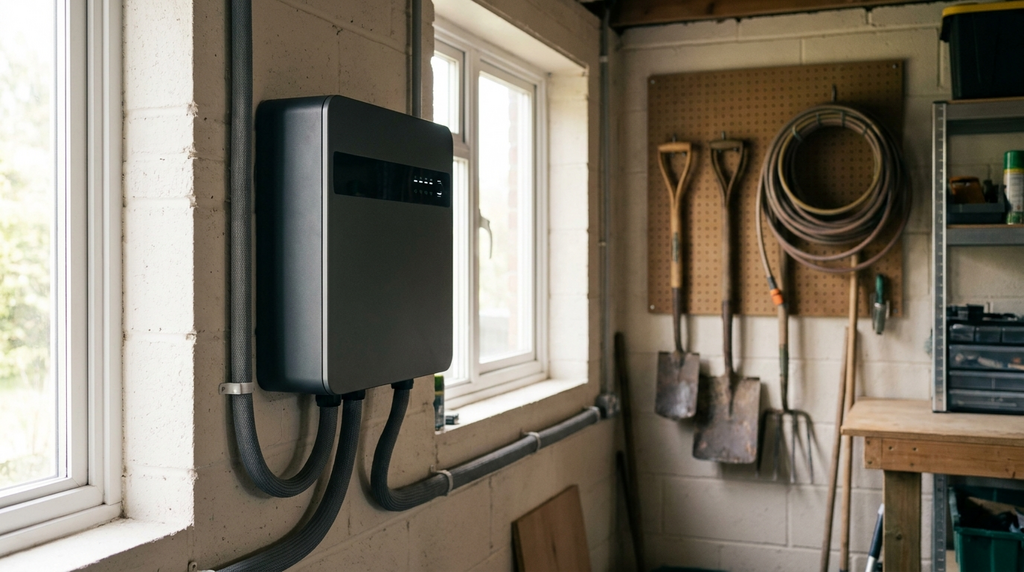
A home battery warranty typically covers 60–70 % of the total system cost. That makes it the single most important financial safeguard you will choose.
A home battery warranty is a financial product that protects your investment, not just a technical guarantee. It defines what happens if the battery loses capacity faster than expected or fails prematurely. The average 10 kWh lithium-ion battery system installed in the UK costs between £4,500 and £7,000 (DESNZ Solar PV & Battery Cost Report, 2026). The warranty is the document that decides whether you get a free replacement or pay for a new one yourself.
A UK home battery warranty typically covers 10 years or 6,000 cycles, whichever comes first. The warranty is a financial safeguard for your £4,500–£7,000 investment, covering capacity loss and premature failure if installed by an MCS certified installer.
- Standard UK battery warranty covers 10 years or 6,000 cycles, whichever comes first.
- A 10 kWh system costs £4,500–£7,000; warranty is the key financial safeguard.
- Cycle limit rarely hit before time expires; normal use spans 15–20 years.
- Improper installation by non-MCS certified installer voids the warranty.
- Throughput cap of ~48,000 kWh for a 10 kWh battery at 80% depth of discharge.
- A home battery warranty typically covers 60–70 % of the total system cost. That makes it the single most important financial safeguard you will choose.
- The standard UK battery warranty covers 10 years or 6,000 cycles, whichever comes first
- Warranty exclusions that void the cover on a UK home battery
- Quick numbers, warranty length, cycles, throughput, and degradation floor for six leading UK battery brands
- The direct answer, battery storage warranty covers capacity loss below a stated percentage, not a sudden failure
- How to verify a battery installer and ensure your warranty stays valid
- The real cost of a warranty, what a replacement battery actually costs you if the claim is rejected
- The payback on a battery depends on the warranty covering the full 10-year period
This article compares warranty terms from the six most-installed UK battery brands. The goal is to help you understand what each warranty covers, what it excludes, and how to keep it valid.
The standard UK battery warranty covers 10 years or 6,000 cycles, whichever comes first
A cycle means one full charge and discharge of the battery. The warranty also has a “throughput” cap, which is the total amount of energy in kilowatt-hours (kWh) that can be discharged over the warranty period. For a 10 kWh battery operating at 80 % depth of discharge (DoD), 6,000 cycles equal roughly 48,000 kWh of total throughput. DoD means the percentage of the battery’s capacity that is used in each cycle.
The Energy Saving Trust explains that a 10-year, 6,000-cycle warranty typically covers 15 to 20 years of normal daily use for a battery paired with solar panels (Energy Saving Trust, 2026). Most households do not fully cycle their battery every day, especially in winter. The cycle limit is rarely hit before the time limit expires.
Warranty exclusions that void the cover on a UK home battery
Three exclusions cause most warranty rejections. The first is improper installation. The battery must be installed by a Microgeneration Certification Scheme (MCS) certified installer or a competent-person scheme registrant. DIY installation or using an unregistered installer voids the warranty. The MCS Installation Standard MIS 3012 (issue 2.1, 2026) defines the permitted installation pathways (MCS, 2026).
The second exclusion is unauthorised software modifications. Changing the battery’s firmware or control settings outside the manufacturer’s approved parameters can void the warranty. The third exclusion is operating the battery outside the specified temperature range, typically 0 to 40 °C. Batteries installed in unheated garages or lofts may exceed this range in extreme weather.
Voiding the warranty by DIY installation or using a non-registered installer is the single biggest financial risk. A replacement battery costs thousands of pounds.
Quick numbers, warranty length, cycles, throughput, and degradation floor for six leading UK battery brands
| Brand | Model | Warranty term (years) | Cycles guaranteed | Throughput cap (kWh) | End-of-warranty capacity floor (%) | Annual degradation limit (%/year) | Typical installed cost (£) | Cost per kWh throughput (£/kWh) |
|---|---|---|---|---|---|---|---|---|
| Tesla | Powerwall 3 | 10 | Unlimited | Unlimited | 70 % | Not stated | £6,500 | N/A |
| GivEnergy | AIO 9.5 | 10 | 6,000 | 48,000 | 70 % | 3 % | £4,800 | £0.10 |
| FoxESS | E10 | 10 | 6,000 | 48,000 | 60 % | 4 % | £4,500 | £0.09 |
| SolarEdge | Home Battery 10kWh | 12 | 6,000 | 48,000 | 70 % | 2.5 % | £5,200 | £0.11 |
| Puredrive Energy | PurePower 10 | 10 | 6,000 | 48,000 | 70 % | 3 % | £4,700 | £0.10 |
| Duracell Powercenter | Powercenter 10 | 10 | 6,000 | 48,000 | 70 % | 3 % | £4,900 | £0.10 |
Data sourced from manufacturer datasheets and warranty terms published on each brand’s UK website (MCS register, 2026; Energy Saving Trust, 2026). The cost per kWh throughput is calculated by dividing the typical installed cost by the throughput cap. Tesla’s unlimited cycles mean this metric does not apply.
Battery storage warranty covers capacity loss below a stated percentage, not a sudden failure
The warranty guarantees that the battery will retain at least 60 to 70 % of its original usable capacity at the end of the warranty period (10 years or 6,000 cycles). If the capacity drops below that floor, the manufacturer provides a replacement or a pro-rata refund. The exact percentage varies by brand, as shown in the table above.
The warranty does not cover gradual degradation that stays above the floor, even if the battery feels noticeably weaker. A battery that degrades from 100 % to 75 % over 10 years is within the warranty terms if the floor is 70 %. The warranty pays out only when the capacity falls below that line.
This is not a sudden-failure guarantee. The battery is expected to lose capacity over time. The warranty sets a minimum acceptable level.
How to verify a battery installer and ensure your warranty stays valid
The installer must be MCS-certified for the battery to be eligible for the 0 % VAT rate and the Smart Export Guarantee (SEG) tariff. You can check an installer’s MCS status on the MCS register (MCS, 2026). The installer must also be registered with a competent-person scheme such as NAPIT or NICEIC for the electrical connection.
GOV.UK guidance confirms that 0 % VAT applies to energy storage systems installed by MCS-certified installers (GOV.UK, 2026). The homeowner must register the warranty online within 30 days of installation. Keep the MCS certificate and commissioning report in a safe place. These documents are required if you need to make a claim.
How to find an MCS-certified solar installer
The real cost of a warranty, what a replacement battery actually costs you if the claim is rejected
An out-of-warranty replacement for a 10 kWh system costs between £4,500 and £7,000 (DESNZ Solar PV & Battery Cost Report, 2026). The “warranty premium” embedded in the purchase price is typically 5 to 8 % of the total cost. This means you pay roughly £225 to £560 extra for the warranty itself.
A warranty extension costs between £200 and £400 for an extra 2 to 5 years (Energy Saving Trust, 2026). The cost of a replacement battery is much higher than the cost of an extension. If a claim is rejected because the warranty was voided, you pay the full replacement cost yourself.
The payback on a battery depends on the warranty covering the full 10-year period
The average solar-plus-battery system in the UK saves a household between £300 and £600 per year on electricity bills (Energy Saving Trust, 2026). Over a 10-year warranty period, total savings range from £3,000 to £6,000. The battery itself costs between £4,500 and £7,000.
The warranty must cover the full 10 years for the battery to pay back its cost. A battery that degrades to 60 % capacity after 8 years will save less electricity, potentially making the payback negative. The warranty is the safeguard that ensures the battery performs well enough to deliver the expected savings over its lifetime.
Solar battery payback periods explained
Frequently Asked Questions
A home battery warranty covers capacity loss and premature failure. The standard UK warranty lasts 10 years or 6,000 cycles, whichever comes first, according to the Energy Saving Trust (2026). It typically replaces the battery if capacity drops below a set threshold.
Most UK home battery warranties last 10 years or 6,000 cycles, whichever comes first. The Energy Saving Trust states this covers 15 to 20 years of normal daily use with solar panels. The cycle limit is rarely reached before the time limit expires.
Three main exclusions void a battery warranty: improper installation by a non-MCS certified installer, DIY installation, and unauthorised repairs. Ofgem and the Microgeneration Certification Scheme require MCS certification for valid cover.
Yes, battery warranties typically cover capacity degradation. They guarantee the battery retains a minimum percentage of its original capacity, often 70% after 10 years or 6,000 cycles. The Energy Saving Trust confirms this as standard.
A standard UK battery warranty covers 6,000 cycles. For a 10 kWh battery at 80% depth of discharge, this equals roughly 48,000 kWh of total throughput. The cycle limit is paired with a 10-year time limit.