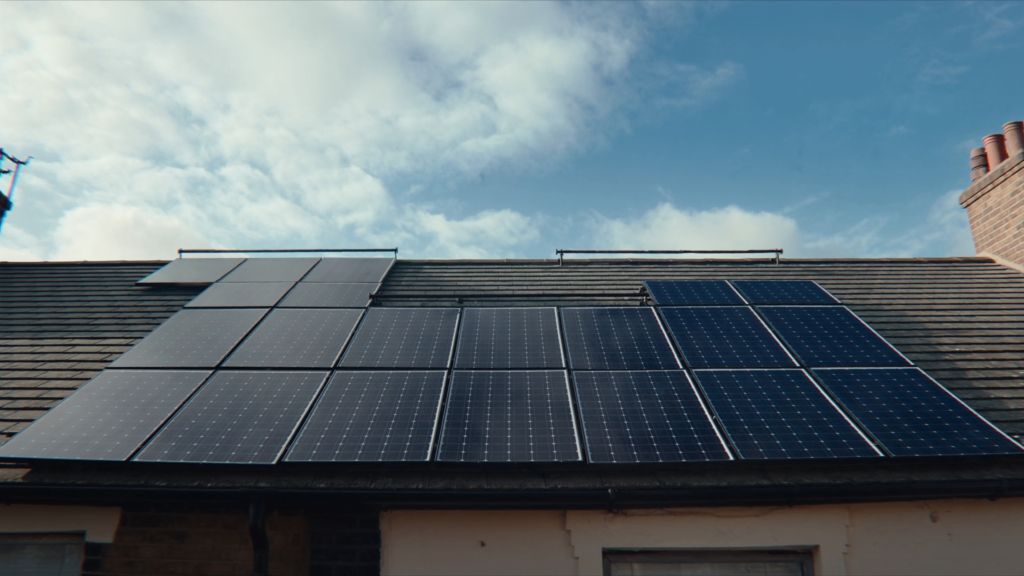
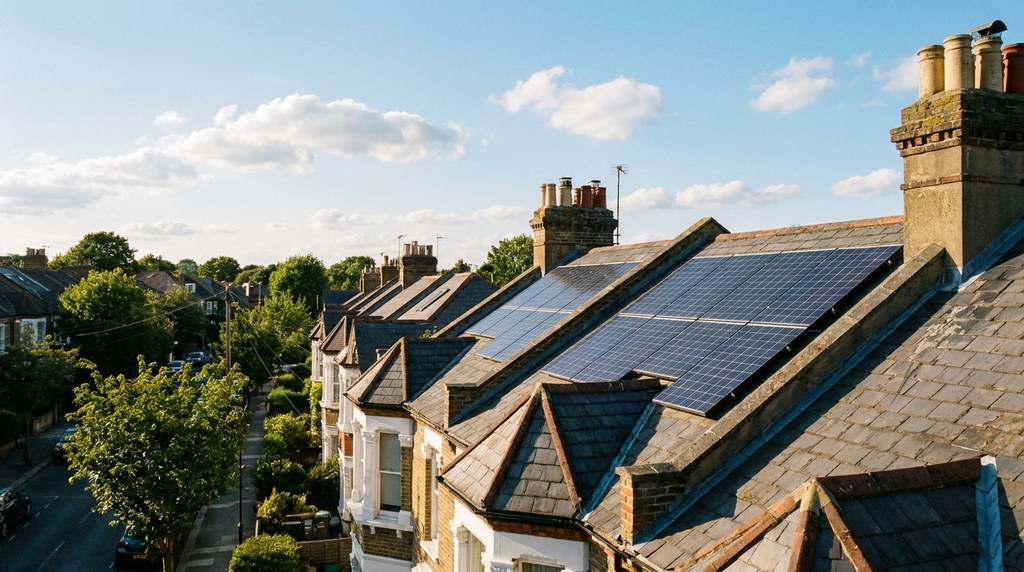
Solar EV charging at home is possible, but it requires the right hardware and a clear understanding of the trade-offs
Many homeowners wonder if their solar panels can directly charge an electric vehicle. The short answer is yes, but not with a standard solar panel system alone. Solar panels generate direct current (DC) electricity, which must be converted to alternating current (AC) by an inverter for your home to use, and then your car’s onboard charger converts it back to DC to charge the battery.
Yes, solar EV charging at home is possible with the right hardware. You need a solar-compatible EV charger (like myenergi zappi) that diverts surplus solar power to your car. Adding a home battery lets you charge after dark. Compare chargers to find the best fit for your solar setup.
- Check your solar inverter is compatible with a solar-integrated EV charger.
- Install a solar diverter to prioritise surplus solar power over grid supply.
- Most UK solar generation peaks between 10am and 3pm (Energy Saving Trust, 2026).
- Add home battery storage to charge your EV with solar power after dark.
- Use the MCS installer finder to verify your solar setup meets standards.
- Solar EV charging at home is possible, but it requires the right hardware and a clear understanding of the trade-offs
- How solar EV charging works the flow of energy from panel to car
- The three main options for solar EV charging (direct, battery-backed, and grid-tied)
- Quick numbers typical costs, savings, and charging speeds for solar EV charging
- Is solar EV charging worth it for a typical UK homeowner? (The plain answer)
- Eligibility and certification what to check before installing a solar EV charger
- The key trade-off solar EV charging vs. grid-only off-peak charging
To charge an EV from solar panels, you need either a home battery storage system or a special solar-compatible EV charger that can coordinate with your solar inverter to prioritise surplus solar power. The key limitation is that solar generation is intermittent. Energy Saving Trust data shows most UK homes generate the bulk of their solar power between 10am and 3pm (Energy Saving Trust, 2026), which may not match when you need to charge. Without a battery, charging an EV directly from solar panels during daylight hours is possible only if the car is plugged in and drawing power at the exact moment the panels are producing surplus electricity.
How solar EV charging works the flow of energy from panel to car
Solar panels generate DC electricity, which passes through a solar inverter to become AC electricity for your home’s circuits. A standard EV charger takes AC from your home supply and feeds it to the car’s onboard charger, which converts it back to DC to charge the battery.
To use solar power for EV charging, you need a solar-compatible EV charger, often called a “solar diverter” or “solar-integrated charger.” This device monitors your home’s energy consumption and solar generation in real time. When the charger detects that your solar panels are producing more power than your home is using, it diverts the surplus to the EV instead of exporting it to the grid. The Microgeneration Certification Scheme (MCS) sets standards for solar installations, and the Energy Saving Trust provides guidance on solar panels and EV charging compatibility (MCS, 2026).
The three main options for solar EV charging (direct, battery-backed, and grid-tied)
Option 1: Direct solar charging without a battery. You plug your car in during the day and rely on the solar-compatible charger to use only surplus solar power. The car charges only when solar generation exceeds household demand, which typically means slow, partial charging on sunny days. This is the cheapest option but the most unreliable.
Option 2: With a home battery. A home battery stores surplus solar power during the day, and you can use that stored energy to charge the EV later, including at night. This gives you more control but adds significant upfront cost. Energy Saving Trust figures show a typical home battery (5–10 kWh) costs £4,000–£6,000 installed (Energy Saving Trust, 2026).
Option 3: Grid-tied with a solar-compatible charger. The charger can mix solar power with grid power to ensure the car charges at a consistent rate, even when solar generation dips. This is the most practical approach for most UK homeowners, as it avoids the “stop-start” charging problem. The trade-off is clear: direct solar charging is cheapest but least reliable; battery-backed gives you the highest solar self-consumption but costs extra; grid-tied is the most convenient but means you still draw some grid power.
Quick numbers typical costs, savings, and charging speeds for solar EV charging
| Metric | Typical Value | Source |
|---|---|---|
| Average cost of a solar-compatible EV charger (installed) | £800–£1,200 | Energy Saving Trust, 2026 |
| Average cost of a home battery (5–10 kWh) installed | £4,000–£6,000 | Energy Saving Trust, 2026 |
| Typical solar panel system size for a 3-bed semi | 3.5–4.5 kWp | MCS register, 2026 |
| Average solar generation in the UK per kWp per year | 850–1,100 kWh | DESNZ, 2026 |
| Typical EV battery size (medium-range car) | 50–60 kWh | Car manufacturer specs (e.g., Nissan Leaf, VW ID.3) |
| Solar-only charging speed (on a 3.5 kWp system, peak sun) | ~1.5–2.0 kW (approx. 6–8 miles per hour) | Energy Saving Trust calculation based on typical solar output |
| Grid-tied charging speed (7 kW home charger) | 7 kW (approx. 25–30 miles per hour) | Ofgem, 2026 |
| Estimated annual savings from solar EV charging (1,000 miles/year) | £100–£150 (vs. grid-only off-peak rate) | Energy Saving Trust, 2026 |
Is solar EV charging worth it for a typical UK homeowner? (The plain answer)
For a typical UK homeowner with a 3.5–4.5 kWp solar system, solar-only charging will cover roughly 20–40% of an average EV’s annual mileage, based on 8,000 miles per year, assuming you can plug in during peak solar hours. The financial case depends heavily on your electricity tariff. If you are on a cheap off-peak night rate (e.g., 7–10p/kWh), the savings from solar charging are marginal, you are substituting cheap grid power for free solar power.
If you are on a standard variable tariff (24–30p/kWh), solar charging can save £200–£300 per year, but the payback period for a solar-compatible charger and battery is typically 8–12 years. The non-financial benefit is reducing your carbon footprint. Solar-charged miles produce near-zero emissions, whereas grid-charged miles in the UK still have an average carbon intensity of around 200 gCO2/kWh (DESNZ, 2026). comparing solar battery costs and payback periods
Eligibility and certification what to check before installing a solar EV charger
To qualify for the 0% VAT on solar panels and battery storage, your installer must be MCS-certified for solar. For the EV charger, the installer must be registered with a competent person scheme such as NICEIC or NAPIT for electrical work. Solar-compatible EV chargers must be listed on the Office for Zero Emission Vehicles (OZEV) approved charger list to be eligible for any remaining grant funding (GOV.UK, 2026).
If you are connecting a solar-compatible charger to your existing solar inverter, check that the charger’s communication protocol, such as CT clamp, Modbus, or proprietary, is compatible with your inverter brand. Most modern inverters from SolarEdge, SMA, or Huawei support this. For new builds or major renovations, you may need to notify your Distribution Network Operator (DNO) if the combined solar inverter and EV charger load exceeds 3.68 kW per phase, which is typical for a single-phase home (Energy Networks Association, 2026). understanding MCS certification for solar installers
The key trade-off solar EV charging vs. grid-only off-peak charging
Solar EV charging gives you free energy during the day, but you are limited by weather, season, and the need to plug in during daylight hours. Grid-only off-peak charging, for example on Octopus Go or EDF GoElectric tariffs, offers 7–10p/kWh for 4–6 hours at night. This costs roughly £2–£3 per full charge for a 50 kWh battery (Ofgem, 2026).
For a typical UK home, the break-even point between solar and off-peak charging occurs when you can cover at least 50% of your EV mileage from solar. Otherwise, the upfront cost of the solar-compatible charger and battery outweighs the savings. If you work from home and can plug in during the middle of the day, solar charging becomes more attractive. If you commute and return at night, off-peak grid charging is likely cheaper and simpler (Energy Saving Trust, 2026).
Frequently Asked Questions
Yes, but only when the car is plugged in during peak solar generation, typically 10am to 3pm (Energy Saving Trust, 2026). You need a solar-compatible EV charger that diverts surplus solar power to the car.
You need solar panels, a solar inverter, and a solar-compatible EV charger (often called a solar diverter). Adding a home battery helps store excess solar for later charging. The MCS certifies suitable installations.
A solar-compatible EV charger typically costs £800-£1,500 installed. Adding a home battery adds £4,000-£6,000. Solar panels average £5,000-£8,000 for a 3-4kW system (GOV.UK, 2026).
Yes, if your solar inverter is compatible with a solar-integrated EV charger. Check your inverter model against MCS-approved chargers. An electrician can confirm compatibility.
Yes, but at reduced output. Solar panels generate 10-25% of their rated capacity on overcast days (Energy Saving Trust, 2026). A home battery or grid top-up ensures you still charge the car.
Popular solar-compatible chargers include the myenergi zappi, the Indra Smart Pro, and the EO Mini Pro. All work with MCS-certified solar systems and can prioritise surplus solar power.
The Electric Vehicle Homecharge Scheme (EVHS) has ended. However, the Boiler Upgrade Scheme offers £7,500 off a heat pump plus solar panels, and the ECO4 grant may cover solar for low-income households (GOV.UK, 2026).