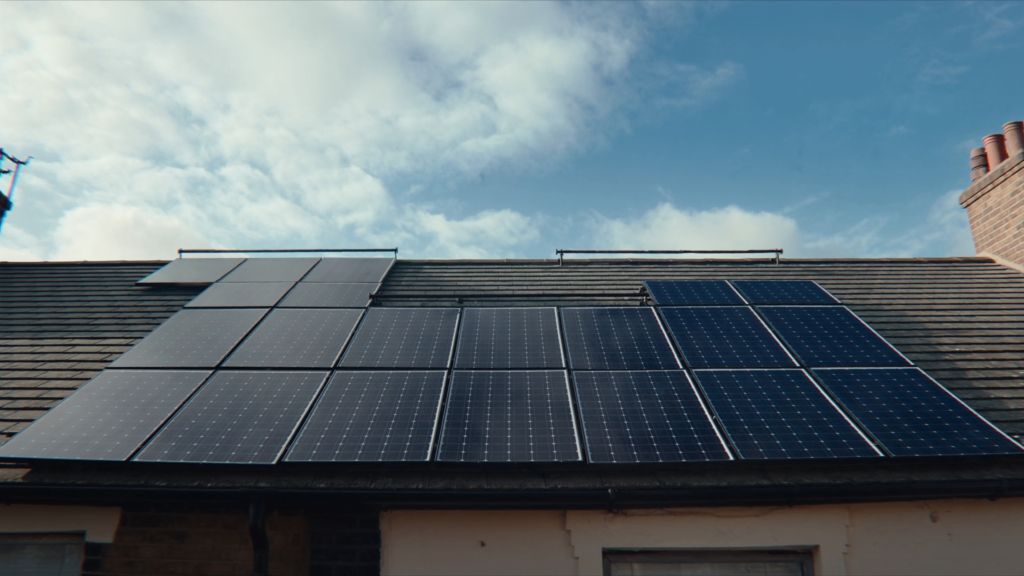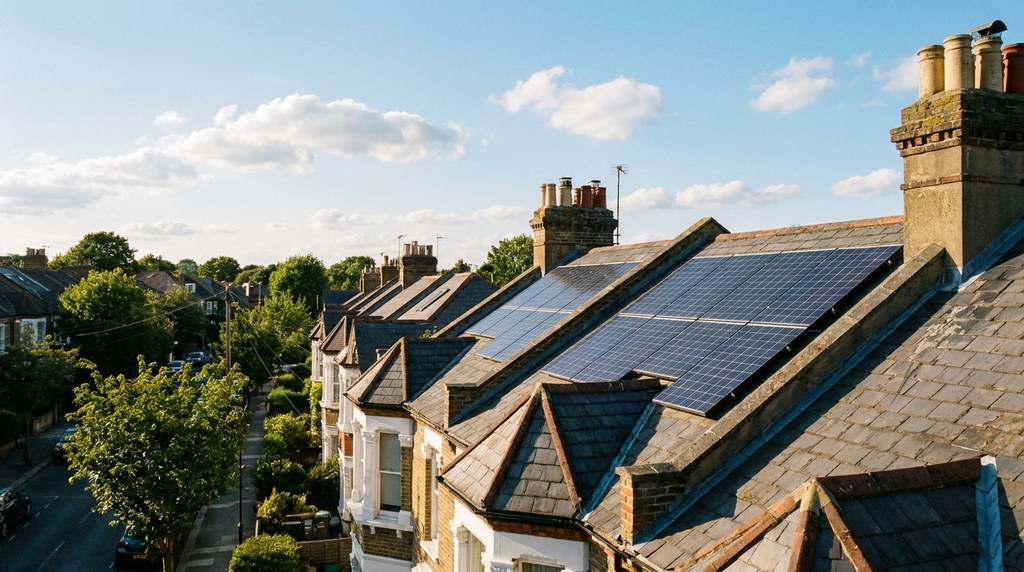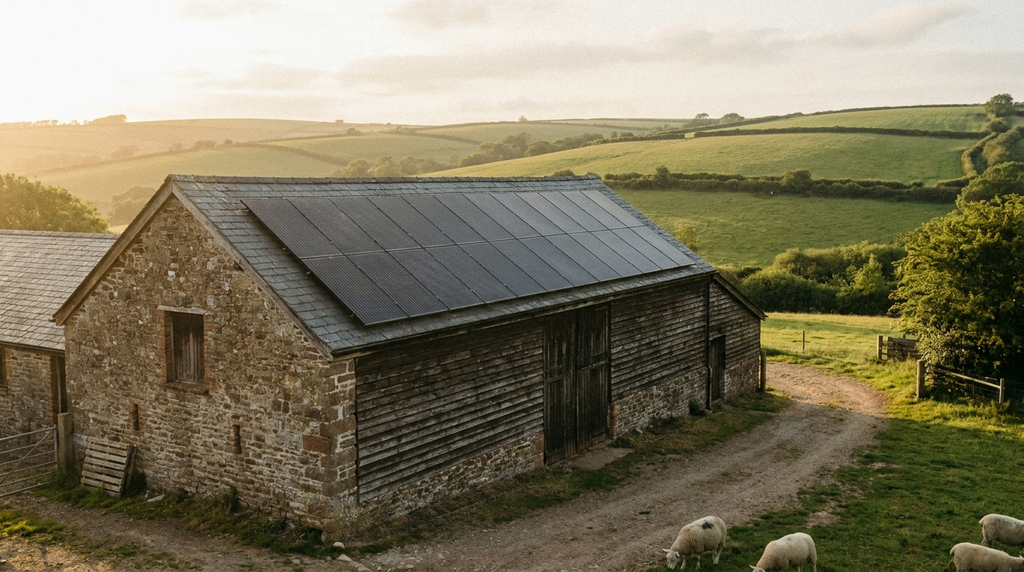
Solar panels absorb sunlight, specifically photons from the sun’s rays, to generate electricity through the photovoltaic effect. A typical residential solar panel system in the UK converts around 15-22% of incoming sunlight into usable electricity (Energy Saving Trust, 2026).
What solar panels absorb is not heat, but light. While panels can get warm, their electrical output depends on light intensity, not temperature. This distinction matters for UK homeowners: panels still generate on cloudy days, though at reduced efficiency. The amount absorbed varies by panel type, orientation, and shading.
Photons are the primary energy source
Solar panels absorb photons from natural sunlight, which are particles of light carrying energy. When a photon hits a solar cell, it knocks electrons loose from atoms, creating a flow of direct current (DC) electricity. A standard 3kWp system absorbs enough photons to generate around 2,650 kWh per year in the UK (Energy Saving Trust, 2026). Panels do not absorb heat from the sun; they absorb light energy across the visible and near-infrared spectrum.
Panels absorb diffuse light not just direct sun
Solar panels absorb both direct sunlight and diffuse light, which is scattered by clouds and the atmosphere. In the UK, diffuse light contributes significantly to generation: even on overcast days, panels can produce 10-25% of their peak output. The UK receives an average of 1,000-1,200 kWh of solar radiation per square metre per year (GOV.UK, 2026). This makes solar viable in all regions, though south-facing roofs maximise absorption.
Absorption efficiency depends on panel type
Monocrystalline panels absorb photons more efficiently than polycrystalline or thin-film types, achieving efficiency rates of 20-22% compared to 15-17% for polycrystalline (MCS, 2026). The absorption layer is made of silicon, which is treated to create an electric field. Panels also absorb reflected light from the ground or nearby surfaces, called albedo, which can boost output by up to 5% in snowy or bright conditions. For UK homes, monocrystalline panels are the most common choice due to their higher absorption per square metre.
A worked example
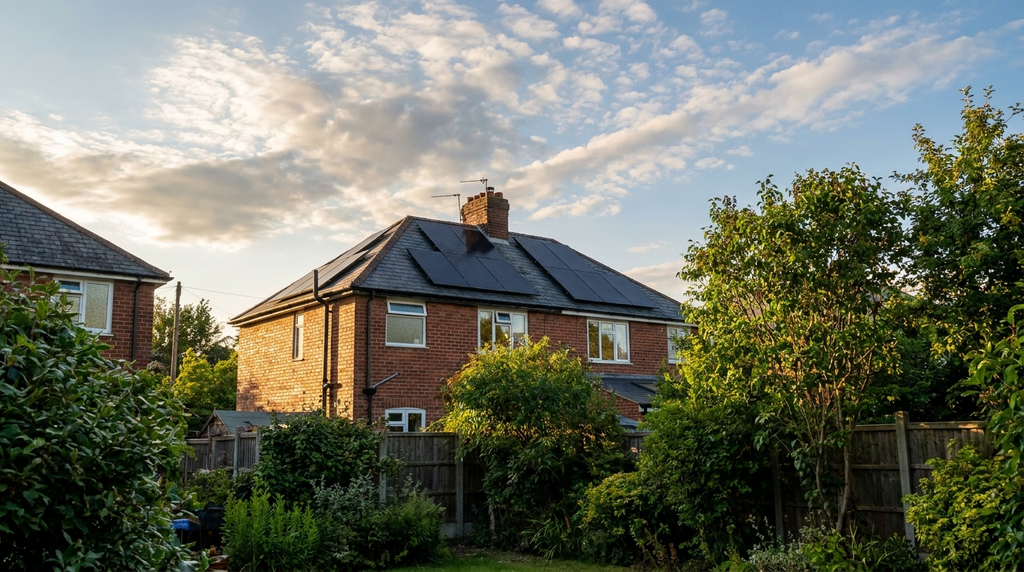
A typical 3.5kWp solar panel system on a 1930s semi-detached home in Manchester absorbs enough photons to generate roughly 2,850 kWh per year. Under the current 0% VAT scheme (until March 2027) and assuming no other grants apply, the upfront cost for a quality system from a certified MCS installer is around £5,500 to £6,500. With the Smart Export Guarantee (SEG) paying roughly 15p per kWh exported and displacing grid electricity at 24p per kWh, a household using 50% of the generated power and exporting the rest saves about £560 annually. This gives a payback period of roughly 10 to 12 years. Over 25 years, the total savings, including SEG payments and avoided electricity costs, reach approximately £14,000 to £16,000, even accounting for a gradual 0.5% annual degradation in panel efficiency (Energy Saving Trust, 2026).
| Item | Figure |
|---|---|
| Upfront cost after grants | £6,000 |
| Yearly savings | £560 |
| Payback period | 11 years |
| 25-year lifetime savings | £15,000 |
What homeowners often get wrong
The most common mistake UK homeowners make is believing solar panels need direct, blazing hot sunshine to work properly. Here are three specific misconceptions that cost people money or lead to poor installations.
- Believing panels need heat not light Many households mistakenly think solar panels absorb heat and will not generate in winter. The truth is panels absorb photons from light, not heat, so they still produce electricity on cold, bright winter days, though at roughly 10-25% of summer peak output.
- Thinking shading means zero generation Some homeowners assume one shaded panel will stop the whole system. Modern systems with microinverters or power optimisers isolate each panel, so a shaded panel on a typical semi-detached roof only reduces that one panel’s output by 50-70%, not the entire array.
- Ignoring the importance of orientation Many people fixate on a south-facing roof as the only option. Panels absorb enough photons facing east or west to generate 15-20% less energy, which is still financially worthwhile and often better than a south roof with heavy shading.
Quick reference
- Solar panels absorb photons from both direct sunlight and diffuse light on cloudy days, generating 10-25% of peak output in overcast UK conditions.
- A standard 3.5kWp system in the UK absorbs enough photons to produce roughly 2,850 kWh per year, saving around £560 annually on energy bills.
- Panels are eligible for the 0% VAT rate on installations until March 2027, and households on standard meters can claim the Smart Export Guarantee (SEG) at around 15p per kWh exported.
- Panels do not absorb heat and actually become slightly less efficient above 25°C, losing about 0.3-0.5% output per degree Celsius of temperature rise.
- Installing panels on a north-facing roof is rarely worthwhile in the UK, as absorption drops by roughly 30-40% compared to a south-facing installation.
Frequently Asked Questions
Solar panels absorb light, specifically photons, not heat. The Energy Saving Trust confirms that electrical output depends on light intensity, not temperature.
Yes, solar panels absorb diffuse light on cloudy days, producing 10-25% of their peak output. GOV.UK reports the UK receives 1,000-1,200 kWh of solar radiation per square metre annually.
A typical UK residential system absorbs and converts 15-22% of incoming sunlight into electricity, according to the Energy Saving Trust (2026).