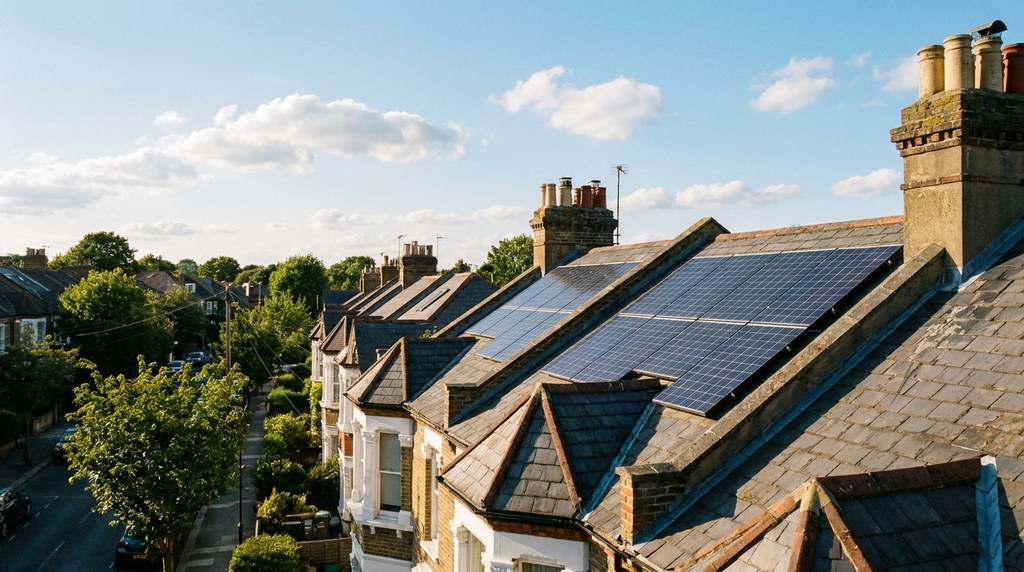
The three main types of solar panels for UK homes are monocrystalline, polycrystalline, and thin-film, with monocrystalline being the most efficient and popular choice, typically achieving efficiency rates of 20% to 22% (Energy Saving Trust, 2026).
Your choice depends on roof space, budget, and energy needs. Monocrystalline panels dominate the UK market due to their high efficiency, while polycrystalline offers a lower-cost alternative with slightly less output. Thin-film panels are less common for home installations but suit large, unshaded roofs or commercial applications where space is not a limiting factor.
Monocrystalline Solar Panels
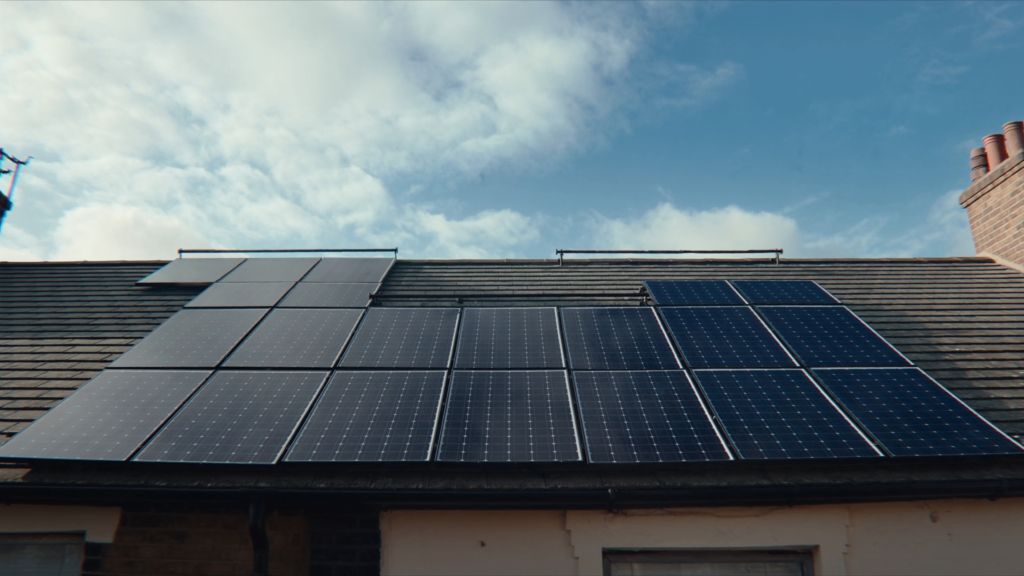
Monocrystalline panels are made from a single silicon crystal, giving them a uniform black appearance and the highest efficiency of any residential type. A typical 350W monocrystalline panel costs between £200 and £350, and a standard 4kWp system costs around £6,000 to £8,000 installed (GOV.UK, 2026). They perform better in low-light conditions than polycrystalline, making them ideal for UK weather. Their higher efficiency means fewer panels are needed to produce the same output, which is valuable for homes with limited roof space.
Polycrystalline Solar Panels
Polycrystalline panels use multiple silicon fragments melted together, giving them a blue, speckled look. They are slightly less efficient, typically 15% to 17%, but cost less, around £150 to £250 per panel (Energy Saving Trust, 2026). A 4kWp polycrystalline system may cost £5,000 to £7,000 installed. Because they are less efficient, you need more panels to achieve the same power output, so they are better suited to larger roofs. They also degrade slightly faster than monocrystalline in high temperatures, which is rarely a problem in the UK.
Thin-Film Solar Panels
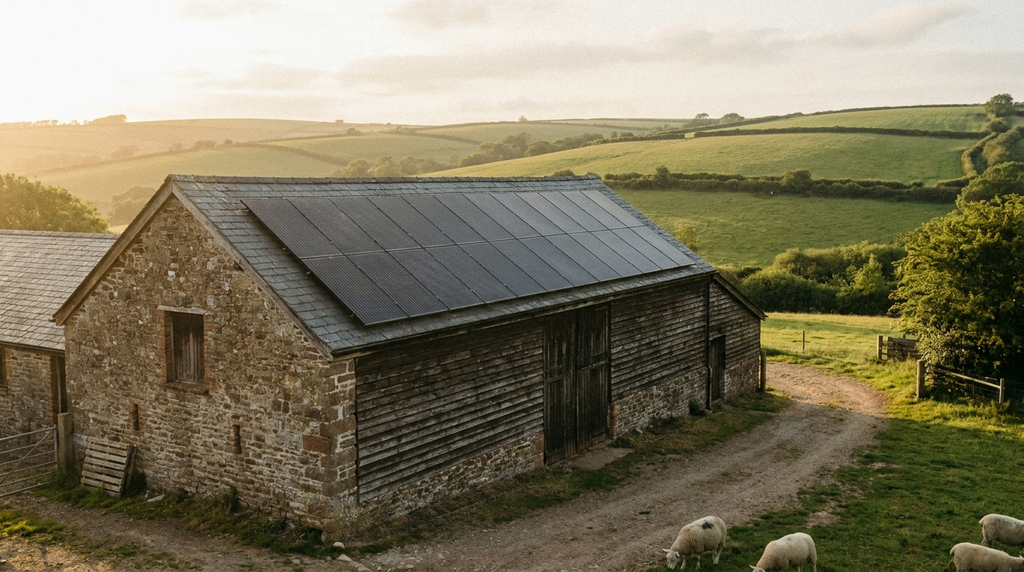
Thin-film panels are made by depositing photovoltaic material onto a substrate like glass or metal. They are lightweight and flexible, with efficiency typically between 10% and 12% (BRE, 2026). Costs are lower per panel, around £100 to £200, but you need significantly more roof area to match the output of crystalline panels. A 4kWp thin-film system can cost £4,000 to £6,000 installed. They perform better in high heat and partial shade than crystalline types, but their low efficiency makes them rare for standard UK homes. They are more common on commercial roofs or portable installations.
A worked example
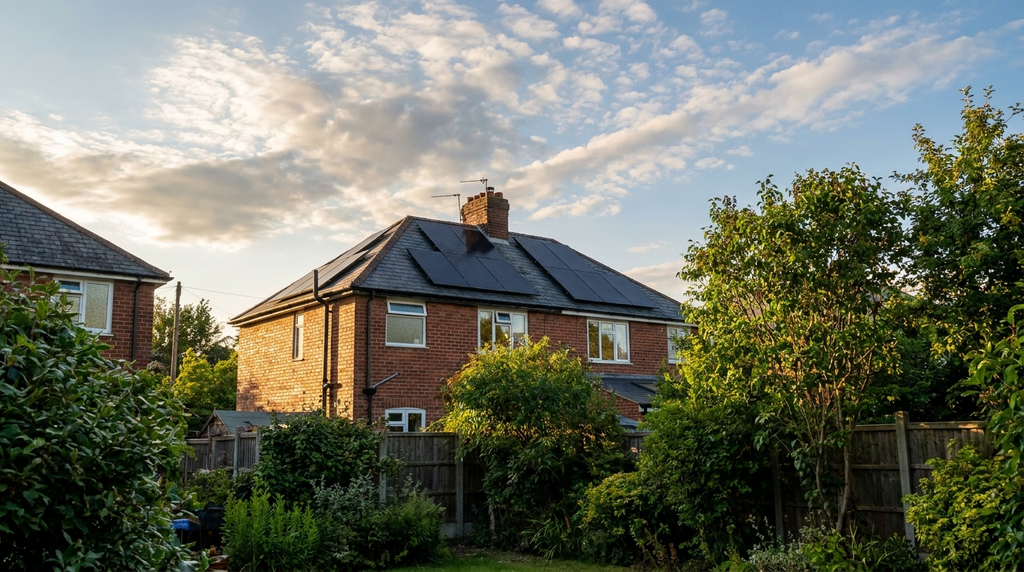
A typical 1930s semi-detached house in the Midlands with a south-facing roof could save around £480 per year on electricity bills by installing a 4.2kWp monocrystalline solar panel system. Under the current 0% VAT scheme (until March 2027) and with a typical installation cost of £7,000, the upfront outlay is £7,000. The Energy Saving Trust estimates a 4.2kWp system in central England generates roughly 3,500 kWh annually, and with the Smart Export Guarantee (SEG) paying around 15p per kWh for exported power, total savings and income reach £480 yearly. This gives a payback period of about 14.6 years, well within the 25-year performance warranty of most modern panels. Over 25 years, assuming a modest 0.5% annual degradation and 3% inflation on energy prices, the total savings could exceed £14,000. The system also reduces the household’s carbon footprint by roughly 1.3 tonnes of CO₂ per year, according to Energy Saving Trust data.
| Item | Figure |
|---|---|
| Upfront cost after grants | £7,000 |
| Yearly savings | £480 |
| Payback period | 14.6 years |
| 25-year lifetime savings | £14,000+ |
What homeowners often get wrong
The most common mistake UK homeowners make is choosing panels based solely on price per watt without considering roof orientation, shading, or future battery storage plans. Here are three frequent errors and how to avoid them.
- Believing all panels need direct sunlight Many assume panels are useless on cloudy days, but monocrystalline panels generate 20-30% of their rated output even in overcast conditions. A typical UK winter day still produces usable power, and the SEG tariff means you earn from every kWh exported.
- Ignoring inverter quality Homeowners often focus only on panel brand while skimping on the inverter, which converts DC to AC power. A cheap inverter can reduce system efficiency by 5-10% and may fail within 8 years, costing £1,000-£1,500 to replace and voiding your overall warranty if not professionally installed.
- Thinking bigger panels are always better Larger panels (e.g., 400W+ modules) may not fit a typical UK roof with chimneys or dormers, leaving gaps that reduce total output. A 4kWp system using 350W panels often fits more neatly than one using 400W panels, maximising usable roof coverage and avoiding costly structural modifications.
Quick reference
- Monocrystalline panels are the most efficient for UK homes, achieving 20-22% efficiency compared to 15-17% for polycrystalline and 10-12% for thin-film.
- A standard 4kWp monocrystalline system costs £6,000 to £8,000 installed, with 0% VAT until March 2027 reducing the upfront cost by up to £400.
- To qualify for the Smart Export Guarantee (SEG), your system must be installed by an MCS-certified installer and be no larger than 5MW capacity.
- Polycrystalline panels offer a lower upfront cost (around £150-£250 per panel) but generate roughly 10% less electricity per square metre than monocrystalline.
- Thin-film panels are rarely recommended for UK homes because they require 50% more roof space than monocrystalline to produce the same output, making them unsuitable for typical semi-detached or terrace houses.
Frequently Asked Questions
The three main types are monocrystalline, polycrystalline, and thin-film. Monocrystalline is the most efficient and popular for UK homes, according to the Energy Saving Trust.
Monocrystalline panels are best for most UK homes due to their 20-22% efficiency and better low-light performance. The Energy Saving Trust recommends them for limited roof space.
A typical 350W monocrystalline panel costs between £200 and £350. A full 4kWp system costs around £6,000 to £8,000 installed, according to GOV.UK.