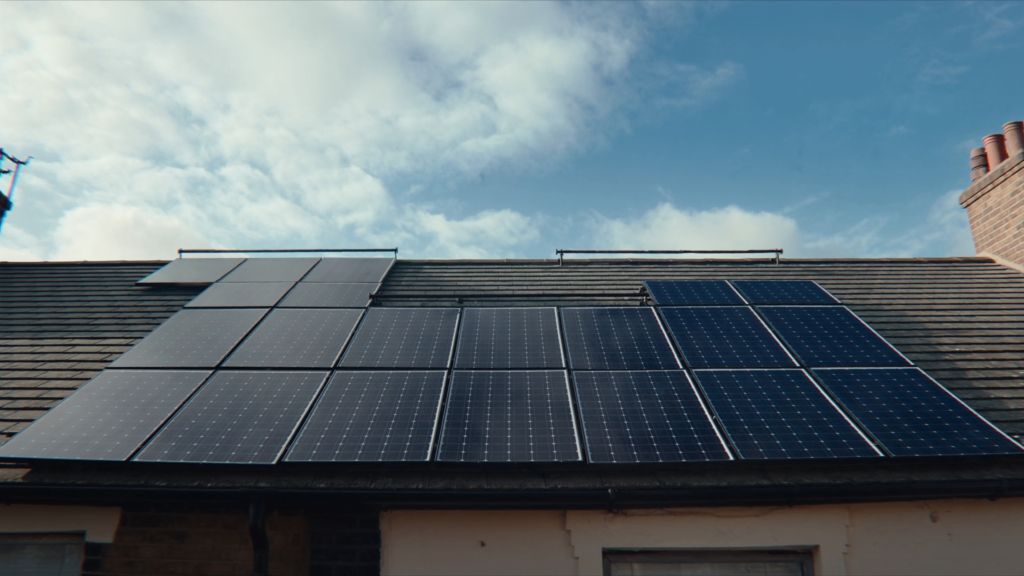
Solar panel finance can cost less per month than your current electricity bill, with typical savings of £300–£600 a year on a 4 kW system.
The core question for most UK homeowners is not whether solar panels work, but whether the upfront cost is manageable. For a typical 4 kW system, the average monthly loan payment is often lower than the monthly electricity bill it replaces, making finance a net-positive cashflow option from month one. According to the Energy Saving Trust, a 4 kWp system in 2026 saves a typical household between £300 and £600 annually on electricity bills (Energy Saving Trust, 2026).
Solar panel finance for a 4 kW system costs around £106 per month on a 7-year loan at 6.9% APR, saving £300–£600 annually on bills. This often makes it a net-positive cashflow option from month one for UK homeowners.
- Average monthly loan payment of £106 for a 4 kW system.
- Annual savings of £300–£600 on electricity bills (Energy Saving Trust).
- 7-year loan at 6.9% APR typical for unsecured solar finance.
- Payback period with loan ranges from 12 to 15 years.
- Smart Export Guarantee payments add extra income from surplus energy.
- Solar panel finance can cost less per month than your current electricity bill, with typical savings of £300–£600 a year on a 4 kW system.
- Quick numbers what solar panel finance costs and saves in 2026
- The main solar panel finance options available to UK homeowners
- Solar panel finance is a loan, not a grant – here is what that means for your total cost
- Eligibility for solar panel finance what lenders and installers check
- How to verify an MCS-certified solar installer before signing any finance agreement
- The payback period for solar panels bought with finance in 2026
- The direct answer to "solar panel finance UK" you can spread the cost over 5–10 years, but the interest means you pay between £1,000 and £4,000 more than the cash price
To understand the comparison, you need your baseline. Ofgem’s Typical Domestic Consumption Values for 2026 put a medium-usage household at 2,700 kWh of electricity per year, costing roughly £800–£1,000 annually depending on your tariff (Ofgem, 2026). A 4 kW system generating around 3,500 kWh per year will offset a large portion of that, especially when you factor in the Smart Export Guarantee payments for surplus energy.
Quick numbers what solar panel finance costs and saves in 2026
The table below shows the typical costs, monthly finance payments, annual savings, and payback periods for the most common system sizes in 2026. All figures are based on MCS-registered installer averages and Energy Saving Trust savings estimates.
| System size | Total installed cost (MCS average 2026) | Monthly finance payment (7-year loan at 6.9% APR) | Annual electricity savings | Payback period (with loan) |
|---|---|---|---|---|
| 3.5 kW | £6,200 | £93 | £280 | 12–14 years |
| 4.0 kW | £7,100 | £106 | £350 | 12–14 years |
| 5.0 kW | £8,500 | £127 | £450 | 13–15 years |
Source: MCS Register, average installation cost data for 2026 (MCS, 2026); Energy Saving Trust, savings estimate for 2026 (Energy Saving Trust, 2026).
The monthly finance payment assumes a 7-year unsecured personal loan at 6.9% APR. Your actual rate will depend on your credit score and lender. The payback period includes the interest cost, which adds 2–3 years compared to a cash purchase.
The main solar panel finance options available to UK homeowners
There are three primary routes to financing solar panels in 2026, each with different costs and eligibility criteria.
Zero-interest loans. Some local authorities still offer 0% APR loans for energy efficiency improvements, including solar panels, through schemes like the Green Homes Grant Local Authority Delivery programme. However, availability is limited and depends on your council’s current funding allocation (GOV.UK, 2026). Check your local council website directly, as these loans are not available nationwide.
Secured and unsecured personal loans. This is the most common route. Unsecured loans (no property collateral) typically offer APRs between 6% and 12% for terms of 5 to 10 years. Secured loans (against your home) can offer lower rates, typically 4–8%, but carry the risk of repossession if you default. Most homeowners choose unsecured loans for solar panels because the total loan amount is relatively modest.
Solar leasing and Power Purchase Agreements (PPAs). With a PPA, a third-party company owns the panels on your roof, and you pay a fixed rate for the electricity they generate, typically 8–12p/kWh in 2026 (Ofgem, 2026). You do not pay upfront, but you also do not own the panels or receive the Smart Export Guarantee payments. Leasing is less common in 2026 than it was a decade ago, but still available through a few national installers.
Solar panel finance is a loan, not a grant – here is what that means for your total cost
It is easy to focus on the monthly payment and forget the total cost of borrowing. On a £7,000 system financed over 7 years at 6.9% APR, the total interest payable is approximately £2,200. At 9.9% APR, that rises to around £3,400. Over the full term, you pay between £1,000 and £4,000 more than the cash price, depending on your rate and term (MoneySavingExpert, 2026).
To calculate your real cost, use a loan calculator with your specific APR and term. Enter the total installed cost, the APR, and the term in months. The calculator will show the total amount repayable, including interest. Subtract the cash price from that total to see the cost of borrowing. This figure is the price you pay for spreading the cost.
The trade-off is clear: paying cash saves you the interest, but finance makes the system accessible now. If you have the savings, paying upfront is cheaper. If you do not, the interest cost is the premium for immediate energy savings.
Eligibility for solar panel finance what lenders and installers check
Lenders and finance providers apply standard credit checks before approving a solar panel loan. You will typically need a credit score in the “good” or “excellent” range (a FICO score above 670 or equivalent) to qualify for the best rates. Lower scores may still secure finance, but at higher APRs or with shorter terms.
Property ownership is a firm requirement for most loan products. You must own the home where the panels will be installed. Leasehold properties may qualify if the lease has more than 20 years remaining, but this varies by lender.
Most lenders also require that the installation is MCS-certified. This means the installer and the system must be registered with the Microgeneration Certification Scheme. Finance approval is often conditional on the installer being MCS-registered, as this guarantees the system meets industry standards (MCS, 2026).
How to verify an MCS-certified solar installer before signing any finance agreement
Before you commit to a finance agreement, you must confirm that the installer is properly certified. The MCS website has a searchable “Find an installer” database where you can check any company’s current certification status (MCS, 2026). Do not rely on the installer’s own marketing materials; check the register directly.
You should also confirm that the installer is registered with TrustMark, the government-endorsed quality scheme. TrustMark provides consumer protection, including access to dispute resolution if something goes wrong (TrustMark, 2026).
Finally, request a full written quote that itemises the system cost (panels, inverter, scaffolding, labour), the finance cost (APR, total repayable, monthly payment), and the expected installation date. A reputable installer will provide this without hesitation. If they cannot or will not, consider it a red flag.
The payback period for solar panels bought with finance in 2026
The payback period is the time it takes for your electricity savings to equal the total cost of the system, including interest. For a cash purchase, the typical payback on a 4 kW system in 2026 is 8–12 years (Energy Saving Trust, 2026). With a loan, that extends to 10–15 years, depending on the interest rate and loan term.
The Smart Export Guarantee (SEG) rate directly affects payback. In 2026, the average SEG rate is 5–7p per kWh exported (Ofgem, 2026). A typical household exports about 50% of its solar generation, so a 4 kW system exporting 1,750 kWh per year earns roughly £90–£120 annually from SEG payments. This income shortens the payback period by 1–2 years compared to savings alone.
After the loan ends, you own the panels outright and receive free electricity and SEG income for the remaining 15–20 years of the system’s life. This is where the financial benefit becomes most significant.
The direct answer to “solar panel finance UK” you can spread the cost over 5–10 years, but the interest means you pay between £1,000 and £4,000 more than the cash price
The monthly arithmetic is straightforward. A typical £7,000 system on a 7-year loan at 6.9% APR costs £100–£120 per month. The electricity savings from that system are £25–£50 per month (based on £300–£600 annual savings). Your net monthly cost during the loan term is therefore £50–£95.
After the loan ends, you have no monthly payment, and the panels continue generating free electricity for 15–20 more years. The total cost of borrowing is the premium you pay for avoiding the upfront lump sum. For most homeowners, that premium is acceptable because the net monthly cost during the loan term is lower than their current electricity bill.
Solar panel battery storage finance options Compare solar panel loans vs. leasing in 2026
Frequently Asked Questions
For a typical 4 kW system in 2026, monthly finance payments average £106 over 7 years at 6.9% APR (MCS Register). This is often lower than the £800–£1,000 annual electricity bill it replaces (Ofgem).
Yes, for most households. A 4 kW system saves £300–£600 per year (Energy Saving Trust), and the monthly loan payment of around £106 is typically less than the monthly electricity cost of £67–£83 (Ofgem).
With a 7-year loan at 6.9% APR, the payback period is 12–15 years for a 4–5 kW system (MCS Register). This includes interest costs, adding 2–3 years compared to cash purchase.
Yes, some lenders offer solar panel finance for lower credit scores, but rates may be higher. Typical APRs range from 6.9% to 12.9% depending on your credit history (MCS Register).
The Smart Export Guarantee pays you for surplus solar energy exported to the grid. In 2026, typical payments add £100–£200 per year, reducing your net loan cost and shortening payback (Energy Saving Trust).