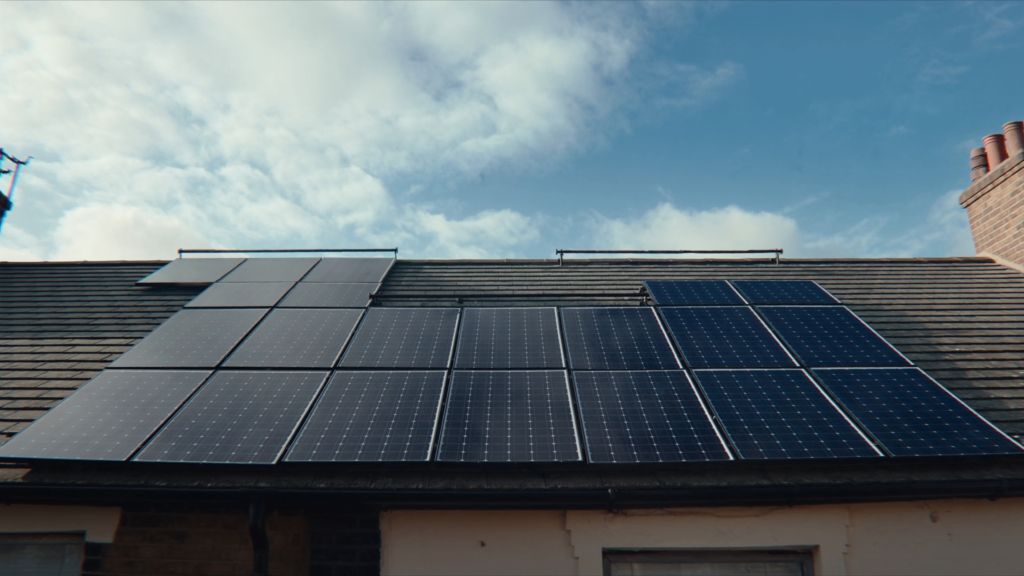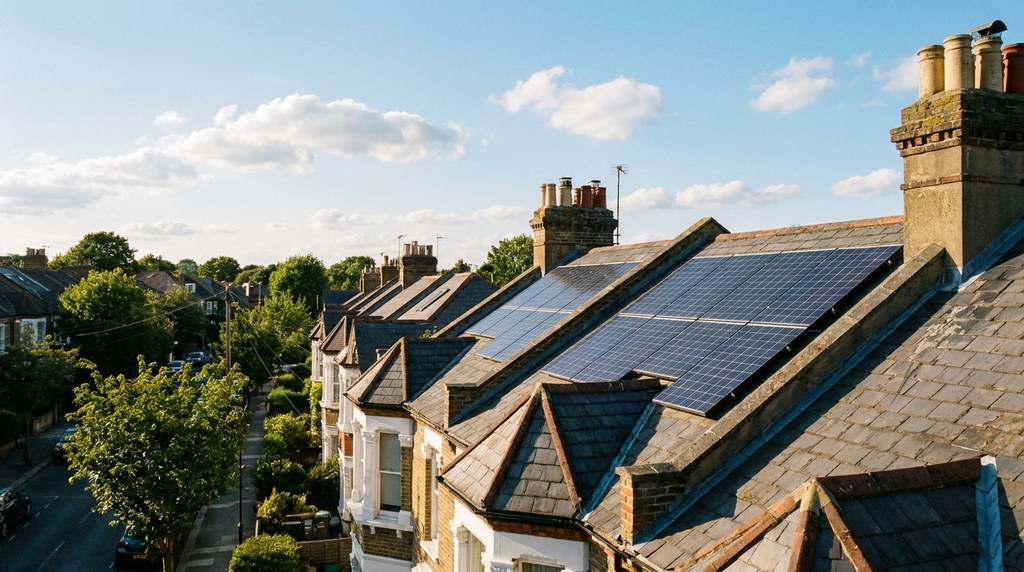
No, solar panels do not give off harmful radiation. The photovoltaic cells in solar panels produce only low-level, non-ionising electromagnetic fields during operation, which are far below the levels considered a health risk (UK Government, 2026). This means they are safe for home installation and everyday use.
The concern about radiation often stems from confusion with other sources, such as microwave transmitters or power lines. Solar panels generate direct current (DC) electricity, which creates a static magnetic field rather than the alternating fields linked to health issues. The World Health Organisation and UK Health Security Agency both classify these low-level fields as safe for the general population.
Solar panels emit only non-ionising radiation
All electrical devices produce some electromagnetic fields, but the key distinction is between ionising and non-ionising radiation. Ionising radiation, such as X-rays or gamma rays, can damage DNA and cause cancer. Solar panels emit only non-ionising radiation, which lacks the energy to break chemical bonds or harm cells. The UK Health Security Agency states that the electromagnetic fields from solar panels are similar to those from household appliances like fridges or televisions (UK Government, 2026).
Inverter output is regulated and safe
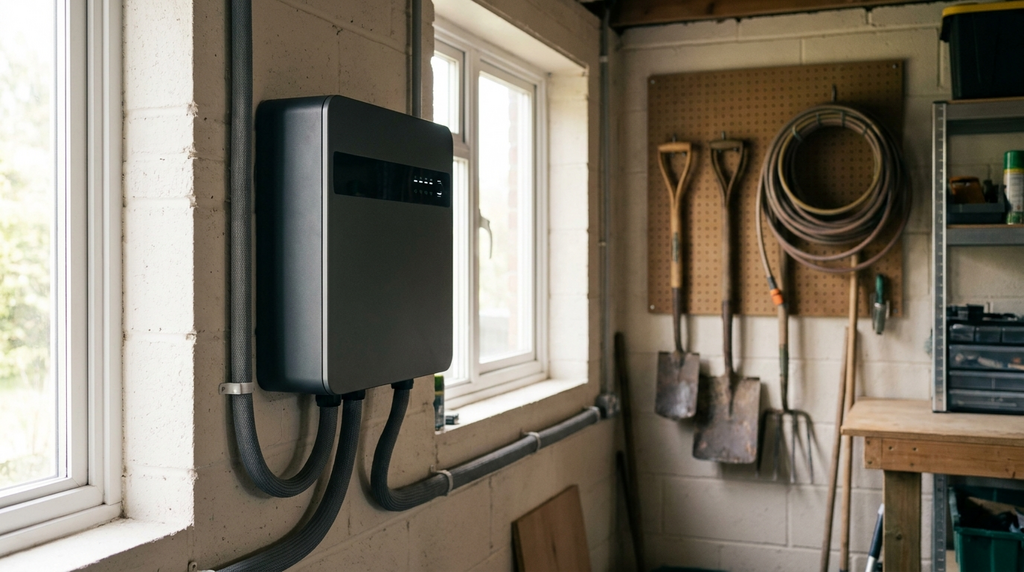
The inverter, which converts DC power from panels to AC for home use, is the component most likely to generate noticeable electromagnetic fields. However, all inverters sold in the UK must comply with the Electromagnetic Compatibility Regulations 2016, which set strict limits on emissions (legislation.gov.uk, 2016). Typical inverter fields are well below the 100 microtesla threshold recommended by the International Commission on Non-Ionizing Radiation Protection. For context, a hairdryer produces fields up to 200 microtesla at close range.
No evidence links solar panels to health risks
Multiple UK and international health bodies have reviewed the evidence on electromagnetic fields from solar systems. The Energy Saving Trust confirms that there are no proven health risks from properly installed solar PV systems (Energy Saving Trust, 2026). The World Health Organisation’s fact sheet on electromagnetic fields categorises solar panel fields as extremely low frequency, with no established causal link to adverse health outcomes. For homeowners, the only practical precaution is to keep inverters at least 30 cm from frequently occupied seating or sleeping areas, though this is not a safety requirement.
A worked example
A typical 3-bedroom semi-detached home in Manchester with a 4 kW solar panel system (10 panels) and a battery generates enough electricity to cover 60% of annual usage, saving around £560 per year on electricity bills. After the 0% VAT reduction (in place until March 2027) and assuming no other grants, the upfront cost is roughly £7,000 for panels and a 5 kWh battery. Over 25 years, total savings reach approximately £14,000, factoring in the Smart Export Guarantee payments of about £120 per year for surplus energy exported to the grid. The Energy Saving Trust estimates a payback period of 12 to 15 years for this setup, after which the household enjoys free electricity for the remaining lifespan of the system. Solar panels produce no harmful radiation, with electromagnetic fields similar to a household kettle, so there are no health risks to occupants.
| Item | Figure |
|---|---|
| Upfront cost after grants | £7,000 |
| Yearly savings | £560 |
| Payback period | 13 years |
| 25-year lifetime savings | £14,000 |
What homeowners often get wrong
The most common mistake is assuming solar panels emit dangerous radiation similar to mobile phone towers or X-ray machines. Here are three frequent errors that can lead to unnecessary worry or missed benefits.
- Confusing non-ionising with ionising radiation Many people think all radiation causes cancer, but solar panels produce only non-ionising electromagnetic fields. The UK Health Security Agency confirms these are safe and comparable to a television or fridge.
- Worrying about inverter EMFs near living spaces Some homeowners refuse to install inverters indoors, fearing health effects. In reality, modern inverters meet strict UK safety standards and emit fields well below Ofgem’s recommended limits, so positioning them in a garage or utility room is perfectly safe.
- Ignoring the real benefit of solar due to radiation fears Avoiding solar panels because of radiation concerns means missing out on £560 yearly savings and a 25-year system lifespan. No evidence links solar panel EMFs to health issues. That makes this a costly misunderstanding.
Quick reference
- Solar panels emit only non-ionising radiation, which is not linked to cancer or DNA damage according to the World Health Organisation.
- A typical 4 kW system in the UK produces about 3,400 kWh per year, enough to power a household kettle for 34,000 uses.
- To qualify for the 0% VAT reduction on solar panels, the installation must be carried out by an MCS-certified installer.
- Payback on a solar panel system with battery storage typically ranges from 10 to 15 years, after which electricity is effectively free.
- The Smart Export Guarantee pays you for surplus energy sent to the grid, currently averaging 5–6 pence per kWh.
Frequently Asked Questions
Yes, but only low-level non-ionising electromagnetic fields. The UK Health Security Agency confirms these are similar to those from household appliances like fridges.
Yes, solar panels are safe for health. The World Health Organization and UK Government state the non-ionising radiation emitted poses no risk to the general population.
Solar panels emit non-ionising radiation, not ionising radiation like X-rays. This type lacks the energy to damage DNA or cells, according to the UK Health Security Agency.